Comparison of Domestic and International Transformer Standards
As a core component of power systems, the performance and safety of transformers directly affect grid operation quality. The IEC 60076 series standards established by the International Electrotechnical Commission (IEC) correspond multidimensionally with China’s GB/T 1094 series standards in technical specifications. For example, regarding insulation levels, IEC specifies that power frequency withstand voltage for transformers rated at 72.5 kV and below must reach 3.5 times the rated voltage, whereas GB standards increase this requirement to 4 times under the same voltage level—a difference rooted in specific considerations of China's grid operating environment.
The U.S. IEEE C57.12.00 standard employs a different classification system, with distinct lightning impulse test waveform parameters compared to IEC. Its defined 1.2/50 μs standard impulse wave contrasts with the chopped-wave testing method widely adopted in Europe, reflecting divergent technical approaches.
In terms of energy efficiency, the European EN 50588-1 standard reduces allowable no-load losses by 12%–15% compared to IEC benchmarks, driving European manufacturers to develop amorphous alloy core technologies. China’s GB 20052-2020 energy efficiency standard implements a three-tier system, where Tier 1 efficiency transformers have load loss limits optimized by 18% over the baseline specified in IEC 60076-20. This tiered energy efficiency strategy balances technological feasibility with market readiness.
Japan’s JIS C4304 standard sets an extremely strict partial discharge detection threshold of 0.5 pC—four times more precise than the internationally common 2 pC benchmark—reflecting its heightened reliability demands due to frequent seismic activity.
Regional characteristics are evident in insulation material specifications. IEC 60422 permits the use of Nomex paper with thermal class K, while China’s GB/T 11021 mandates modified polyimide materials with Class C thermal endurance for ultra-high-voltage applications. Russia’s GOST 3484 requires transformer oil breakdown voltage to reach 70 kV/2.5 mm—40% higher than the international norm of 50 kV—addressing dielectric performance degradation under extreme cold climates.
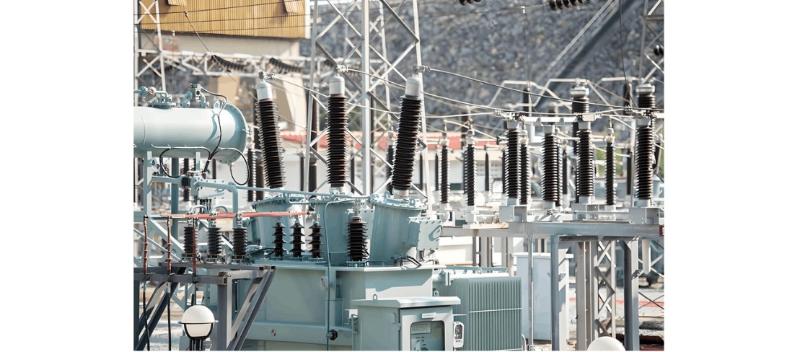
India’s IS 2026 standard includes additional sand-dust simulation tests during temperature rise testing, responding to operational challenges posed by its unique geographical conditions.
For short-circuit withstand capability verification, IEC 60076-5 specifies a test duration 25% longer than GB 1094.5, but allows a 15% greater permissible winding deformation limit. These differing technical indicators reflect varying interpretations of safety margins among standardization bodies.
Canada’s CSA C88 standard mandates sudden short-circuit testing at -40°C, a critical requirement for equipment in arctic environments. Brazil’s NBR 5356 standard specifically requires accelerated aging tests under tropical rainforest conditions, requiring equipment to maintain insulation performance after 1,000 hours of continuous operation at 95% relative humidity.
In environmental regulations, the EU RoHS directive strictly limits PCB (polychlorinated biphenyl) content in transformer oil to 0.005%, while China’s GB/T 26125 permits up to 0.01% residual concentration for certain specialized applications. The U.S. EPA 40 CFR Part 761 sets a PCB control threshold at 50 ppm. These differences reflect graded enforcement intensities across regional environmental policies.
Testing methodology varies significantly. In lightning impulse tests, IEC specifies chopped wave durations between 3–6 μs, while IEEE allows a broader window of 2–8 μs. The UK’s BS 7821 standard requires combined tests using switching impulses and oscillatory lightning waves, better simulating real-world grid disturbances. France’s NF C52-112 standard introduces a nighttime background noise correction algorithm for sound level measurements, requiring test results to subtract a 35 dB(A) ambient noise influence value—enhancing accuracy in efficiency evaluation.
Harmonization efforts continue globally. The IEC/TC14 technical committee’s draft of the new transformer standard introduces digital twin verification clauses for the first time, requiring manufacturers to provide full lifecycle simulation models. Meanwhile, China’s Standardization Administration is revising GB/T 1094 with a focus on unified smart monitoring interfaces and proposing the development of a digital signature database for 12 standard fault types.
This coexistence of standard mutual recognition and differentiated management preserves national technical sovereignty while promoting global interoperability in power equipment trade.