• Product
  • Suppliers
  • Manufacturers
  • Solutions
  • Free tools
  • Knowledges
  • Experts
  • Communities
Search


Transformer Insulation Integrity and Protection Testing: Ensuring Reliability and Performance

Rockwell
Field: Manufacturing
China

Verification of Insulation Integrity

When a new or overhauled transformer is energized under open-circuit (no-load) conditions, switching surges—caused by operations such as opening or closing the no-load transformer circuit—can generate overvoltages. These reach 4.0–4.5 times the phase voltage if the neutral point is isolated or earthed through a Petersen coil, and up to 3.0 times the phase voltage when the neutral is solidly grounded. The full-voltage, no-load impact test deliberately subjects insulation to these switching overvoltages before service, exposing any weak spots in the transformer windings or auxiliary circuits.

Assessment of Differential Protection Performance

Energizing a de-energized, unloaded transformer produces inrush (magnetizing) currents reaching 6–8 times the rated current. Though this inrush decays relatively rapidly—typically to 0.25–0.5 times rated current within 0.5–1 second—total decay may take several seconds in small-to-medium units and 10–20 seconds in large transformers. Early-stage inrush can falsely trigger differential protection, preventing closure. Repeated no-load closing operations allow protection engineers to observe actual inrush waveforms, verify relay wiring, characteristic curves, and settings, and confirm proper differential protection operation under real inrush conditions.
Evaluation of Mechanical Strength

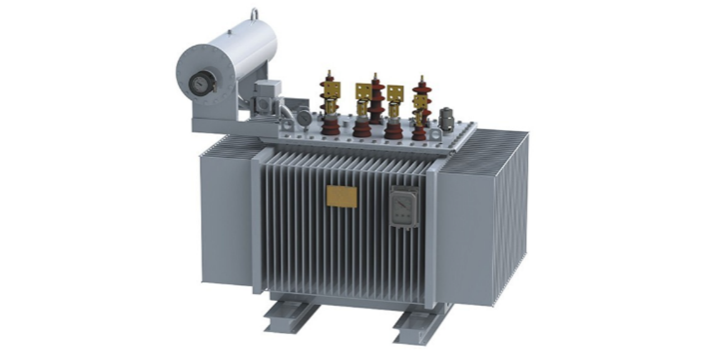
Substantial electromagnetic forces generated during inrush transients subject the transformer's core, windings, and structural components to mechanical stress. Repeated no-load closing tests verify that all internal and support structures can withstand these forces without deformation or damage.

Test Procedure Requirements

  • New Units: Five consecutive full-voltage no-load closing operations.

  • Overhauled Units: Three consecutive operations.

  • Test Interval: At least 5 minutes between operations.

  • On-Site Monitoring: Qualified technicians should observe the transformer throughout testing, checking for abnormalities (unusual sounds, vibrations, or thermal signs) and halting immediately if defects are detected.

These multiple impact tests ensure the transformer's insulation reliability, protection coordination, and mechanical robustness before continuous service.
Give a tip and encourage the author!
Recommended
Chinese Grid Technology Reduces Egyptian Power Distribution Losses
On December 2nd, the South Cairo distribution network loss reduction pilot project in Egypt, led and implemented by a Chinese power grid company, officially passed the acceptance inspection by the South Cairo Electricity Distribution Company of Egypt. The comprehensive line loss rate in the pilot area decreased from 17.6% to 6%, achieving an average daily reduction of lost electricity of approximately 15,000 kilowatt-hours. This project is the first overseas distribution network loss reduction p
Baker
12/10/2025
Why does a 2-in 4-out 10 kV solid-insulated ring main unit have two incoming feeder cabinets?
A "2-in 4-out 10 kVsolid-insulated ring main unit" refers to a specific type of ring main unit (RMU). The term "2-in 4-out" indicates that this RMU has two incoming feeders and four outgoing feeders.10 kVsolid-insulated ring main unit are equipment used in medium-voltage power distribution systems, primarily installed in substations, distribution stations, and transformer stations to distribute high-voltage power to low-voltage distribution networks. They generally consist of high-voltage incomi
Garca
12/10/2025
What Is a Magnetic Levitation Transformer? Uses & Future
In today’s rapidly advancing technological era, the efficient transmission and conversion of electric power have become continuous goals pursued across various industries. Magnetic levitation transformers, as an emerging type of electrical equipment, are gradually demonstrating their unique advantages and broad application potential. This article will thoroughly explore the application fields of magnetic levitation transformers, analyze their technical characteristics and future development tren
Baker
12/09/2025
How Often Should Transformers Be Overhauled?
1. Transformer Major Overhaul Cycle The main transformer shall undergo a core-lifting inspection before being put into service, and thereafter a core-lifting overhaul shall be performed every 5 to 10 years. Core-lifting overhaul shall also be carried out if a fault occurs during operation or if issues are identified during preventive tests. Distribution transformers operating continuously under normal load conditions may be overhauled once every 10 years. For on-load tap-changing transformers, t
Felix Spark
12/09/2025
Related Products
Send inquiry
Download
Get the IEE Business Application
Use the IEE-Business app to find equipment, obtain solutions, connect with experts, and participate in industry collaboration anytime, anywhere—fully supporting the development of your power projects and business.