Pangontrol sa Bilis sa DC Motor: Pangontrol sa Resistance sa Armature ug Pangontrol sa Field Flux

Ang motor DC mao ang device nga molihok sa mechanical power ngadto sa direct - current electrical power. Usa ka natirang karakteristika sa motor DC mao ang iyang kapabilidad nga madaling maadjust ang iyang speed batas sa mga espesipikong pangutana pinaagi sa straightforward nga mga paraan. Kini nga level sa convenient nga speed control dili kasagaran mahimo sa motor AC.
Ang konsepto sa speed regulation ug speed control walay piniling. Sa kaso sa speed regulation, ang speed sa motor nagbag-o spontaneamente isip tugon sa iba't ibang operating conditions. Sa sunod, sa motor DC, ang mga pagbag-o sa speed gitumong deliberate, yaither manual sa usa ka operator o automatic pinaagi sa control devices. Ang speed sa motor DC gihatagan sa sumala nga relasyon:

Ang Equation (1) malinaw nga nagsuhay nga ang speed sa motor DC depende sa tulo ka key factors: ang supply voltage V, ang armature circuit resistance Ra, ug ang field flux ϕ, nga gigenerehado sa field current.
Sa pagkontrol sa speed sa motor DC, ang pagmanipular sa voltage, armature resistance, ug field flux makapahimulos. May tulo ka primary nga teknik sa pagabot sa DC motor speed control, sama sa mosunod:
Variation of Resistance in the Armature Circuit (Armature Resistance or Rheostatic Control)
Variation in Field Flux (Field Flux Control)
Variation in Applied Voltage (Armature Voltage Control)
Usa ka mas in-depth nga pagkuha sa bawg nga teknik sa speed-control gibuto sa sunod.
Armature Resistance Control of DC Motor (Shunt Motor)
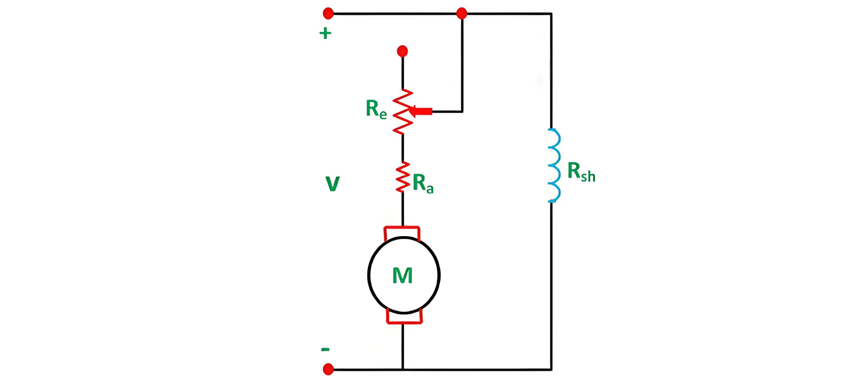
Ang connection diagram alang sa pag-implementar sa armature resistance control sa shunt motor gigamit sa mosunod. Sa karon nga approach, ang variable resistor Re giinsert sa armature circuit. Notably, ang mga pagbag-o sa value sa variable resistor wala makaapekto sa magnetic flux tungod kay ang field winding direktang giconnect sa supply mains.
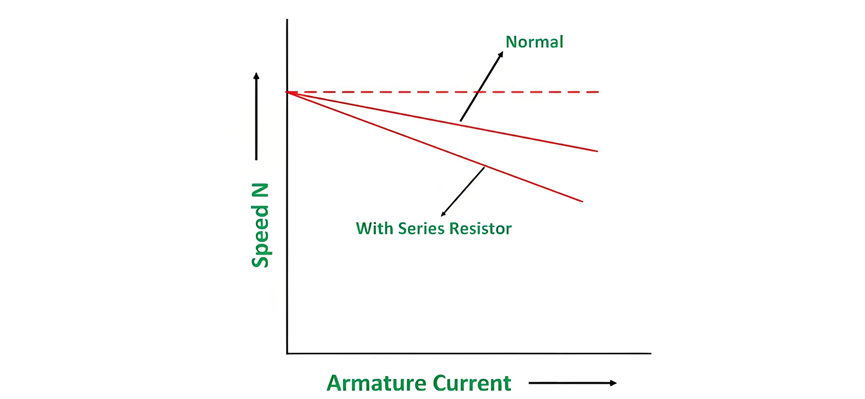
Ang speed current characteristic sa shunt motor gishown sa mosunod.
Series Motor
Pagbutang sa atensyon sa connection diagram alang sa pagkontrol sa speed sa DC series motor gamit ang armature resistance control method.
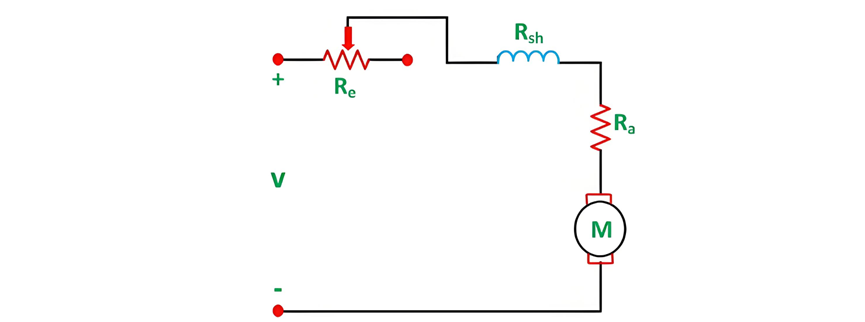
Kung ang resistance sa armature circuit giadjust, makakaapekto kini sa current nga molihok sa circuit ug ang magnetic flux sa loob sa motor. Ang voltage drop sa variable resistor effectively nadiminis ang voltage available sa armature. Isip resulta, kini nga pagbawas sa applied armature voltage magresulta sa pagbawas sa rotational speed sa motor.
Ang speed-current characteristic curve sa series motor, nga nagpakita sa relasyon sa pagitan sa speed sa motor ug ang current nga molihok sa loob nia, gipresentar sa figure sa mosunod.
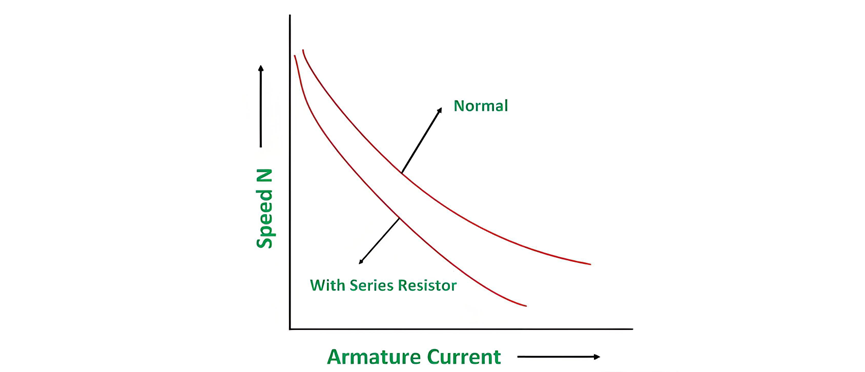
Kung ang value sa variable resistance Re giincrease, ang motor mogamit sa mas lawas nga rotational speed. Tungod kay ang variable resistance nagconduct sa tanang armature current, kinahanglan na iya nga engineered aron continuous nga handle-on ang full-rated armature current sanay dili mobati o mobati.
Disadvantages of the Armature Resistance Control Method
Daghan nga electrical power nadissipate isip heat sa external resistance Re, nagresulta sa inefficiencies ug energy waste.
Kini nga paraan sa armature resistance control limitado sa pagbawas sa speed sa motor dihang mas lawas sa iyang normal nga operating speed; wala kini makapahimo og increase sa speed beyond sa normal level.
Para sa anumang specific value sa variable resistance, ang degree sa pagbawas sa speed wala fixed apan nagdepende sa load nga giapply sa motor, makadaog sa challenging aron makamit ang precise speed regulation.
Tungod sa iyang inherent inefficiencies ug limitations, kini nga speed-control approach kasagaran ra suitable para sa small-sized motors.
Field Flux Control Method of DC Motor
Ang magnetic flux sa DC motor gigenerehado sa field current. Isip resulta, ang speed control pinaagi niining metodo makamao pinaagi sa pag-adjust sa magnitude sa field current.
Shunt Motor
Sa shunt motor, ang variable resistor RC giconnect sa series sa shunt field windings, sama sa ipakita sa figure sa mosunod. Kini nga RC kasagaran gitawag og shunt field regulator, nag-play og crucial role sa pag-modify sa field current ug, sa sunod, sa magnetic flux sa motor.
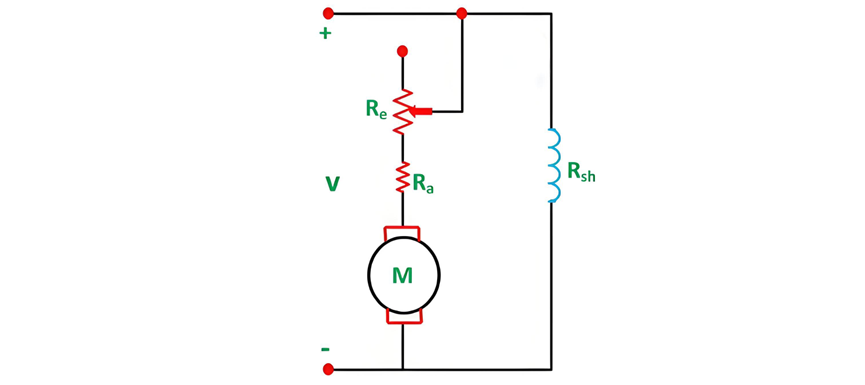
Ang shunt field current gihatagan sa equation sa mosunod:

Kung ang variable resistor RC giinsert sa field circuit, gi-restrict kini ang flow sa field current. Isip resulta, ang magnetic flux gigenerehado sa field windings nadiminis. Kini nga pagbawas sa flux may direktang impact sa speed sa motor, nagresulta sa pagtaas. Isip resulta, ang motor mogamit sa rotational speed nga mas taas sa iyang normal, unaltered speed.
Kini nga unique nga characteristic naghatag og high usefulness sa duha ka main purposes. Una, kini makapahimo sa motor nga makamit ang speeds mas taas sa iyang standard operating speed, providing flexibility sa applications nga gi-require elevated rotational rates. Ikaduha, kini makapahimo sa counteract sa natural drop sa speed nga mogamit kung ang motor adunay load, effectively maintaining a more consistent speed under varying load conditions.
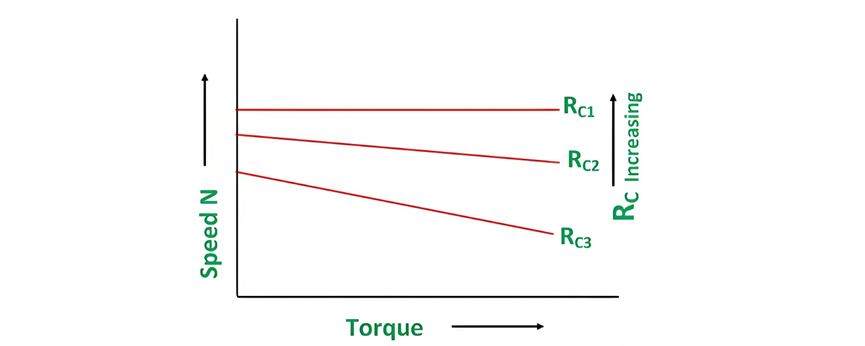
Ang speed-torque curve sa shunt motor, nga graphically nagpakita sa relasyon sa pagitan sa rotational speed sa motor ug ang torque nga makaproduce, gipresentar sa mosunod. Kini nga curve naghatag og valuable insights sa performance characteristics sa motor sa different operating scenarios kung ang field flux control method giapply.
Series Motor
Sa kaso sa series motor, ang pag-alter sa field current makamao pinaagi sa duha ka methods: either by utilizing a diverter o by implementing tapped field control.
By Using a Diverter
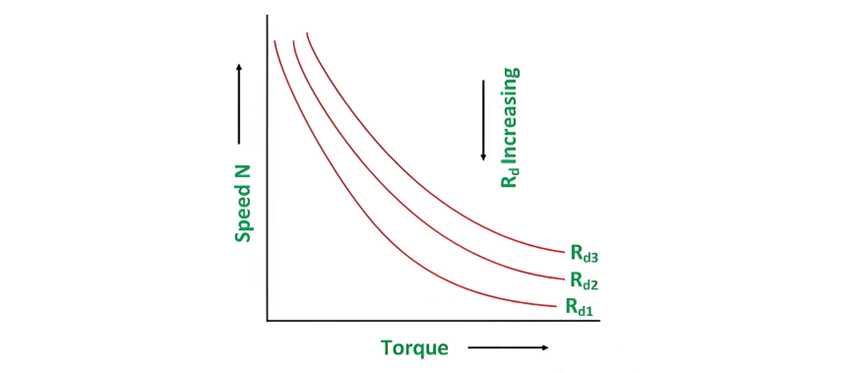
As depicted in the figure below, a variable resistance Rd is connected in parallel with the series field windings. This configuration allows for the manipulation of the current distribution within the circuit, thereby influencing the strength of the magnetic field generated by the series field windings.
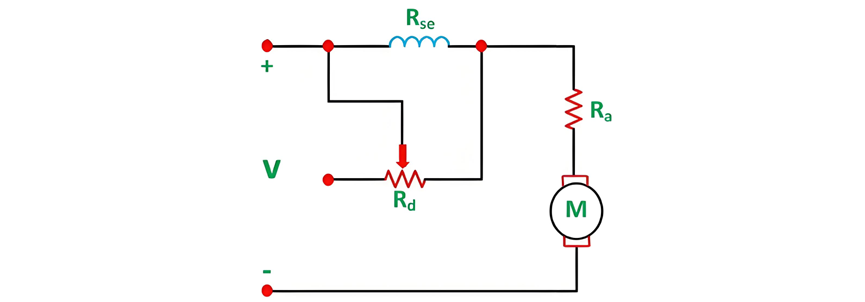
Ang parallel resistor sa setup niini gitawag og diverter. Kung ang diverter sa variable resistance Rd giconnect, kini nag-divert sa certain fraction sa main current away from the series field windings. As a result, ang primary function sa diverter mao ang pag-decrease sa magnitude sa current passing through the field winding. As the field current diminishes, ang magnetic flux generated by the field also reduces. Kini nga pagbawas sa flux leads to an increase in the motor's rotational speed.Tapped Field ControlThe second approach for altering the field current in a series motor is through tapped field control. The corresponding connection diagram, which illustrates the specific electrical connections and components involved in this method, is presented below.
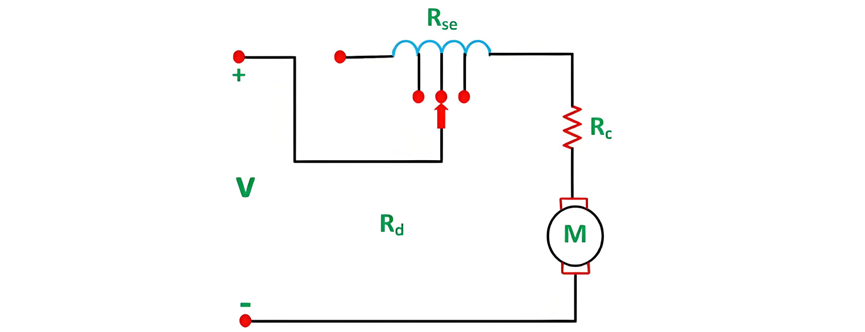
In the tapped field control method, the ampere-turns are adjusted by changing the number of active field turns. This particular configuration is highly applicable in electric traction systems. By manipulating the number of field turns, the magnetic field flux generated by the motor's field winding is altered, thereby enabling precise control over the motor's speed.
Ang speed-torque characteristic curve of a series motor, which graphically depicts the relationship between the motor's rotational speed and the torque it can produce under various operating conditions, is illustrated below. This curve provides valuable insights into the motor's performance capabilities when the tapped field control method is employed, helping engineers and technicians understand how the motor responds to changes in load and speed settings.
Advantages of Field Flux Control
The field flux control method offers several notable benefits, as outlined below:
Ease of Use: This approach is straightforward and user-friendly, facilitating simple implementation and operation.
Low Power Loss: Given that the shunt field typically has a relatively small current requirement, the power dissipated within the shunt field remains minimal, contributing to improved overall efficiency.
Speed Increase Mechanism: Due to the saturation of the iron core in the magnetic circuit, the magnetic flux generally cannot be increased beyond its normal value. As a result, field flux control primarily focuses on weakening the field, which effectively leads to an increase in the motor's rotational speed.
Controlled Application Range: However, it's important to note that this method is applicable only within a restricted range. Excessive weakening of the field can lead to instability in the motor's operation, limiting its use to specific scenarios where precise control and stability are crucial.
Mahitungod sa mga eksperto
Gipareserbado