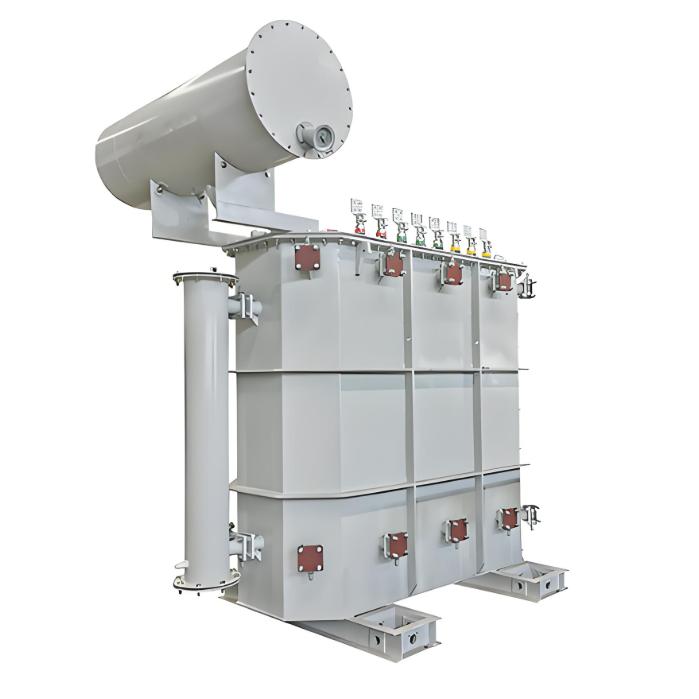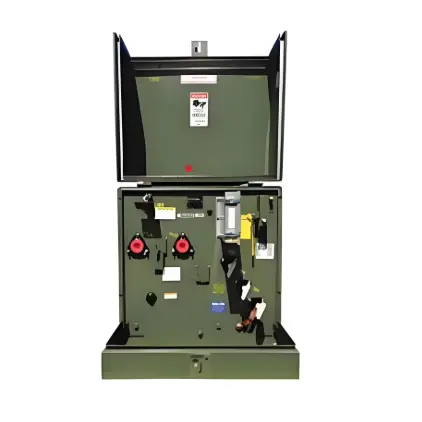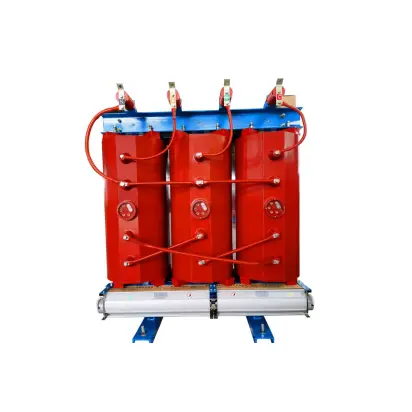
In the boost transformer, the tap changer mainly has the following uses:
First, adjust the output voltage
Adapt to input voltage changes
The input voltage in the power system may fluctuate for a variety of reasons, such as changes in the load of the grid, and the output of the generation equipment is unstable. The tap-changer can adjust the transformer ratio according to the change of the input voltage, so as to maintain the stability of the output voltage. For example, when the input voltage is reduced, by adjusting the tap-changer and increasing the turn ratio of the transformer, the output voltage can be increased to meet the needs of the load.
This regulation function is essential to ensure the proper operation of the equipment connected to the output of the booster transformer. For example, in industrial production, some high-precision equipment has high requirements for voltage stability, and if the voltage fluctuations are too large, the performance and life of the equipment may be affected.
To meet different load requirements
Different loads may have different voltage requirements. The tap-changer can adjust the output voltage according to the characteristics of the load to achieve the best power transmission and equipment operation efficiency. For example, for long-distance transmission lines, in order to reduce line losses, the output voltage needs to be increased; For close loads, too high a voltage may cause equipment damage, so the output voltage needs to be reduced.
The adjustment of the tap-changer can be dynamically adjusted according to the actual load situation to improve the flexibility and adaptability of the power system. For example, in some areas with large seasonal load changes, such as the increase of air conditioning load in summer and the increase of heating load in winter, the tap changer can be adjusted to meet the load needs of different seasons.
Second, optimize the operation of the power system
Increase power factor
Power factor is an important index to measure the efficiency of power system. By adjusting the tap-changer, the output voltage of the transformer can be changed, thus affecting the power factor of the load. For example, for inductive loads, the output voltage can be appropriately increased to reduce the Angle of load current lagging voltage, thereby improving the power factor.
Increasing the power factor can reduce the transmission of reactive power, reduce line losses, and improve the overall efficiency of the power system. For example, in factories, commercial buildings and other places, by reasonably adjusting the tap changer of the boost transformer, you can improve the power factor and reduce the electricity bill.
Balance three-phase load
In a three-phase power system, there may be a three-phase load imbalance. Tap-changer can adjust the output voltage of each phase to balance the three-phase load as much as possible, reduce the generation of zero sequence current and negative sequence current, and improve the stability and reliability of the power system. For example, when the load of a phase is too heavy, the output voltage of the phase can be appropriately increased to reduce the load current, so as to achieve the balance of the three-phase load.
Balancing three-phase loads can also extend the service life of transformers and other power equipment. For example, if the three-phase load is unbalanced for a long time, it will lead to overheating of a phase winding of the transformer, accelerate insulation aging, and reduce the service life of the transformer.
Third, protect transformers and power systems
Protection against overvoltage and undervoltage
When the input voltage is too high or too low, the tap-changer can adjust the output voltage of the transformer in time to prevent overvoltage and undervoltage from damaging the transformer and connected devices. For example, when the input voltage exceeds the rated voltage of the transformer, the tap-changer can reduce the output voltage and protect the insulation and winding of the transformer; When the input voltage is lower than the rated voltage, the tap-changer can increase the output voltage to ensure the normal operation of the load.
Overvoltage and undervoltage may cause equipment faults and power outages, affecting the normal operation of the power system. Through the adjustment of tap-changer, these problems can be effectively prevented and the safety and reliability of power system can be improved.
With relay protection device
Tap changer can be used in conjunction with relay protection devices to protect transformers and power systems. For example, when a transformer fails, the relay protection device will operate, cutting off the power supply. In this case, the tap-changer can be automatically adjusted to the appropriate position to prevent the fault from expanding and prepare for the restoration of power supply after the fault is repaired.
The action of the tap changer can be automatically controlled according to the signal of the relay protection device to improve the response speed and accuracy of the protection. For example, in the event of a short circuit fault in the power system, the tap changer can quickly adjust the output voltage, reduce the short circuit current, and mitigate the impact on transformers and other equipment.