Amince Wata Daga Samun Digitized Medium-Voltage Switchgear da Circuit Breakers
"Wata" - wannan wani kalma da ba ake so in fuskantar ma'aikatar gida bai, musamman idan ya shafi da haka. Na gode da circuit breakers (MV) na farko da switchgear, za ku iya amfani da tushen digital don kare masu shiga da zama mai kyau.
Switchgear da circuit breakers na MV na zamani suna da sensors digital da suka fito da su, wanda ke taimaka da kawo abubuwan da za a duba game da manyan abubuwa. Wannan yana ba ku karfin dubawa daidai kan kalmomin karkashin abubuwan. Tushen digital na yi ake amfani da su a matsayin babban birnin ko kuma za a iya haɗa da building management systems (BMS) ko power monitoring platforms.
Traditionally, medium-voltage circuit breakers da metal-clad switchgear ba suka da sensors built-in don dubar abubuwan - wanda ke cewa muhimmiyar hada a lokacin da ake buƙata decisions based on data and condition to avoid downtime. Idan an fi sensors waɗanda ba suka da su kaɗansu zuwa software platforms, ba suka bayar data general ta hanyar health of the equipment during scheduled outages, ba ta hanyar real-time, insights granular ba.
A cikin wannan takardun, za mu iya duba yadda circuit breakers da switchgear na MV na digital new sun taimaka da health monitoring at the product level don kare masu shiga da zama mai kyau. Za mu iya bayyana kuma yadda integrated digital data supports analytical insights into electrical performance, forming the foundation of condition-based maintenance to increase operational uptime.
Capture Data Locally with Sensors in New MV Switchgear
The ability to quickly identify and resolve issues in circuit breakers and switchgear is key to minimizing unplanned facility downtime.
Integrated digital sensors provide real-time visibility into component health, helping ensure switchgear operates at peak performance. This enables faster intervention when anomalies are detected, putting you in a better position to eliminate pain points in your power distribution system more quickly and efficiently.
Digitally integrated switchgear continuously monitors temperature, speed, voltage, and current in critical components such as:
Coils
Motors
Vacuum interrupters
Sensors automatically detect deviations and trigger warnings or real-time alerts when immediate action is needed to minimize downtime and prevent equipment damage.
With these condition-monitoring capabilities, your operators can better prioritize maintenance tasks and resolve potential issues before they become failures. For example, maintenance teams can access component data before an outage, prepare required repair or replacement parts in advance, and execute faster, smoother maintenance. Conversely, if all components are healthy, maintenance intervals can be safely extended.
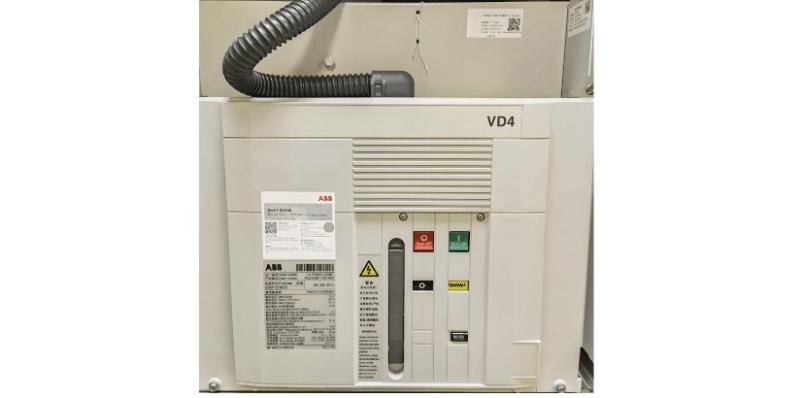
Digital sensors also work together to provide a comprehensive view of equipment health, including:
Thermal Monitoring: Measures temperature in breaker arms. Overheating may indicate increased resistance, poor contact, or overcurrent — risks that could lead to equipment damage, safety hazards, or even fire.
Mechanical Monitoring: Tracks breaker speed at key points to detect deviations from initial mechanical performance.
Vacuum Interrupter Monitoring: Measures Erosion Gap (E-gap) to track contact wear based on cumulative interrupting current over the device’s lifetime.
Coil Monitoring: Assesses coil health, activation time, and electromagnetic performance.
Spring Charging Motor Monitoring: Tracks motor run time and current consumption to detect wear in spring charging and racking mechanisms.
Operate at Peak Efficiency and Maximize Uptime
Now that we’ve seen how integrated digital sensors help prevent failures before they cause downtime, let’s explore how new digital MV circuit breakers can boost operational efficiency.
Digital sensors in modern breakers deliver data on key performance indicators such as:
Operating time and speed
Number of operations
Overall breaker health status
With access to real-time data and actionable insights, you and your team can identify components operating under ideal conditions and analyze energy consumption patterns. This enables targeted optimizations — such as reducing energy waste and lowering carbon emissions. In some cases, maintenance intervals can be extended up to five times longer than traditional schedules.
Condition-Based Monitoring: Shift to Proactive Maintenance at the Product Level
Beyond the monitoring functions described above, product-level digital integration enables a more proactive maintenance strategy for your operations team.
Digitalization at the circuit breaker and switchgear level allows for continuous asset health monitoring, eliminating the need to wait for scheduled maintenance windows to identify repair needs. You can accelerate maintenance for components showing signs of wear or delay it for those performing optimally.
For example, an E-gap sensor monitors arc contact erosion. As contacts erode, contact resistance increases, leading to poor electrical performance and reduced system reliability. By tracking erosion in real time, maintenance personnel can assess contact condition and determine the optimal time for replacement — without unnecessary outages.
Without such sensors, technicians would need to de-energize the system, transfer load to a backup source, withdraw the breaker, and manually measure the erosion gap — a time-consuming and risky process.
This product-level, condition-based monitoring is a critical step toward predictive maintenance, enabling you to:
Capture key performance data
Establish performance baselines
Identify long-term trends
Make data-driven decisions
Remote Monitoring: Reduce Risk Through Digital Connectivity
Remote monitoring and control of power distribution systems is another major benefit of product-level digitalization.
With remote access, you can monitor breaker health from your preferred desktop or mobile device — without physical access to the equipment. This capability streamlines maintenance and reduces the need for on-site visits.
Technicians can monitor equipment located within switchgear rooms but outside the arc flash boundary, using local wireless communication to operate devices and collect performance data — all while maintaining a safe working distance.
Remote digital operation from outside the arc flash zone reduces risks to personnel and equipment, especially in high-voltage environments.
Key Benefits of Smart, Digital Circuit Breakers and Switchgear
With these intelligent, digitized solutions, you can:
Gain actionable insights into your power distribution system through real-time performance data.
Use condition-based monitoring to extend equipment life and prevent unplanned downtime.
Remotely monitor your electrical system to reduce arc flash risks and diagnose/resolve issues from a safe distance.
Proactively manage system performance to maximize uptime between maintenance cycles.