• Product
  • Suppliers
  • Manufacturers
  • Solutions
  • Free tools
  • Knowledges
  • Experts
  • Communities
Search


Free Expert Guides on Power Systems, Circuit Design & Electrical Troubleshooting

Access free engineering resources from IEE Business—covering power design, circuit layout, equipment selection, and troubleshooting. Expert-developed guides help engineers, procurement, and project teams make better decisions. Stay ahead on smart grids, renewables, efficiency, and AI tools. Improve reliability, reduce downtime, and enhance outcomes with real-world solutions. Explore our knowledge hub today.
Electrical Performance Testing of Distribution Transformers: Ensuring Grid Reliability
In the intricate network of power distribution systems,distribution transformersact as vital nodes, converting high-voltage electricity into usable low-voltage power. Regular and meticulousinspectionof their electrical performance is non-negotiable. Unlike visualinspections focusing on physical integrity, electrical tests penetrate deeper, uncovering hidden risks that could trigger outages or safety hazards. This article delves into the critical role of electrical performanceinspections fordistr
04/11/2025
Consult
Tip
Consult
Tip
How primary feeder, distribution transformer, fuses and service operate in radial networks
Preventing an interruption of serviceAs is known, distribution transformers reduce the distribution or primary feeder voltage to the utilization voltage. They are linked to the primary feeder, sub - feeders, and laterals via primary fuses or fused cutouts. When a transformer fault or a low - impedance secondary - circuit fault takes place, the primary fuse disconnects the associated distribution transformer from the primary feeder. Reclosers are not addressed in this article.The blowing of the p
04/11/2025
Consult
Tip
Consult
Tip
Distribution Transformer Appearance Inspection: A Fundamental Step for Reliability
In the realm of electrical power distribution, thedistribution transformerstands as a crucial link between high-voltage transmission and low-voltage consumption. Ensuring its reliability begins with meticulousinspection, particularly of its external condition. Regularinspections are not merely routine checks; they are proactive measures to prevent failures that could disrupt power supply and pose safety risks.1. The Significance of Appearance InspectionThe exterior of adistribution transformerse
04/11/2025
Consult
Tip
Consult
Tip
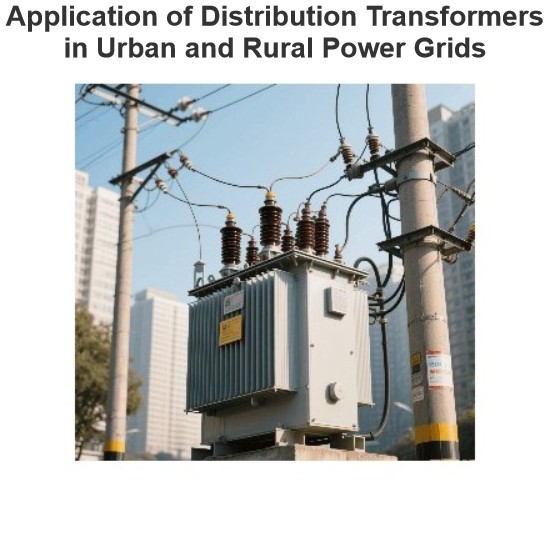
Application of Distribution Transformers in Urban and Rural Power Grids
Application of Distribution Transformers in Urban and Rural Power GridsI. Application in Urban Power Grids Core Role in Distribution SystemsDistribution transformers are pivotal in urban power grids, converting high-voltage transmission line power to low-voltage distribution voltages (e.g., 380V/220V) for direct supply to residential, commercial, and industrial users. Distributed layouts ensure stable and reliable power supply across urban areas. Energy Efficiency and IntelligenceUrban grids dem
04/10/2025
Consult
Tip
Consult
Tip
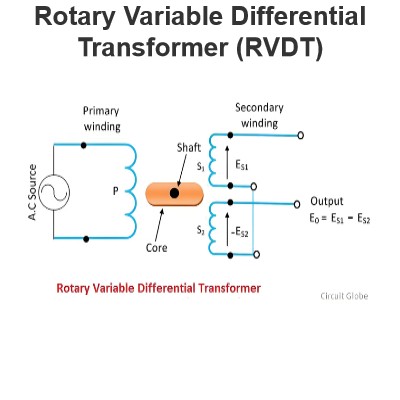
Rotary Variable Differential Transformer (RVDT)
Rotary Variable Differential Transformer (RVDT)The Rotary Variable Differential Transformer (RVDT) is an electromechanical transducer that transforms mechanical motion into an electrical signal. It comprises a rotor and a stator. The rotor is linked to the conductor, while the stator houses the primary and secondary windings.The circuit of the Rotary Variable Differential Transformer (RVDT) is shown in the figure below. The working principle of the RVDT is similar to that of the Linear Variable
04/10/2025
Consult
Tip
Consult
Tip
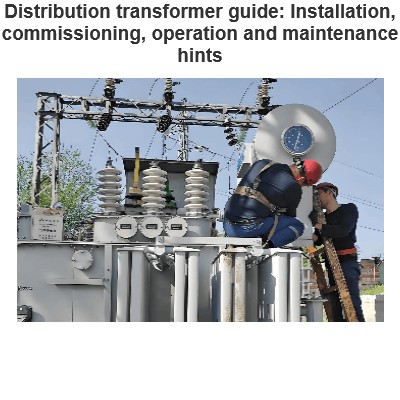
Distribution transformer guide: Installation, commissioning, operation and maintenance hints
Transformer ServiceThis guide comprehensively covers various aspects of distribution transformers. It delves into the construction elements, including the core, windings, cooling system, tank and cover, conservator, pressure relief device, Buchholz relay, silica gel breather, and winding temperature indicator. Additionally, it addresses topics such as transport, packing, and despatch processes, installation procedures, fittings and accessories, commissioning steps, as well as operation and maint
04/10/2025
Consult
Tip
Consult
Tip
Good operating practices for switchgear circuit breakers and contactors
Good operating practices for switchgear circuit breakers and contactorsOperation of LV/MVSwitchgearThe aim of this guideline is to offer recommended practices for the operation and inspection of medium - voltage (2 - 13.8 kV) and low - voltage (200 - 480 V) draw - out switchgear circuit breakers and contactors. Well - regulated operation is of utmost importance for maximizing the performance and service of plant equipment, as well as ensuring a safe working environment for plant personnel.This a
04/09/2025
Consult
Tip
Consult
Tip
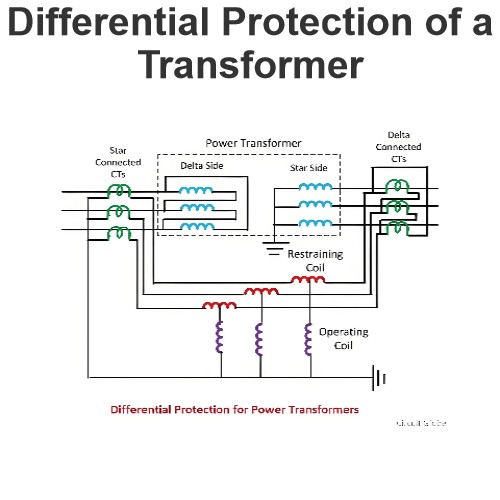
Differential Protection of a Transformer
Differential Protection of a TransformerTransformers are among the key components in power systems. As static, fully - enclosed, and typically oil - immersed devices, faults on them are relatively infrequent. However, even a rare fault can have severe consequences for a power transformer. Thus, safeguarding power transformers against potential faults is of utmost importance.Faults on transformers are mainly categorized into two types: external faults and internal faults. External faults are swif
04/09/2025
Consult
Tip
Consult
Tip
Key Considerations in Transformer Specification
As a professional involved in formulating technical specifications for power transformers, I recognize that defining these specifications is a critical step to ensure equipment reliability, efficiency, and compliance with international standards like IEC 60076. A comprehensive specification must clearly outline all parameters to avoid operational inefficiencies, technical discrepancies, and potential failures. Below, from my professional perspective, are the core considerations in formulating sp
04/08/2025
Consult
Tip
Consult
Tip
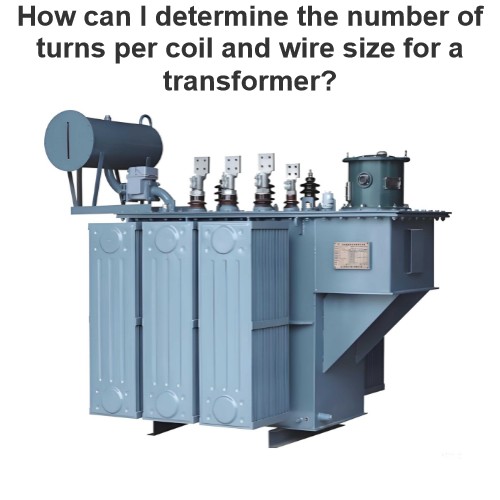
How can I determine the number of turns per coil and wire size for a transformer?
How can I determine the number of turns per coil and wire size for a transformer?Determining the number of turns and wire size for transformer coils requires considering voltage, current, frequency, core characteristics, and load requirements. Below are the detailed steps and formulas:I. Define Basic Transformer Parameters Input/Output Voltage (V1,V2): Primary and secondary voltages (in volts). Rated Power (P): Transformer capacity (in VA or watts). Operating Frequency (f): Typically 50 Hz or 60
04/08/2025
Consult
Tip
Consult
Tip
Send inquiry
+86
Click to upload file
Download
Get the IEE Business Application
Use the IEE-Business app to find equipment, obtain solutions, connect with experts, and participate in industry collaboration anytime, anywhere—fully supporting the development of your power projects and business.