• Product
  • Suppliers
  • Manufacturers
  • Solutions
  • Free tools
  • Knowledges
  • Experts
  • Communities
Search


Free Expert Guides on Power Systems, Circuit Design & Electrical Troubleshooting

Access free engineering resources from IEE Business—covering power design, circuit layout, equipment selection, and troubleshooting. Expert-developed guides help engineers, procurement, and project teams make better decisions. Stay ahead on smart grids, renewables, efficiency, and AI tools. Improve reliability, reduce downtime, and enhance outcomes with real-world solutions. Explore our knowledge hub today.
Back-to-Back Test (Sumpner’s Test) on Transformer
DefinitionConducting a full - load test on a small transformer is quite convenient. However, when it comes to large transformers, this task becomes extremely challenging. The maximum temperature rise in a large transformer is typically determined through a full - load test. This particular test is also known as the back - to - back test, regenerative test, or Sumpner’s test.Finding a suitable load that can absorb the full - load power of a large transformer is not an easy feat. As a result, a si
04/07/2025
Consult
Tip
Consult
Tip
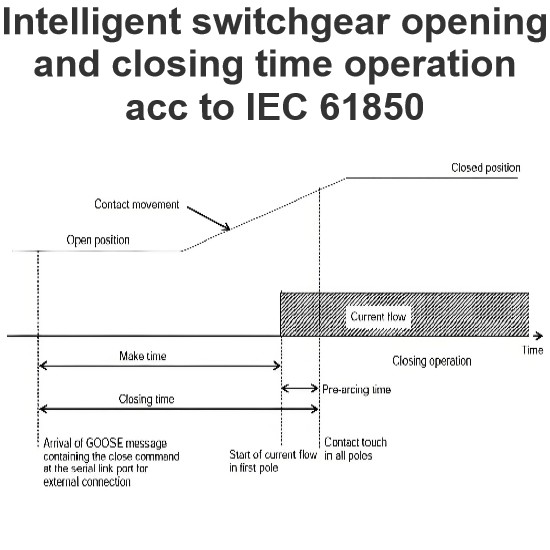
Intelligent switchgear opening and closing time operation acc to IEC 61850
For intelligent switchgear, the opening time is defined as the duration starting from the moment when the first message carrying the trip command (a GOOSE message in accordance with the IEC61850 series) is received through the interface, with the circuit - breaker initially in the closed position, and ending at the instant when the arcing contacts of all poles are separated.Regarding the closing time of intelligent switchgear, it refers to the time span from the reception of the first message co
03/18/2025
Consult
Tip
Consult
Tip
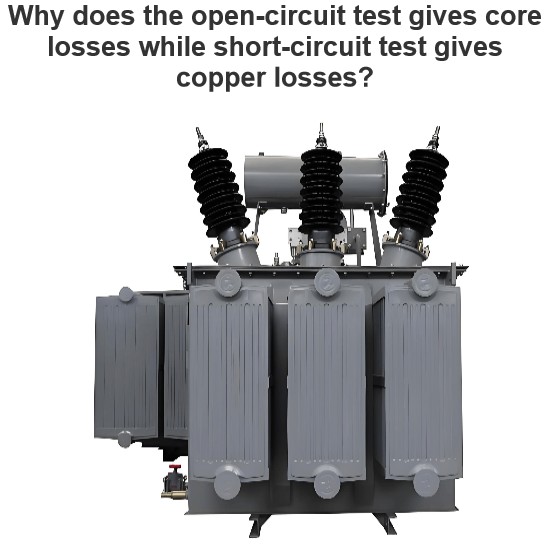
Why does the open-circuit test gives core losses while short-circuit test gives copper losses?
Open circuit tests and short circuit tests are two fundamental methods used in transformer testing to separately determine core losses and copper losses.Open Circuit Test (No-Load Test)In an open circuit test, a rated voltage is typically applied to one winding while the other winding is left open. This setup is primarily used to measure core losses for the following reasons:Core losses mainly consist of hysteresis losses and eddy current losses, which occur in the transformer's core. When an AC
03/07/2025
Consult
Tip
Consult
Tip
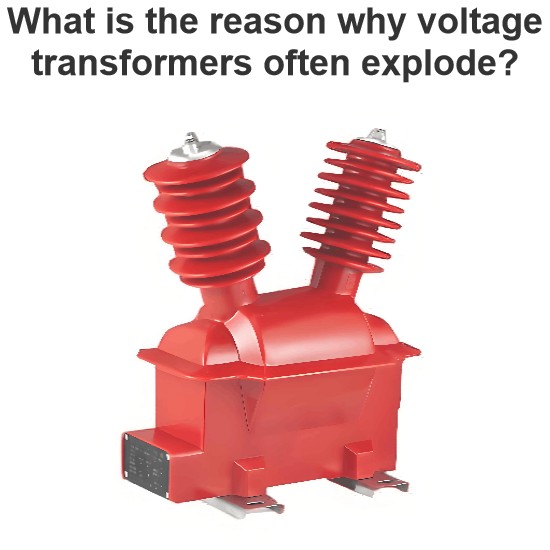
What is the reason why voltage transformers often explode?
Over - voltage and Over - current Aspects Ferroresonant over - voltage: In a non - effectively earthed neutral system, the magnetic circuits of equipment such as transformers, voltage transformers, and arc suppression coils may saturate, potentially triggering ferroresonance. The resulting over - voltage can increase the excitation current of the voltage transformer by dozens of times. Operating under high voltage and large current for an extended period causes the temperature of the transformer
03/07/2025
Consult
Tip
Consult
Tip
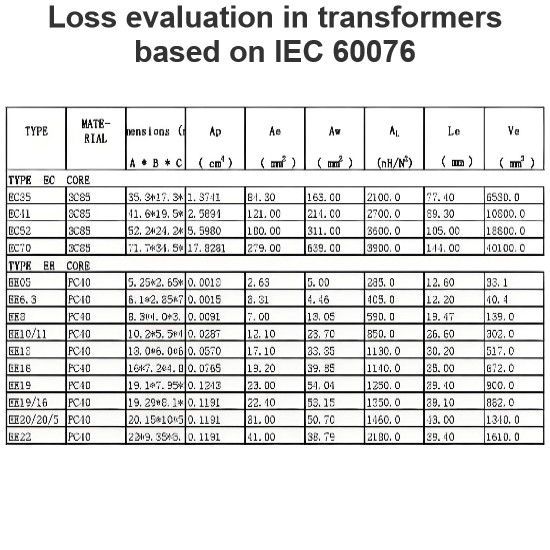
Loss evaluation in transformers based on IEC 60076
I. Definitions of Losses in IEC 6007IEC 60076-1 (General Requirements) and IEC 60076-7 (Loading Guidelines) specify two core types of losses:No-load Loss (P0)Definition: Losses measured when the primary winding is energized at rated voltage and the secondary winding is open-circuited (dominated by core losses).Test Conditions Measured at rated frequency and voltage (typically sinusoidal power frequency). Corrected to reference temperature (75°C for oil-immersed transformers, 115°
02/27/2025
Consult
Tip
Consult
Tip
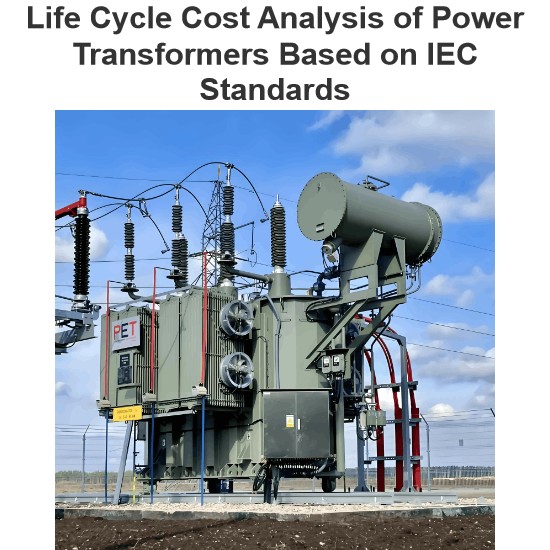
Life Cycle Cost Analysis of Power Transformers Based on IEC Standards
Life Cycle Cost Analysis of Power Transformers Based on IEC StandardsCore Framework Under IEC StandardsAccording to IEC 60300-3-3, the life cycle cost (LCC) of power transformers includes five stages: Initial Investment Costs: Procurement, installation, and commissioning (e.g., 20% of total LCC for a 220kV transformer). Operational Costs: Energy losses (60%-80% of LCC), maintenance, and inspections (e.g., annual savings of 2,600 kWh for a 1250kVA dry-type transformer). Decommissioning Costs: Res
02/25/2025
Consult
Tip
Consult
Tip
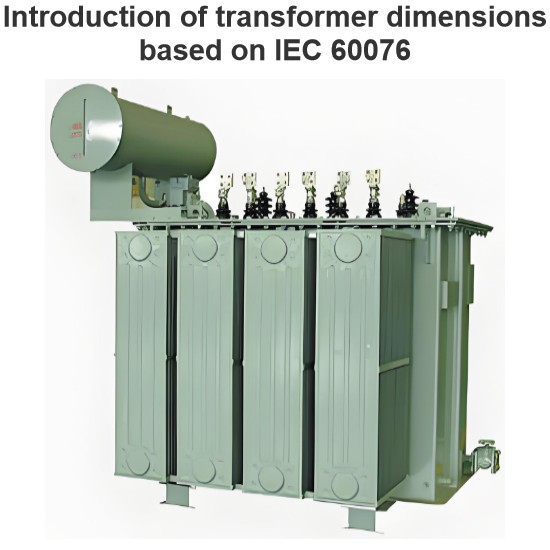
Introduction of transformer dimensions based on IEC 60076
Relationship Between Rated Capacity and DimensionsDefinition of Rated Capacity: According to IEC 60076-1, the rated capacity is the maximum apparent power (kVA or MVA) allowed under continuous load, ensuring compliance with steady-state temperature rise and voltage regulation requirements.Key Parameters Affecting Dimensions: No-load loss (P0)and load loss (Pk)directly influence the physical size of the core and windings. Short-circuit impedance (%) correlates with winding turns and insulation di
02/22/2025
Consult
Tip
Consult
Tip
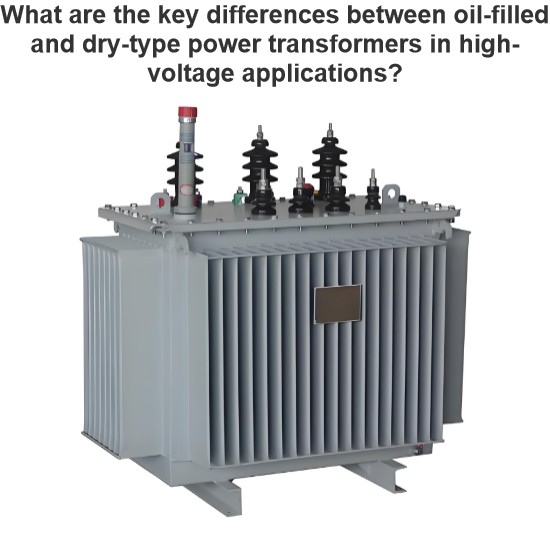
What are the key differences between oil-filled and dry-type power transformers in high-voltage applications ?
Insulating medium Oil - filled type: It uses insulating oil (such as mineral oil, silicone oil) as the main insulating medium. The iron core and coils are immersed in the oil. The insulating property of the oil is utilized to isolate conductors with different potentials, preventing short - circuits and discharges. Dry - type: It adopts air or solid insulating materials, such as epoxy resin, as the insulating medium. Materials like epoxy resin are wrapped around the coils, serving as insulation a
02/19/2025
Consult
Tip
Consult
Tip
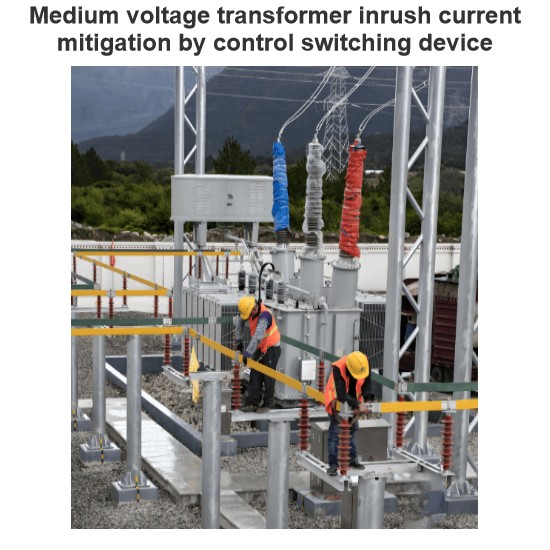
Medium voltage transformer inrush current mitigation by control switching device
Controlled Switching Devices in the Medium Voltage RangeOver three decades ago, Controlled Switching Devices (CSDs) were first introduced to mitigate switching transients caused by high voltage circuit breakers connected to shunt reactors and capacitor banks. Subsequent research expanded their application to transmission lines and power transformers. Initially, these devices optimized switching moments on a per-phase basis using independently pole-operated circuit breakers (IPO).Recently, the su
02/18/2025
Consult
Tip
Consult
Tip
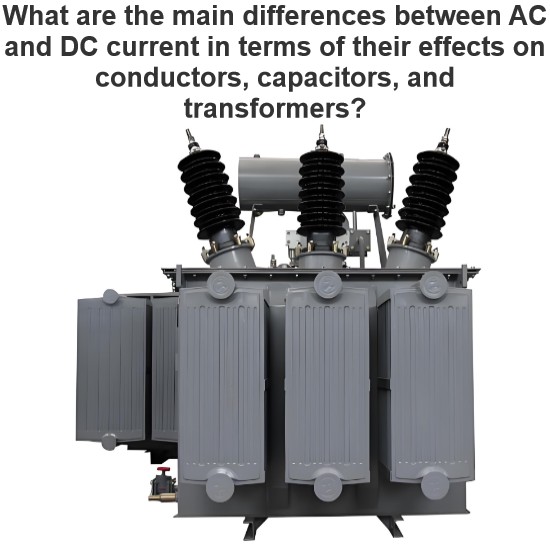
What are the main differences between AC and DC current in terms of their effects on conductors, capacitors, and transformers?
Differences in the Impact of AC and DC on Conductors, Capacitors, and TransformersThe effects of alternating current (AC) and direct current (DC) on conductors, capacitors, and transformers differ significantly, primarily in the following aspects:Impact on Conductors Skin Effect: In AC circuits, due to electromagnetic induction, the current tends to flow near the surface of the conductor, a phenomenon known as the skin effect. This results in a reduced effective cross-sectional area of the condu
02/15/2025
Consult
Tip
Consult
Tip
Send inquiry
+86
Click to upload file
Download
Get the IEE Business Application
Use the IEE-Business app to find equipment, obtain solutions, connect with experts, and participate in industry collaboration anytime, anywhere—fully supporting the development of your power projects and business.