1 Error Analysis of Traditional Turn Ratio Testing MethodsThe QJ35 turn ratio bridge and other single-phase-phase-based testers all use the double-voltmeter principle. The QJ35, however, eliminates power supply fluctuation interference via bridge balance. For three-phase transformer ratio testing with a single power supply, corresponding terminals must be shorted and data converted, turning three-phase tests into independent single-phase measurements, with √3 Yd conversion based on con
07/28/2025
Consult
Tip
A certain special transformer manufacturing enterprise, which has been producing special transformers such as split - phase - shifting rectifier transformers, rectifier transformers for electrolysis, and transformers for submerged arc furnaces for more than 20 years. Now, an evaluation is made on the production process flow and its characteristics of the special transformers after the company's transformation.1.Production Process Flow Chart of Special TransformersThe production of special transf
07/28/2025
Consult
Tip
For users, when purchasing a 35kV new energy transformer, choosing between dry-type, mineral oil-filled, or vegetable oil-filled types involves multiple considerations. These include user habits, maintenance-free performance, safety and fire resistance, volume and weight, among others. However, cost differences are undoubtedly one of the most crucial factors.To illustrate the issue intuitively, this paper selects a three-level energy efficiency dual-winding new energy transformer with a rated ca
07/26/2025
Consult
Tip
Transformer Connection GroupThe connection group of a transformer refers to the phase difference between the primary and secondary voltages or currents. It is determined by the winding directions of the primary and secondary coils, the labeling of their start and end terminals, and the connection mode. Expressed in a clock-like format, there are 12 groups in total, numbered from 0 to 11.The DC method is commonly used to measure the transformer's connection group, mainly to verify whether the con
07/26/2025
Consult
Tip
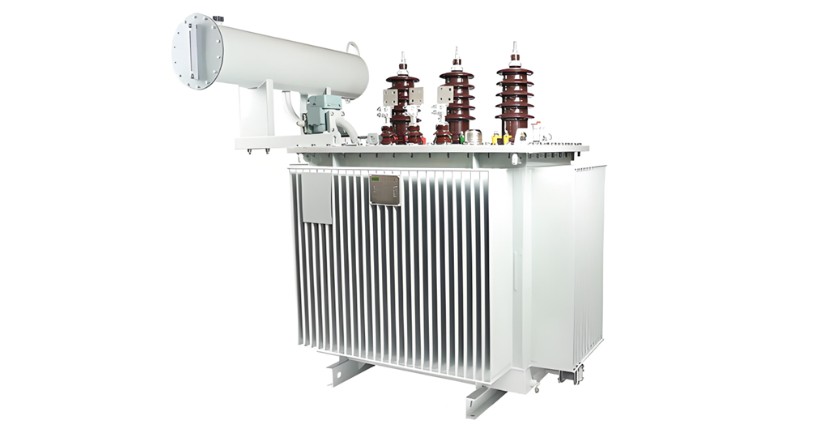
The sequence for shutting down a main transformer is as follows: when de-energizing, the load side should be shut down first, followed by the power supply side. For energizing operations, the reverse order applies: the power supply side is energized first, then the load side. This is because: Energizing from the power supply side to the load side makes it easier to identify the fault range and take prompt judgment and handling measures in case of a fault, preventing the fault from spreading or e
07/26/2025
Consult
Tip
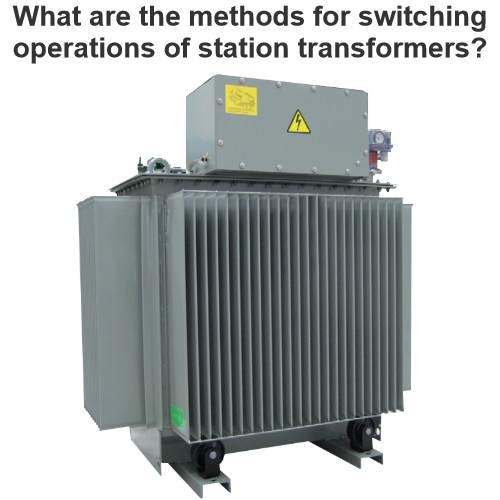
Let's take an auxiliary power system with two station transformers as an example. When one station transformer needs to be out of service, there are two operation methods: non-interruptive power supply and instantaneous power interruption. Generally, the method of instantaneous power interruption on the low-voltage side is preferred.The operation method for instantaneous power interruption on the low-voltage side is as follows: Open the 380V power incoming circuit breaker of the corresponding se
07/26/2025
Consult
Tip
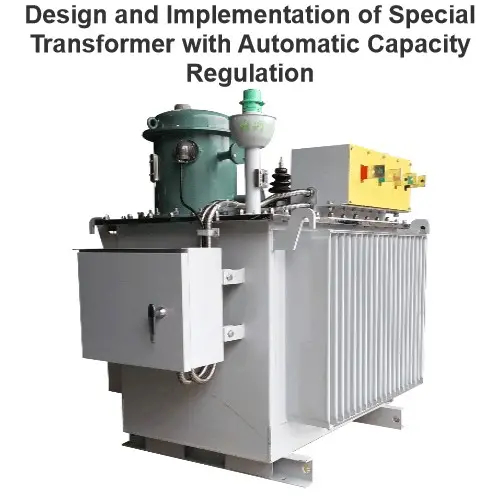
1. IntroductionEnergy is essential for societal operation and development. To meet national energy - conservation and emission - reduction policies, improving resource utilization—critical for power enterprises—is necessary. Multi - stage rural grid upgrades drive distribution transformer development. Despite high efficiency, widespread transformers still face significant overall losses due to capacity and usage issues; 70% of medium - and low - voltage grid losses come from
07/26/2025
Consult
Tip
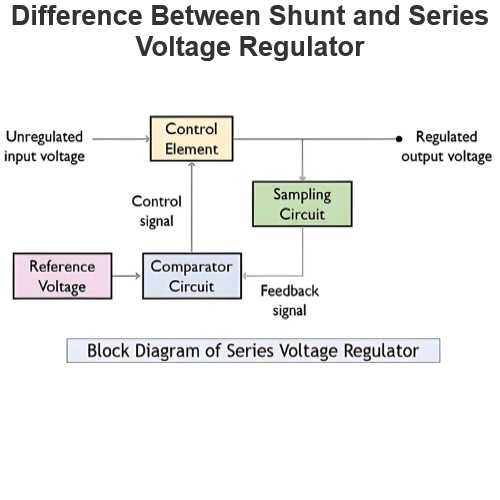
Linear voltage regulators are mainly classified into two types: shunt voltage regulators and series voltage regulators. The key difference between them lies in the connection of the control element: in a shunt voltage regulator, the control element is connected in parallel with the load; in contrast, in a series voltage regulator, the control element is connected in series with the load. These two types of voltage regulator circuits operate on different principles and thus have their own advanta
07/25/2025
Consult
Tip
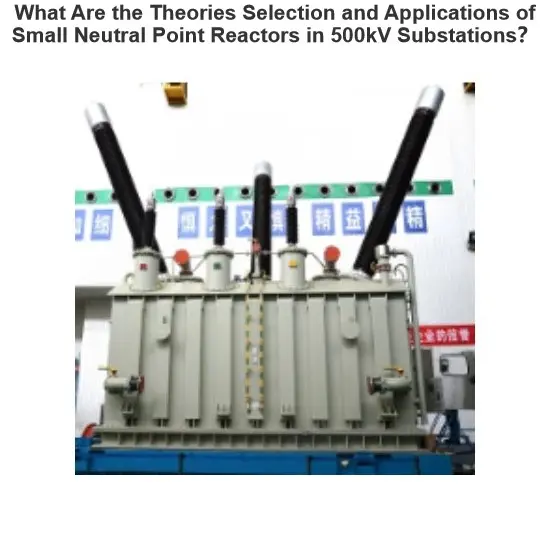
1 Relevant Theories of Small Neutral Point Reactors in 500kV Substations1.1 Definitions and RolesA reactor is a key power system component that controls the phase relationship between AC current and voltage, divided into inductive and capacitive types. Inductive reactors limit short-circuit currents and improve stability; capacitive ones enhance transmission efficiency and voltage quality. A small neutral point reactor is a specialized type connected between a three-phase system's neutral point
07/25/2025
Consult
Tip
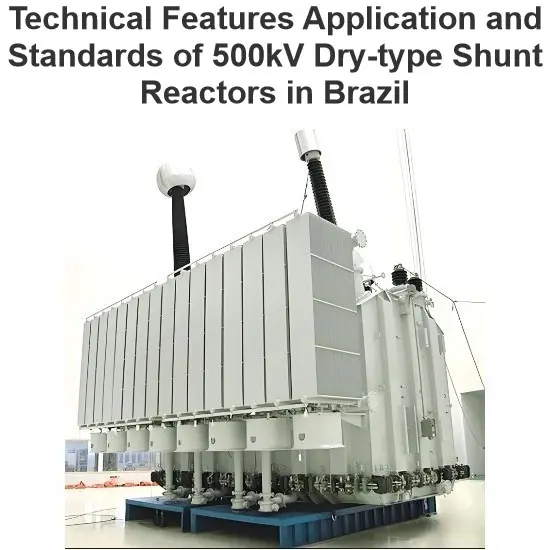
1 Technical Features and Standard References of 500kV Dry - type Shunt Reactors1.1 Technical FeaturesThe 500kV dry - type shunt reactor, an oil - free power device for ultra - high - voltage transmission systems, boasts core features like advanced insulation, innovative heat dissipation, optimized electromagnetic design, and modular structure. These advantages, outperforming traditional oil - immersed reactors, also drive new technical standard demands. Advanced Insulation: Using epoxy resin cas
07/24/2025
Consult
Tip






