• Product
  • Suppliers
  • Manufacturers
  • Solutions
  • Free tools
  • Knowledges
  • Experts
  • Communities
Search


Free Expert Guides on Power Systems, Circuit Design & Electrical Troubleshooting

Access free engineering resources from IEE Business—covering power design, circuit layout, equipment selection, and troubleshooting. Expert-developed guides help engineers, procurement, and project teams make better decisions. Stay ahead on smart grids, renewables, efficiency, and AI tools. Improve reliability, reduce downtime, and enhance outcomes with real-world solutions. Explore our knowledge hub today.
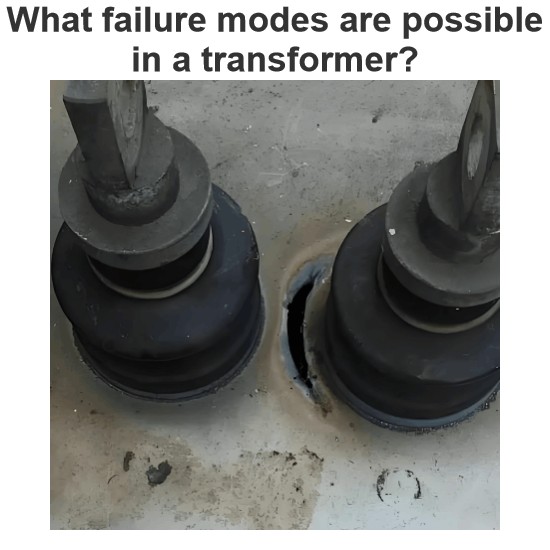
What failure modes are possible in a transformer? How to identify and fix these failures?
Transformers are critical components in power systems, and various failure modes can affect their operation. Timely identification and resolution of these failure modes are essential to prevent costly downtime and ensure system reliability. Below are some common transformer failure modes, along with methods to identify and address them: Insulation FailureIdentification: Insulation failure leads to decreased insulation resistance, which can be detected through insulation resistance testing (megge
09/02/2025
Consult
Tip
Consult
Tip
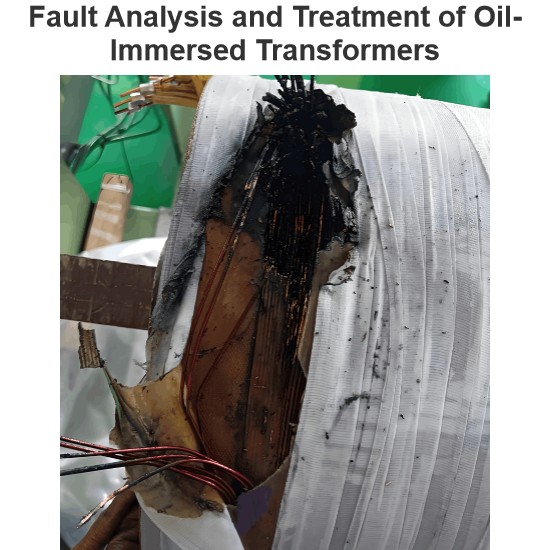
Fault Analysis and Treatment of Oil-Immersed Transformers
Oil Leakage at Welded JointsOil leakage at welded joints primarily stems from poor welding quality, such as incomplete or detached welds, and defects like pinholes and gas pores. Although oil-immersed transformers are initially coated with solder and paint during manufacturing, potentially masking these issues temporarily, the defects tend to surface during operation. Additionally, electromagnetic vibration can cause weld cracks, leading to oil leakage.To resolve such leaks, the first critical s
08/29/2025
Consult
Tip
Consult
Tip
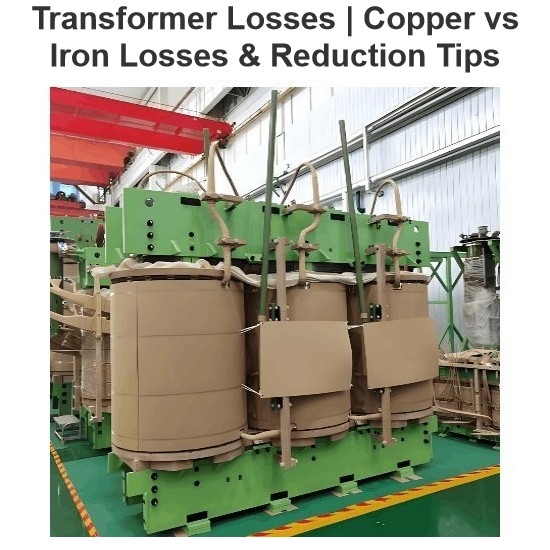
Transformer Losses | Copper vs Iron Losses & Reduction Tips
Transformers experience various types of losses during operation, primarily categorized into two main types: copper losses and iron losses.Copper LossesCopper losses, also known as I²R losses, are caused by the electrical resistance of the transformer windings—typically made of copper. As current flows through the windings, energy is dissipated in the form of heat. These losses are proportional to the square of the load current (I²R), meaning they increase significant
08/29/2025
Consult
Tip
Consult
Tip
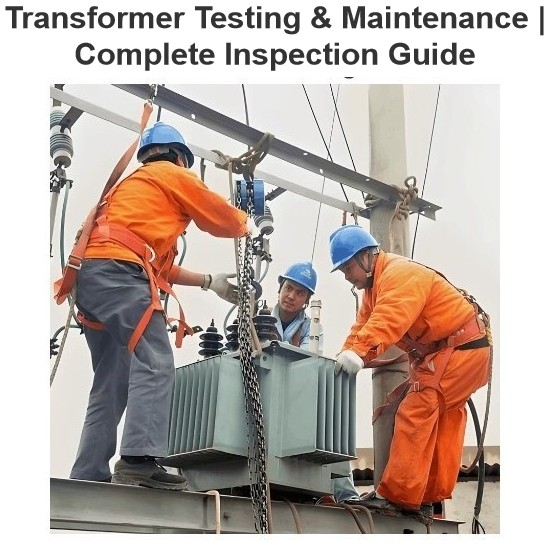
Transformer Testing & Maintenance | Complete Inspection Guide
Transformer testing, inspection, and maintenance are essential tasks to ensure normal operation and extend the service life of transformers. Below are some recommended steps: Visual Inspection: Regularly inspect the transformer's exterior, including the enclosure, cooling system, and oil tank. Ensure the enclosure is intact, free from corrosion, damage, or leakage. Insulation Resistance Testing: Use an insulation resistance tester to check the transformer's insulation system. Verify that the ins
08/29/2025
Consult
Tip
Consult
Tip
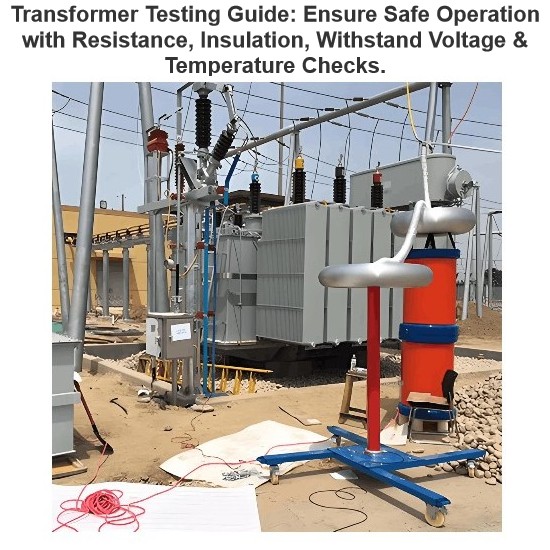
Transformer Testing Guide: Ensure Safe Operation with Resistance, Insulation, Withstand Voltage & Temperature Checks.
I. DC Resistance Test of Transformer Primary and Secondary Windings:The DC resistance of transformer primary and secondary windings can be measured using the four-wire (Kelvin) method, which is based on principles related to accurate resistance measurement.In the four-wire method, two test leads are connected to both ends of the winding under test, while the other two leads are connected to adjacent winding terminals. An AC power source is then applied to the two leads connected to the adjacent
08/28/2025
Consult
Tip
Consult
Tip
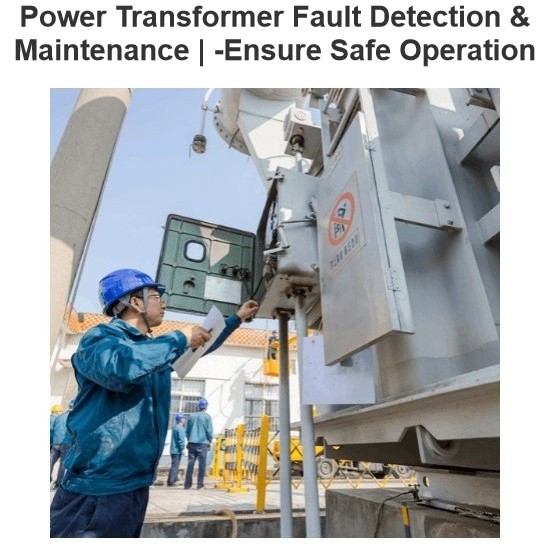
Power Transformer Fault Detection & Maintenance | -Ensure Safe Operation
Power transformer fault detection and repair typically require operation by experienced and qualified technical personnel. Below are some common steps for power transformer fault detection and maintenance:I. Check the transformer’s input and output voltage, current, temperature, and other parameters to ensure they are within normal ranges. Carefully read the transformer’s instruction manual to understand its rated voltage and current, temperature limits, and other special req
08/28/2025
Consult
Tip
Consult
Tip
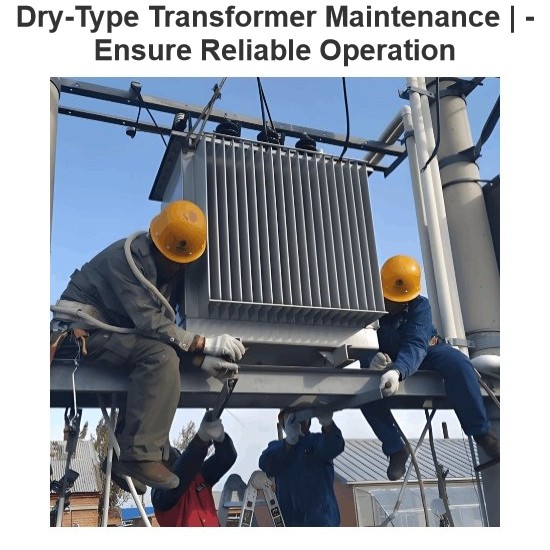
Dry-Type Transformer Maintenance | -Ensure Reliable Operation
I. Key Points for Daily MaintenanceVisual InspectionVisual inspection is the first step during routine patrols. Carefully examine the transformer’s enclosure for any damage or deformation. Enclosure damage not only compromises the transformer’s protective performance but may also expose internal electrical components, increasing safety risks. Additionally, check for dust accumulation, oil stains, or other contaminants on the transformer’s surface. Excessive dust can
08/28/2025
Consult
Tip
Consult
Tip
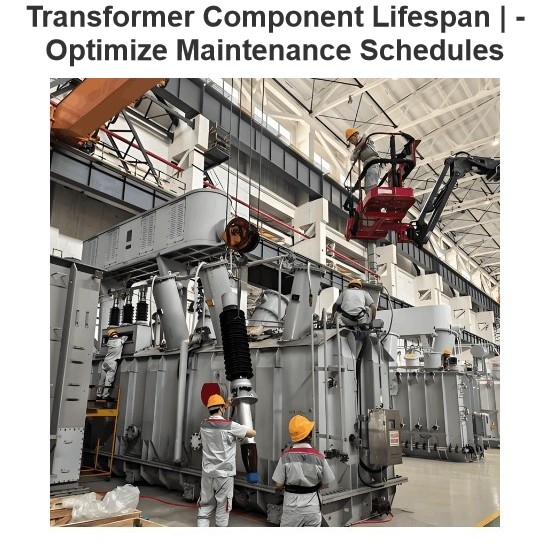
Transformer Component Lifespan | -Optimize Maintenance Schedules
The vulnerable components of a transformer and their replacement cycles must be determined comprehensively based on factors such as transformer type, operating environment, load conditions, and manufacturing processes.Common Vulnerable Components in Oil-Immersed TransformersOil-immersed transformers rely on insulating oil for heat dissipation and insulation. Their core components include the core, windings, insulation system, cooling system, and accessories. Vulnerable parts are primarily concen
08/28/2025
Consult
Tip
Consult
Tip
Let's Talk About Mining Transformers
Mine-Resistant Transformers, also known as Mining Transformers, are specialized electrical devices specifically designed for mining applications. These transformers are essential components in the mining industry, used to convert and distribute electrical power to various mining equipment and facilities. They are custom-engineered to meet the unique demands and challenges of mining environments.Key characteristics and features of mine-resistant transformers include:1. Durability: Mine-resistant
08/28/2025
Consult
Tip
Consult
Tip
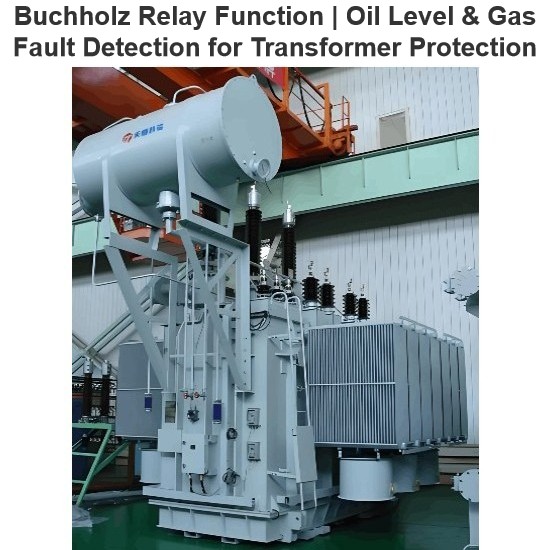
Buchholz Relay Function | Oil Level & Gas Fault Detection for Transformer Protection
Revised and Polished Version:The Buchholz relay is a critical protective device used in oil-immersed transformers, serving multiple key functions to ensure safe and reliable operation:1. Monitoring Oil Level Changes:The relay continuously monitors the oil level within the transformer tank. A drop in oil level—often caused by leaks or oil loss—can compromise the transformer’s insulation and cooling capabilities, potentially leading to overheating or insulation failur
08/27/2025
Consult
Tip
Consult
Tip
Send inquiry
+86
Click to upload file
Download
Get the IEE Business Application
Use the IEE-Business app to find equipment, obtain solutions, connect with experts, and participate in industry collaboration anytime, anywhere—fully supporting the development of your power projects and business.