• Product
  • Suppliers
  • Manufacturers
  • Solutions
  • Free tools
  • Knowledges
  • Experts
  • Communities
Search


Free Expert Guides on Power Systems, Circuit Design & Electrical Troubleshooting

Access free engineering resources from IEE Business—covering power design, circuit layout, equipment selection, and troubleshooting. Expert-developed guides help engineers, procurement, and project teams make better decisions. Stay ahead on smart grids, renewables, efficiency, and AI tools. Improve reliability, reduce downtime, and enhance outcomes with real-world solutions. Explore our knowledge hub today.
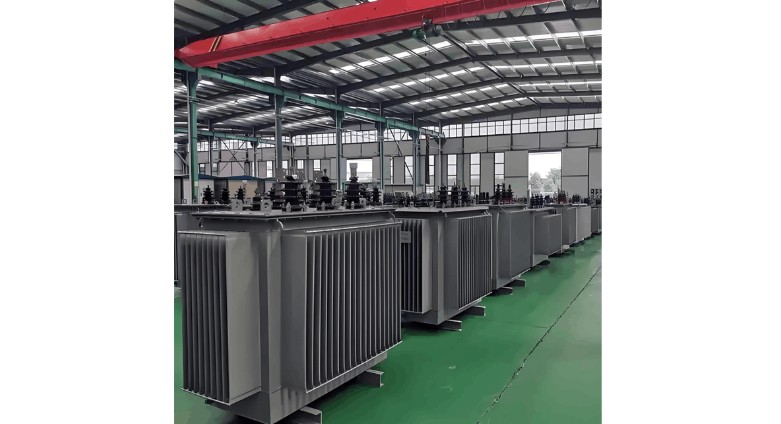
How to Choose the Right Transformer?
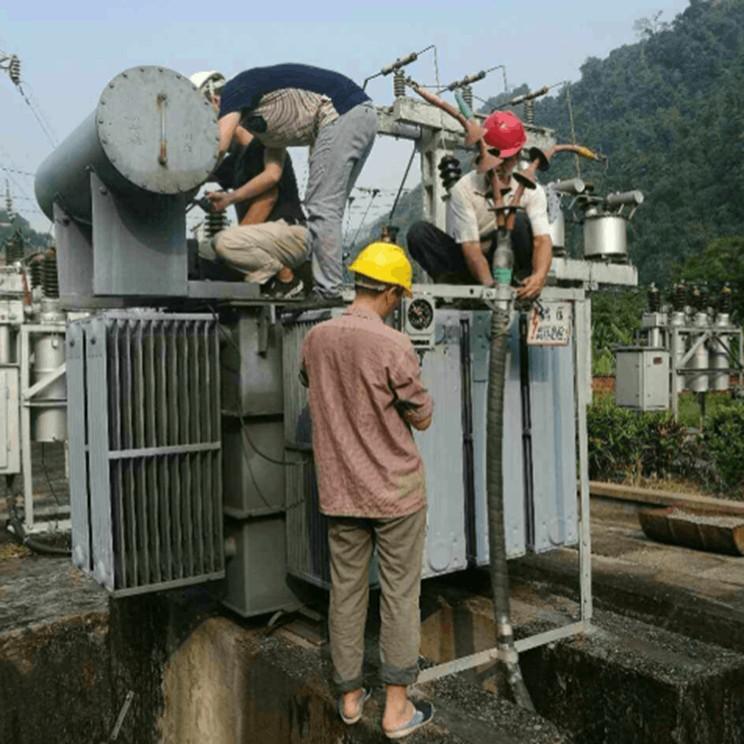
Transformer Selection and Configuration Standards1. Importance of Transformer Selection and ConfigurationTransformers play a critical role in power systems. They adjust voltage levels to suit different requirements, enabling electricity generated at power plants to be efficiently transmitted and distributed. Improper transformer selection or configuration can lead to serious issues. For example, if the capacity is too small, the transformer may not support the connected load, causing voltage dro
10/18/2025
Consult
Tip
Consult
Tip
How to handle transformer faults?
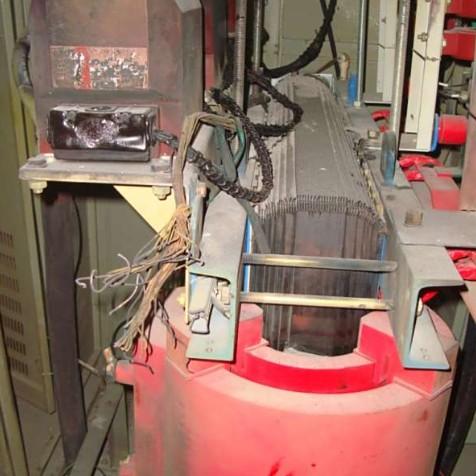
Common transformer faults and their handling methods.1. Transformer OverheatingOverheating is extremely harmful to transformers. Most transformer insulation failures are caused by overheating. Rising temperature reduces the dielectric strength and mechanical strength of insulation materials. IEC 354, Loading Guide for Transformers, states that when the hottest spot temperature of a transformer reaches 140°C, bubbles will form in the oil. These bubbles can reduce insulation performance or cause f
10/18/2025
Consult
Tip
Consult
Tip
Essential Dry-Type Transformer Maintenance Steps
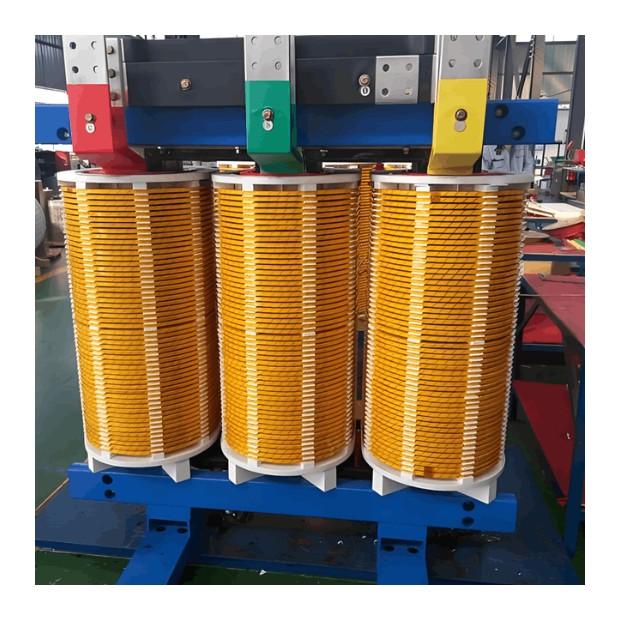
Routine Maintenance and Care of Dry-Type Power TransformersDue to their flame-resistant and self-extinguishing properties, high mechanical strength, and ability to withstand large short-circuit currents, dry-type transformers are easy to operate and maintain. However, under poor ventilation conditions, their heat dissipation performance is inferior to that of oil-immersed transformers. Therefore, the key focus in the operation and maintenance of dry-type transformers is controlling the temperatu
10/09/2025
Consult
Tip
Consult
Tip
What Causes Boiling or Popping in Transformers
Normal operating sound of a transformer. Although a transformer is static equipment, a slight, continuous "humming" sound can be heard during operation. This sound is an inherent characteristic of operating electrical equipment, commonly known as "noise." A uniform and continuous sound is considered normal; an uneven or intermittent noise is abnormal. Tools such as a stethoscope rod can assist in determining whether the transformer's sound is normal. The causes of this noise are as follows: Vibr
10/09/2025
Consult
Tip
Consult
Tip
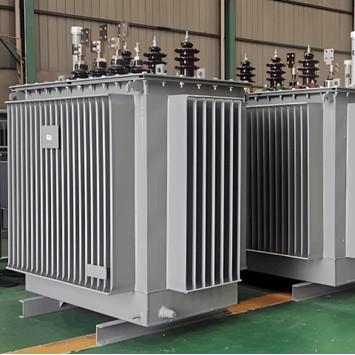
What is an oil-immersed transformer?
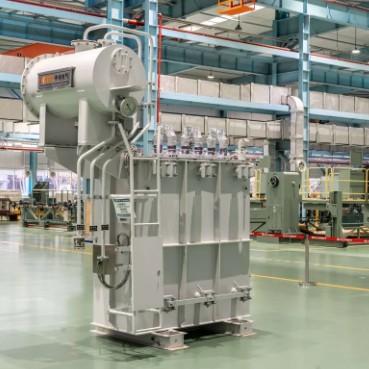
Oil-Immersed Transformers: Overview, Features, and ApplicationsAn oil-immersed transformer is a widely used type of power transformer that employs a liquid—typically insulating oil—as both an insulating and cooling medium.Key Features of Oil-Immersed Transformers: Insulating Oil: Insulating oil serves as the primary dielectric medium, electrically isolating the windings from the core and ground. With its high dielectric strength, it effectively prevents electrical breakdown between windings or b
09/26/2025
Consult
Tip
Consult
Tip
From Research to Deployment: The Innovation Leap in the UK's Solid-State Transformer Development
I. Overview of Solid-State Transformers (SST)A Solid-State Transformer (SST) is an advanced power conversion device that integrates power semiconductors, high-frequency transformers, and control circuits.Compared with traditional transformers, SST supports AC/AC, AC/DC, and DC/DC conversions, and features advantages such as bidirectional power flow, intelligent control, and a compact design.Its main topologies include single-stage, two-stage (with LVDC or HVDC links), and three-stage structures,
09/22/2025
Consult
Tip
Consult
Tip
Seizing the Power Future: The Strategic Evolution of Solid-State Transformer Technology in the United States
DG Matrix and Resilient Power say their solid - state transformers can reduce the cost, time, and complexity of supplying power to data centers, electric vehicle (EV) charging hubs, and the like. For decades, electrical engineers have dreamed of a device that can seamlessly connect solar panels, battery systems, and on - site generators to high - power equipment such as EV chargers or data center servers without the need for a large amount of expensive hardware to make them work together.Now, th
09/22/2025
Consult
Tip
Consult
Tip
What is a Solid-State Transformer? 2025Tech, Structure & Principles Explained
1. What is a Solid-State Transformer (SST)?1.1 Fundamentals and Limitations of Conventional TransformersThe article first reviews the history (e.g., Stanley's 1886 patent) and basic principles of conventional transformers. Based on electromagnetic induction, traditional transformers consist of silicon steel cores, copper or aluminum windings, and insulation/cooling systems (mineral oil or dry-type). They operate at fixed frequencies (50/60 Hz or 16⅔ Hz), with fixed voltage transformation ratios,
09/19/2025
Consult
Tip
Consult
Tip
Transformer Use and Installation: Ensuring Safe and Reliable Operation
Operating Conditions for Transformers The installation site must be free from flooding, located at an altitude not exceeding 1,000 meters, and maintained in an ambient temperature not exceeding 40°C. Relative humidity may reach 100% within an operating temperature range of 40°C to -25°C (on-load tap changers and temperature controllers must be rated for -25°C). The installation area should be clean, free from conductive dust and corrosive gases, and equipped with sufficient natural or mechanical
09/17/2025
Consult
Tip
Consult
Tip
 Advantages of SC Series Transformers: Advanced Production Equipment Enabling High Reliability
Heidrich Pouring Tank Features a fully integrated online film degassing system for enhanced resin quality. Employs static mixing technology—ensuring contamination-free processing with zero waste. Offers programmable mixing ratios and adjustable pouring speed for precise process control. Achieves an internal vacuum level of 0.8 to 2.5 bar, optimizing resin penetration and impregnation.Horizontal and Vertical Cutting Lines Delivers high-precision machining with a tolerance of ±0.01 mm and burr con
09/17/2025
Consult
Tip
Consult
Tip
Send inquiry
+86
Click to upload file
Download
Get the IEE Business Application
Use the IEE-Business app to find equipment, obtain solutions, connect with experts, and participate in industry collaboration anytime, anywhere—fully supporting the development of your power projects and business.