• Product
  • Suppliers
  • Manufacturers
  • Solutions
  • Free tools
  • Knowledges
  • Experts
  • Communities
Search


Free Expert Guides on Power Systems, Circuit Design & Electrical Troubleshooting

Access free engineering resources from IEE Business—covering power design, circuit layout, equipment selection, and troubleshooting. Expert-developed guides help engineers, procurement, and project teams make better decisions. Stay ahead on smart grids, renewables, efficiency, and AI tools. Improve reliability, reduce downtime, and enhance outcomes with real-world solutions. Explore our knowledge hub today.
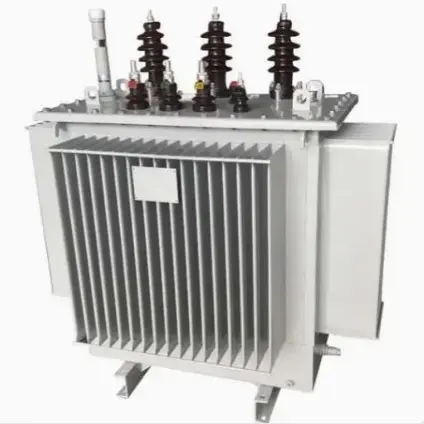
Why Must a Transformer Core Be Grounded at Only One Point? Isn't Multi-Point Grounding More Reliable?
Why Does the Transformer Core Need to Be Grounded?During operation, the transformer core, along with the metal structures, parts, and components that fix the core and windings, are all situated in a strong electric field. Under the influence of this electric field, they acquire a relatively high potential with respect to ground. If the core is not grounded, a potential difference will exist between the core and the grounded clamping structures and tank, which may lead to intermittent discharge.I
01/29/2026
Consult
Tip
Consult
Tip
Understanding Transformer Neutral Grounding
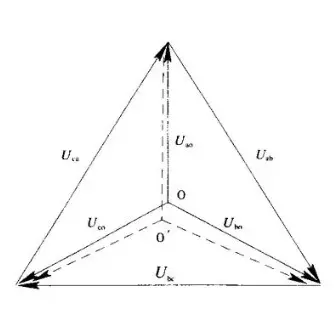
I. What is a Neutral Point?In transformers and generators, the neutral point is a specific point in the winding where the absolute voltage between this point and each external terminal is equal. In the diagram below, pointOrepresents the neutral point.II. Why Does the Neutral Point Need Grounding?The electrical connection method between the neutral point and earth in a three-phase AC power system is called theneutral grounding method. This grounding method directly affects:The safety, reliabilit
01/29/2026
Consult
Tip
Consult
Tip
Short Circuit vs. Overload: Understanding the Differences and How to Protect Your Power System
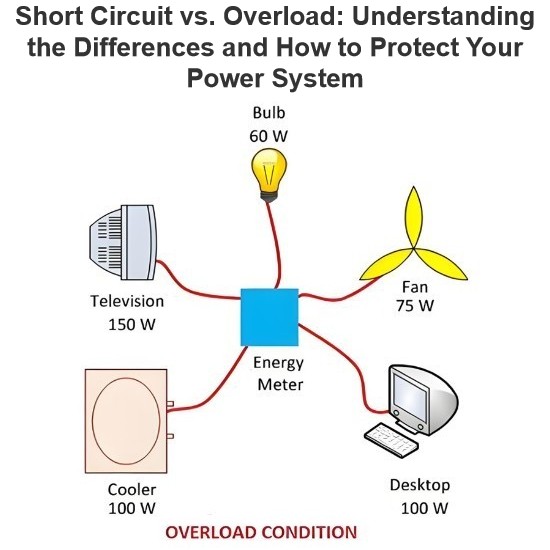
One of the main differences between a short circuit and an overload is that a short circuit occurs due to a fault between conductors (line-to-line) or between a conductor and earth (line-to-ground), whereas an overload refers to a situation where equipment draws more current than its rated capacity from the power supply.Other key differences between the two are explained in the comparison chart below.The term "overload" typically refers to a condition in a circuit or connected device. A circuit
08/28/2025
Consult
Tip
Consult
Tip
Leading vs Lagging Power Factor | Phase Difference Explained
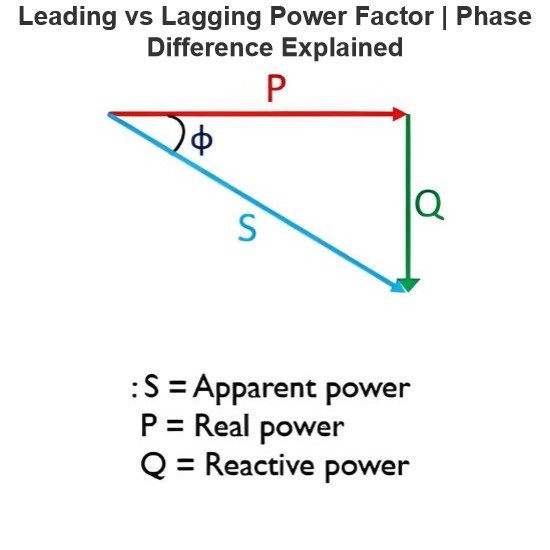
Leading and lagging power factors are two key concepts related to the power factor in AC electrical systems. The main difference lies in the phase relationship between current and voltage: in a leading power factor, the current leads the voltage, whereas in a lagging power factor, the current lags behind the voltage. This behavior depends on the nature of the load in the circuit.What is Power Factor?Power factor is a crucial, dimensionless parameter in AC electrical systems, applicable to both s
08/26/2025
Consult
Tip
Consult
Tip
Ensuring Safety and Efficiency: Power Outage Scope and Site Inspection Guidelines
The power outage and work scopes must be clearly inspectedCollaborate with the site survey leader to confirm the equipment to be maintained and the work area involved. Consider requirements such as the use of special vehicles and large machinery, and safe distances from adjacent energized equipment. Verify on-site whether the proposed power outage scope is sufficient to meet the operational needs.On-site safety measures must be clearly inspectedCollaborate with the site survey leader to verify s
08/14/2025
Consult
Tip
Consult
Tip
Complete Guide to Plugging (Reverse Current) Braking for DC Motors
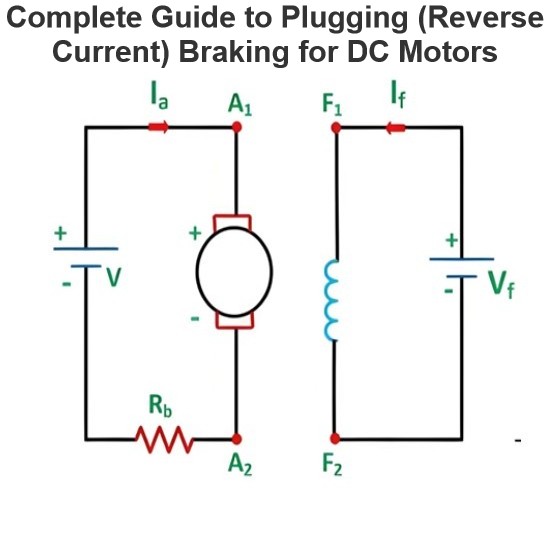
In plugging or reverse current braking, the armature terminals or the supply polarity of a separately excited or shunt DC motor is reversed while the motor is running. As a result, during plugging, the supply voltage V and the induced armature voltage Eb (also known as back EMF) act in the same direction. This causes the effective voltage across the armature circuit to become (V + Eb), nearly twice the supply voltage. The armature current reverses, producing a high braking torque. To limit the a
08/14/2025
Consult
Tip
Consult
Tip
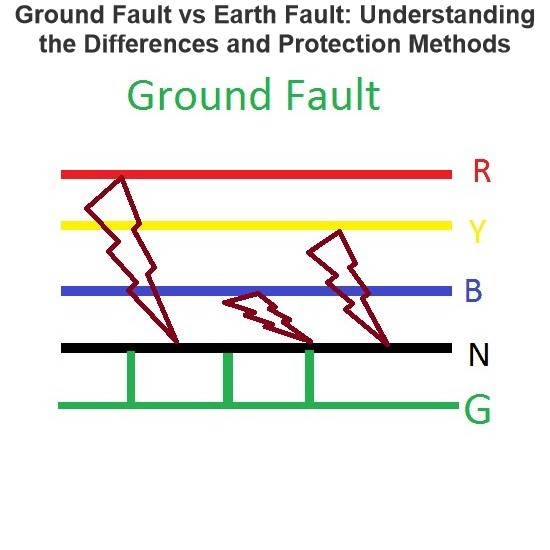
Ground Fault vs Earth Fault: Understanding the Differences and Protection Methods
What is a Ground Fault and an Earth Fault?Ground Fault:A ground fault occurs when an unintended connection (fault) develops between a live conductor and the ground or neutral point. In such a fault, the current flows directly to the ground. This can happen in various forms, such as a single line-to-ground fault (L-G), double line-to-ground fault (LL-G), or three line-to-ground fault (LLL-G).Ground faults are particularly severe because they can result in a large magnitude of fault current. If no
08/11/2025
Consult
Tip
Consult
Tip
Why Do Resistors Use Standard Values Like 4.7 kΩ Instead of Round Numbers?
Many beginners in circuit design may find standard resistor values puzzling. Why are common values like 4.7 kΩ or 5.1 kΩ instead of round numbers such as 5 kΩ?The reason lies in the use of an exponential distribution system for resistor values, standardized by the International Electrotechnical Commission (IEC). This system defines a series of preferred values, including the E3, E6, E12, E24, E48, E96, and E192 series.For example: The E6 series uses a ratio of appro
08/07/2025
Consult
Tip
Consult
Tip
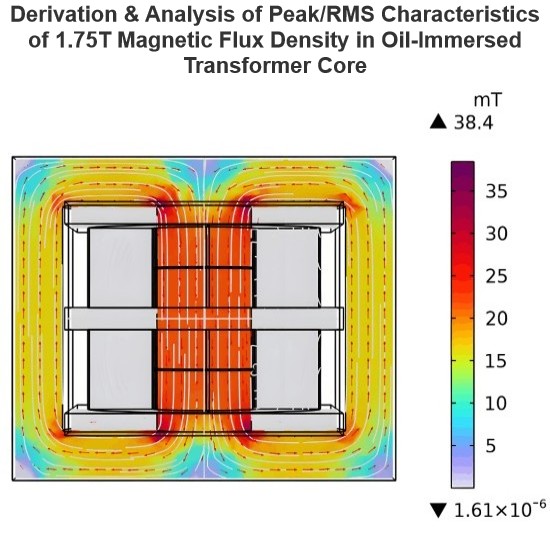
Derivation & Analysis of Peak/RMS Characteristics of 1.75T Magnetic Flux Density in Oil-Immersed Transformer Core
Generally speaking, the designed working magnetic flux density of the iron core in an oil-immersed power transformer can be around 1.75T (the specific value depends on factors such as no-load loss and noise requirements). However, there is a seemingly basic yet easily confusing question: is this 1.75T magnetic flux density value a peak value or an effective value?Even when asking an engineer with many years of experience in transformer design, they may not be able to give an accurate answer imme
08/04/2025
Consult
Tip
Consult
Tip
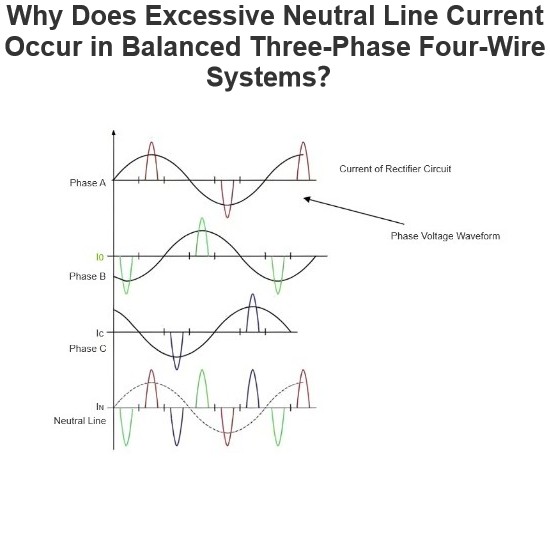
Why Does Excessive Neutral Line Current Occur in Balanced Three-Phase Four-Wire Systems?
In a three-phase four-wire power distribution system, it is a consensus among industry insiders that the neutral line current should be very small when the three-phase loads are balanced. However, more and more phenomena are subverting this concept.For example, the advertising light boxes around a building use fluorescent lighting with electronic ballasts. The loads on the three-phase lines are balanced, with each phase current being approximately 90A, but the neutral line current reaches 160A.I
08/01/2025
Consult
Tip
Consult
Tip
Send inquiry
+86
Click to upload file
Download
Get the IEE Business Application
Use the IEE-Business app to find equipment, obtain solutions, connect with experts, and participate in industry collaboration anytime, anywhere—fully supporting the development of your power projects and business.