• Product
  • Suppliers
  • Manufacturers
  • Solutions
  • Free tools
  • Knowledges
  • Experts
  • Communities
Search


Free Expert Guides on Power Systems, Circuit Design & Electrical Troubleshooting

Access free engineering resources from IEE Business—covering power design, circuit layout, equipment selection, and troubleshooting. Expert-developed guides help engineers, procurement, and project teams make better decisions. Stay ahead on smart grids, renewables, efficiency, and AI tools. Improve reliability, reduce downtime, and enhance outcomes with real-world solutions. Explore our knowledge hub today.
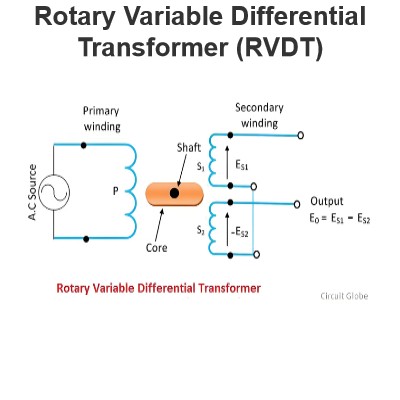
Rotary Variable Differential Transformer (RVDT)
Rotary Variable Differential Transformer (RVDT)The Rotary Variable Differential Transformer (RVDT) is an electromechanical transducer that transforms mechanical motion into an electrical signal. It comprises a rotor and a stator. The rotor is linked to the conductor, while the stator houses the primary and secondary windings.The circuit of the Rotary Variable Differential Transformer (RVDT) is shown in the figure below. The working principle of the RVDT is similar to that of the Linear Variable
04/10/2025
Consult
Tip
Consult
Tip
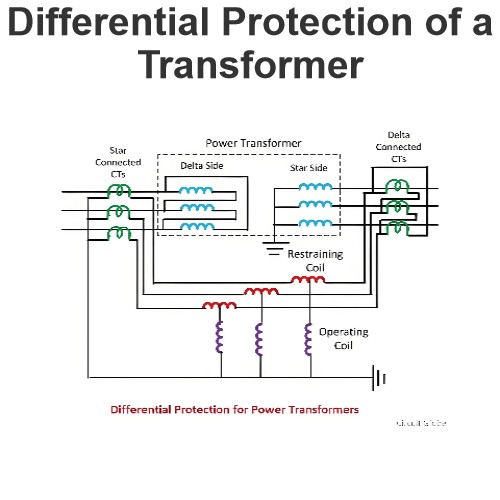
Differential Protection of a Transformer
Differential Protection of a TransformerTransformers are among the key components in power systems. As static, fully - enclosed, and typically oil - immersed devices, faults on them are relatively infrequent. However, even a rare fault can have severe consequences for a power transformer. Thus, safeguarding power transformers against potential faults is of utmost importance.Faults on transformers are mainly categorized into two types: external faults and internal faults. External faults are swif
04/09/2025
Consult
Tip
Consult
Tip
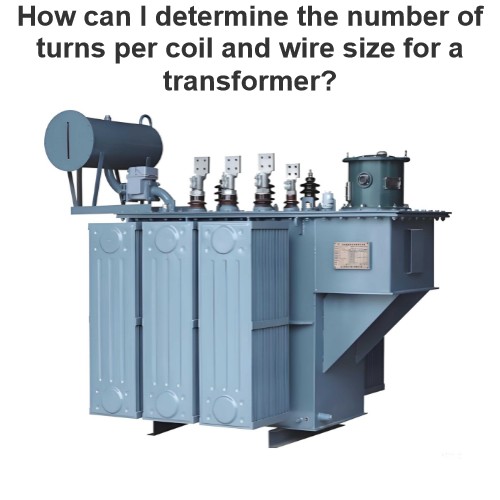
How can I determine the number of turns per coil and wire size for a transformer?
How can I determine the number of turns per coil and wire size for a transformer?Determining the number of turns and wire size for transformer coils requires considering voltage, current, frequency, core characteristics, and load requirements. Below are the detailed steps and formulas:I. Define Basic Transformer Parameters Input/Output Voltage (V1,V2): Primary and secondary voltages (in volts). Rated Power (P): Transformer capacity (in VA or watts). Operating Frequency (f): Typically 50 Hz or 60
04/08/2025
Consult
Tip
Consult
Tip
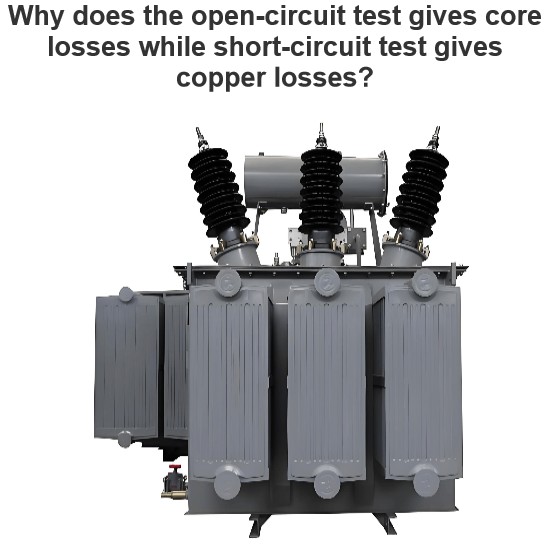
Why does the open-circuit test gives core losses while short-circuit test gives copper losses?
Open circuit tests and short circuit tests are two fundamental methods used in transformer testing to separately determine core losses and copper losses.Open Circuit Test (No-Load Test)In an open circuit test, a rated voltage is typically applied to one winding while the other winding is left open. This setup is primarily used to measure core losses for the following reasons:Core losses mainly consist of hysteresis losses and eddy current losses, which occur in the transformer's core. When an AC
03/07/2025
Consult
Tip
Consult
Tip
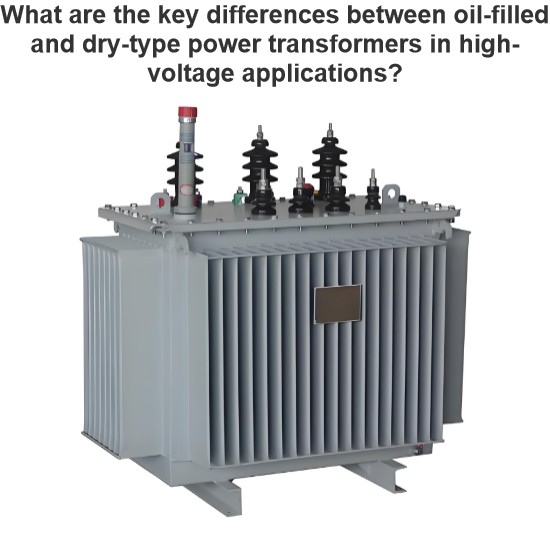
What are the key differences between oil-filled and dry-type power transformers in high-voltage applications ?
Insulating medium Oil - filled type: It uses insulating oil (such as mineral oil, silicone oil) as the main insulating medium. The iron core and coils are immersed in the oil. The insulating property of the oil is utilized to isolate conductors with different potentials, preventing short - circuits and discharges. Dry - type: It adopts air or solid insulating materials, such as epoxy resin, as the insulating medium. Materials like epoxy resin are wrapped around the coils, serving as insulation a
02/19/2025
Consult
Tip
Consult
Tip
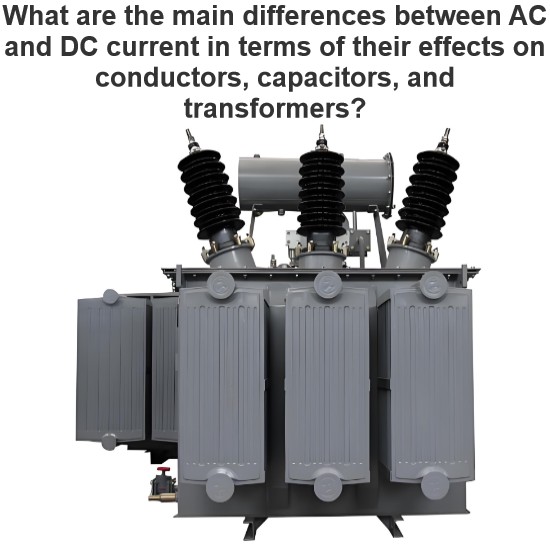
What are the main differences between AC and DC current in terms of their effects on conductors, capacitors, and transformers?
Differences in the Impact of AC and DC on Conductors, Capacitors, and TransformersThe effects of alternating current (AC) and direct current (DC) on conductors, capacitors, and transformers differ significantly, primarily in the following aspects:Impact on Conductors Skin Effect: In AC circuits, due to electromagnetic induction, the current tends to flow near the surface of the conductor, a phenomenon known as the skin effect. This results in a reduced effective cross-sectional area of the condu
02/15/2025
Consult
Tip
Consult
Tip
What are the advantages of step-up autotransformers over step-up transformers and where are they usually used?
Advantages of Step-Up Autotransformers Compared to Step-Up TransformersStep-up autotransformers and traditional step-up transformers have some notable differences in design and application. Below are the advantages of step-up autotransformers over traditional step-up transformers, as well as the typical scenarios where they are used.Advantages of Step-Up AutotransformersHigher Efficiency: Reduced Copper Losses: Due to the shared winding between the primary and secondary sides, the total length a
01/10/2025
Consult
Tip
Consult
Tip
How can we increase the dielectric strength of transformer oil?
How to Improve the Dielectric Strength of Transformer OilEnhancing the dielectric strength of transformer oil is crucial for ensuring the safe and reliable operation of transformers. Dielectric strength refers to the maximum electric field intensity an insulating material can withstand before it breaks down. The dielectric strength of transformer oil is influenced by various factors, including the quality of the oil, impurity content, moisture, temperature, and more. Below are several effective
12/24/2024
Consult
Tip
Consult
Tip
What are the key design considerations for manufacturing effective isolation transformers?
Key Design Considerations for Manufacturing an Effective Isolation TransformerAn isolation transformer is a type of transformer designed to provide electrical isolation between the primary and secondary windings, ensuring safety and preventing ground faults. To manufacture an efficient and reliable isolation transformer, several key design factors must be considered. Below are these critical design considerations in detail:1.Insulation Design Electrical Isolation: The core function of an isolati
12/20/2024
Consult
Tip
Consult
Tip
How does silica gel play the role of hygroscopic agent in transformer ventilation system?
The Role of Silica Gel in Transformer Breathing SystemsSilica gel (Silica Gel) is a commonly used adsorbent with excellent hygroscopic properties, widely applied in power equipment for drying and moisture prevention. In transformer breathing systems, silica gel primarily functions to absorb moisture from the air entering the transformer tank, preventing water from entering the oil and insulation materials, thereby protecting the transformer's insulation performance.1. Working Principle of Silica
12/20/2024
Consult
Tip
Consult
Tip
Send inquiry
+86
Click to upload file
Download
Get the IEE Business Application
Use the IEE-Business app to find equipment, obtain solutions, connect with experts, and participate in industry collaboration anytime, anywhere—fully supporting the development of your power projects and business.