• Product
  • Suppliers
  • Manufacturers
  • Solutions
  • Free tools
  • Knowledges
  • Experts
  • Communities
Search


Free Expert Guides on Power Systems, Circuit Design & Electrical Troubleshooting

Access free engineering resources from IEE Business—covering power design, circuit layout, equipment selection, and troubleshooting. Expert-developed guides help engineers, procurement, and project teams make better decisions. Stay ahead on smart grids, renewables, efficiency, and AI tools. Improve reliability, reduce downtime, and enhance outcomes with real-world solutions. Explore our knowledge hub today.
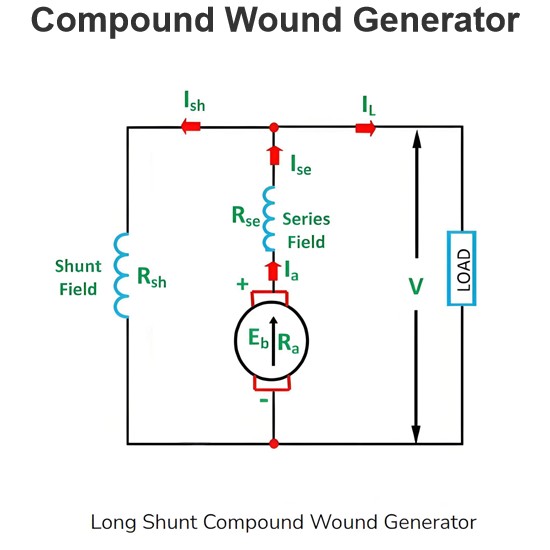
Compound Wound Generator
Compound Wound Generator FundamentalsA compound wound generator features two field windings per pole: one series-connected with few turns of thick wire, and the other shunt-connected with many turns of fine wire parallel to the armature windings.In essence, a compound generator integrates both shunt and series field windings. It is classified as: Cumulative compounded: Series winding flux reinforces shunt winding flux. Differentially compounded: Series winding flux opposes shunt winding flux.Two
05/27/2025
Consult
Tip
Consult
Tip
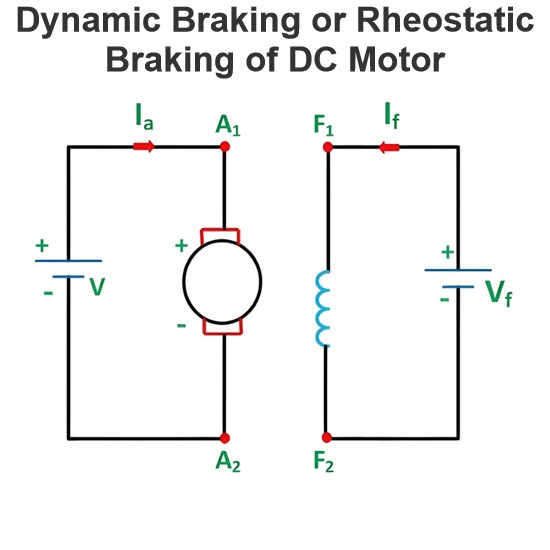
Dynamic Braking or Rheostatic Braking of DC Motor
Dynamic Braking Principles in DC MotorsIn dynamic braking, a braking resistor Rbis connected across the armature immediately after disconnecting the DC motor from the supply. The motor then functions as a generator, producing braking torque.Dynamic Braking ConfigurationsTwo connection methods enable braking operation: Separately Excited/Shunt Motor as a Separately Excited Generator: Flux is maintained constant for consistent braking performance. Self-Excited Shunt Generator: Field winding i
05/27/2025
Consult
Tip
Consult
Tip
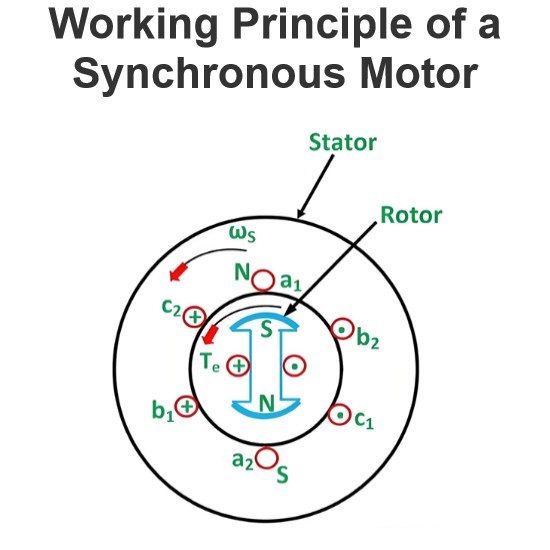
Working Principle of a Synchronous Motor
Structure and Excitation of Synchronous MotorsThe synchronous motor consists of two primary components: the stator (stationary part) and the rotor (rotating part). The stator is energized by a three-phase AC supply, while the rotor is excited by a DC supply.Excitation Principle:Excitation refers to the process of inducing magnetic fields in both the stator and rotor, transforming them into electromagnets. This magnetic coupling is essential for converting electrical energy into mechanical rotati
05/26/2025
Consult
Tip
Consult
Tip
Analysis of Internal Insulation Failures in GIS Equipment and Insulation Testing Methods
High-Voltage Conductor SpikesDuring the installation of high-voltage conductors, accidental bumps or scratches can cause metallic spikes on the conductor surface, as shown in Figure 1. Under power-frequency voltage, the ionization effect of high electric fields at the spike tips generates charged particles, which may suppress partial discharge (PD) or breakdown. However, under impulse voltage, the ionization process induced by the strong electric field does not have sufficient time to develop, m
05/26/2025
Consult
Tip
Consult
Tip
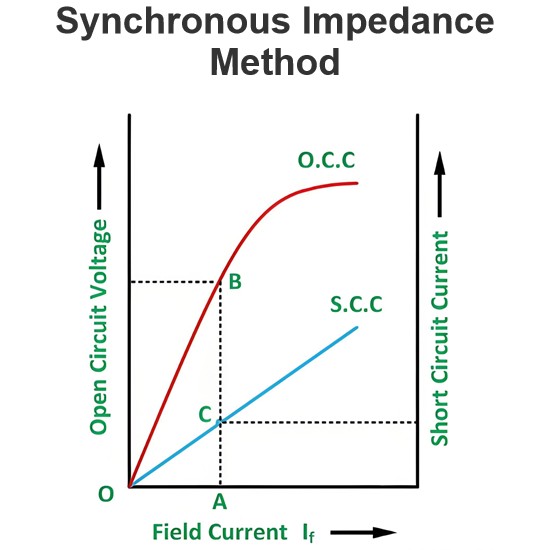
Synchronous Impedance Method
The Synchronous Impedance Method, also known as the EMF Method, replaces the impact of armature reaction with an equivalent imaginary reactance. To calculate voltage regulation using this method, the following data are required: armature resistance per phase, the Open-Circuit Characteristic (OCC) curve depicting the relationship between open-circuit voltage and field current, and the Short-Circuit Characteristic (SCC) curve showing the relationship between short-circuit current and field current
05/26/2025
Consult
Tip
Consult
Tip
Slip Speed in an Induction Motor
Slip Speed in an Induction MotorDefinition: The slip of an induction motor is defined as the difference between the synchronous speed of the main magnetic flux and the rotor speed. Denoted by the symbolS, it is expressed as a percentage of the synchronous speed. Mathematically, it is formulated as:This revision enhances technical precision by clarifying "main flux speed" as thesynchronous speed(a standard term in electrical engineering), and structures the definition to align with academic notat
05/26/2025
Consult
Tip
Consult
Tip
Maximum Torque Condition of an Induction Motor
In the article titled "Torque Equation of an Induction Motor", we've already examined the developed torque and its corresponding equation. Now, we'll discuss the Maximum Torque Condition of an induction motor. The torque generated in an induction motor mainly hinges on three factors: the magnitude of the rotor current, the interaction between the rotor and the magnetic flux of the motor, and the rotor's power factor. The equation for the torque value during the motor's operation is as follows:Th
05/26/2025
Consult
Tip
Consult
Tip
Torque Speed Characteristic of an Induction Motor
The Torque - Speed Characteristic is a curve that plots the relationship between the torque and the speed of an induction motor. In the topic "Torque Equation of an Induction Motor", we've already delved into the torque of the induction motor. The torque equation is presented as follows:At the maximum torque, the speed of the rotor is expressed by the equation shown below:The curve below shows theTorque Speed Characteristic:The magnitude of the maximum torque is independent of rotor resistance.
05/26/2025
Consult
Tip
Consult
Tip
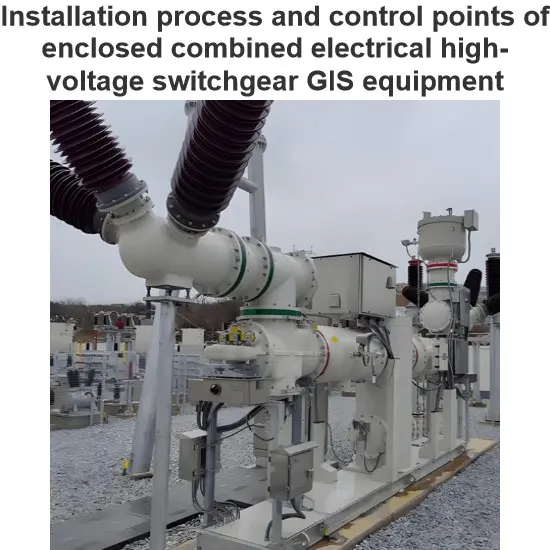
Installation process and control points of enclosed combined electrical high-voltage switchgear GIS equipment
Analysis of GIS Equipment Installation ProcessPre - installation Preparations for GIS EquipmentFirst, use a crane to lift the equipment to the entrance. Then, insert a crowbar into the groove of the channel steel to move the equipment along the channel steel into the room. It can be received by a roller or a forklift for transfer. Before the equipment installation after the transfer is completed, sufficient preliminary preparations are required. Firstly, the equipment needs to be comprehensively
05/24/2025
Consult
Tip
Consult
Tip
Blocked Rotor Test of an Induction Motor
The blocked - rotor test of an induction motor is analogous to the short - circuit test of a transformer. In this test, the motor's shaft is immobilized to prevent any rotation, and the rotor winding is short - circuited. For a slip - ring motor, the rotor winding is short - circuited via the slip rings. In the case of cage motors, the rotor bars are inherently short - circuited. This test is also referred to as the Locked Rotor Test. The circuit diagram for the blocked - rotor test is presented
05/24/2025
Consult
Tip
Consult
Tip
Send inquiry
+86
Click to upload file
Download
Get the IEE Business Application
Use the IEE-Business app to find equipment, obtain solutions, connect with experts, and participate in industry collaboration anytime, anywhere—fully supporting the development of your power projects and business.