• Product
  • Suppliers
  • Manufacturers
  • Solutions
  • Free tools
  • Knowledges
  • Experts
  • Communities
Search


Free Expert Guides on Power Systems, Circuit Design & Electrical Troubleshooting

Access free engineering resources from IEE Business—covering power design, circuit layout, equipment selection, and troubleshooting. Expert-developed guides help engineers, procurement, and project teams make better decisions. Stay ahead on smart grids, renewables, efficiency, and AI tools. Improve reliability, reduce downtime, and enhance outcomes with real-world solutions. Explore our knowledge hub today.
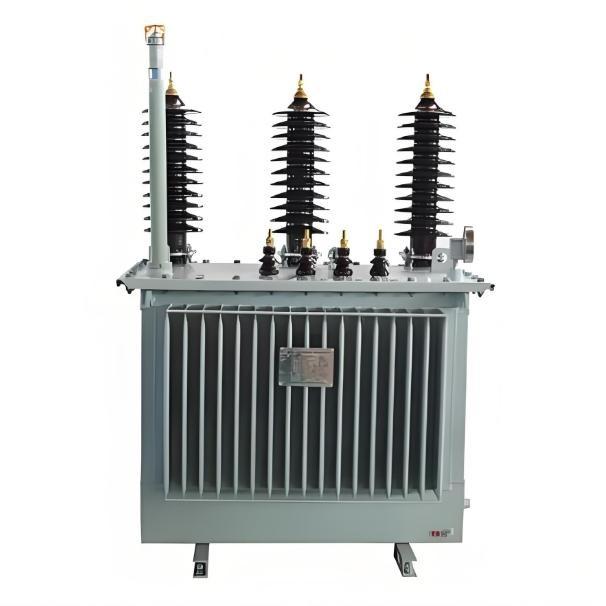
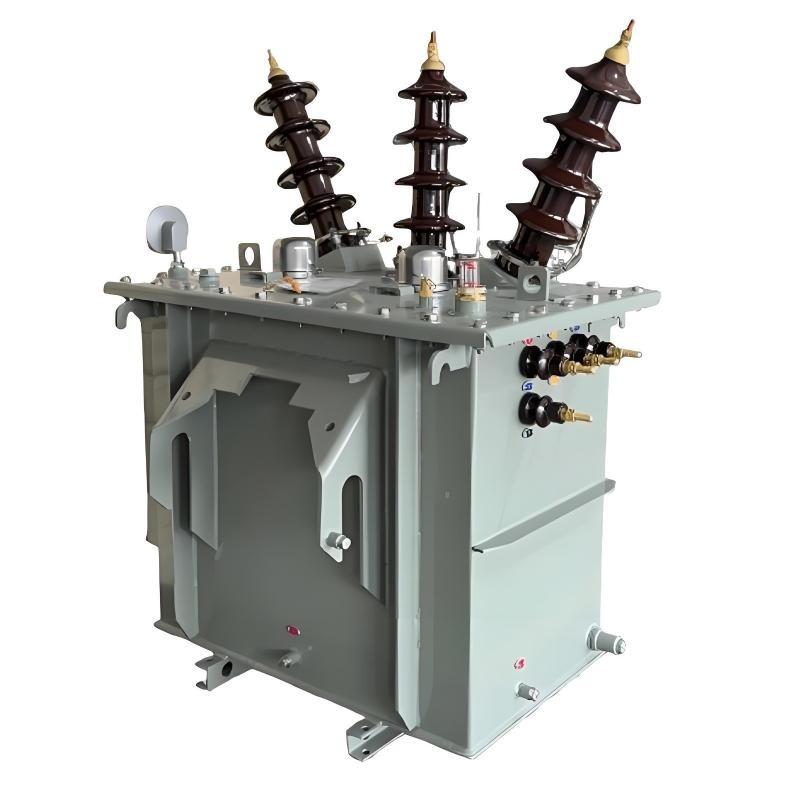
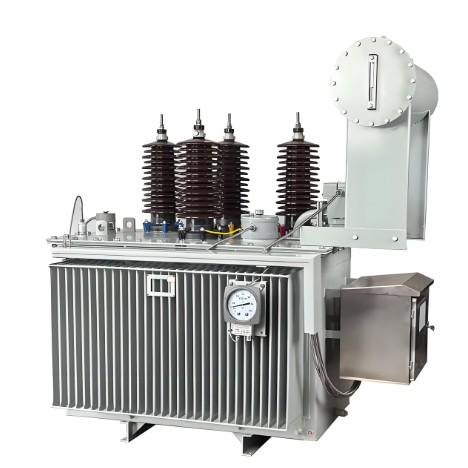
How to Select H61 Distribution Transformers?
H61 Distribution Transformer Selection includes the selection of transformer capacity, model type, and installation location.1.Selection of H61 Distribution Transformer CapacityThe capacity of H61 distribution transformers should be selected based on the current conditions and development trends of the area. If the capacity is too large, it results in the “large horse pulling a small cart” phenomenon—low transformer utilization and increased no-load losses. If the capacity is too small, the tran
12/06/2025
Consult
Tip
Consult
Tip
How to Implement Transformer Gap Protection & Standard Shutdown Steps
How to Implement Transformer Neutral Grounding Gap Protection Measures?In a certain power grid, when a single-phase ground fault occurs on a power supply line, both the transformer neutral grounding gap protection and the power supply line protection operate simultaneously, causing an outage of an otherwise healthy transformer. The main reason is that during a system single-phase ground fault, the zero-sequence overvoltage causes the transformer neutral grounding gap to break down. The resulting
12/05/2025
Consult
Tip
Consult
Tip
Innovative & Common Winding Structures for 10kV High-Voltage High-Frequency Transformers
1.Innovative Winding Structures for 10 kV-Class High-Voltage High-Frequency Transformers1.1 Zoned and Partially Potted Ventilated Structure Two U-shaped ferrite cores are mated to form a magnetic core unit, or further assembled into series/series-parallel core modules. Primary and secondary bobbins are mounted on the left and right straight legs of the core, respectively, with the core mating plane serving as the boundary layer. Windings of the same type are grouped on the same side. Litz wire i
12/05/2025
Consult
Tip
Consult
Tip
Protection Logic Improvement and Engineering Application of Grounding Transformers in Rail Transit Power Supply Systems
1. System Configuration and Operating ConditionsThe main transformers at Zhengzhou Rail Transit’s Convention & Exhibition Center Main Substation and Municipal Stadium Main Substation adopt a star/delta winding connection with a non-grounded neutral point operation mode. On the 35 kV bus side, a Zigzag grounding transformer is used, connected to ground through a low-value resistor, and also supplies station service loads. When a single-phase ground short-circuit fault occurs on a line, a path
12/04/2025
Consult
Tip
Consult
Tip
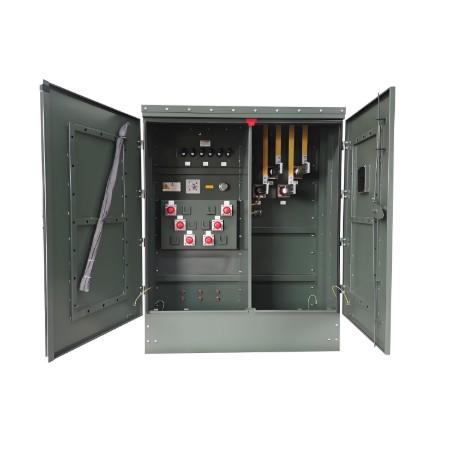
Functions and Specific Wiring Method of the Grounding Disconnect Switch for Pad-Mounted Transformers
The grounding disconnect switch of a pad-mounted transformer is a switching device used to isolate the pad-mounted transformer from the grounding cable. It is an essential component of pad-mounted transformer equipment and plays a critical role in protecting the safety of the transformer equipment. The grounding disconnect switch of a pad-mounted transformer serves important functions in grounding down leads, grounding switching, auxiliary grounding, and lightning protection.Its functions includ
12/04/2025
Consult
Tip
Consult
Tip
Brief Discussion on the Selection of Grounding Transformers in Booster Stations
Grounding transformers, commonly referred to as "grounding transformers" or simply "grounding units," operate under no-load conditions during normal grid operation and experience overload during short-circuit faults. Based on the filling medium, they are commonly categorized into oil-immersed and dry-type types; based on phase count, they can be either three-phase or single-phase grounding transformers.A grounding transformer artificially creates a neutral point for connecting a grounding resist
12/04/2025
Consult
Tip
Consult
Tip
How Grounding Resistor Cabinets Protect Transformers?
In power systems, transformers, as core equipment, are critical to the safe operation of the entire grid. However, due to various reasons, transformers are often exposed to multiple threats. In such cases, the importance of grounding resistor cabinets becomes evident, as they provide indispensable protection for transformers.Firstly, grounding resistor cabinets can effectively protect transformers from lightning strikes. The instantaneous high voltage caused by lightning can severely damage tran
12/03/2025
Consult
Tip
Consult
Tip
110kV Transformer Zero-Sequence Protection: Issues & Improvement Measures
Problems with Zero-Sequence Protection of 110 kV TransformersIn an effectively grounded system, the neutral-to-ground displacement voltage of a transformer is limited to a certain level, and the neutral-point gap protection does not operate. The purpose of installing gap protection is to prevent damage to transformer insulation caused by elevated zero-sequence voltage in non-effectively grounded systems. The discharge gap only operates when a single-phase ground fault occurs, all directly ground
12/03/2025
Consult
Tip
Consult
Tip
Grounding Transformer Types & Winding Connections
Grounding transformer is a special type of transformer primarily used for grounding protection in power systems. The design and winding connection methods of this transformer are crucial to ensuring the safe operation of power systems.1.Function of Grounding TransformerThe main function of a grounding transformer is to provide grounding protection in power systems. When a ground fault occurs in the system, the grounding transformer helps limit the fault current, thereby protecting equipment and
12/03/2025
Consult
Tip
Consult
Tip
Causes of Transformer Damage from Lightning Strikes and Whether It Can Still Be Used Afterward
1. What Causes Transformer Damage from Lightning Strikes? Direct Lightning Strike: When lightning directly hits a transformer or its nearby transmission lines, it generates an enormous transient current that instantly flows through the transformer windings and core. This causes the insulation material to heat up rapidly—even melt—leading to winding short circuits or burnout. Damage from direct strikes is often catastrophic. Lightning-Induced Voltage (Electromagnetic Induction): Even if lightning
12/02/2025
Consult
Tip
Consult
Tip
Send inquiry
+86
Click to upload file

IEE Business will not sell or share your personal information.

Download
Get the IEE Business Application
Use the IEE-Business app to find equipment, obtain solutions, connect with experts, and participate in industry collaboration anytime, anywhere—fully supporting the development of your power projects and business.