• Product
  • Suppliers
  • Manufacturers
  • Solutions
  • Free tools
  • Knowledges
  • Experts
  • Communities
Search


Free Expert Guides on Power Systems, Circuit Design & Electrical Troubleshooting

Access free engineering resources from IEE Business—covering power design, circuit layout, equipment selection, and troubleshooting. Expert-developed guides help engineers, procurement, and project teams make better decisions. Stay ahead on smart grids, renewables, efficiency, and AI tools. Improve reliability, reduce downtime, and enhance outcomes with real-world solutions. Explore our knowledge hub today.
Application of Bidirectional Automatic Voltage Regulators in Mountain Distribution Networks
1. OverviewMountain distribution networks are equipped with numerous small hydropower stations, most of which are run-of-river stations without regulation capacity. These stations are connected to the same line as electrical loads, bringing certain negative impacts on power grid operation. The most prominent issue among them is the voltage quality problem. During the wet season, small hydropower stations generate electricity to the grid, and the failure to achieve local power balance leads to el
11/26/2025
Consult
Tip
Consult
Tip
First Fully Unmanned GIS Inspection at ±800kV UHV Station
On October 16, a ±800 kV ultra-high-voltage (UHV) transmission project completed all its maintenance tasks and was fully re-energized. During this period, a regional power company successfully conducted the first-ever fully unmanned inspection of the GIS (Gas-Insulated Switchgear) room at a UHV converter station within this power system.As a key component of China’s “West-to-East Power Transmission” strategy, the ±800 kV UHV project has been in operation since 2016 and has delivered nearly 400 b
11/21/2025
Consult
Tip
Consult
Tip
Analysis of Inter-Bay Jumper Installation Construction Techniques for UHV Substations
UHV (Ultra-High Voltage) substations are a critical component of power systems. To meet the fundamental requirements of power systems, the associated transmission lines must remain in good operational condition. During the operation of UHV substations, it is essential to properly implement the inter-bay jumper installation and construction techniques between structural frames to ensure rational interconnection among the frames, thereby fulfilling the basic operational needs of UHV substations an
11/20/2025
Consult
Tip
Consult
Tip
What Is a Substation Bay? Types & Functions
A substation bay refers to a complete and independently operable assembly of electrical equipment within a substation. It can be regarded as a fundamental unit of the substation’s electrical system, typically comprising circuit breakers, disconnectors (isolators), earthing switches, instrumentation, protective relays, and other associated devices.The primary function of a substation bay is to receive electrical power from the power system into the substation and then deliver it to the required d
11/20/2025
Consult
Tip
Consult
Tip
What is the difference between a pad-mounted substation and a traction substation?
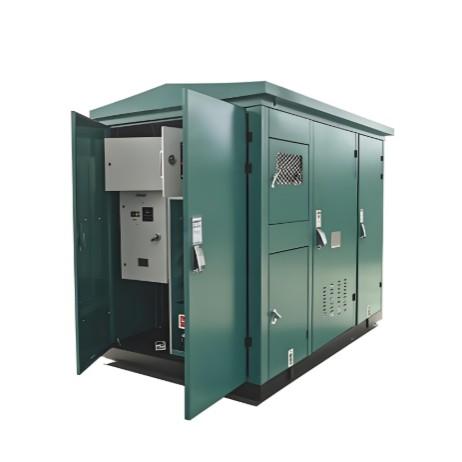
Pad-Mounted Substation (Box-Type Substation)Definition:A pad-mounted substation, also known as a prefabricated substation or pre-assembled substation, is a compact, factory-assembled power distribution unit that integrates high-voltage switchgear, a distribution transformer, and low-voltage distribution equipment according to a specific wiring scheme. It combines functions such as voltage step-down and low-voltage power distribution into a single unit housed in a fully enclosed, movable steel en
11/20/2025
Consult
Tip
Consult
Tip
What Are the Differences Between Substations, Switching Stations, and Distribution Rooms?
What Are the Differences Between Substations, Switching Stations, and Distribution Rooms?A substation is a power facility in the electric power system that transforms voltage levels, receives and distributes electrical energy, controls the direction of power flow, and adjusts voltage. It interconnects power grids of various voltage levels through its transformers. In specific applications—such as submarine power cables or long-distance transmission—some systems use high-voltage direct current (H
11/20/2025
Consult
Tip
Consult
Tip
Installation Requirements and Procedures for 10 kV High-Voltage Disconnect Switches
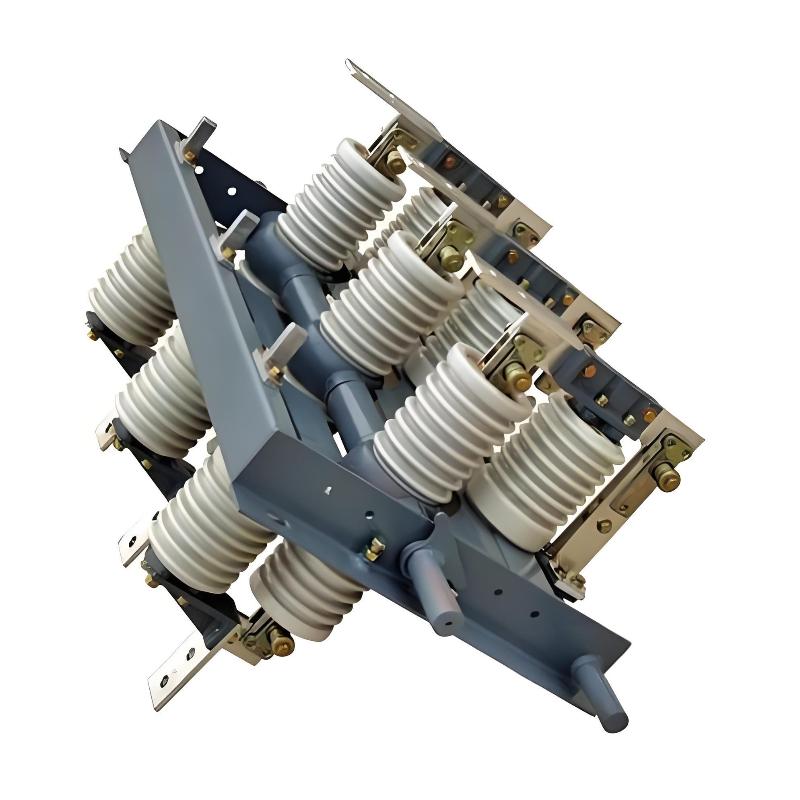
First, the installation of 10 kV high-voltage disconnect switches must meet the following requirements. The first step is to select an appropriate installation location, typically near the switchgear power supply in the power system to facilitate operation and maintenance. At the same time, sufficient space must be ensured at the installation site to accommodate equipment placement and wiring.Secondly, equipment safety must be fully considered—for example, lightning protection and explosion-proo
11/20/2025
Consult
Tip
Consult
Tip
Common Issues and Handling Measures for 145kV Disconnector Control Circuits
The 145 kV disconnector is a critical switching device in substation electrical systems. It is used in conjunction with high-voltage circuit breakers and plays an important role in power grid operation:First, it isolates the power source, separating equipment under maintenance from the power system to ensure personnel and equipment safety;Second, it enables switching operations to change the system operating mode;Third, it is used to interrupt small-current circuits and bypass (loop) currents.Re
11/20/2025
Consult
Tip
Consult
Tip
What are the six operating principles of disconnect switches?
1. Operating Principle of the DisconnectorThe operating mechanism of the disconnector is connected to the active pole of the disconnector via a connecting tube. When the main shaft of the mechanism rotates 90°, it drives the insulating pillar of the active pole to rotate 90°. The bevel gears inside the base drive the insulating pillar on the other side to rotate in the opposite direction, thereby achieving opening and closing operations. The active pole, through inter-pole linkage tubes, drives
11/19/2025
Consult
Tip
Consult
Tip
36kV Disconnect Switch Selection Guide & Key Parameters
Selection Guidelines for 36 kV Disconnect SwitchesWhen selecting the rated voltage, ensure that the disconnect switch’s rated voltage is equal to or higher than the nominal voltage of the power system at the installation point. For example, in a typical 36 kV power network, the disconnect switch must have a rated voltage of at least 36 kV.For rated current, selection should be based on the actual long-term load current. Generally, the switch’s rated current must be no less than the maximum conti
11/19/2025
Consult
Tip
Consult
Tip
Send inquiry
+86
Click to upload file

IEE Business will not sell or share your personal information.

Download
Get the IEE Business Application
Use the IEE-Business app to find equipment, obtain solutions, connect with experts, and participate in industry collaboration anytime, anywhere—fully supporting the development of your power projects and business.