• Product
  • Suppliers
  • Manufacturers
  • Solutions
  • Free tools
  • Knowledges
  • Experts
  • Communities
Search


Free Expert Guides on Power Systems, Circuit Design & Electrical Troubleshooting

Access free engineering resources from IEE Business—covering power design, circuit layout, equipment selection, and troubleshooting. Expert-developed guides help engineers, procurement, and project teams make better decisions. Stay ahead on smart grids, renewables, efficiency, and AI tools. Improve reliability, reduce downtime, and enhance outcomes with real-world solutions. Explore our knowledge hub today.
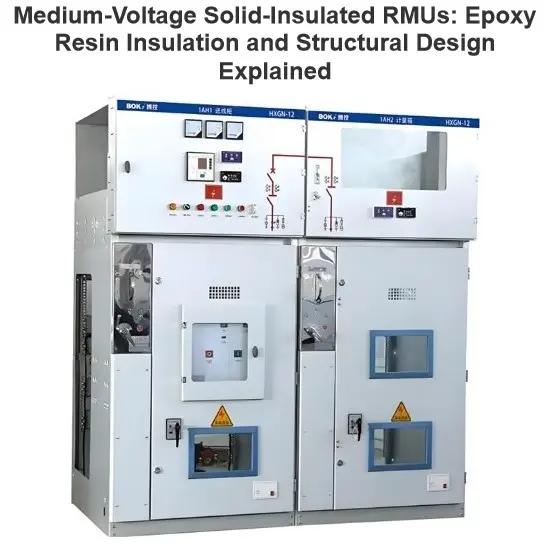
Medium-Voltage Solid-Insulated RMUs: Epoxy Resin Insulation and Structural Design Explained
1 Insulation Materials and DesignBased on cost statistics for medium-voltage solid-insulated ring main units (RMUs), the insulation structure accounts for over 40% of the total cost. Therefore, selecting appropriate insulation materials, designing rational insulation structures, and determining the correct insulation method are crucial to the value of medium-voltage RMUs. Since the first synthesis of epoxy resin in 1930, various additives have been continuously explored to improve its properties
08/12/2025
Consult
Tip
Consult
Tip
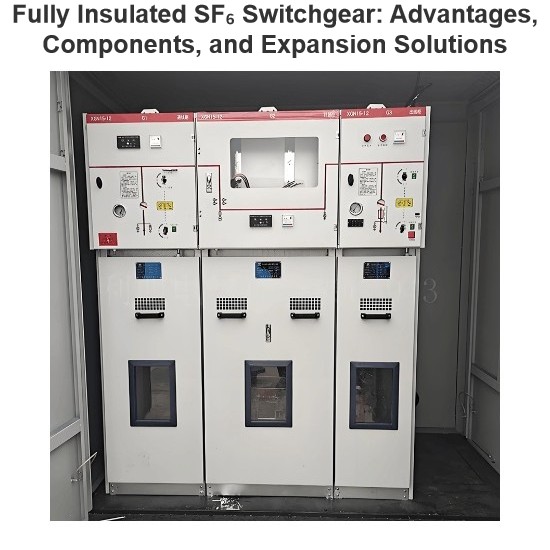
Fully Insulated SF₆ Switchgear: Advantages, Components, and Expansion Solutions
1. Characteristics of Fully Insulated SF₆ Switchgear1.1 OverviewFully insulated SF₆ switchgear comprises functional units such as load switches, load switch-fuse combinations, disconnectors-circuit breakers, etc., all sealed within stainless steel gas boxes filled with low-pressure SF₆ gas. This gas serves both as the arc-quenching and insulating medium. The switchgear employs electric or manual spring-operated mechanisms. Each cabinet is an independent gas box, allowing for expansion through bu
08/11/2025
Consult
Tip
Consult
Tip
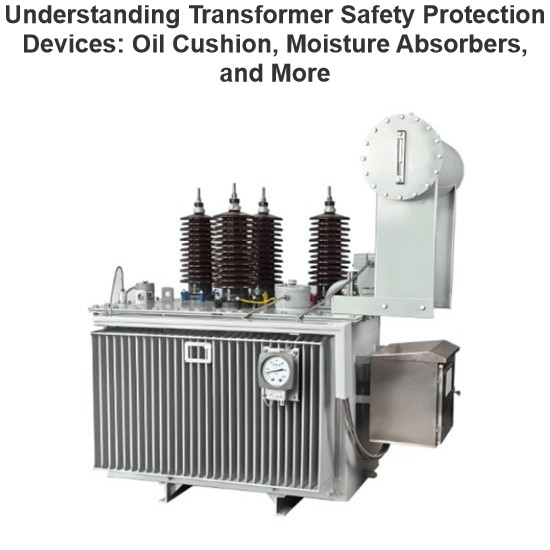
Understanding Transformer Safety Protection Devices: Oil Cushion, Moisture Absorbers, and More
Transformer Main Body Construction and Safety Protection DevicesA power transformer is equipped with several critical safety protection devices to ensure reliable and safe operation. These components play essential roles in monitoring, protecting, and maintaining the integrity of the transformer under varying operating conditions.1. Oil Cushion (Conservator Tank)The oil cushion, also known as the conservator tank, typically has a capacity of approximately 8–10% of the total transformer
08/09/2025
Consult
Tip
Consult
Tip
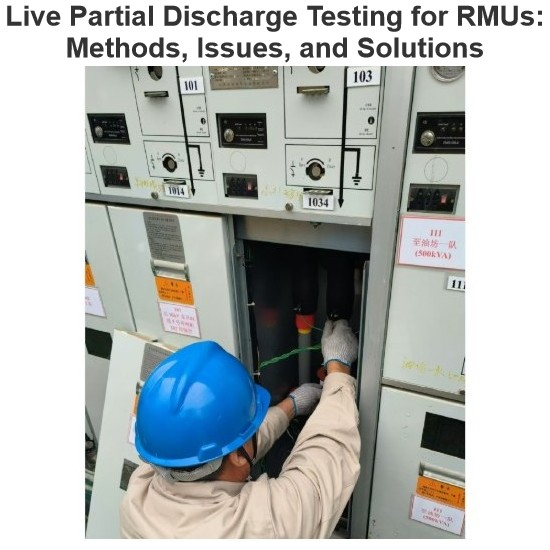
Live Partial Discharge Testing for RMUs: Methods, Issues, and Solutions
1 Live Testing AnalysisDetection of Issues through Live TestingIn October of a certain year, during live partial discharge (PD) testing on 10kV ring main units (RMUs) under our jurisdiction, the maintenance and testing team observed significantly elevated signal amplitudes in several units (Transient Earth Voltage (TEV) readings around 18 dB, and ultrasonic readings around 20 dB). Most of these units were from the same manufacturer. Consequently, a unified test was conducted on 15 RMUs from this
08/09/2025
Consult
Tip
Consult
Tip
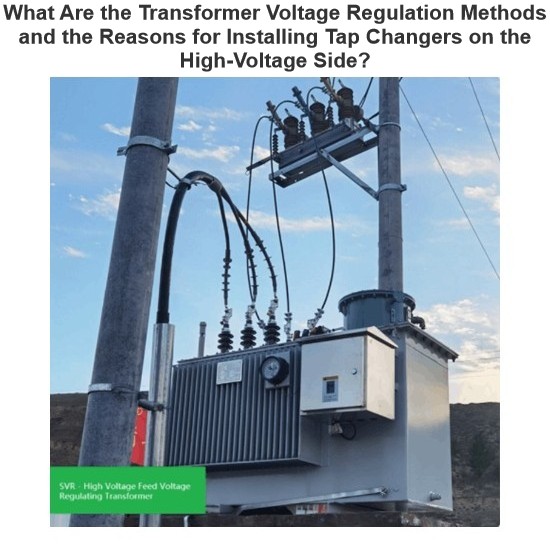
What Are the Transformer Voltage Regulation Methods and the Reasons for Installing Tap Changers on the High-Voltage Side?
Transformer voltage regulation can be achieved through on-load tap changing (OLTC) and off-load tap changing:On-load voltage regulation allows the transformer to adjust its tap position while in operation, thereby changing the turns ratio to regulate voltage. There are two methods: line-end regulation and neutral-point regulation. Line-end regulation involves placing the tap on the line end of the high-voltage winding, whereas neutral-point regulation places the tap on the neutral end of the hig
08/09/2025
Consult
Tip
Consult
Tip
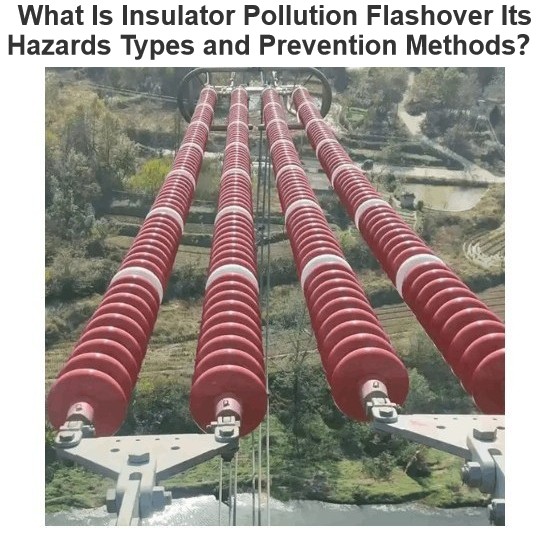
What Is Insulator Pollution Flashover Its Hazards Types and Prevention Methods?
Insulator Pollution Flashover and Its HazardsPollution flashover refers to a phenomenon where contaminants on the surface of electrical equipment insulators (external insulation) dissolve in moisture, forming a conductive layer that significantly reduces the insulator's insulation level. Under the influence of an electric field, this leads to severe discharge. During pollution flashover incidents, the success rate of automatic reclosing is very low, often resulting in widespread power outages. T
08/08/2025
Consult
Tip
Consult
Tip
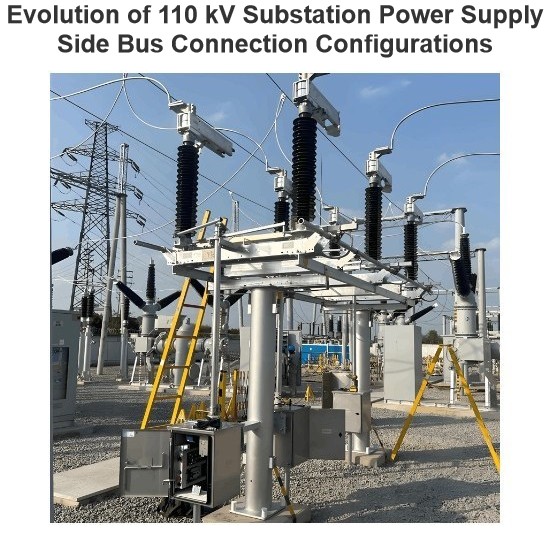
Evolution of 110 kV Substation Power Supply Side Bus Connection Configurations
Early 110 kV substations typically adopted the "internal bus connection" configuration on the power supply side, where the power source commonly used the "internal bridge connection" method. This was often observed in certain 220 kV substations supplying 110 kV buses from different transformers in a "same-direction dual-power" arrangement. This setup involved two transformers, with the 10 kV side using a single busbar with sectionalized connection. Advantages included simple wiring, convenient o
08/08/2025
Consult
Tip
Consult
Tip
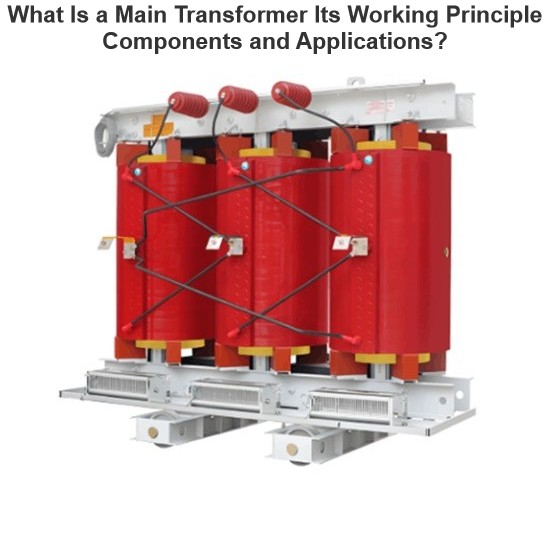
What Is a Main Transformer Its Working Principle Components and Applications?
Main TransformerThe main transformer is primarily responsible for converting the high-voltage electrical energy generated at power plants into lower-voltage electrical energy suitable for transmission, distribution, and end-use. This process involves stepping down voltage from high to low levels.Working PrincipleThe main transformer operates based on the principles of electromagnetic induction and voltage transformation. When an alternating current (AC) is applied to the high-voltage winding, it
08/07/2025
Consult
Tip
Consult
Tip
What Is a Power System Bushing and Its Types for Transformers?
In electrical power systems, a bushing is an insulating device that allows an electrical conductor to pass safely through a grounded conductive barrier, as in the case of transformers or circuit breakers. All transformer windings are connected to high-voltage lines, so special attention must be paid to the terminal connections to prevent flashover between the high-voltage terminals and the transformer body. In low-voltage distribution transformers, cable connections are made within a terminal bo
08/07/2025
Consult
Tip
Consult
Tip
Working Principle and Characteristics of Rectifier Transformers
Working Principle of Rectifier TransformersThe working principle of a rectifier transformer is the same as that of a conventional transformer. A transformer is a device that converts AC voltage based on the principle of electromagnetic induction. Typically, a transformer consists of two electrically isolated windings—the primary and secondary—wound around a common iron core. When the primary winding is connected to an AC power source, the alternating current generates a magne
08/07/2025
Consult
Tip
Consult
Tip
Send inquiry
+86
Click to upload file

IEE Business will not sell or share your personal information.

Download
Get the IEE Business Application
Use the IEE-Business app to find equipment, obtain solutions, connect with experts, and participate in industry collaboration anytime, anywhere—fully supporting the development of your power projects and business.