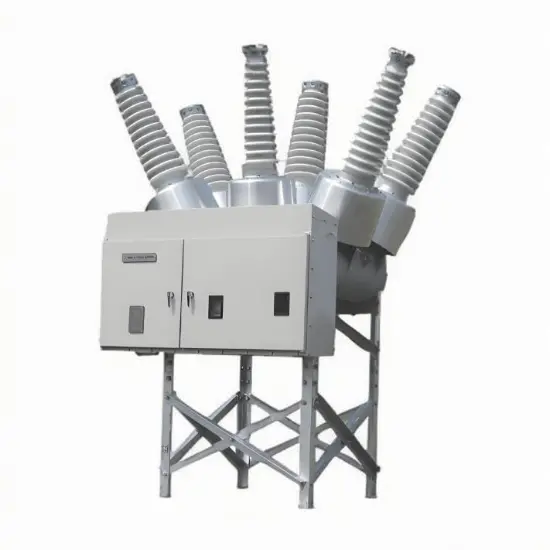
36kV 72.5kV Dry Air Insulated Dead Tank Vacuum Circuit Breaker(VCB)
Key attributes
| Brand | ROCKWILL |
| Model NO. | 36kV 72.5kV Dry Air Insulated Dead Tank Vacuum Circuit Breaker(VCB) |
| Rated voltage | 36kV |
| Rated normal current | 2000A |
| Rated frequency | 50/60Hz |
| Series | NVBOA |
Product descriptions from the supplier
Description
The Dry Air Insulated Dead Tank VCB was born of superb technology and abundant production experience of Meidensha Corporation.It is a circuit breaker employing vacuum interrupters and dry air for insulation. In order to use no SF6, which is global warming gas, there is no fear to decomposition of gas due to current interruption. It is therefore a highly reliable and high-performance circuit breaker.
Feature
Dead Tank Type VCB optimized for green procurement. It uses dry air for insulation in place of the SF6 which is specified as a greenhouse gas. Our basic design concept is to realize the environmental factors in design (The 3Rs (Reduce, Reuse, and Recycle) + LS (Longuse & Separable)) and life-cycle cost (LCC) reduction as basic concepts.
Contribution to global warming prevention
Dry air insulation are employed instead of SF6 gas insulation. GWP (Global Warning Potential) of SF6 is 23,900.
Excellent breaking performance
Since each current breaking section employs a vacuum interrupter, insulation recovery characteristics are excellent. It exhibits superb characteristics in cases of short-circuit interruption and short line fault interruption.
Sucient capability against multiple strokes and evolving faults
Since the vacuum interrupters used are of completely self-arc-diusion type, this circuit breaker is the only unit that is capable of disposing of multiple strokes and evolving fault currents.
Reduction of maintenance labor
Use of vacuum interrupters in the current breaking sections eliminates requirements of inspection for these sections. Therefore, man-hours can be saved for maintenance and inspection.
Type and Ratings
Specifications
Rated voltage (kV) |
36 |
72.5 |
|
Withstand |
1 min power frequency (kV rms) |
70 |
140 |
1.2x50μs impulse (kV peak) |
200 |
350 |
|
Rated frequency (Hz) |
50/60 |
||
Rated normal current (A) |
2000 |
2000/3150 |
|
Rated short circuit breaker current (kA) |
31.5 |
40 |
|
Rated transient recovery voltage |
Rate of rise (kV/μs)) |
1.19 |
1.47 |
First pole to clear factor |
1.5 |
||
Rated short circuit making current (kA) |
82 |
104 |
|
Rated short time current (kA) |
31.5 (3s) |
40 (3s) |
|
Rated breaking time (cycle) |
3 |
||
Rated opening time (s) |
0.033 |
0.03 |
|
Make time with no load (s) |
0.05 |
0.10 |
|
Operating duty |
O-0.3s-CO-15s-CO |
||
Closing control voltage (Vdc) |
48, 100, 110, 125, 250 |
||
Rated tripping voltage (Vdc) |
48, 100, 110, 125, 250 |
||
Supply voltage for charging motor |
(Vdc) |
48, 100, 110, 125, 250 |
|
(Vac) |
60, 120, 240 |
||
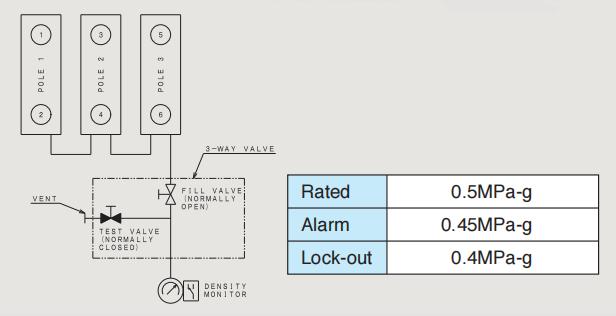
Rated dry-air pressure |
0.5MPa-g (at 20℃ ) |
||
Closing operation system |
Spring |
||
Tripping control system |
Spring |
||
Applicable standard |
IEC 62271-100-2008, ANSI/IEEE C37.06-2009 |
||
Construction
Overall construction
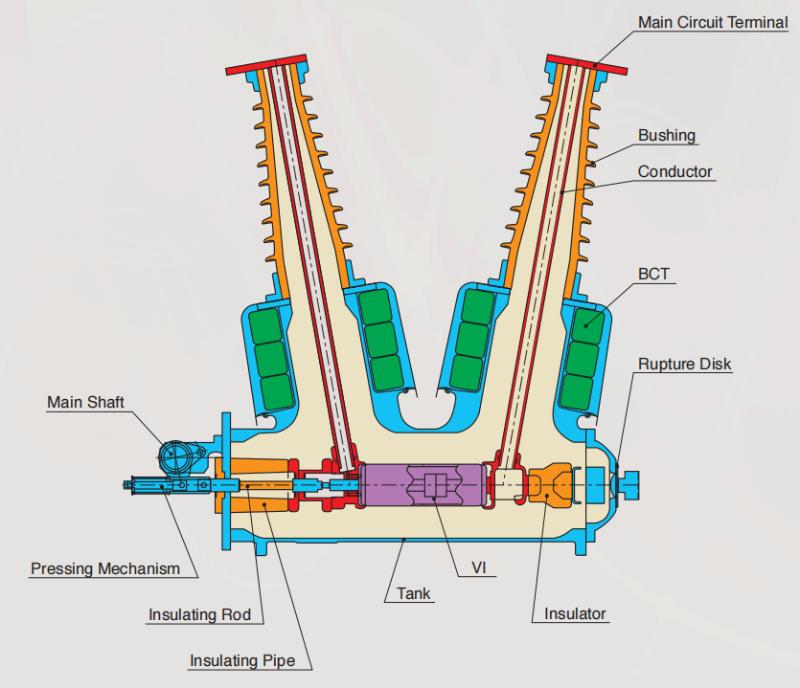
For each phase, a current breaking vacuum interrupter is accommodated in the grounded tank. The operation system is such that closing and tripping are effected by spring force.The operating mechanism and 3-phase interlinkage are assembled on a common base, which is installed on the frame legs.
Internal construction
The overall structure is composed mainly of grounded tank, vacuum interrupters (VI), insulating rods, bushings and main circuit terminals. Each grounded tank is filled with dry air maintained at a rated pressure of 0.5MPa-g (20℃).
Internal construction of vacuum circuit breaker
Dry air system
Outline drawing
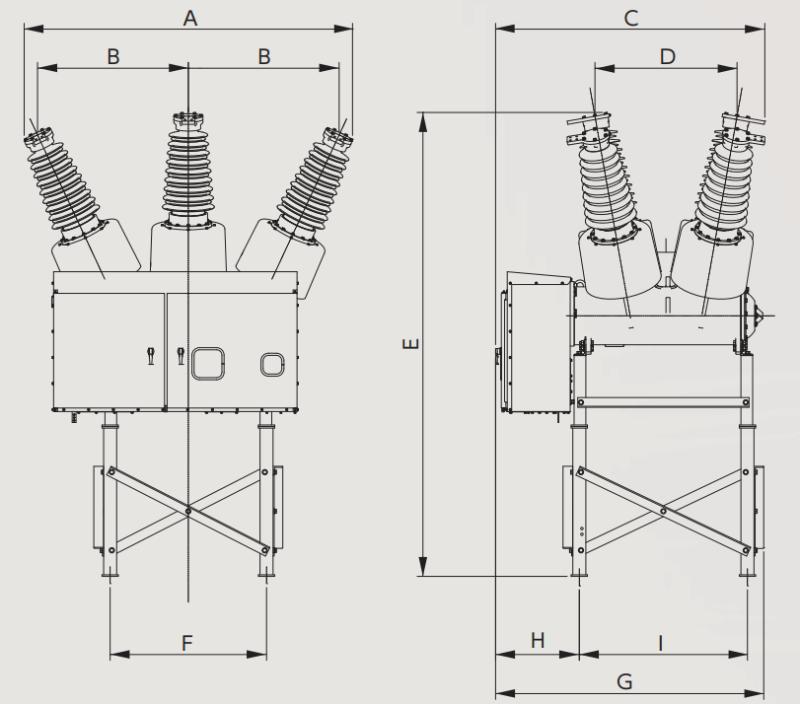
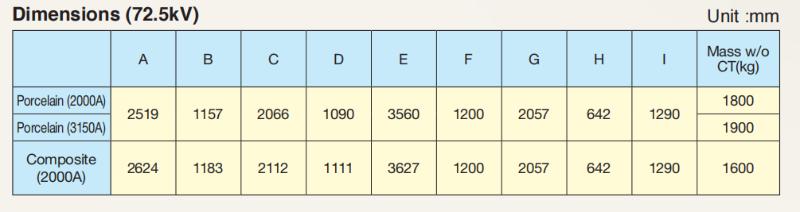
Dimensions (72.5kV)
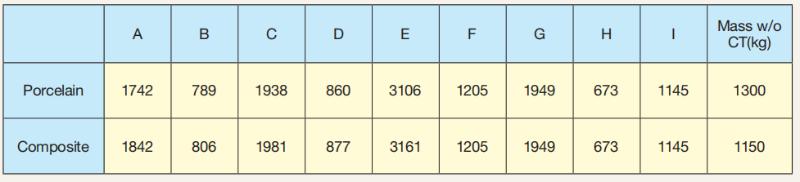
Dimensions (36kV)
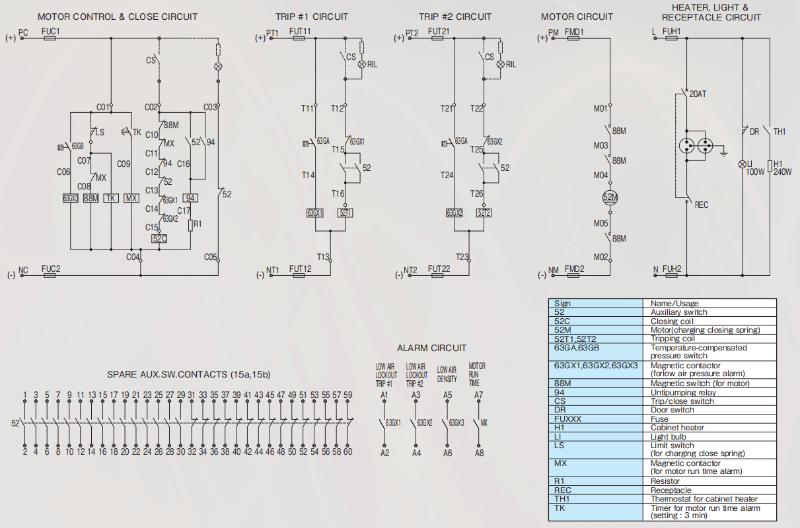
Standard connection diagram
Performance
Performance of the circuit breaker has been designed in accordance with ANSI and IEC standard, and verified by type test. All products are shipped after confirmation of various performances by acceptance test based on these standards.
Withstand voltage characteristics :Performance of withstand voltage is assured at the specified dry air pressure. Even though the dry air pressure has been lowered to the alarming level, the required insulation level can be assured.In addition, even though this pressure lowers to the atmosphericpressure, the circuit breaker withstands the rated voltage.
Current passing performance :Since the main contacts are located under vacuum, their surfaces are never oxidized and current passing performance is therefore stabilized. In the closing mode of circuit breaker, a pressing force is exerted between main contacts by the effect of pressing spring and sufficient tolerance is assured against closing current and short-time current.
Mechanical life :Due to adoption of simplified operating mechanism, switching characteristics are extremely stabilized. Frequent switching performance has also been verified through continuous mechanical switching test by repeating switching operations more than 10,000 times.
Electrical life :Since current breaking is performed in the vacuum interrupter,arcing energy generated during current interruption is extremely low and contact erosion is minimal. This implies long contact life.Load current switching : 10,000 times
Rated breaking current switching : 20 times
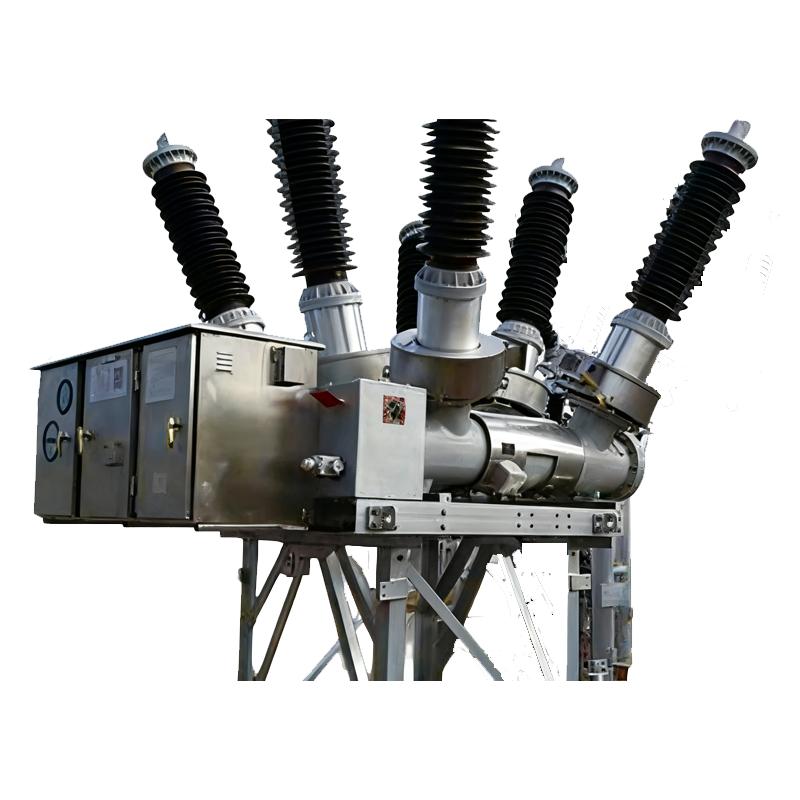
Integral Tank Structure:
-
Integral Tank Structure: The breaker's arc quenching chamber, insulating medium, and related components are sealed within a metal tank filled with an insulating gas (such as sulfur hexafluoride) or insulating oil. This forms a relatively independent and sealed space, effectively preventing external environmental factors from affecting the internal components. This design enhances the insulation performance and reliability of the equipment, making it suitable for various harsh outdoor environments.
Arc Quenching Chamber Layout:
-
Arc Quenching Chamber Layout: The arc quenching chamber is typically installed inside the tank. Its structure is designed to be compact, enabling efficient arc quenching within a limited space. Depending on different arc quenching principles and technologies, the specific construction of the arc quenching chamber may vary, but generally includes key components such as contacts, nozzles, and insulating materials. These components work together to ensure that the arc is quickly and effectively extinguished when the breaker interrupts the current.
Operating Mechanism:
-
Operating Mechanism: Common operating mechanisms include spring-operated mechanisms and hydraulic-operated mechanisms.
-
Spring-Operated Mechanism: This type of mechanism is simple in structure, highly reliable, and easy to maintain. It drives the opening and closing operations of the breaker through the energy storage and release of springs.
-
Hydraulic-Operated Mechanism: This mechanism offers advantages such as high output power and smooth operation, making it suitable for high-voltage and high-current class breakers.

Related Products
-
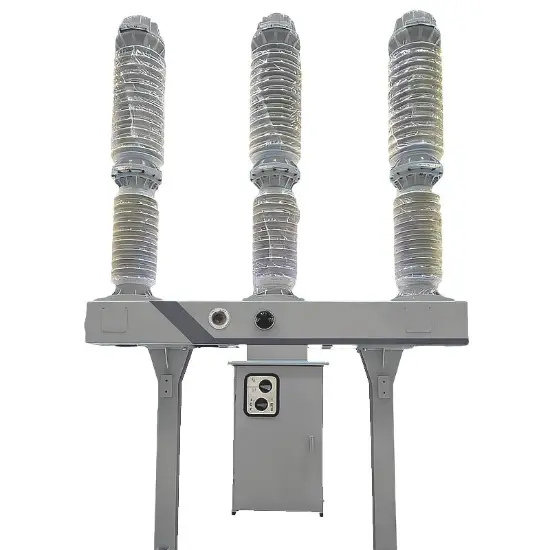
126(145)kV HV Vacuum circuit breaker
-
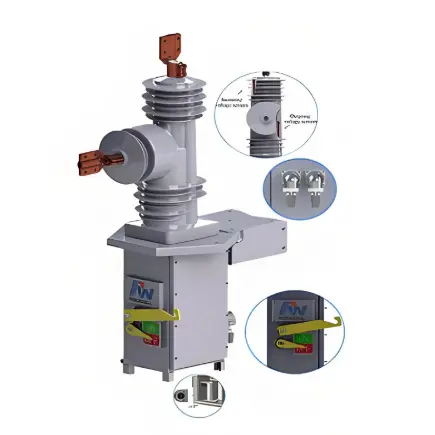
Customization 10kV 10.5kV 11kV 11.5kV 15.6kV Single-phase outdoor Automatic Smart recloser/reclosure
-
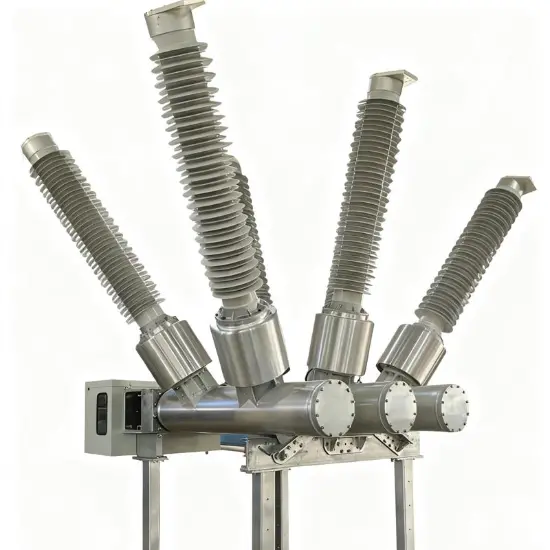
Customization 145kV/138kV/230kV or Other Dead tank Vacuum Circuit-Breaker
-
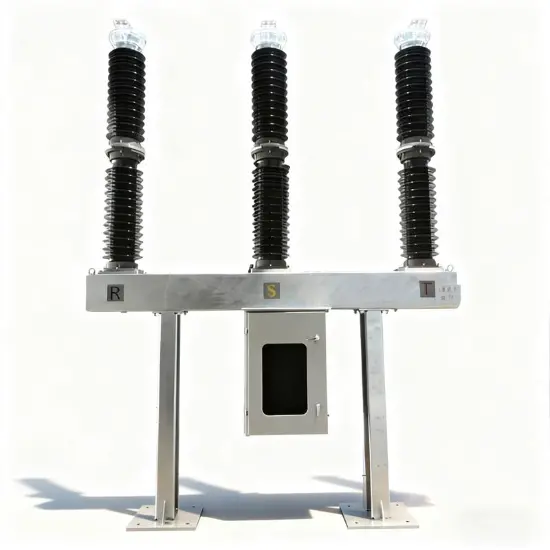
Customization 145kV/138kV/230kV or Other Live tank Vacuum Circuit-Breaker
-
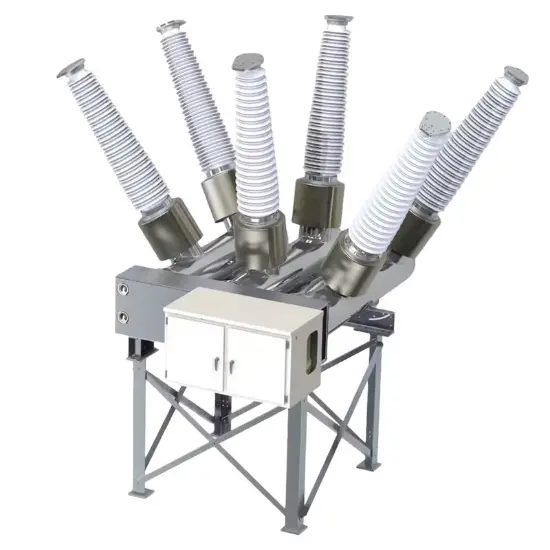
145kV/123kV Dead tank vacuum circuit breaker
-
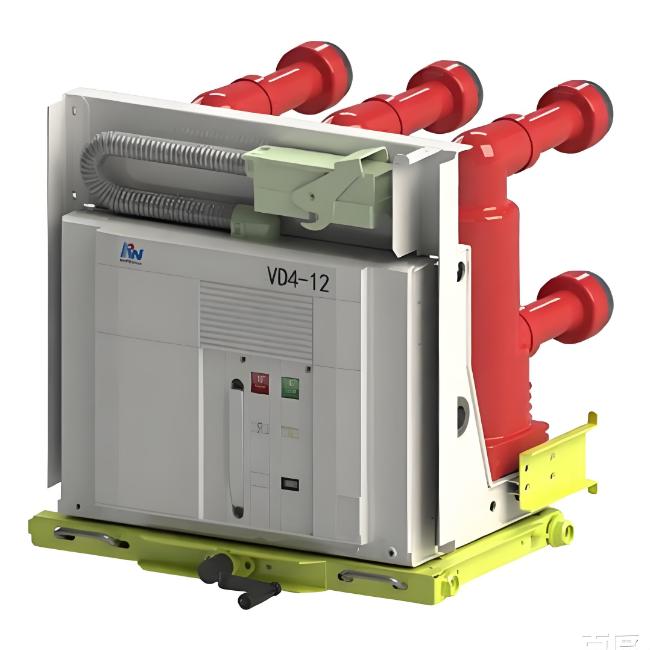
VD4 MV Vacuum Circuit Breakers
-
15kV 15.5kV 22kV 27kV 38kV Three-Phase Automatic Circuit Recloser/ reclosure with ADVC Controller

Related Knowledges
-
 Impact of DC Bias in Transformers at Renewable Energy Stations Near UHVDC Grounding ElectrodesImpact of DC Bias in Transformers at Renewable Energy Stations Near UHVDC Grounding ElectrodesWhen the grounding electrode of an Ultra-High-Voltage Direct Current (UHVDC) transmission system is located close to a renewable energy power station, the return current flowing through the earth can cause a rise in ground potential around the electrode area. This ground potential rise leads to a shift in the neutral-point potential of nearby power transformers, inducing DC bias (or DC offset) in their01/15/2026
 -
 HECI GCB for Generators – Fast SF6 Circuit Breaker1.Definition and Function1.1 Role of the Generator Circuit BreakerThe Generator Circuit Breaker (GCB) is a controllable disconnect point located between the generator and the step-up transformer, serving as an interface between the generator and the power grid. Its primary functions include isolating generator-side faults and enabling operational control during generator synchronization and grid connection. The operating principle of a GCB is not significantly different from that of a standard c01/06/2026
 -
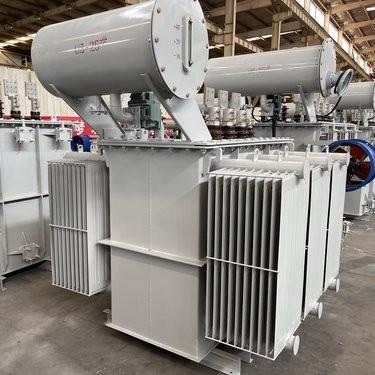
 Distribution Equipment Transformer Testing, Inspection, and Maintenance1.Transformer Maintenance and Inspection Open the low-voltage (LV) circuit breaker of the transformer under maintenance, remove the control power fuse, and hang a “Do Not Close” warning sign on the switch handle. Open the high-voltage (HV) circuit breaker of the transformer under maintenance, close the grounding switch, fully discharge the transformer, lock the HV switchgear, and hang a “Do Not Close” warning sign on the switch handle. For dry-type transformer maintenance: first clean the porcel12/25/2025
 -
 How to Test Insulation Resistance of Distribution TransformersIn practical work, insulation resistance of distribution transformers is generally measured twice: the insulation resistance between thehigh-voltage (HV) windingand thelow-voltage (LV) winding plus the transformer tank, and the insulation resistance between theLV windingand theHV winding plus the transformer tank.If both measurements yield acceptable values, it indicates that the insulation among the HV winding, LV winding, and transformer tank is qualified. If either measurement fails, pairwise12/25/2025
 -
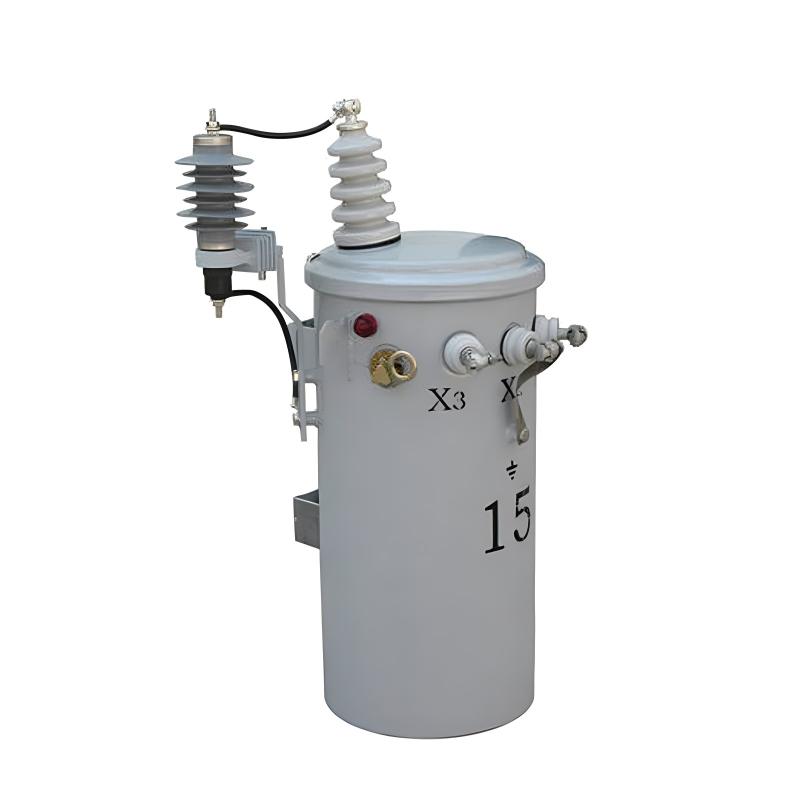 Design Principles for Pole-Mounted Distribution TransformersDesign Principles for Pole-Mounted Distribution Transformers(1) Location and Layout PrinciplesPole-mounted transformer platforms should be located near the load center or close to critical loads, following the principle of “small capacity, multiple locations” to facilitate equipment replacement and maintenance. For residential power supply, three-phase transformers may be installed nearby based on current demand and future growth projections.(2) Capacity Selection for Three-Phase Pole-Mounted Tr12/25/2025
 -
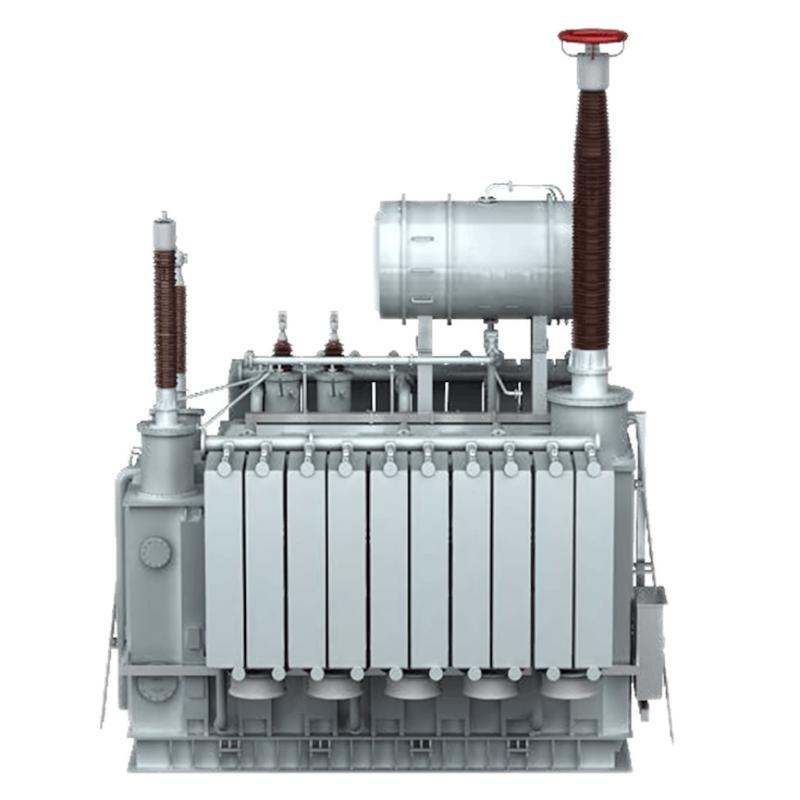 Transformer Noise Control Solutions for Different Installations1.Noise Mitigation for Ground-Level Independent Transformer RoomsMitigation Strategy:First, conduct a power-off inspection and maintenance of the transformer, including replacing aged insulating oil, checking and tightening all fasteners, and cleaning dust from the unit.Second, reinforce the transformer foundation or install vibration isolation devices—such as rubber pads or spring isolators—selected based on the severity of vibration.Finally, strengthen sound insulation at weak points of the ro12/25/2025
Related Solutions
-
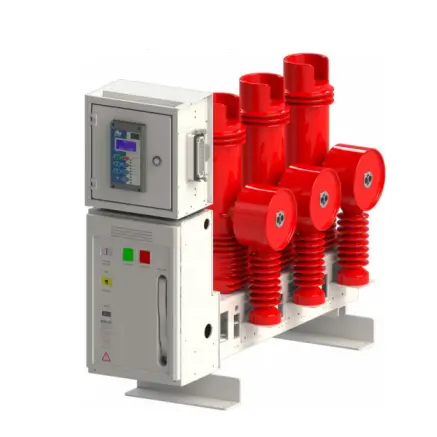 Intelligent Operation Solution for 12kV Vacuum Circuit Breakers: Integrating Real-time Monitoring & Lifetime OptimizationⅠ. Equipment Operation & MaintenanceIntelligent Monitoring System IntegrationMulti-parameter Real-time Monitoring: Embedded sensors (temperature, displacement, Hall effect current sensors) track contact temperature rise, mechanical characteristics (opening/closing speed, overtravel), coil current, and partial discharge signals. Data undergoes preprocessing via edge computing prior to cloud upload.Lifetime Prediction Model: Dynamically evaluates remaining lifespan using electrical wear data06/10/2025
 -
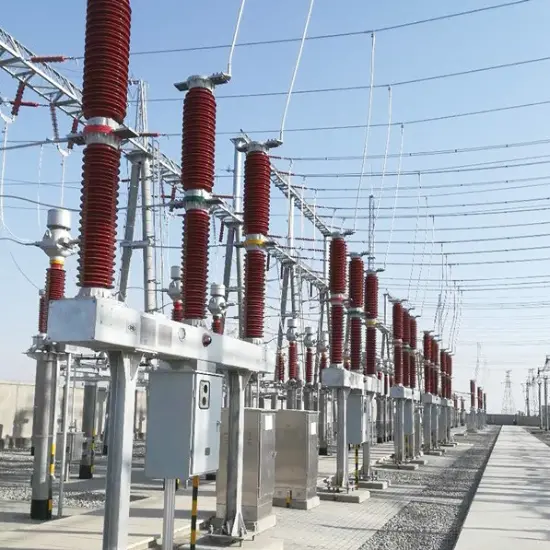 SF6 Circuit Breaker Solutions for Outdoor Installation (Anti-Pollution & Seismic Resistance)I.Core Challenges in Outdoor InstallationIn high-voltage transmission and distribution systems, SF6 circuit breakers are exposed to complex outdoor environments for extended periods, facing the following critical issues:Pollution & Insulation DegradationDust, salt fog, and industrial pollutants in outdoor environments easily adhere to equipment surfaces. In coastal or industrial areas, pollution levels may reach Class IV, resulting in insufficient creepage distance and triggering flasho05/12/2025
 -
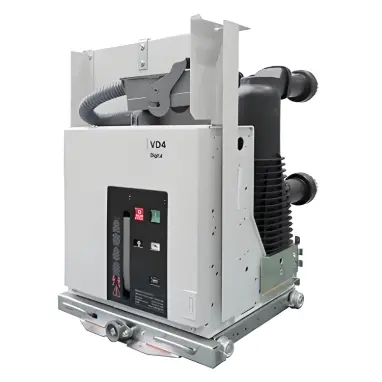 12kV Indoor Vacuum Circuit Breaker Southeast Asia Solution: Anti-Corrosion Compact Design12kV Indoor Vacuum Circuit Breaker Southeast Asia Solution: Anti-Corrosion Compact DesignⅠ. Executive SummarySoutheast Asia faces rapidly growing electricity demand alongside environmental challenges including high temperatures, humidity, salt spray corrosion, and grid instability. This solution recommends Solid Insulated Pole-Mounted Vacuum Circuit Breakers (VCB) featuring high reliability, compact design, and smart monitoring. Tailored for tropical climates and industrial scenarios, it06/10/2025






