• Product
  • Suppliers
  • Manufacturers
  • Solutions
  • Free tools
  • Knowledges
  • Experts
  • Communities
Search


Impact of DC Bias in Transformers at Renewable Energy Stations Near UHVDC Grounding Electrodes

Vziman
Field: Manufacturing
China
Impact of DC Bias in Transformers at Renewable Energy Stations Near UHVDC Grounding Electrodes
When the grounding electrode of an Ultra-High-Voltage Direct Current (UHVDC) transmission system is located close to a renewable energy power station, the return current flowing through the earth can cause a rise in ground potential around the electrode area. This ground potential rise leads to a shift in the neutral-point potential of nearby power transformers, inducing DC bias (or DC offset) in their cores. Such DC bias can degrade transformer performance and, in severe cases, cause equipment damage. Therefore, effective mitigation measures are essential.
A detailed analysis of this issue is provided below:
1. Influencing Factors
The severity of DC bias depends on multiple factors, including:
  • The operating current of the UHVDC system;
  • The location and design of the grounding electrode;
  • The spatial distribution of soil resistivity;
  • The winding connection configuration and structural characteristics of the transformer.
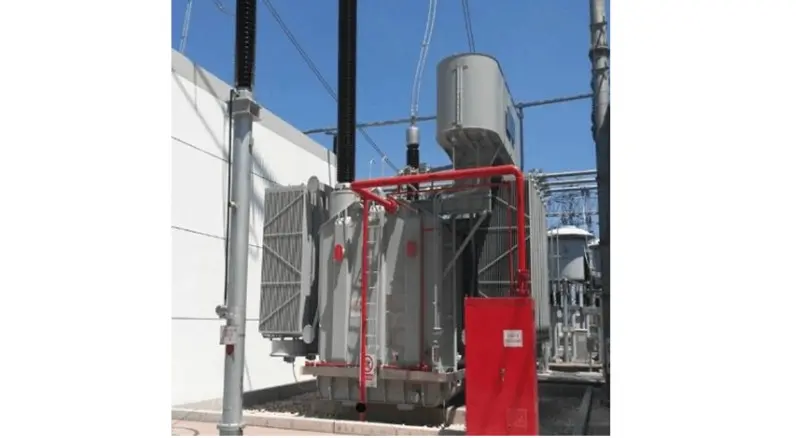
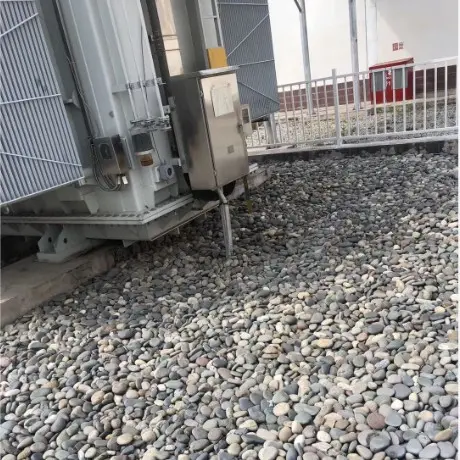
On-site Photo of UHV Project
2. Consequences of DC Bias
DC bias in transformers can result in:
  • Increased audible noise and mechanical vibration;
  • Elevated temperature rise due to additional core losses;
  • Accelerated aging of winding insulation under prolonged exposure.
  • These effects compromise the safe and reliable operation of transformers and shorten their service life.
3. Mitigation Measures
To suppress DC bias, several technical strategies can be employed:
  • Dynamically switching the neutral grounding mode of the renewable energy station (e.g., between solidly grounded and high-resistance grounded);
  • Optimizing the grounding grid design to balance potential distribution between the renewable plant and nearby substations;
  • Installing DC-blocking devices (e.g., capacitive or active-type neutral blocking devices) at transformer neutral points to block geomagnetically induced or stray DC currents.
Conclusion
The impact of DC bias on transformers in renewable energy stations near UHVDC grounding electrodes is a complex geoelectrical and power system issue that requires a holistic approach. It is recommended to implement continuous monitoring of DC bias levels in affected transformers, conduct periodic risk assessments, and proactively deploy mitigation measures. Doing so ensures the safe, stable, and long-term operation of renewable energy facilities within regions influenced by UHVDC systems.

Give a tip and encourage the author!

Recommended

Main Transformer Accidents and Light Gas Operation Issues
1. Accident Record (March 19, 2019)At 16:13 on March 19, 2019, the monitoring background reported a light gas action of No. 3 main transformer. In accordance with the Code for Operation of Power Transformers (DL/T572-2010), operation and maintenance (O&M) personnel inspected the on-site condition of No. 3 main transformer.On-site confirmation: The WBH non-electrical protection panel of No. 3 main transformer reported a Phase B light gas action of the transformer body, and the reset was ineff
02/05/2026
Faults and Handling of Single-phase Grounding in 10kV Distribution Lines
Characteristics and Detection Devices for Single-Phase Ground Faults1. Characteristics of Single-Phase Ground FaultsCentral Alarm Signals:The warning bell rings, and the indicator lamp labeled “Ground Fault on [X] kV Bus Section [Y]” illuminates. In systems with a Petersen coil (arc suppression coil) grounding the neutral point, the “Petersen Coil Operated” indicator also lights up.Insulation Monitoring Voltmeter Indications:The voltage of the faulted phase decreases (in
01/30/2026
Neutral point grounding operation mode for 110kV~220kV power grid transformers
The arrangement of neutral point grounding operation modes for 110kV~220kV power grid transformers shall meet the insulation withstand requirements of transformer neutral points, and shall also strive to keep the zero-sequence impedance of substations basically unchanged, while ensuring that the zero-sequence comprehensive impedance at any short-circuit point in the system does not exceed three times the positive-sequence comprehensive impedance.For 220kV and 110kV transformers in new constructi
01/29/2026
Why Do Substations Use Stones, Gravel, Pebbles, and Crushed Rock?
Why Do Substations Use Stones, Gravel, Pebbles, and Crushed Rock?In substations, equipment such as power and distribution transformers, transmission lines, voltage transformers, current transformers, and disconnect switches all require grounding. Beyond grounding, we will now explore in depth why gravel and crushed stone are commonly used in substations. Though they appear ordinary, these stones play a critical safety and functional role.In substation grounding design—especially when multiple gr
01/29/2026
Send inquiry
+86
Click to upload file
Download
Get the IEE Business Application
Use the IEE-Business app to find equipment, obtain solutions, connect with experts, and participate in industry collaboration anytime, anywhere—fully supporting the development of your power projects and business.