• Product
  • Suppliers
  • Manufacturers
  • Solutions
  • Free tools
  • Knowledges
  • Experts
  • Communities
Search


Free Expert Guides on Power Systems, Circuit Design & Electrical Troubleshooting

Access free engineering resources from IEE Business—covering power design, circuit layout, equipment selection, and troubleshooting. Expert-developed guides help engineers, procurement, and project teams make better decisions. Stay ahead on smart grids, renewables, efficiency, and AI tools. Improve reliability, reduce downtime, and enhance outcomes with real-world solutions. Explore our knowledge hub today.
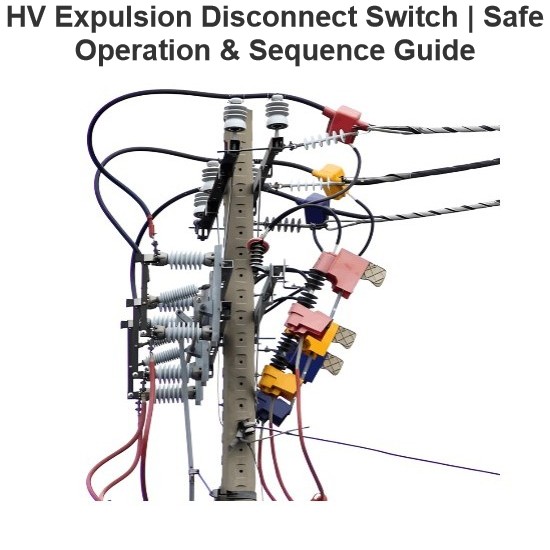
HV Expulsion Disconnect Switch | Safe Operation & Sequence Guide
High-voltage disconnect switches (or fuses) do not have arc-extinguishing capability, but they provide a clearly visible break point. Therefore, they are used solely as isolation components in a circuit. They are installed at the beginning of a circuit or in front of components requiring maintenance. When a circuit needs to be de-energized for maintenance, the power is first interrupted using a switching device, and then the disconnect switch is opened. This ensures a clearly visible break in th
08/26/2025
Consult
Tip
Consult
Tip
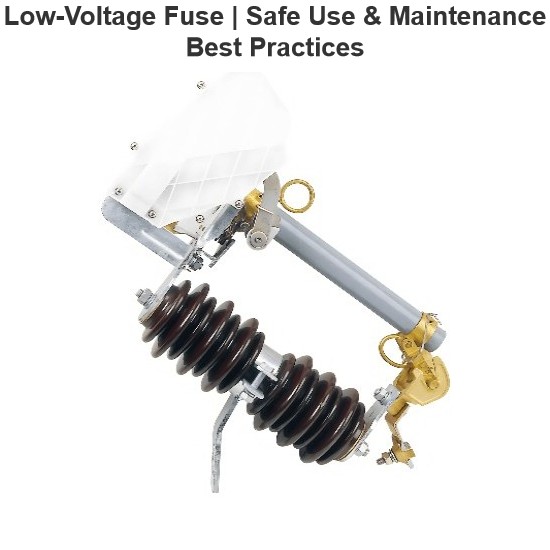
Low-Voltage Fuse | Safe Use & Maintenance Best Practices
Use and MaintenanceIn low-voltage power distribution systems, fuses are protective electrical devices. Widely used for power grid and electrical equipment protection, fuses automatically cut off circuits when short circuits or overloads occur in the grid or equipment, preventing damage to electrical devices and preventing accidents from spreading.A fuse consists of an insulating base (or support), contacts, and a fuse element. The fuse element is the primary working component, acting like a spec
08/26/2025
Consult
Tip
Consult
Tip
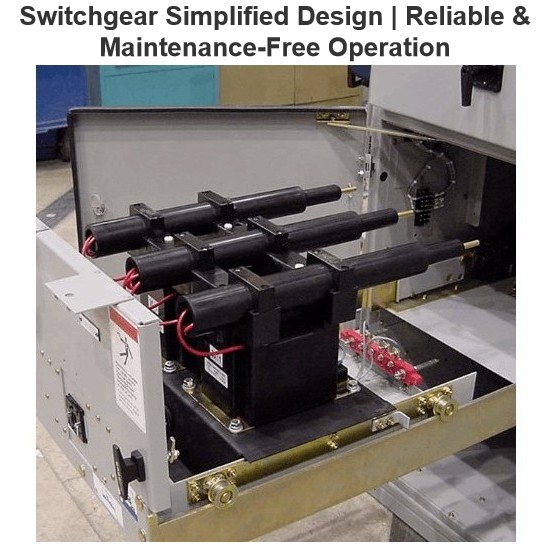
Switchgear Simplified Design | Reliable & Maintenance-Free Operation
Simplicity means fewer components. According to the principle that system reliability equals the product of individual component reliabilities, fewer parts lead to higher reliability.For PT trolleys in air-insulated switchgear, a simplified drawer-type design is adopted. On the cable compartment side, the PT trolley eliminates the need for a 200mm chassis to rack in and dispenses with blossom contacts. Instead, it uses the PT’s built-in fuse and striker mechanism, making direct contact
08/26/2025
Consult
Tip
Consult
Tip
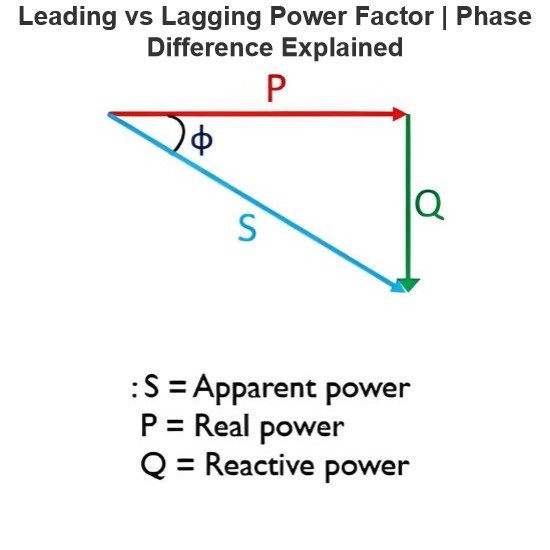
Leading vs Lagging Power Factor | Phase Difference Explained
Leading and lagging power factors are two key concepts related to the power factor in AC electrical systems. The main difference lies in the phase relationship between current and voltage: in a leading power factor, the current leads the voltage, whereas in a lagging power factor, the current lags behind the voltage. This behavior depends on the nature of the load in the circuit.What is Power Factor?Power factor is a crucial, dimensionless parameter in AC electrical systems, applicable to both s
08/26/2025
Consult
Tip
Consult
Tip
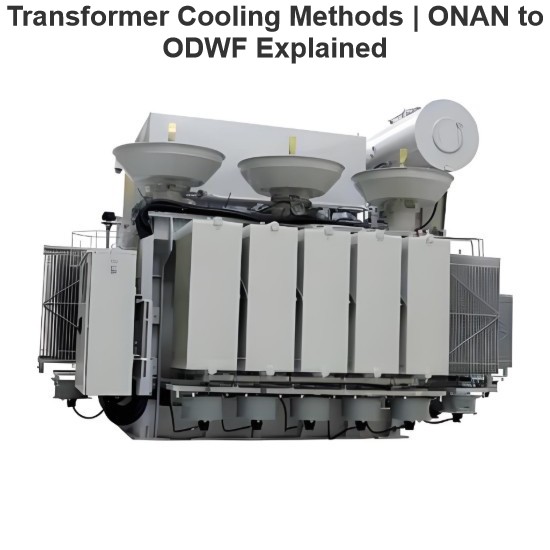
Transformer Cooling Methods | ONAN to ODWF Explained
1. Oil-Immersed Self-Cooling (ONAN)The working principle of oil-immersed self-cooling is to transfer the heat generated inside the transformer to the surface of the tank and cooling tubes through natural convection of the transformer oil. The heat is then dissipated into the surrounding environment via air convection and thermal conduction. This cooling method does not require any dedicated cooling equipment.Applicable to: Products with capacity up to 31,500 kVA and voltage level up to 35 kV; Pr
08/26/2025
Consult
Tip
Consult
Tip
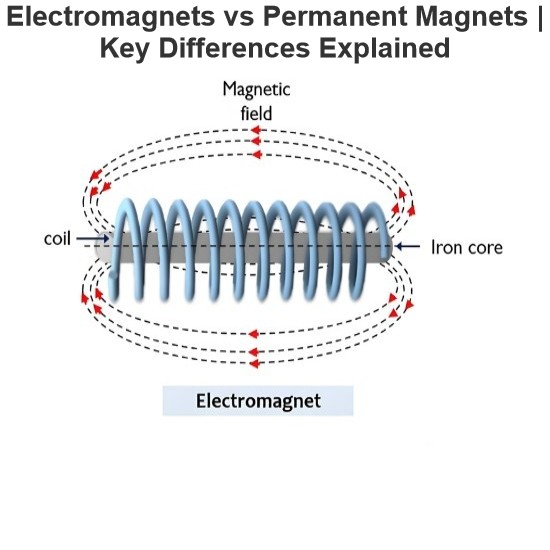
Electromagnets vs Permanent Magnets | Key Differences Explained
Electromagnets vs. Permanent Magnets: Understanding the Key DifferencesElectromagnets and permanent magnets are the two primary types of materials that exhibit magnetic properties. While both generate magnetic fields, they differ fundamentally in how these fields are produced.An electromagnet generates a magnetic field only when an electric current flows through it. In contrast, a permanent magnet inherently produces its own persistent magnetic field once it has been magnetized, without requirin
08/26/2025
Consult
Tip
Consult
Tip
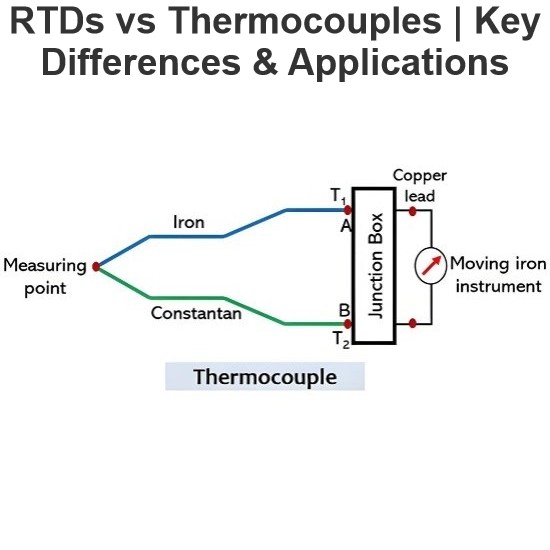
RTDs vs Thermocouples | Key Differences & Applications
RTDs and Thermocouples: Key Temperature SensorsResistance Temperature Detectors (RTDs) and thermocouples are two fundamental types of temperature sensors. While both serve the primary function of measuring temperature, their operational principles differ significantly.An RTD relies on the predictable change in electrical resistance of a single metal element as temperature varies. In contrast, a thermocouple operates based on the Seebeck effect, where a voltage difference (electromotive force, EM
08/26/2025
Consult
Tip
Consult
Tip
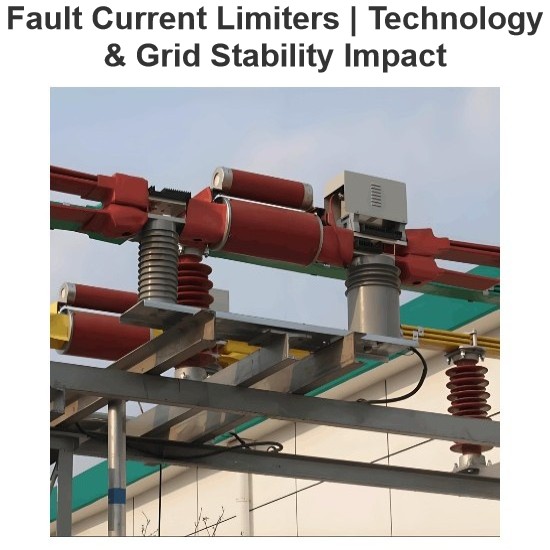
Fault Current Limiters | Technology & Grid Stability Impact
1 Introduction to Fault Current Limiter (FCL) TechnologyTraditional passive fault current limitation methods—such as using high-impedance transformers, fixed reactors, or split-busbar operation—suffer from inherent drawbacks, including disruption of grid structure, increased steady-state system impedance, and reduced system security and stability. These approaches are becoming increasingly unsuitable for today's complex and large-scale power grids.In contrast, active fault cu
08/26/2025
Consult
Tip
Consult
Tip
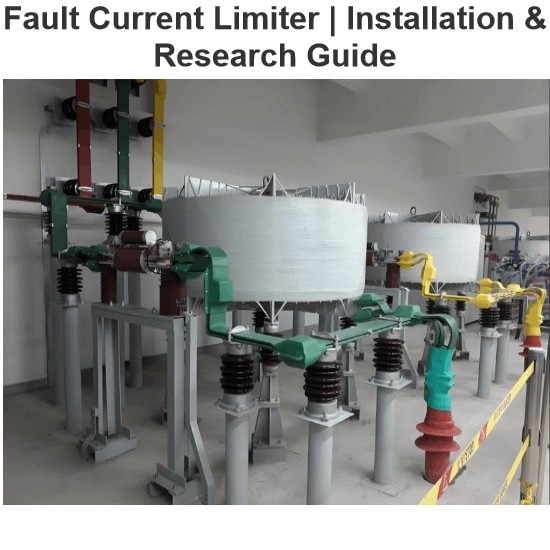
Fault Current Limiter | Installation & Research Guide
1 Locations for Installing Fault Current Limiters (FCLs) At Generator Terminals:Installing an FCL at this location reduces the short-circuit current level in the grid during faults, minimizes mechanical and thermal stress on the generator, and consequently reduces losses in equipment and devices. At Plant Distribution Substations:Short-circuit current levels at this location are typically very high. Installing an FCL can significantly suppress fault currents. Across the Entire Busbar:When increa
08/26/2025
Consult
Tip
Consult
Tip
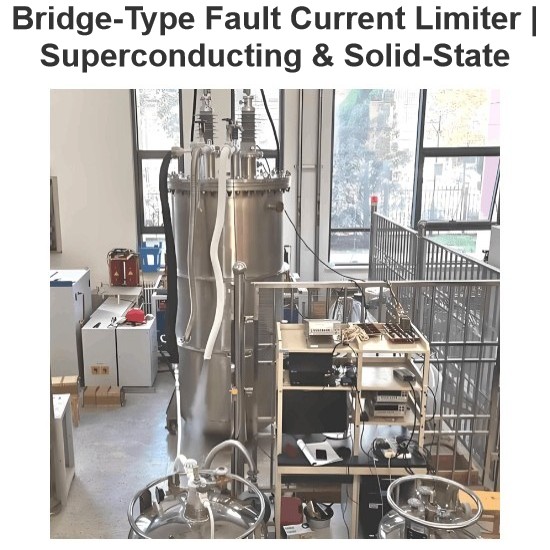
Bridge-Type Fault Current Limiter | Superconducting & Solid-State
1 Bridge-Type Superconducting Fault Current Limiter1.1 Structure and Operating Principle of the Bridge-Type SFCLFigure 1 shows the single-phase circuit diagram of the bridge-type SFCL, which consists of four diodes D₁ to D₄, a DC bias voltage source V_b, and a superconducting coil L. A circuit breaker CB is connected in series with the limiter to interrupt the fault current after it has been limited. The bias source V_b provides a bias current i_b to the superconducting coil L. The voltage of V_
08/25/2025
Consult
Tip
Consult
Tip
Send inquiry
+86
Click to upload file
Download
Get the IEE Business Application
Use the IEE-Business app to find equipment, obtain solutions, connect with experts, and participate in industry collaboration anytime, anywhere—fully supporting the development of your power projects and business.