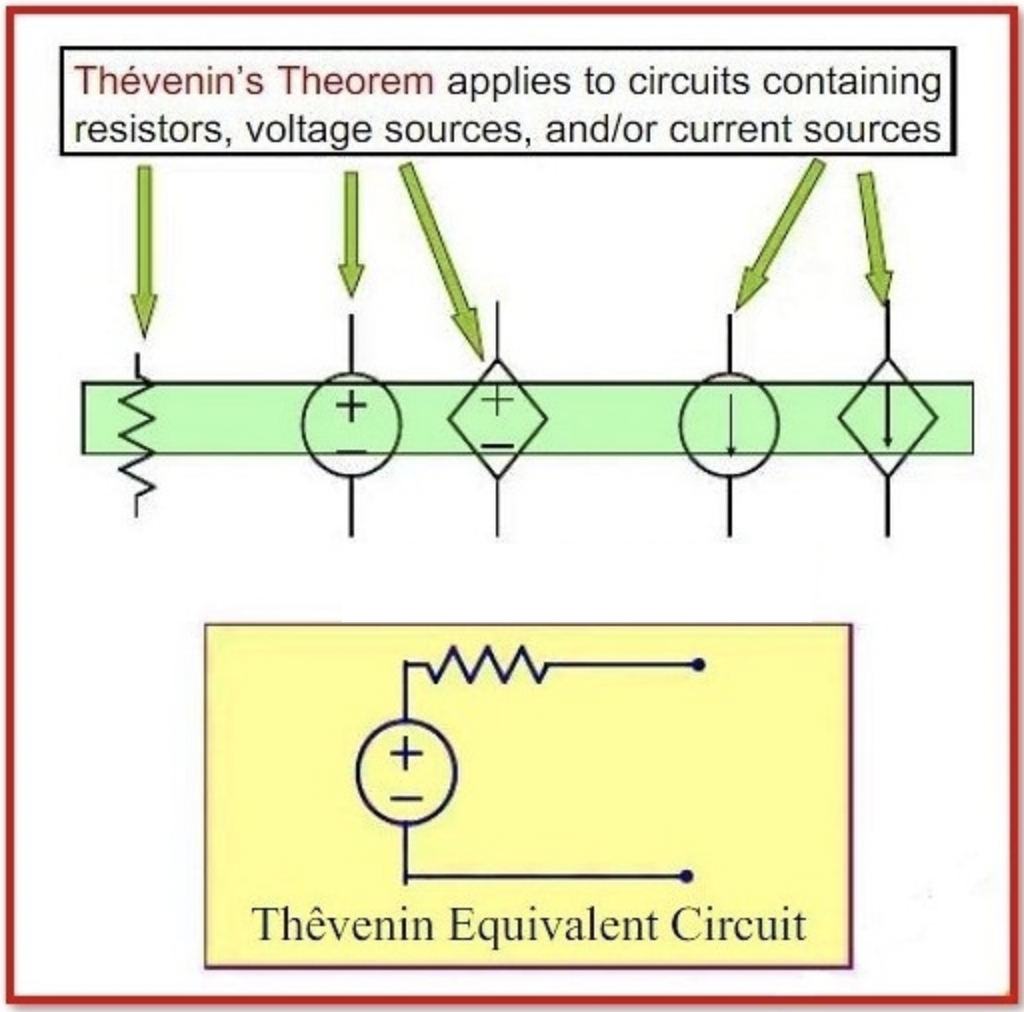
Thevenin’s Theorem is a principle in electrical engineering that allows the complex impedance of an electric circuit to be reduced to a single equivalent impedance. It states that any linear, two-terminal electrical network can be represented by an equivalent circuit consisting of a single voltage source in series with a single impedance. The voltage of the source is the open-circuit voltage of the network, and the impedance is the impedance seen looking into the circuit with the voltage source
03/09/2024
Consult
Tip
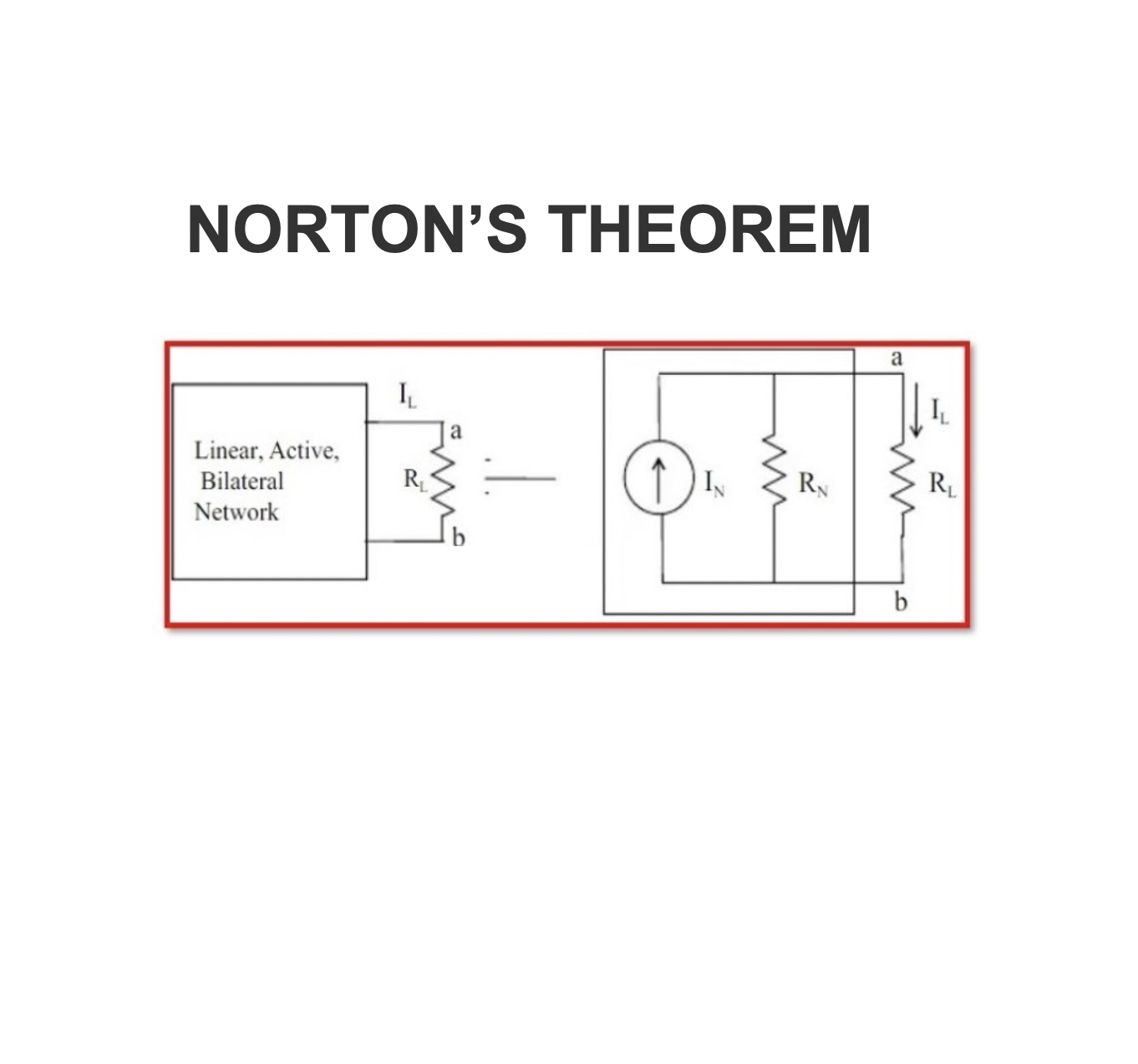
Norton’s Theorem is a principle in electrical engineering that allows the complex impedance of an electric circuit to be reduced to a single equivalent impedance. It states that any linear, two-terminal electrical network can be represented by an equivalent circuit consisting of a single current source in parallel with a single impedance. The current of the source is the short-circuit current of the network, and the impedance is the impedance seen looking into the circuit with the current source
03/09/2024
Consult
Tip
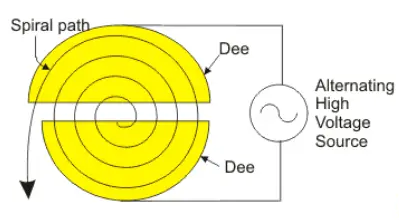
Before understanding the basic working principle of Cyclotron it is necessary to understand force on a moving charged particle in a magnetic field and also motion of the charged particle in the magnetic field.Force on a Moving Charged Particle in a Magnetic FieldWhen a current carrying conductor of length L metre with current I ampere placed perpendicularly in a magnetic field of flux density B Weber per metre square, then the force rather to say magnetic force acting on the conductor would beNo
03/09/2024
Consult
Tip
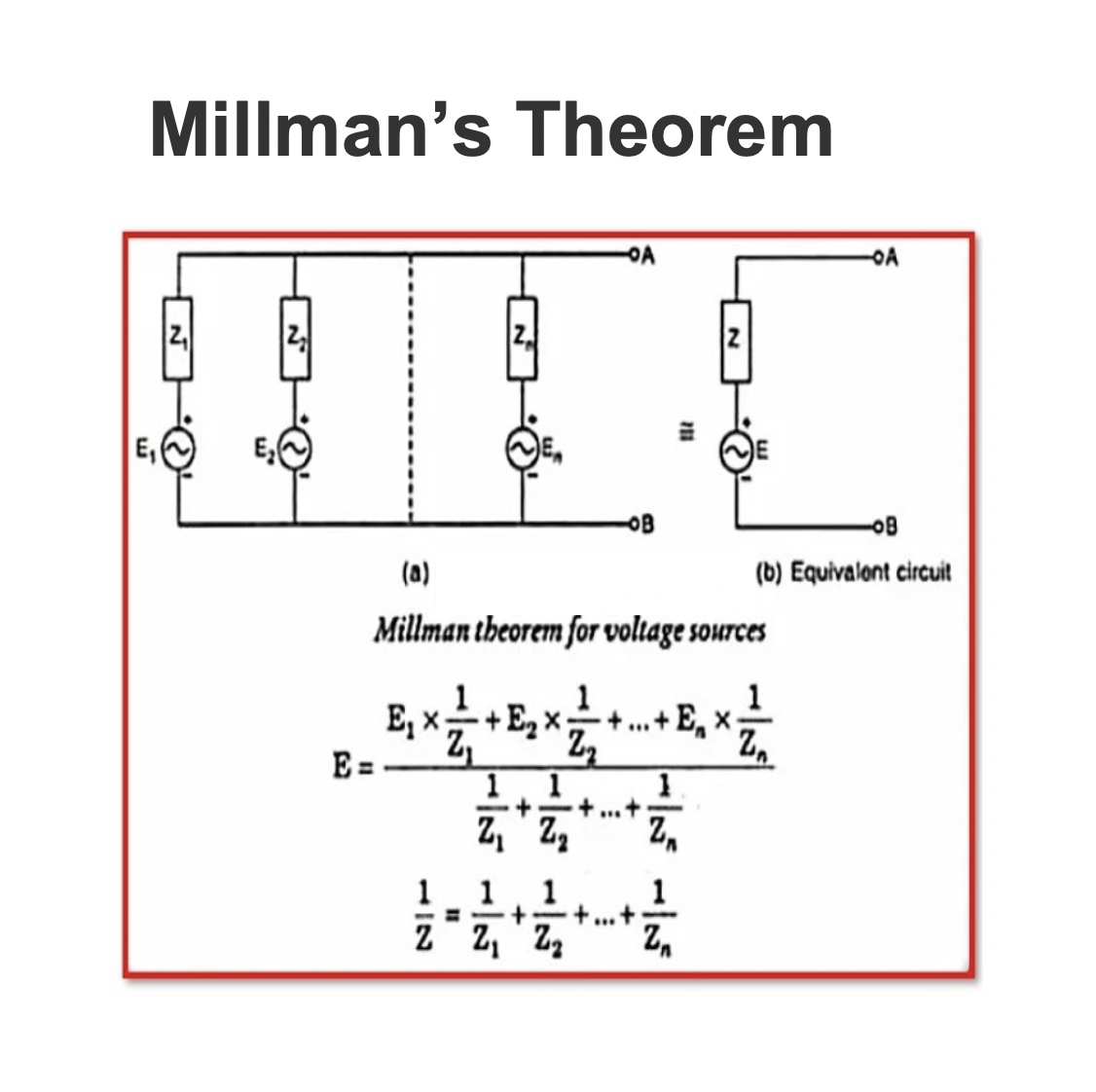
Millman’s Theorem is a principle in electrical engineering that allows the complex impedance of a series of resistors and voltage sources to be reduced to a single equivalent impedance. It states that any series circuit consisting of a number of resistors and voltage sources can be represented by an equivalent circuit consisting of a single resistor in parallel with a single voltage source. The resistor is the equivalent resistance of the circuit, and the voltage of the source is the equivalent
03/09/2024
Consult
Tip
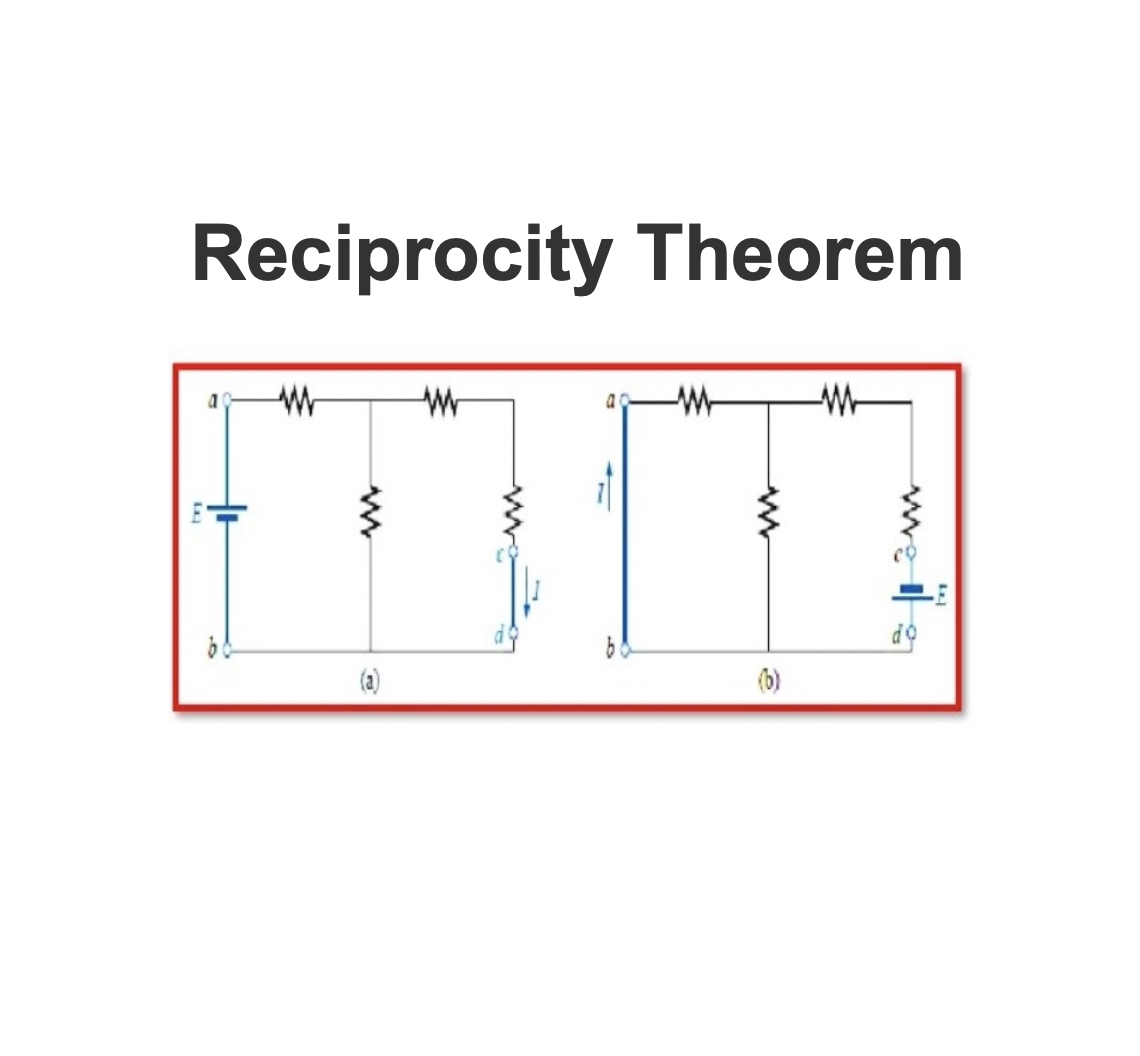
The Reciprocity Theorem is a principle in electromagnetics that relates the voltage and current at two points in a linear, passive network. It states that the ratio of the voltage at one point to the current at another point is equal to the ratio of the current at the first point to the voltage at the second point.What is the formula for the reciprocity theorem?Mathematically, the Reciprocity Theorem can be expressed as:V1/I1= V2/I2where:V1– the voltage at the first pointI1– the current at the f
03/09/2024
Consult
Tip
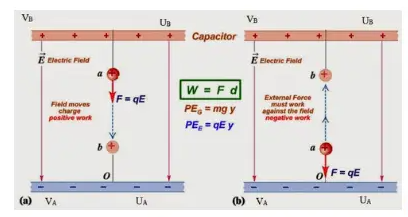
The concept of electron volt is very simple. Let us start from very basic. We know the unit of power is watt.W = VI, where V is the voltage and I is the current.Now as I is current, it is nothing but rate of charge transfer. Therefore, instantaneous impression of power would beWhere, q(t) is the amount of charge transferred in time t.Now energy is expressed asWhere, q is the charge in Coulomb crosses a voltage V volts.From the expression of energy we can write the energy required or work to be d
03/09/2024
Consult
Tip
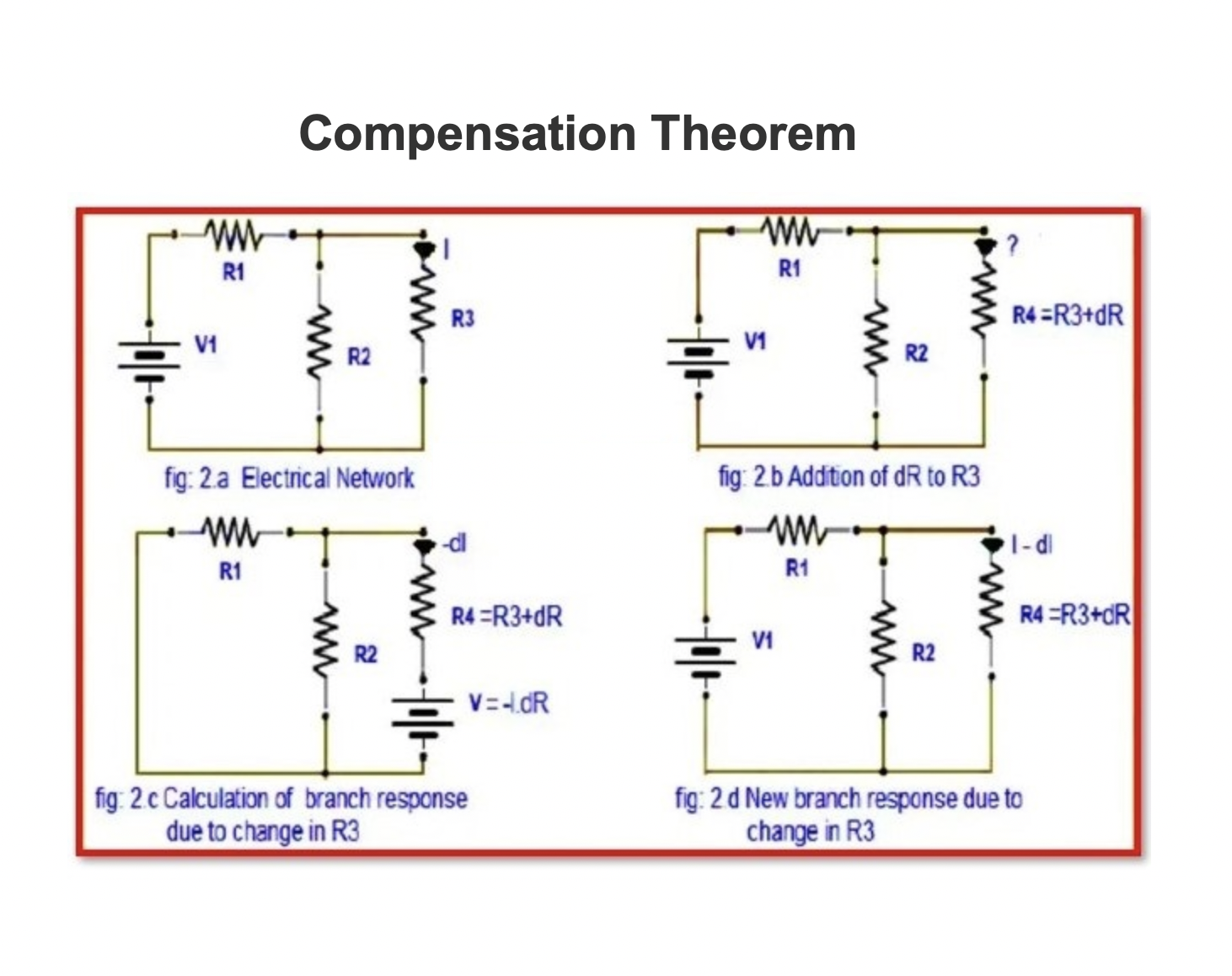
The Compensation Theorem is a principle in electrical engineering that allows the response of a linear, two-port network to be determined based on the response of the network to a single input. It states that the response of a two-port network to any two inputs can be determined by measuring the response of the network to a single input and a zero input.The Compensation Theorem is based on the idea that the response of a linear, two-port network to any two inputs can be represented by a matrix,
03/09/2024
Consult
Tip
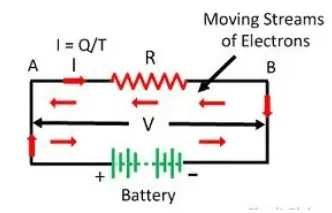
What is Electrical Energy?Before explaining what electrical energy is, let us try to review the potential difference between two points in an electric field.Suppose potential difference between point A and point B in an electric is v volts.As per the definition of potential difference we can say, if one positive unit electrical charge that is a body containing one-coulomb positive charge travels from point A to point B, it will do v joules work.Now instead of one-coulomb charge if q coulomb char
03/09/2024
Consult
Tip
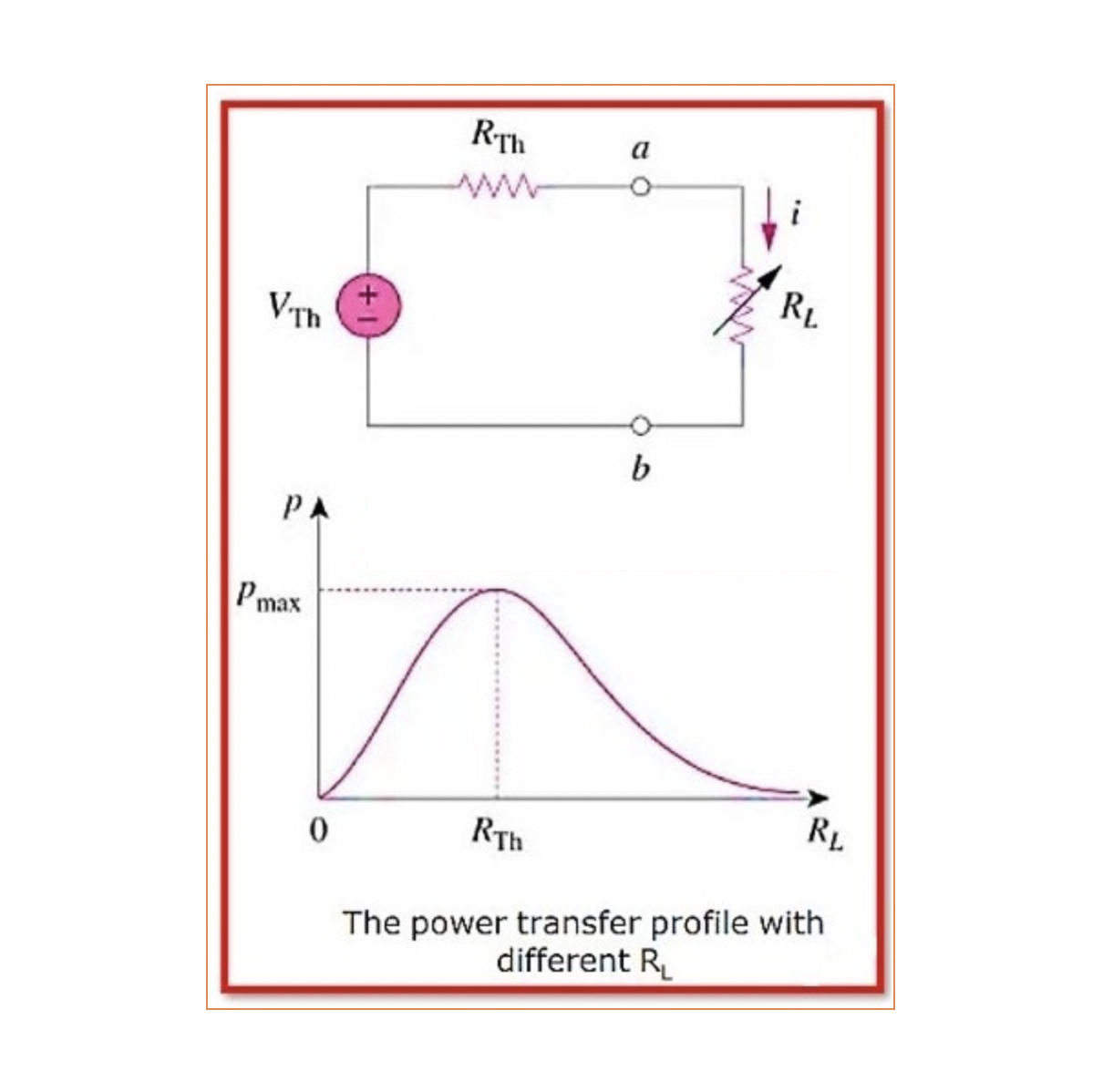
In electrical engineering, the Maximum Power Transfer Theorem states that in a passive, two-port, linear network, the power transmitted to the load is maximised when the load resistance (RL)is equal to the Thevenin equivalent resistance (RTH) of the network. The Thevenin equivalent resistance of a network is the resistance seen looking into the terminals of the network with all sources of voltage removed and the terminals shorted together.The Maximum Power Transfer Theorem is based on the idea t
03/09/2024
Consult
Tip
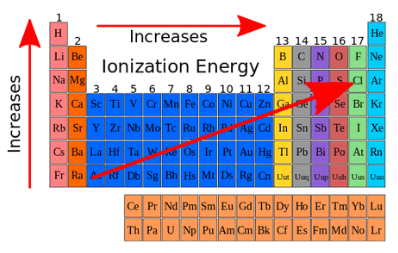
The ability of an element to give away its outermost electrons to form positive ions is manifested in the amount of energy supplied to its atoms sufficiently enough to take away the electrons out of them. This energy is known as Ionisation Energy. Simply speaking, the Ionisation Energy is the energy supplied to an isolated atom or molecule to knockout its most loosely bound valence shell electron to form a positive ion. Its unit is electron-volt eV or kJ/mol and is measured in an electric discha
03/09/2024
Consult
Tip






