• Product
  • Suppliers
  • Manufacturers
  • Solutions
  • Free tools
  • Knowledges
  • Experts
  • Communities
Search


Free Expert Guides on Power Systems, Circuit Design & Electrical Troubleshooting

Access free engineering resources from IEE Business—covering power design, circuit layout, equipment selection, and troubleshooting. Expert-developed guides help engineers, procurement, and project teams make better decisions. Stay ahead on smart grids, renewables, efficiency, and AI tools. Improve reliability, reduce downtime, and enhance outcomes with real-world solutions. Explore our knowledge hub today.
Resistivity Laws of Resistance and Unit of Resistivity
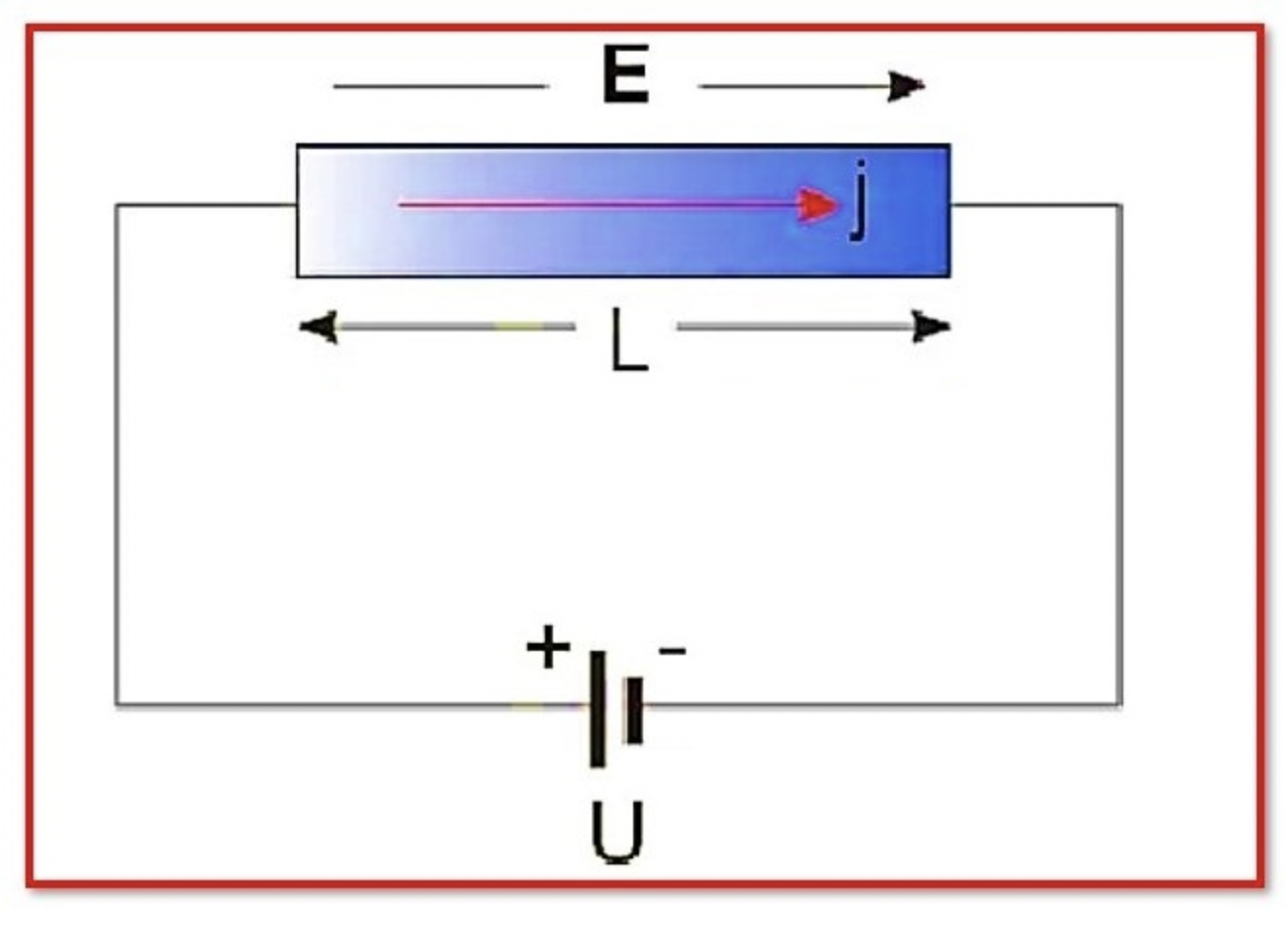
Resistivity or Coefficient of ResistanceResistivity or Coefficient of Resistance is a property of substance, due to which the substance offers opposition to the flow of current through it. Resistivity or Coefficient of Resistance of any substance can easily be calculated from the formula derived fromLaws of Resistance.Laws of ResistanceThe resistance of any substance depends on the following factors, Lengthof the substance. Cross sectional areaof the substance. Thenature of materialof the substa
03/09/2024
Consult
Tip
Consult
Tip
Explain Biot Savart Law
What exactly is Biot Savart Law?The Biot Savart Law is a mathematical equation that describes the magnetic field produced by a constant electric current. It connects the magnetic field to the electric current’s size, direction, length, and proximity. Ampere’s circuital law and Gauss’ theoremare both consistent with the Biot-Savart law.The Biot-Savart law is essential to magnetostatics, having a similar function toCoulomb’s lawin electrostatics.Biot Savart Law Statement:According to the Biot-Sava
03/09/2024
Consult
Tip
Consult
Tip
Ampere’s circuital law
Ampere’s circuital law is a fundamental law in electromagnetism that relates the magnetic field around a conductor to the electric current flowing through the conductor. It is named after French scientist André-Marie Ampère, who developed the law in the early 19th century.Ampere’s circuital law Equation:Ampere’s circuital law can be expressed mathematically as:∮B⋅ds =µ0Iencwhere:∮B⋅ds – The integral of the magnetic field (B) around a closed path (ds)µ0 – The permeability of free space, a constan
03/09/2024
Consult
Tip
Consult
Tip
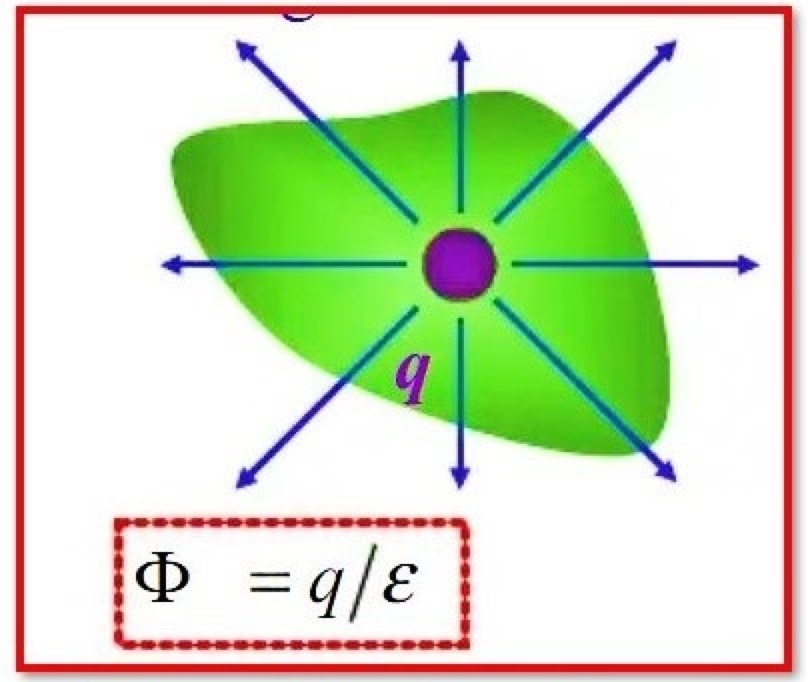
State Gauss’s law
In physics, Gauss’s Law is a fundamental relationship that connects the distribution of electric charge to the resulting electric field. It is a generalization of Coulomb’s Law, which describes the electric force between two-point charges. Gauss’s Law states that the flux of the electric field through any closed surface is equal to the charge enclosed within that surface.Gauss’s law Mathematical Expression:Mathematically, Gauss’s Law can be expressed as:∫E⋅dA = q/εwhere:E – The electric fielddA
03/09/2024
Consult
Tip
Consult
Tip
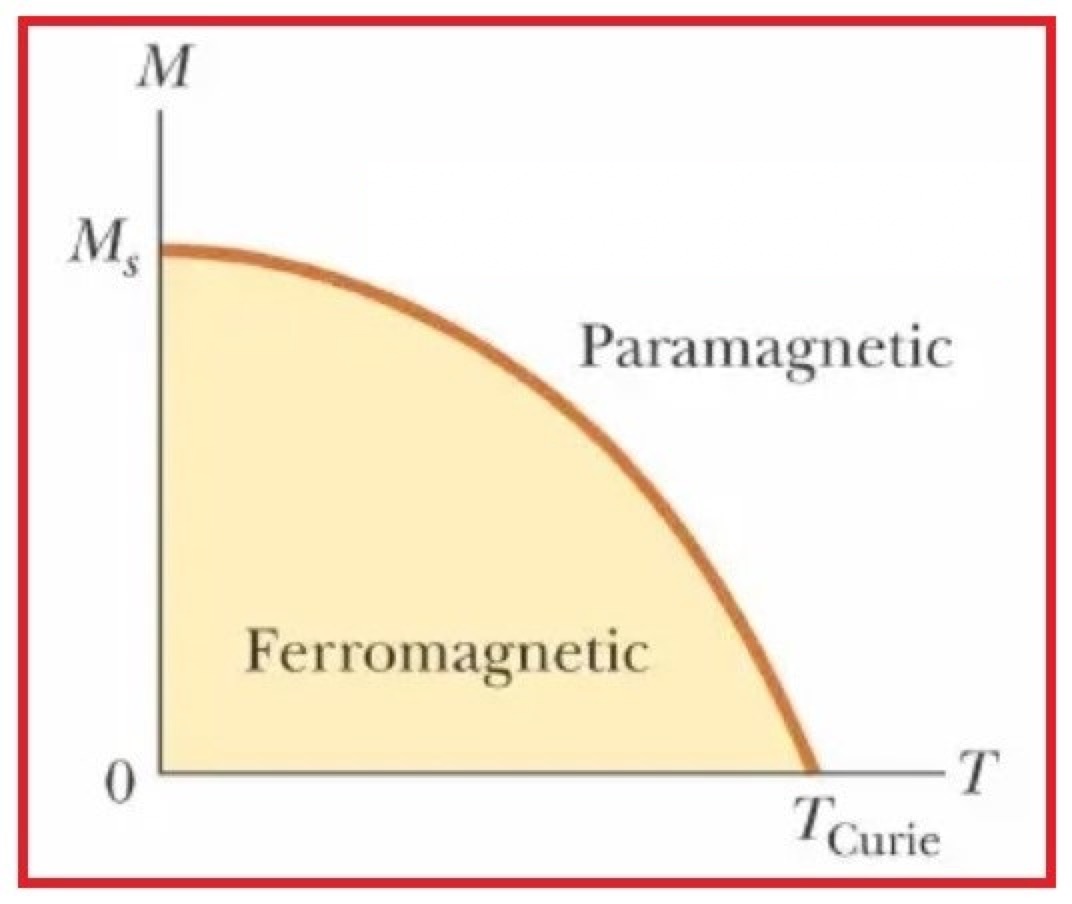
Curie’s Law
Curie’s Law is a relationship in physics that describes the behavior of magnetic materials at different temperatures. It states that the magnetic moment per unit volume of a material is directly proportional to the temperature. The magnetic moment of a material is a measure of the strength of its magnetization.Curie’s Law Expression:Mathematically, Curie’s Law can be expressed as:M/V = C/Twhere:M – The magnetic moment per unit volumeV – The volume of the materialC – A constant of proportionality
03/09/2024
Consult
Tip
Consult
Tip
Resistance Variation with Temperature
There are some materials mainly metals, such as silver, copper, aluminum, which have plenty of free electrons. Hence this type of materials can conduct current easily that means they are least resistive. But the resistivity of these materials is highly dependable upon their temperature. Generally metals offer more electrical resistance if temperature is increased. On the other hand the resistance offered by a non-metallic substance normally decreases with increase of temperature.If we take a pie
03/09/2024
Consult
Tip
Consult
Tip
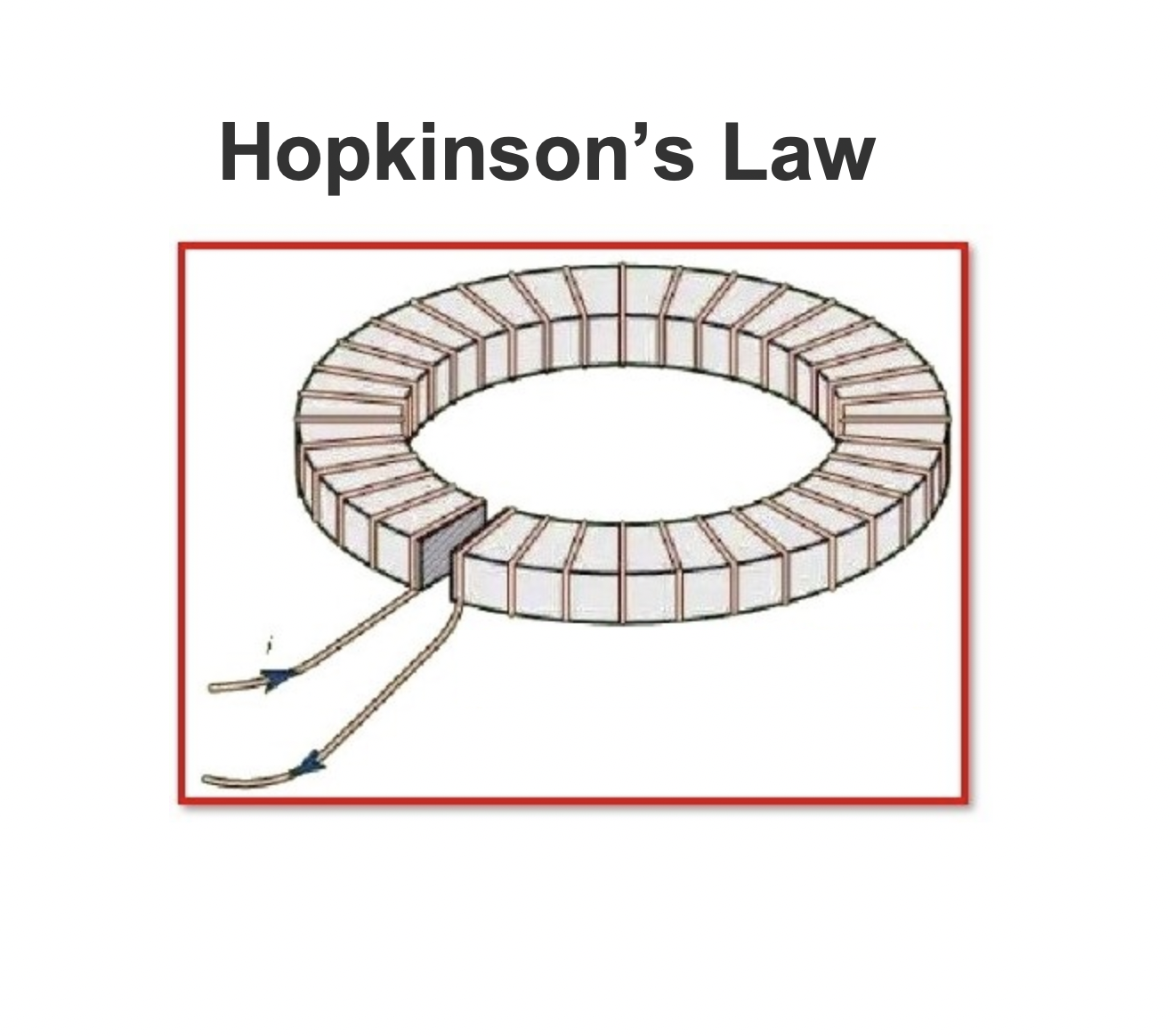
Hopkinson’s Law
Hopkinson’s Law is a relationship in materials science that describes the behavior of materials under high strain rates. It states that the stress of a material is proportional to the strain rate at which it is deformed. Hopkinson’s Law is named after Sir Benjamin Baker Hopkinson, who first proposed it in the early 20th century.Hopkinson’s Law Mathematical Expression:Mathematically, Hopkinson’s Law can be expressed as:σ = k ε̇where:σ – The stress of the materialk – The material’s strength coeffi
03/09/2024
Consult
Tip
Consult
Tip
Electrical Reactance: What is it?
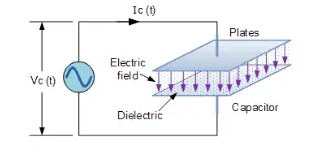
What is Reactance?Reactance (also known as electrical reactance) is defined as the opposition to the flow of current from a circuit element due to its inductance and capacitance. Greater reactance leads to smaller currents for the same applied voltage. Reactance is similar to electric resistance, although it differs in several respects.When an alternating current passes through the electric circuit or element, the phase, and amplitude of current will change. The reactance is used to compute this
03/09/2024
Consult
Tip
Consult
Tip
Wiedemann–Franz law
The Wiedemann–Franz law is a relationship in physics that relates the electrical conductivity of a metal to its thermal conductivity. It states that the ratio of the electrical conductivity to the thermal conductivity of a metal is proportional to the temperature and is equal to a constant known as the Lorenz number. The Wiedemann–Franz law is named after German physicists Georg Wiedemann and Robert Franz, who first proposed it in the mid-19th century.Wiedemann–Franz law Derivation:Mathematicall
03/09/2024
Consult
Tip
Consult
Tip
How to Calculate Equivalent Resistance
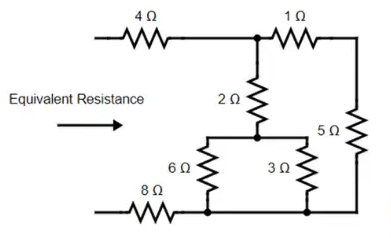
What is Equivalent Resistance?The equivalent resistance is defined as a point where the total resistance is measured in a parallel or series circuit (in either the whole circuit or in a part of the circuit). The equivalent resistance is defined between two terminals or nodes of the network. Equivalent resistance may sound complicated, but it’s just a technical way to say “total resistance”.In the equivalent resistance of a network, a single resistor could substitute the complete network so that
03/09/2024
Consult
Tip
Consult
Tip
Send inquiry
+86
Click to upload file
Download
Get the IEE Business Application
Use the IEE-Business app to find equipment, obtain solutions, connect with experts, and participate in industry collaboration anytime, anywhere—fully supporting the development of your power projects and business.