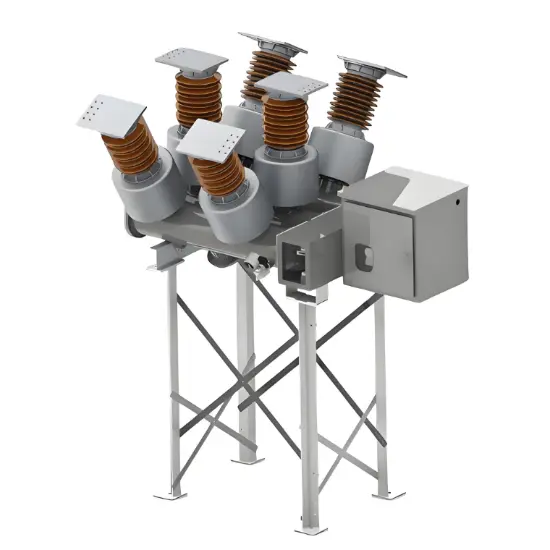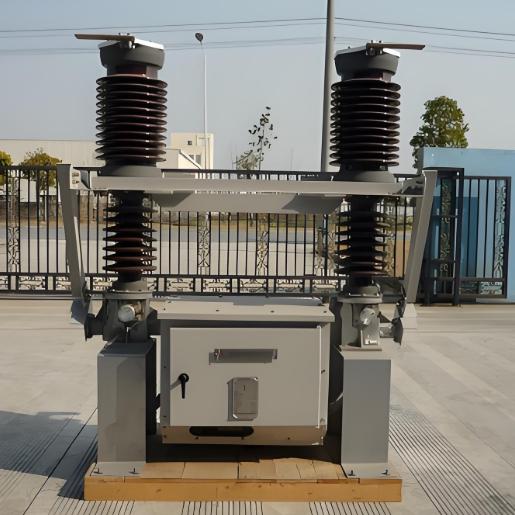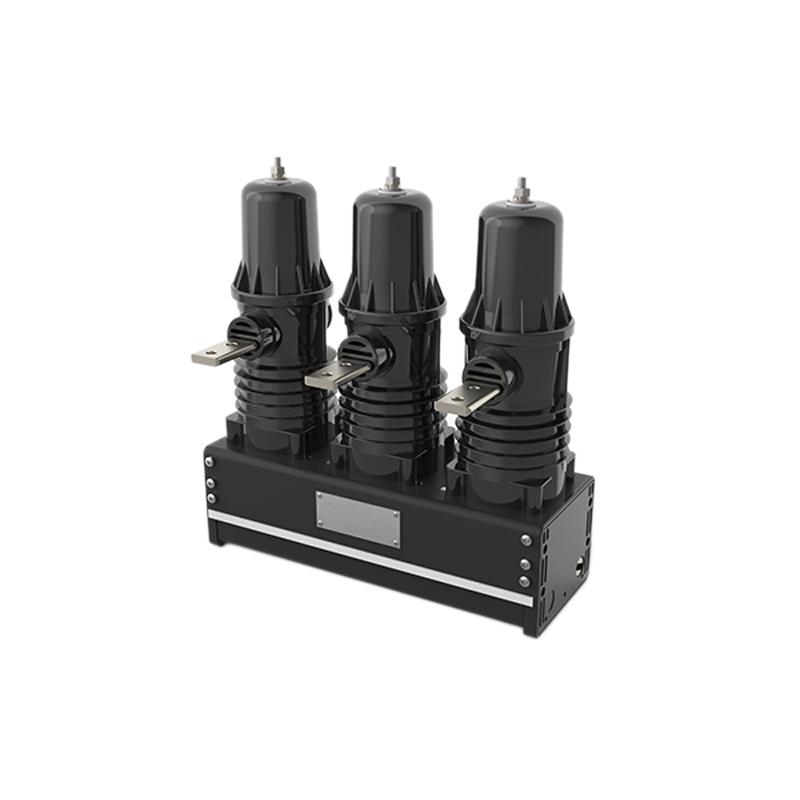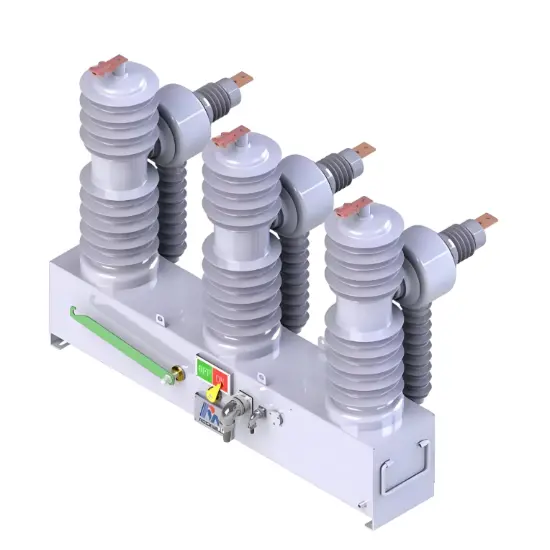
The rural power grid transformation plays an important role in reducing rural electricity tariffs and accelerating rural economic development. Recently, the author participated in the design of several small-scale rural power grid transformation projects or conventional substations. In rural power grid substations, conventional 10kV systems mostly adopt 10kV outdoor auto circuit vacuum reclosers.
To save investment, we adopted a scheme in the transformation that removes the control unit of the 10kV outdoor auto circuit vacuum recloser and converts it into an outdoor vacuum circuit breaker. This raises the question of how to modify the protection and control circuits to integrate them into a microcomputer-based integrated monitoring system. This issue and its corresponding solutions will be further elaborated below.
1. Basic Principles of the 10kV Outdoor Auto Circuit Vacuum Recloser
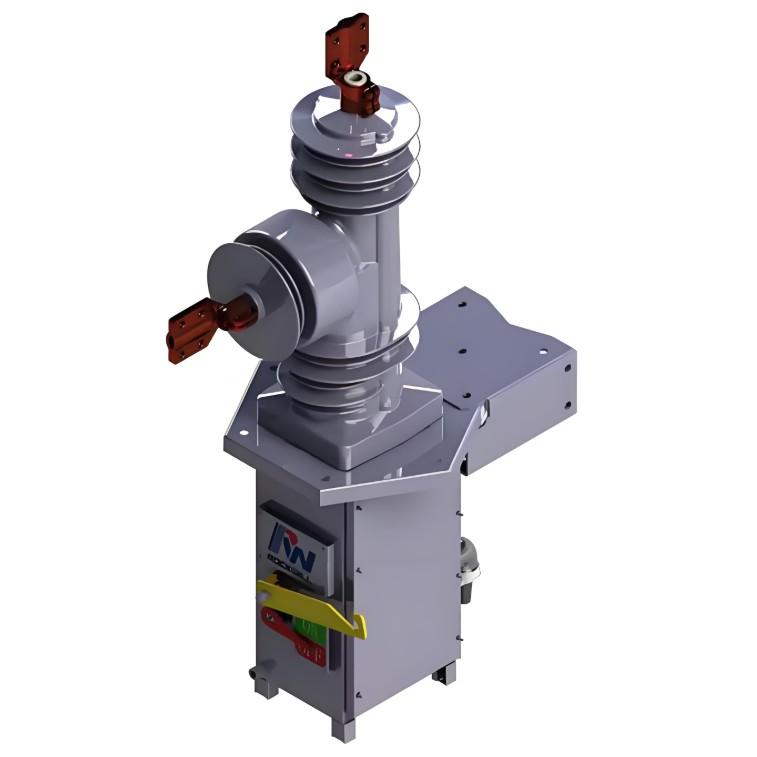
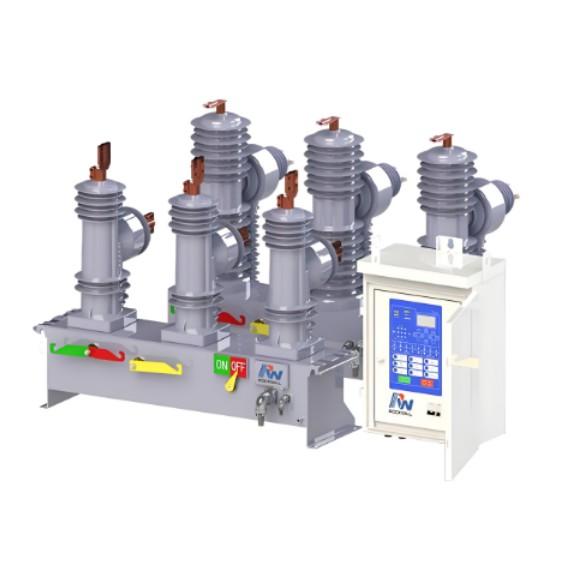
The 10kV outdoor auto circuit vacuum recloser integrates switching, control, protection, and monitoring functions into one unit. It is a preferred intelligent device for distribution automation, capable of automatically performing opening and reclosing operations on AC lines according to a preset sequence, and subsequently resetting automatically or locking out. It features self-contained (requiring no external power source) control and protection functionality. Since its introduction into China, it has been widely used in urban distribution networks and rural substations due to its unique advantages.
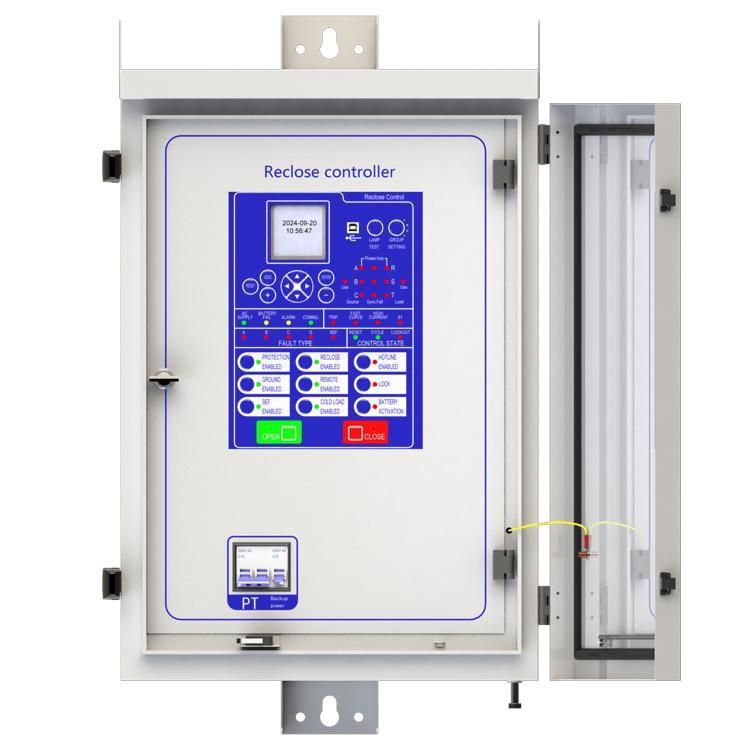
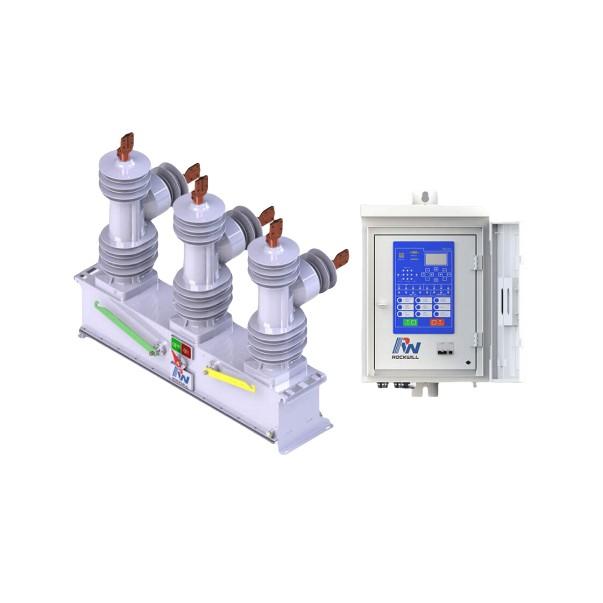
The 10kV outdoor auto circuit vacuum recloser consists of two parts: the main recloser body and the controller unit. Depending on the method of supplying control power, the controller generally comes in three configurations:
Using AC 220V directly as both operating and closing power for the controller;
Converting AC 220V to regulated DC 220V for operating and closing power;
Powering the controller with an internal lithium battery.
The recloser body is equipped with bushing-type current transformers (CTs) to detect line current. The measured values from each phase are transmitted separately to the controller. Upon confirming a fault current and after a preset time delay, the recloser automatically performs opening and reclosing operations according to a predetermined sequence. When a transient fault occurs on the system, the automatic reclosing function restores power supply automatically.
If the fault is permanent, the recloser operates according to its pre-set sequence. After completing the preset number of reclosing attempts (typically three), it confirms the fault as permanent. A sectionalizer then isolates the faulty branch, restoring power to non-faulted sections. Manual intervention is required to clear the fault and reset the recloser’s lockout status to return it to normal operation. When used in coordination with sectionalizers and sectional circuit breakers, the recloser effectively clears transient faults and isolates permanent fault locations, minimizing both outage duration and affected area.
2. Modification Methods for the 10kV Outdoor Auto Circuit Vacuum Recloser Controller
To reduce investment costs, we implemented a scheme in the transformation that removes the controller unit of the 10kV outdoor auto circuit vacuum recloser and repurposes the device as an outdoor vacuum circuit breaker. After the substation adopts an integrated automation system, the protection and monitoring functions of the recloser must be disabled. However, the current signals from the recloser body and the trip/close circuits of the circuit breaker must be connected to the 10kV protection and monitoring unit of the integrated automation system. The specific modifications are as follows:
Disable the recloser’s protection and detection functions by disconnecting the controller’s power supply and output circuits at the terminal block.
The current signals from the recloser body are typically routed through the controller’s terminal block to the 10kV protection and monitoring unit. The wiring from the terminal block to the original controller must be disconnected to avoid parasitic circuits. Alternatively, the secondary side of the CTs on the recloser body can be directly connected to the 10kV protection and monitoring unit.
The control power for the 10kV integrated protection and monitoring unit is typically DC 220V or 110V. Given the three original controller power configurations, the modification approaches are as follows:
Original configuration: AC 220V for both operation and closing power
→ Replace the trip/close coil with a DC 220V or 110V version. If the mechanism uses a spring-charging motor that is not compatible with both AC and DC, it must also be replaced.
Original configuration: AC 220V converted to regulated DC 220V
→ Disconnect the power supply from the controller to the trip/close circuits and instead power them directly from the 10kV integrated protection and monitoring unit. The substation control power should be set to DC 220V.
Original configuration: Controller powered by built-in lithium battery
→ In this case, the control circuit typically uses DC 36V or 12V, while the trip/close circuits use AC 220V. During modification, the trip/close coils must be replaced. The coil terminals should be connected in series with the circuit breaker’s auxiliary contacts and led directly to the terminal block. Any spring-charging motor not rated for both AC and DC must also be replaced.
Since the controller structure is compact, when selecting replacement trip/close coils and charging motors, products with dimensions identical to the originals should be preferred. Crucially, the new wiring must have no connection whatsoever to the original controller circuits to prevent parasitic loops.
3. Conclusion
During rural power grid transformation, challenges may arise when retrofitting existing equipment to work with new automation systems. However, as long as appropriate solutions are developed for these issues, cost savings can be achieved while still meeting project objectives.
Note: This retrofit approach was relatively common in early rural grid upgrades (e.g., before 2010) or during the phase-out of legacy equipment. In today’s rural power grids, new intelligent devices or dedicated vacuum circuit breakers are more commonly deployed directly.