Search


Solid-State Circuit Breakers: No Arc, Yet Still Limited Lifespan?

Learn why solid-state circuit breakers have no arc yet still face lifespan limits – discover the key factors affecting durability and reliability.

RW Energy
Field: Distribution Automation
10Year<
China
Add us on Google
 

1. What Is a Solid-State Circuit Breaker?

Traditional circuit breakers rely on mechanical contacts to make and break current. When interrupting large currents, a high-temperature arc forms, repeatedly eroding the contacts until the breaker reaches end of life.

A Solid-State Circuit Breaker (SSCB) replaces mechanical contacts with power semiconductor devices — such as IGBTs or SiC MOSFETs — acting as "electronic switches" controlled by gate voltage. With no physical contact separation, arcing is fundamentally eliminated. Key advantages include:

  • Ultra-fast switching — interruption times in the microsecond range, hundreds of times faster than mechanical breakers
  • Far longer switching life — no arc erosion or mechanical wear, though each switching event still incurs some loss; life is not "infinite"
  • Silent, vibration-free operation — no moving mechanical parts

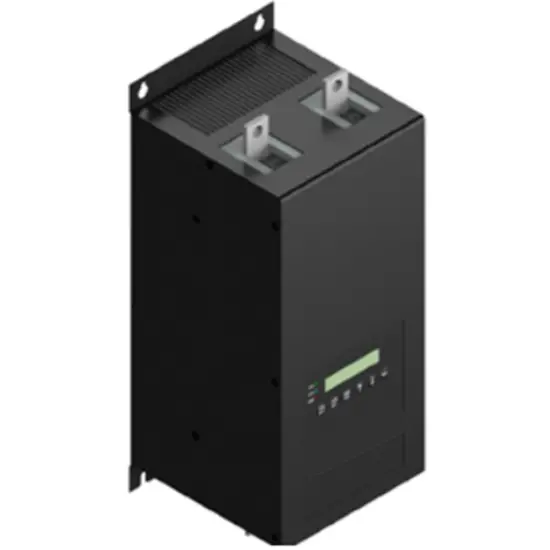
1.5kV High performance SCB Solid State Breaker

High performance SCB Solid State Breaker


2. No Arc ≠ Never Fails

Eliminating the arc removes the biggest "killer," but SSCBs still face several "invisible killers" that limit their lifespan:

1. Thermal Stress

Semiconductor devices in the on-state are not ideal zero-resistance switches; they possess an on-state resistance. Current flow generates heat per Joule's law (P = I²R). During large-current interruption, instantaneous power dissipation is substantial, causing rapid device temperature spikes. If thermal design is inadequate, repeated thermal shock induces micro-cracks in the semiconductor die, leading to eventual failure.

2. Material Ageing — The Silent "Chronic Disease"

Power semiconductor modules have complex internal structures: die, bond wires (fine metal wires connecting die to terminals), solder layers, substrates, etc. Over long-term operation:

  • Bond wires suffer fatigue from thermal cycling, gradually lifting off
  • Solder layers develop voids and cracks, increasing thermal resistance
  • Gate oxide layers degrade under sustained electric field stress

These are fundamental material-level physical processes, entirely independent of arcing, and constitute the root cause of finite SSCB lifespan.

An SSCB is more than a few semiconductor dies; it integrates driver circuits, current sensors, microcontrollers, optocouplers, and numerous auxiliary electronic components. System reliability equals the reliability of the weakest link — failure of any single auxiliary component can render the entire breaker inoperative.

4. Environmental Erosion

High/low temperature cycling, humidity, dust, vibration — these external environmental factors accelerate ageing of all electronic components. While SSCBs lack internal mechanical wear, they remain physical devices operating in the real world.


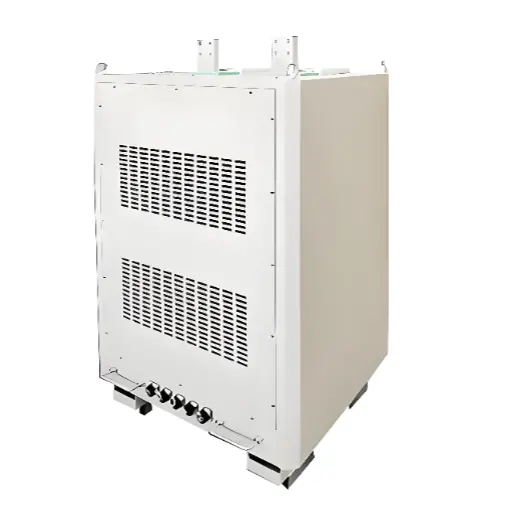
Intelligent Solid State DC Circuit Breaker

Intelligent Solid State DC Circuit Breaker

3. Side-by-Side Comparison

Comparison Dimension Traditional Mechanical Breaker Solid-State Circuit Breaker (SSCB)
Switching Principle Mechanical contact make/break Power semiconductor conduction/blocking
Arc Present; contacts erode Typically no mechanical arc
Switching Speed Millisecond level Microsecond level achievable
Switching Life Limited by mechanical wear & arc erosion Typically far exceeds mechanical breakers
Primary Failure Causes Contact erosion, mechanical wear Thermal stress, electrical stress, device ageing
Short-Circuit Withstand Generally strong Fast response, but device sensitive to transient energy
Cost Generally lower Generally higher
 

 4. Summary

Solid-state circuit breakers replace mechanical contacts with power semiconductors, fundamentally eliminating the arc — the single biggest wear mechanism. This achieves a qualitative leap in both switching life and response speed.

But "no arc" only removes the biggest enemy. The semiconductor devices' own thermal stress, material ageing, auxiliary component reliability, and environmental factors remain the "invisible killers" that limit lifespan.

An SSCB's life is not infinite — it is simply far longer than that of a traditional breaker. In the engineering world, there is no true "perpetual motion machine." Every technology has its physical limits; the engineer's mission is to push reliability and lifespan to the absolute maximum within those limits.

Edited From:Garca

Give a tip and encourage the author!

Comments

Share your question or perspective
WhatsApp
Send inquiry
+86
Click to upload file
Download
Get the IEE Business Application
Use the IEE-Business app to find equipment, obtain solutions, connect with experts, and participate in industry collaboration anytime, anywhere—fully supporting the development of your power projects and business.
Login
or continue with
New here?
Register