Search


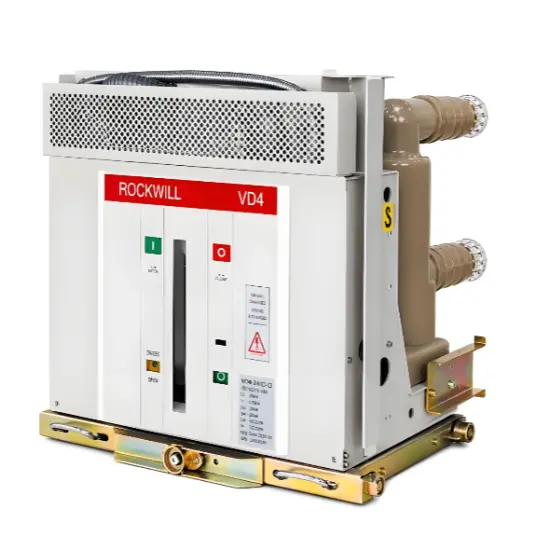
ROCKWILL Indoor Vacuum Circuit Breaker: In-Depth Analysis of Operating Sequence and Arc Extinguishing Reliability

Rockwill indoor VCB technical insight: operating sequence (O-0.3s-CO-180s-CO) and arc extinction reliability analysis for MV switchgear applications.

Rockwill
Field: Manufacturing
10Year<
China
Add us on Google
 
Indoor high voltage vacuum circuit breaker 40.5kV
Intelligent solid sealed MV Vacuum Circuit Breaker 12kV

I. Core Concept: Definition and Operating Condition Simulation of the Rated Operating Sequence

In high-voltage power systems, the rated operating sequence "O-0.3s-CO-180s-CO" of indoor vacuum circuit breakers represents a stringent duty cycle standard used in type tests to evaluate arc extinguishing capability and dielectric recovery performance. This sequence accurately simulates the worst-case "auto-reclosing" condition during an overhead line short-circuit fault:

  • O (Open): When a short-circuit fault occurs on the line, the breaker first performs an opening operation to interrupt the fault current.
  • 0.3s (Dead Time): This brief interval is set by the automatic reclosing relay. It provides initial recovery time for arc deionization at the fault point while maintaining continuity of power supply.
  • CO (Close-Open Operation): The breaker executes a "close followed immediately by open" sequence. This simulates reclosing onto a permanent fault — the breaker must withstand a massive short-circuit current surge and interrupt it again within an extremely short time.
  • 180s (Reclaim Time): After one extreme CO cycle, the breaker needs a 3-minute cooling and recharging window.
  • CO (Second Close-Open): This simulates the final "forced re-energization" attempt by the dispatcher after confirming the fault has not cleared. If the breaker trips again, the fault is permanently locked out.

II. Arc Extinguishing Mechanism: Vacuum Interrupter Interruption and Recovery Characteristics

The ability of vacuum circuit breakers to operate under these extreme conditions depends on their unique arc extinguishing mechanism. In a vacuum, the arc is sustained primarily by metal vapor generated from the contact material. When the AC current crosses zero, the metal vapor rapidly diffuses and condenses on the vapor shield, allowing the dielectric strength across the contact gap to recover quickly. However, this recovery capability is limited by the interrupter's thermal capacity and the contact surface cooling rate. If subjected to continuous short-circuit current interruptions, heat accumulates inside the interrupter, leading to excessive metal vapor concentration and severely impairing dielectric recovery.

iee-business

III. Critical Impact of Parameter Changes on Arc Extinguishing Reliability

This operating sequence is a boundary condition derived from rigorous thermodynamic and kinetic calculations. Unauthorized modification of the interval times directly breaks the system balance:

1. Consequences of Shortening the 0.3s Interval

Dielectric Breakdown and Reignition: The 0.3s interval is the safety threshold ensuring the interrupter's dielectric strength recovers sufficiently to withstand the system recovery voltage. If the interval is too short, the contact gap insulation has not fully recovered, and the breaker may fail to withstand system voltage upon reclosing, resulting in gap breakdown or arc reignition.

Interruption Capability Degradation: Attempting to interrupt a second short-circuit current while insulation has not yet recovered substantially reduces the breaker's actual breaking capacity, which can easily lead to interruption failure or even breaker explosion.

2. Consequences of Shortening the 180s Interval

Thermal Capacity Collapse: The 180s interval is the critical window for interrupter heat dissipation and contact cooling. If the next CO operation is performed before the interrupter has fully cooled, residual high temperatures inside the interrupter cause violent contact material evaporation, leading to an exponential decline in arc extinguishing capability.

Dual Mechanical and Electrical Failure: Taking the high-reliability spring operating mechanism widely adopted by ROCKWILL and other brands as an example — closing releases the closing spring's stored energy, and the 180s reclaim time also accommodates the motor recharging cycle. If this interval is shortened, the closing spring may not be fully charged, or the opening speed may decrease. Insufficient opening speed prolongs arcing time and exacerbates contact erosion. Meanwhile, high temperature and electromagnetic force impact can easily cause contact welding, rendering the breaker completely unable to open.

3. Consequences of Extending the Intervals

While extending the intervals does not directly cause interruption failure, excessively long outage times defeat the purpose of automatic reclosing — "improving supply reliability." Additionally, for certain vacuum interrupters that rely on a specific temperature range to maintain sealing performance, extreme thermal cycling may introduce material fatigue risks.

IV. Conclusion

"O-0.3s-CO-180s-CO" is not merely a set of operating commands — it represents the "survival limit" of vacuum circuit breakers under extreme short-circuit conditions. The 0.3s interval ensures initial dielectric recovery, while the 180s interval guarantees thermal capacity reset and mechanical energy replenishment. In routine operation and maintenance, this rated operating sequence must be strictly followed. Any unauthorized modification of these time parameters will push the breaker outside its safe design envelope, posing a catastrophic threat to grid stability and equipment safety.

Edited From:Garca

Give a tip and encourage the author!

Comments

Share your question or perspective
WhatsApp
Send inquiry
+86
Click to upload file
Download
Get the IEE Business Application
Use the IEE-Business app to find equipment, obtain solutions, connect with experts, and participate in industry collaboration anytime, anywhere—fully supporting the development of your power projects and business.
Login
or continue with
New here?
Register