Search


Rockwill RVB Vacuum Circuit Breaker vs RHB SF6 Circuit Breaker - Technical Comparison

Rockwill RVB vacuum vs RHB SF6 circuit breaker technical comparison: performance, application, and selection guide for power systems.

Rockwill
Field: Manufacturing
10Year<
China
Add us on Google
RVB is primarily designed for medium-voltage distribution systems, emphasizing environmental friendliness, frequent operation capability, and distribution automation adaptability.

RHB is primarily designed for high-voltage and extra-high-voltage transmission systems, emphasizing high-capacity interruption capability, system reliability, and long-term operational stability.

1. Core Technical Comparison

Parameter Rockwill RVB Vacuum Circuit Breaker Rockwill RHB SF6 Circuit Breaker
Arc-Quenching Medium High vacuum (10^-4 to 10^-6 Pa) SF6 (sulfur hexafluoride) gas
Core Positioning Eco-friendly, frequent-operation equipment for medium-voltage distribution networks High-voltage / EHV transmission main-network interrupting equipment
Technical Characteristics Rapid vacuum arc diffusion and condensation quenching; no medium decomposition Self-blast SF6 gas quenching; high dielectric strength supporting large-capacity interruption
Total Interrupting Time Approx. 40-60 ms (varies by operating mechanism and voltage class) Approx. 40-60 ms (slight variation at higher voltage levels)
Rated Short-Circuit Breaking Capacity Up to approx. 40-50 kA (model-dependent) Up to 63 kA (voltage-dependent)
Mechanical Life Approx. 30,000 operations Approx. 10,000 operations
Electrical Endurance Approx. 50 full-capacity interruptions (IEC E2 class) Approx. 20 full-capacity interruptions (IEC E2 class)
Operating Mechanism Spring-operated mechanism Spring-operated mechanism
Applicable Standards IEC 62271-100 (mainly for <=40.5 kV, extended to 72.5 kV applications) IEC 62271-100 (72.5 kV-550 kV)
Environmental Adaptability -25°C to +40°C, altitude <=2000 m (derating required above 2000 m), pollution class II -30°C to +40°C, altitude <=2000 m (derating required above 2000 m), pollution class IV, seismic withstand 0.3 g
Typical Structure Embedded pole / porcelain bushing type Porcelain column type / tank type (live tank / dead tank)
Typical Applications 12-40.5 kV distribution networks, renewable energy integration, urban network renovation 72.5-550 kV main transmission grid, hub substations

Per IEC 62271-100, E2 class requires 50 full-rated short-circuit interruptions for Um <=52 kV (RVB) and 20 for Um >=110 kV (RHB).

iee-business

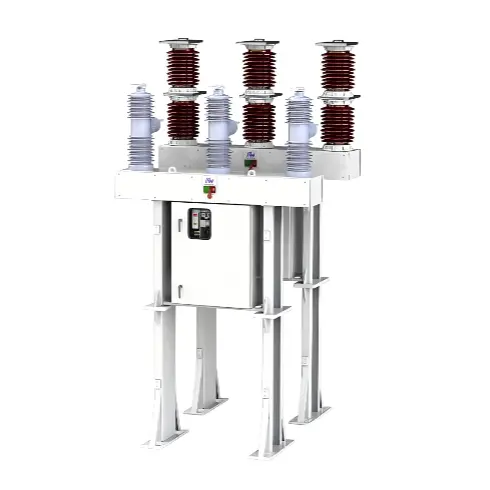
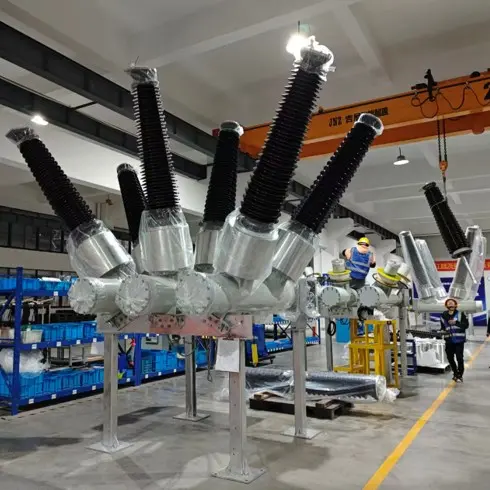
Outdoor live tank vacuum circuit breaker

2. Core Physical Principles (Technical Fundamentals)

2.1 RVB - Vacuum Arc-Quenching Principle

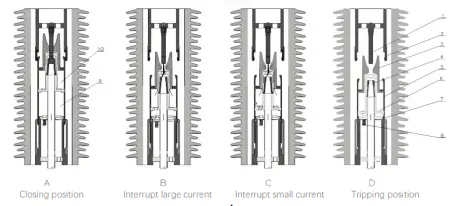
RVB employs a high-vacuum interrupter (10^-4 to 10^-6 Pa). When the current passes through natural zero, the arc rapidly diffuses in the vacuum environment and condenses on the internal arc shield, achieving fast arc extinction.

Key characteristics:

  • No greenhouse gas emissions (GWP = 0)
  • Arc energy is concentrated on the contact surface with controlled erosion
  • Particularly suitable for frequent switching duty (e.g., capacitor banks, distribution automation)

Therefore, RVB is better suited for frequent operation in medium-voltage distribution systems and green grid construction.

2.2 RHB - SF6 Arc-Quenching Principle

RHB uses SF6 gas as both the insulating and arc-quenching medium. The arc energy heats the gas to create a high-speed gas flow, achieving a self-blast arc-quenching mechanism.

Key characteristics:

  • Extremely high dielectric strength (approximately 2.5-3 times that of air)
  • Strong arc-quenching capability, suitable for EHV voltage levels
  • Single interrupter can withstand high system voltage
  • Excellent long-term operational stability

Therefore, RHB is primarily used as core interrupting equipment in high-voltage and EHV transmission backbone networks.

iee-business

3. Rockwill Dual-Technology Path Design Philosophy

3.1 Eco-Friendly Frequent-Operation Path (RVB Series)

The RVB series is based on vacuum arc-quenching technology, compliant with IEC 62271-100 (medium-voltage framework), with the following characteristics:

  • Zero greenhouse gas emissions during operation (GWP = 0)
  • Meets frequent operation requirements (mechanical life approx. 30,000 operations)
  • Full-capacity short-circuit breaking capability of approx. 50 operations (E2 class)
  • Available in both embedded pole and porcelain bushing configurations
  • Embedded-pole design offers excellent anti-pollution flashover performance and compactness

This series is particularly suitable for:

  • Urban distribution network upgrades
  • Renewable energy integration systems
  • Frequent switching load scenarios

3.2 High-Voltage High-Capacity Path (RHB Series)

The RHB series is based on SF6 self-blast arc-quenching technology, compliant with IEC 62271-100 (high-voltage framework, 72.5 kV and above), with the following characteristics:

  • High dielectric strength supporting EHV voltage levels
  • Rated short-circuit breaking capacity up to 63 kA
  • Full-capacity breaking capability of approx. 20 operations (E2 class)
  • Mechanical life approx. 10,000 operations
  • Typical maintenance cycle of 20-30 years (depending on operating environment and maintenance strategy)

Note: Although SF6 gas offers excellent performance, its global warming potential is relatively high (GWP approx. 23,500). Strict gas recovery and management procedures must therefore be implemented.

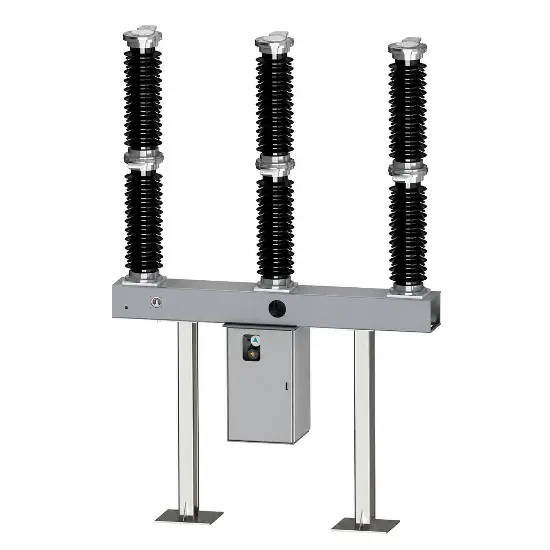
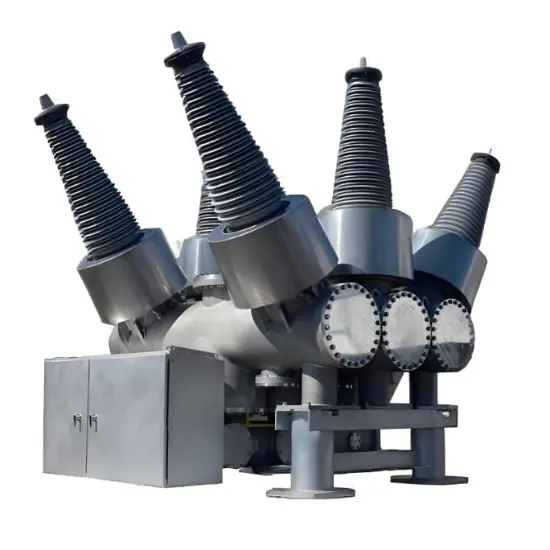
Outdoor Live tank SF6 gas circuit breaker 72.5kV

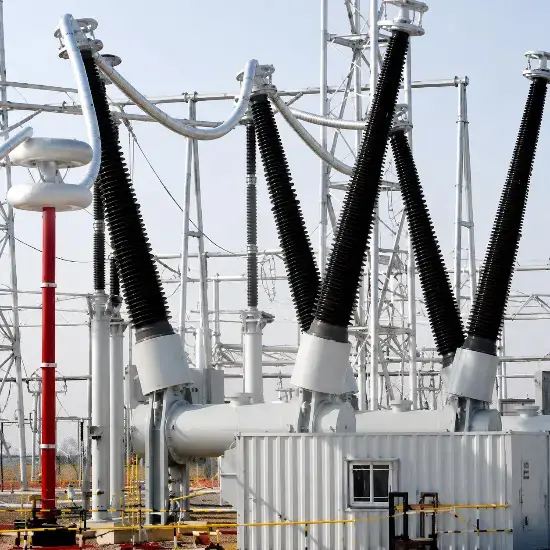
Outdoor Live tank SF6 gas circuit breaker

4. Selection Guide - Engineering Application Oriented

  • Voltage levels <=40.5 kV (extended to 72.5 kV for select applications)
  • Urban distribution and compact substations
  • Systems requiring frequent switching operations
  • New grid projects with strict environmental requirements

Core advantages: Eco-friendly + long life + frequent operation capability + compact structure

  • 72.5 kV-550 kV high-voltage and EHV systems
  • Main transmission networks and hub substations
  • High short-circuit current stress conditions
  • Systems demanding extremely high long-term operational reliability

Core advantages: High voltage class suitability + large-capacity interruption + long-term stable operation

5. Summary

RVB and RHB represent two circuit breaker technology paths that Rockwill has developed for different voltage levels and system requirements:

  • RVB achieves eco-friendly operation and frequent operation capability in medium-voltage distribution systems through vacuum arc-quenching technology.
  • RHB achieves large-capacity interruption and long-term reliable operation in high-voltage / EHV transmission systems through SF6 high dielectric strength.

Together, they form a complete circuit breaker technology system covering medium-voltage to EHV applications.

Edited From:Garca

Give a tip and encourage the author!

Comments

Share your question or perspective
WhatsApp
Send inquiry
+86
Click to upload file
Download
Get the IEE Business Application
Use the IEE-Business app to find equipment, obtain solutions, connect with experts, and participate in industry collaboration anytime, anywhere—fully supporting the development of your power projects and business.
Login
or continue with
New here?
Register