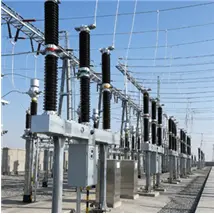
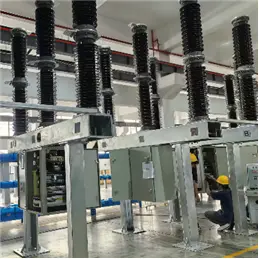
800kV EHV Dead Tank SF6 Circuit Breaker: Key Features and Differences from Standard Dead Tank Circuit Breakers
In extra-high-voltage (EHV) transmission systems, the EHV Dead Tank SF6 Circuit Breaker plays a critical role in switching, protection, and fault isolation in substations and transmission networks.
Compared with conventional Dead Tank SF6 Circuit Breakers rated at 252kV, 363kV, 420kV, or 550kV, an 800kV EHV Dead Tank SF6 Circuit Breaker is not simply a larger version of a conventional circuit breaker.
As the voltage level increases, the requirements for insulation coordination, arc interruption, transient recovery voltage, electric-field control, voltage grading, mechanical strength, SF6 sealing, seismic performance, and long-term reliability all become significantly more demanding.
For example, according to publicly available information for the ROCKWILL RHD-800 series, the 800kV model can be configured with a rated current of up to 5000A and short-circuit breaking capacities of 50kA or 63kA. The 800kV design uses two breaks per pole.
1. What Is an 800kV EHV Dead Tank SF6 Circuit Breaker?
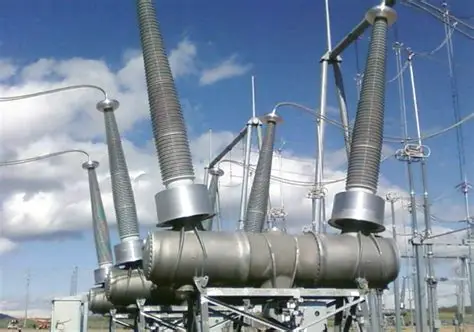
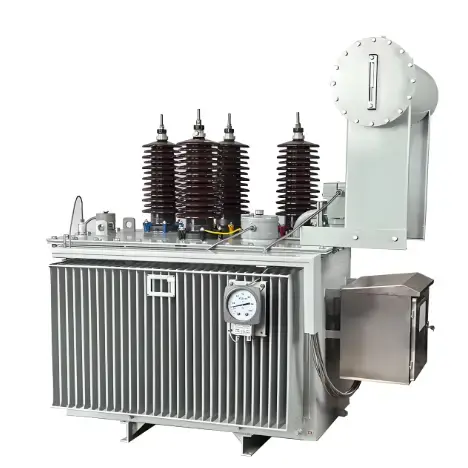
An 800kV EHV Dead Tank SF6 Circuit Breaker is a high-voltage switching device designed for 800kV extra-high-voltage transmission and substation systems.
The term “Dead Tank” does not mean that the circuit breaker is inactive. It refers to the fact that:
The metal tank containing the interrupter is maintained at ground potential, while the high-voltage interrupting components are enclosed inside the grounded metal enclosure.
This differs from a Live Tank circuit breaker, in which the interrupter itself is at high potential and is electrically isolated from ground through an insulating support structure.
In a Dead Tank design, the interrupter, contacts, and other key switching components are enclosed inside a grounded metal tank. High-voltage connections are brought into and out of the tank through high-voltage bushings.
This configuration also makes it possible to integrate current transformers (CTs) around the bushing assembly.
2. Why Is 800kV Considered an EHV Product?
800kV is a very high transmission voltage level and is primarily associated with large-scale, high-capacity power transmission systems.
Typical applications include:
- EHV/UHV transmission lines
- Large substations
- Power plant step-up substations
- Long-distance transmission projects
- Interconnection substations
- High-capacity power transmission hubs
For an 800kV circuit breaker, the challenge is not only to carry normal load current, but also to interrupt high short-circuit currents rapidly and reliably during faults.
In simple terms, an 800kV circuit breaker must:
Interrupt reliably, withstand the recovery voltage, and maintain long-term mechanical and insulation performance.
3. Key Features of an 800kV EHV Dead Tank SF6 Circuit Breaker
3.1 Extremely High Insulation Performance
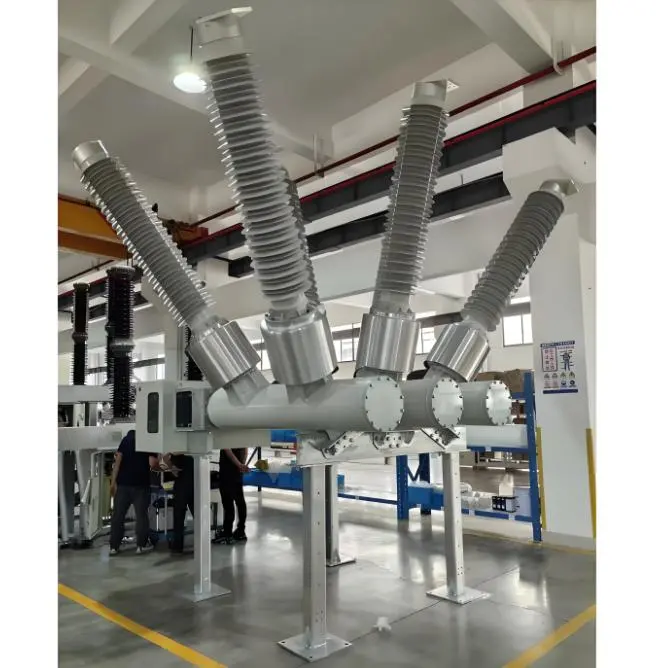
One of the most significant differences between an 800kV circuit breaker and a conventional high-voltage Dead Tank circuit breaker is the insulation system.
As the system voltage increases, the requirements for:
- Phase-to-ground insulation
- Phase-to-phase insulation
- Interrupter insulation
- Lightning impulse withstand
- Switching impulse withstand
- Power-frequency withstand
also increase significantly.
For example, publicly available RHD-800 technical information specifies a lightning impulse withstand voltage of approximately:
- 2100kV peak phase-to-ground
- 2750kV peak across the open contacts
The specified switching impulse withstand voltage is approximately:
- 1550kV peak phase-to-ground
- 1950kV peak across the open contacts
These values demonstrate that the insulation system of an 800kV circuit breaker requires highly specialized insulation coordination and electric-field control.
4. Two-Break Configuration at 800kV
Another important feature of an 800kV Dead Tank circuit breaker is its multi-break interrupter configuration.
At lower voltage levels, a single interrupter may be sufficient. However, at 800kV, the voltage stress and transient recovery voltage across a single interrupting gap can become extremely high.
Therefore, 800kV circuit breakers commonly use a two-break configuration per pole.
Conceptually:
Single-break design:
—— [Interrupter] ——
800kV two-break design:
—— [Break 1] —— [Break 2] ——
The two interrupters share the electrical stress during the interruption process.
This reduces the voltage stress on each individual interrupter and helps achieve the required insulation and interrupting performance at the 800kV level.
5. What Role Does SF6 Play in an 800kV Circuit Breaker?
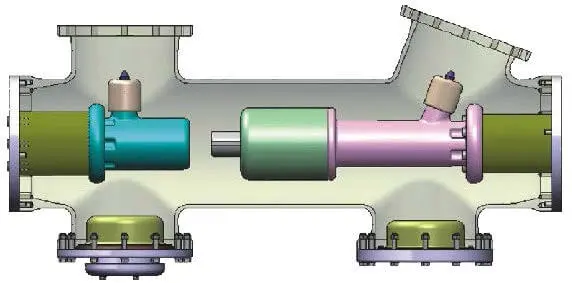
SF6 gas performs two important functions in a conventional SF6 circuit breaker.
5.1 Arc Interruption
When the circuit breaker opens, an electric arc forms between the contacts.
The arc must be extinguished rapidly in order to interrupt the fault current successfully.
SF6 has excellent dielectric and arc-quenching properties and has therefore been widely used in high-voltage and EHV circuit breakers.
5.2 Insulation
After the contacts separate, the insulation strength across the open interrupter must recover rapidly.
Otherwise, the following sequence could occur:
Dielectric breakdown → Arc re-ignition → Unsuccessful interruption
For an 800kV circuit breaker, both arc interruption capability and dielectric recovery performance must be carefully coordinated.
6. Main Differences Between an 800kV EHV Dead Tank and a Conventional Dead Tank Circuit Breaker
| Parameter |
Conventional Dead Tank SF6 CB |
800kV EHV Dead Tank SF6 CB |
| Voltage rating |
Typically 245/252kV, 363kV, 420kV, 550kV, etc. |
800kV |
| Application |
HV substations and transmission lines |
EHV/UHV transmission systems |
| Number of breaks |
Depends on voltage level |
Typically two breaks per pole |
| Insulation requirements |
High |
Extremely high |
| Electric-field control |
Important |
Critical |
| Voltage grading |
Required |
Highly demanding |
| Short-circuit breaking current |
Typically 40–63kA configurations |
50kA / 63kA configurations |
| Rated current |
Application dependent |
Up to 5000A in certain designs |
| Mechanical requirements |
High |
Very high |
| SF6 sealing |
Important |
Critical for long-term reliability |
| Bushing system |
HV bushing |
EHV composite or porcelain bushing system |
| CT integration |
Possible |
Commonly integrated around the bushing |
| Application environment |
Conventional substations |
Large EHV/UHV transmission projects |
| Design complexity |
Arc interruption + insulation |
Arc interruption + insulation + grading + electric field + mechanical design |
7. Why Is Voltage Grading So Important at 800kV?
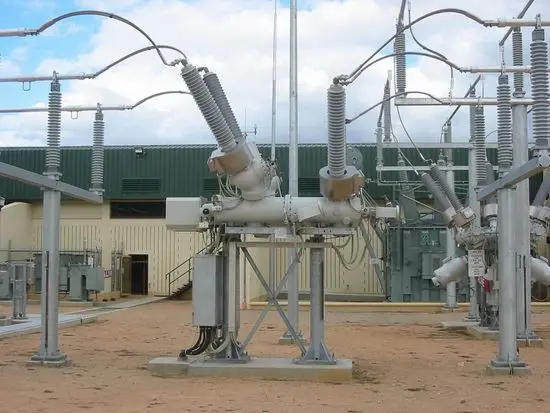
Voltage grading is one of the key engineering challenges in an EHV circuit breaker.
When multiple interrupters are connected in series, the ideal situation is for each interrupter to share the voltage equally.
In practice, however, the voltage distribution can be affected by:
- Stray capacitance
- Capacitance to ground
- Interrupter capacitance
- Bushing capacitance
- Physical geometry
- Connection arrangement
As a result, two interrupters do not necessarily share the voltage equally.
Therefore, grading capacitors, grading rings, and optimized electric-field structures may be required to achieve a more uniform voltage distribution.
This is particularly important at 800kV.
The key engineering question is therefore not simply:
“Can the circuit breaker interrupt the current?”
It is also:
“Can the voltage be properly distributed across the interrupters during both normal operation and transient conditions?”
8. Why Are Low Center of Gravity and Seismic Performance Important?
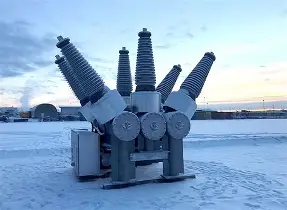
800kV circuit breakers are large and heavy outdoor electrical installations.
During earthquakes, strong winds, and short-circuit events, the equipment can experience significant mechanical forces.
Therefore, EHV Dead Tank circuit breakers must consider:
- Low center-of-gravity design
- Tank mechanical strength
- Support structure strength
- Bushing mechanical strength
- Terminal mechanical loads
- Seismic loads
- Wind loads
- Short-circuit electromagnetic forces
For this reason, EHV Dead Tank designs often place considerable emphasis on mechanical stability and seismic performance.
9. Advantages of the Dead Tank Design
The main structural feature of a Dead Tank circuit breaker is that:
The metal enclosure is grounded.
This provides several practical advantages.
9.1 Improved External Safety
The external metal enclosure remains at ground potential while the high-voltage switching components are enclosed inside the tank.
9.2 Environmental Protection
The interrupter and other critical components are enclosed in the grounded metal tank, helping protect them from direct exposure to:
- Dust
- Moisture
- Pollution
- Environmental contamination
9.3 Convenient CT Integration
The Dead Tank configuration allows current transformers to be integrated around the high-voltage bushings.
This makes it possible to combine:
Circuit breaker + CT + Bushing
into a compact integrated arrangement.
10. SF6 Sealing Is Critical for 800kV Equipment
For an SF6 circuit breaker, gas sealing is much more than a conventional mechanical sealing issue.
If SF6 gas leaks excessively:
SF6 density decreases → Dielectric strength decreases → Arc interruption performance may deteriorate → Overall reliability decreases
Therefore, an 800kV circuit breaker requires careful control of:
- Tank sealing
- Flange sealing
- Valve sealing
- Bushing connections
- Gas-density monitoring
- SF6 leakage detection
Publicly available RHD-series information specifies an SF6 rated pressure of approximately 0.6MPa at 20°C and an annual leakage rate of ≤0.5% for the relevant series. Actual project values should always be confirmed against the final technical specification and type-test documentation.
11. An 800kV Circuit Breaker Is Not Simply a “Larger” Conventional Circuit Breaker
This is one of the most important concepts when evaluating EHV Dead Tank circuit breakers.
The progression from:
252kV → 363kV → 550kV → 800kV
does not simply mean increasing the physical insulation distance.
As the voltage level increases, engineers must reconsider the entire system, including:
Electric field → Insulation → Arc interruption → Transient recovery voltage → Voltage grading → Mechanical structure → Bushing → Sealing → Seismic performance → Testing
Therefore, an 800kV circuit breaker requires dedicated design, engineering verification, and testing for its voltage class.
12. Typical Technical Parameters of an 800kV Dead Tank Circuit Breaker
Using the publicly available RHD-800 information as an example, typical parameters include:
| Parameter |
Typical Value |
| Rated voltage |
800kV |
| Rated current |
5000A |
| Rated frequency |
50/60Hz |
| Short-circuit breaking current |
50kA / 63kA |
| Short-time withstand current |
50kA/3s, 63kA/2s |
| Peak withstand current |
135kA / 171kA |
| Short-circuit making current |
135kA / 171kA |
| Number of breaks |
2 |
| Lightning impulse withstand, phase-to-ground |
2100kV peak |
| Lightning impulse withstand, across open contacts |
2750kV peak |
| Switching impulse withstand, phase-to-ground |
1550kV peak |
| Switching impulse withstand, across open contacts |
1950kV peak |
These figures should be regarded as typical or model-specific values from publicly available product information, rather than universal specifications for every 800kV Dead Tank circuit breaker.
Different manufacturers, grid codes, project specifications, and applicable standards may require different values.
13. What Should Buyers Focus on When Selecting an 800kV Dead Tank Circuit Breaker?
For a conventional Dead Tank SF6 Circuit Breaker, buyers usually focus on:
Rated voltage + Rated current + Short-circuit breaking current + Operating mechanism + SF6 leakage rate
For an 800kV EHV Dead Tank circuit breaker, the evaluation should go much further.
13.1 Type-Test Capability
Check whether the manufacturer has appropriate type-test and verification documentation for the required 800kV voltage class.
13.2 Interrupting Tests
Do not evaluate the product only by looking at the “63kA” figure.
The complete test conditions and applicable standards should also be reviewed.
13.3 Insulation Tests
Key tests include:
- Lightning impulse withstand
- Switching impulse withstand
- Power-frequency withstand
- Open-contact/interrupter dielectric withstand
13.4 Voltage-Grading System
Important questions include:
How is the voltage shared between the two interrupters?
How are grading capacitors or other voltage-grading components configured?
How is the electric field controlled around the interrupters and terminals?
13.5 Bushings
At 800kV, the bushing itself is a critical high-voltage insulation component.
Important factors include:
- Porcelain or composite bushing design
- Creepage distance
- Insulation level
- Mechanical strength
- Pollution performance
13.6 SF6 System
Important parameters include:
- Rated gas pressure
- Gas-density monitoring
- Leakage rate
- Sealing lifetime
- Gas filling and service interfaces
13.7 Operating Mechanism
The reliability of the operating mechanism is extremely important for an 800kV circuit breaker.
A failure to open during a fault can have serious consequences for a large-scale transmission system.
14. What Is the Fundamental Difference Between a Conventional Dead Tank and an 800kV EHV Dead Tank?
The fundamental difference can be summarized as follows:
A conventional Dead Tank circuit breaker is primarily designed to provide reliable high-voltage switching and fault interruption. An 800kV EHV Dead Tank circuit breaker must simultaneously achieve reliable fault interruption, rapid dielectric recovery, controlled voltage distribution, and long-term mechanical and insulation reliability under extremely high electrical stress.
Therefore, the technical focus of an 800kV EHV Dead Tank circuit breaker extends beyond arc interruption technology.
It becomes a comprehensive engineering system involving:
Electric-field control + insulation coordination + arc interruption + mechanical design + gas insulation + seismic performance
15. Why Are 800kV Dead Tank Circuit Breakers Important for Large Power Grids?
The main purpose of an 800kV transmission system is to transmit large amounts of electrical power over long distances with high transmission efficiency.
In a large power grid, the circuit breaker must be capable of:
Normal operation → Carrying load current reliably
Fault condition → Interrupting fault current rapidly
After interruption → Recovering insulation strength rapidly
Long-term operation → Maintaining gas sealing, mechanical integrity, and insulation performance
Therefore, the 800kV Dead Tank SF6 Circuit Breaker is one of the critical primary devices in an EHV transmission system.
For large power plants, EHV substations, and long-distance transmission projects, its reliability directly contributes to the overall stability and availability of the transmission network.
Conclusion
The biggest difference between an 800kV EHV Dead Tank SF6 Circuit Breaker and a conventional Dead Tank SF6 Circuit Breaker is not simply the higher rated voltage.
Rather, the entire engineering challenge becomes significantly more demanding.
An 800kV circuit breaker must address:
- Extra-high-voltage insulation
- Two-break interrupting technology
- Voltage grading
- Highly reliable SF6 sealing
- EHV bushing technology
- High short-circuit current interruption
- Low center of gravity and seismic performance
- Long-term mechanical reliability
- High-level type testing and insulation verification
For these reasons, an 800kV EHV Dead Tank SF6 Circuit Breaker should be regarded as a specialized EHV/UHV transmission device rather than simply a scaled-up conventional Dead Tank circuit breaker.
Contact us:
Edited From:Dyson

 Login