• Product
  • Suppliers
  • Manufacturers
  • Solutions
  • Free tools
  • Knowledges
  • Experts
  • Communities
Search


What caused the transformer in the pump control panel to burn out?
Felix Spark
Field: Failure and maintenance
China

A sewage pump control panel suddenly suffered a catastrophic failure—the control transformer literally caught fire and burned to a charred mess, completely catching us off guard. With no spare parts available in the warehouse and work needing to continue, we had to think fast.

From the circuit diagram, it’s clear that this pump control panel operates on a 660V AC power system, but its control circuit still uses 220V AC—essentially the same as standard distribution panels. The burnt-out transformer’s sole function was to step down the 660V AC supply to 220V AC to power the 220V AC contactor.
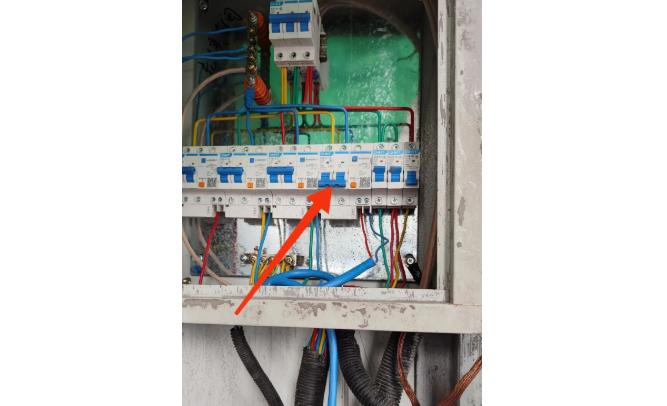
Pump control panel transformer.png

Understanding this principle made troubleshooting straightforward. Since our lighting system already provides a reliable 220V AC source, we decided to repurpose it as the control power supply for the pump panel.

We acted immediately:

  • Ran a temporary cable from the lighting distribution box,

  • Connected it to the output side of a residual current device (RCD) in the lighting panel,

  • Powered up the system—and the pump operated normally!

Problem solved!

Give a tip and encourage the author!

Recommended

Analysis of Common Faults and Causes in Routine Inspection of Distribution Transformers
Common Faults and Causes in Routine Inspection of Distribution TransformersAs the terminal component of power transmission and distribution systems, distribution transformers play a critical role in supplying reliable electricity to end users. However, many users have limited knowledge of power equipment, and routine maintenance is often carried out without professional support. If any of the following conditions are observed during transformer operation, immediate action should be taken: Excess
12/24/2025
Application of Fault Diagnosis Technology for 15kV Outdoor Vacuum Automatic Circuit Reclosers
According to statistics, the vast majority of faults on overhead power lines are transient, with permanent faults accounting for less than 10%. Currently, medium-voltage (MV) distribution networks commonly employ 15 kV outdoor vacuum automatic circuit reclosers in coordination with sectionalizers. This setup enables rapid restoration of power supply after transient faults and isolates faulty line segments in the event of permanent faults. Therefore, it is essential to monitor the operational sta
12/11/2025
35kV RMU Busbar Failure Due to Installation Errors Analysis
This article introduces a case of 35kV ring main unit busbar insulation breakdown failure, analyzes the failure causes and proposes solutions [3], providing reference for the construction and operation of new energy power stations.1 Accident OverviewOn March 17, 2023, a photovoltaic desertification control project site reported a ground fault trip accident in the 35kV ring main unit [4]. The equipment manufacturer arranged a team of technical experts to rush to the site to investigate the cause
12/10/2025
Top 5 Faults Found in H61 Distribution Transformers
Five Common Defects of H61 Distribution Transformers1.Lead Wire DefectsInspection Method: The three-phase DC resistance imbalance rate significantly exceeds 4%, or one phase is essentially open-circuited.Remedial Measures: The core should be lifted for inspection to locate the defective area. For poor contacts, re-polish and tighten the connection. Poorly welded joints should be re-welded. If the welding surface area is insufficient, it should be enlarged. If the lead wire cross-section is inade
12/08/2025
Related Products
Send inquiry
+86
Click to upload file
Download
Get the IEE Business Application
Use the IEE-Business app to find equipment, obtain solutions, connect with experts, and participate in industry collaboration anytime, anywhere—fully supporting the development of your power projects and business.