Reactor (Inductor): Definition and Types
A reactor, also known as an inductor, generates a magnetic field within the surrounding space when current flows through a conductor. Therefore, any current-carrying conductor inherently possesses inductance. However, the inductance of a straight conductor is small and produces a weak magnetic field. Practical reactors are constructed by winding the conductor into a solenoid shape, known as an air-core reactor. To further increase inductance, a ferromagnetic core is inserted into the solenoid, forming an iron-core reactor.
1. Shunt Reactor
The prototype of shunt reactors was used for full-load testing of generators. Iron-core shunt reactors generate alternating magnetic forces between segmented core sections, resulting in noise levels typically 10 dB higher than transformers of equivalent capacity. Shunt reactors carry alternating current (AC) and are used to compensate for system capacitive reactance. They are often connected in series with thyristors to enable continuous regulation of reactive current.
2. Series Reactor
Series reactors carry AC current and are connected in series with power capacitors to form a series resonance circuit for steady-state harmonics (e.g., 5th, 7th, 11th, 13th harmonics). Typical series reactors have impedance values of 5–6% and are considered high-inductance types.
3. Tuning Reactor
Tuning reactors carry AC and are connected in series with capacitors to create series resonance at a specified harmonic frequency (n), thereby absorbing that harmonic component. Common tuning orders are n = 5, 7, 11, 13, and 19.
4. Output Reactor
An output reactor limits the capacitive charging current in motor cables and restricts the rate of voltage rise across motor windings to within 540 V/μs. It is typically required when the cable length between a variable frequency drive (VFD) (4–90 kW) and the motor exceeds 50 meters. It also smoothens the VFD output voltage (reducing switching edge steepness), minimizing disturbances and stress on inverter components such as IGBTs.
Application Notes for Output Reactors:
To extend the distance between VFD and motor, use thicker cables with enhanced insulation, preferably non-shielded types.
Features of Output Reactors:
Suitable for reactive power compensation and harmonic mitigation;
Compensates for distributed capacitance in long cables and suppresses output harmonic currents;
Effectively protects VFDs, improves power factor, blocks grid-side interference, and reduces harmonic pollution from rectifier units to the grid.
5. Input Reactor
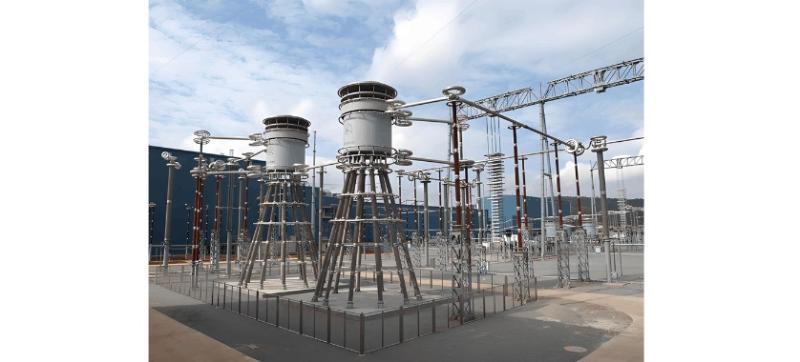
The input reactor limits voltage drops on the grid side during converter commutation, suppresses harmonics, and decouples parallel converter groups. It also limits current surges caused by grid voltage transients or switching operations. When the grid short-circuit capacity to VFD capacity ratio exceeds 33:1, the relative voltage drop of the input reactor should be 2% for single-quadrant operation and 4% for four-quadrant operation. The reactor may operate when the grid short-circuit voltage exceeds 6%. For a 12-pulse rectifier unit, a line-side input reactor with at least 2% voltage drop is required. Input reactors are widely used in industrial and factory automation control systems. Installed between the power grid and VFDs or speed regulators, they suppress surge voltages and currents generated by these devices, significantly attenuating higher-order and distorted harmonics in the system.
Features of Input Reactors:
Suitable for reactive power compensation and harmonic filtering;
Limits current surges caused by grid voltage transients and switching overvoltages; filters harmonics to reduce voltage waveform distortion;
Smoothes voltage spikes and rectifier commutation notches in bridge circuits.
6. Current-Limiting Reactor
Current-limiting reactors are typically used in distribution circuits. They are connected in series with feeder lines branching from the same busbar to limit short-circuit current and maintain bus voltage stability during faults, preventing excessive voltage drops.
7. Arc Suppression Coil (Petersen Coil)
Widely used in resonant grounded systems at 10kV–63kV, arc suppression coils are increasingly of dry-type cast resin design due to the trend toward oil-free substations, especially for systems below 35kV.
8. Damping Reactor (often synonymous with Series Reactor)
Connected in series with capacitor banks or compact capacitors, damping reactors limit inrush current during capacitor switching—similar in function to current-limiting reactors. Filter Reactor: When connected in series with filter capacitors, they form resonant filter circuits, typically used for 3rd to 17th harmonic filtering or higher-order high-pass filtering. HVDC converter stations, phase-controlled static VAR compensators, large rectifiers, electrified railways, and high-power thyristor-based electronic circuits are all harmonic current sources that must be filtered to prevent harmonic injection into the grid. Power utilities have specific regulations regarding harmonic levels in power systems.
9. Smoothing Reactor (DC Link Reactor)
Smoothing reactors are used in DC circuits after rectification. Since rectifier circuits produce a finite number of pulses, the output DC voltage contains ripple, which is often harmful and must be suppressed by a smoothing reactor. HVDC converter stations are equipped with smoothing reactors to make the output DC as close to ideal as possible. Smoothing reactors are also essential in thyristor-controlled DC drives. In rectifier circuits, especially medium-frequency power supplies, their main functions include:
Limiting short-circuit current (during inverter thyristor commutation, simultaneous conduction is equivalent to a direct short-circuit at the rectifier bridge output); without a reactor, this would cause a direct short;
Suppressing the influence of medium-frequency components on the utility power grid;
Filtering effect—rectified current contains AC components; high-frequency AC is impeded by the large inductance—ensuring continuous output current waveform. Discontinuous current (with zero-current intervals) would cause the inverter bridge to stop, resulting in an open-circuit condition at the rectifier bridge;
In parallel inverter circuits, reactive power is exchanged at the input; therefore, energy storage elements—reactors—are essential in the input circuit.
Important Notes
Reactors in power grids are used to absorb capacitive reactive power generated by cable lines. By adjusting the number of shunt reactors, system operating voltage can be regulated. Ultra-high voltage (UHV) shunt reactors serve multiple functions related to reactive power management in power systems, including:
Mitigating the capacitive effect on lightly loaded or no-load transmission lines, reducing power-frequency transient overvoltages;
Improving voltage distribution along long transmission lines;
Balancing reactive power locally under light load conditions, preventing unreasonable reactive power flow and reducing line power losses;
Reducing steady-state power-frequency voltage on high-voltage busbars when large generators are synchronized to the grid, facilitating generator synchronization;
Preventing self-excitation resonance that may occur when generators are connected to long transmission lines;
When the reactor neutral is grounded via a small reactor, the small reactor can compensate for inter-phase and phase-to-ground capacitance, accelerating the self-extinction of residual currents and enabling single-pole auto-reclosing.
Reactors are connected either in series or in parallel. Series reactors are typically used for current limiting, while shunt reactors are commonly used for reactive power compensation.
Shunt Reactor: In ultra-high voltage long-distance transmission systems, they are connected to the tertiary winding of transformers to compensate for the capacitive charging current of transmission lines, limit voltage rise and switching overvoltages, and ensure reliable system operation.
Series Reactor: Installed in capacitor circuits, they are used when the capacitor bank is energized.