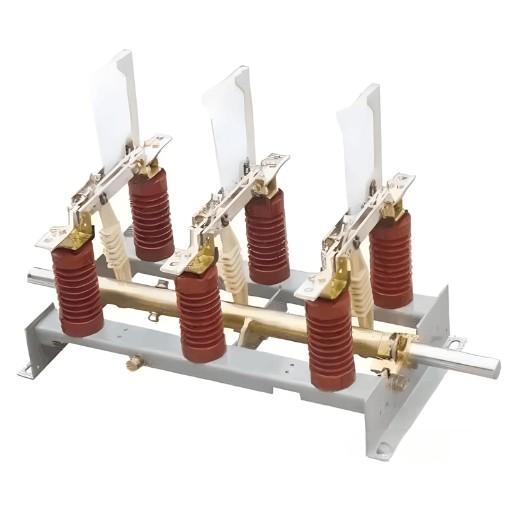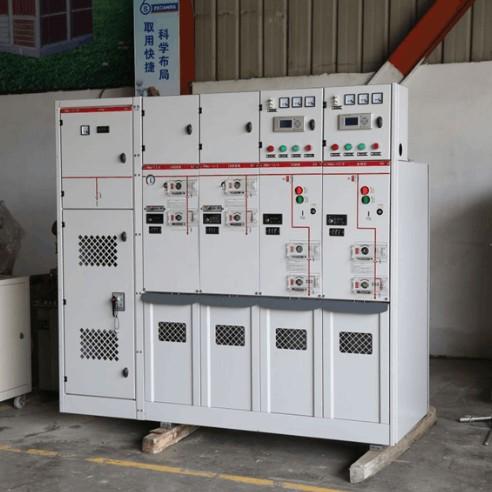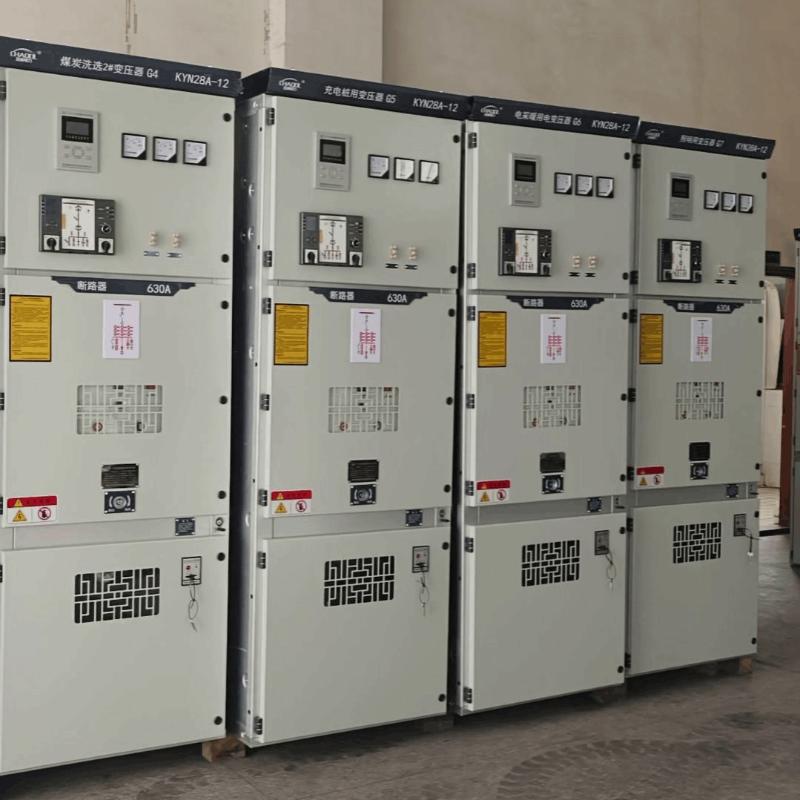
(1) The contact gap is primarily determined by insulation coordination parameters, interruption parameters, contact material of the high-voltage SF₆-free ring main unit, and the design of the magnetic blowout chamber. In practical application, a larger contact gap is not necessarily better; instead, the contact gap should be adjusted as close as possible to its lower limit to reduce operating energy consumption and extend service life.
(2) The determination of contact overtravel is related to factors such as contact material properties, making/breaking current, electrical life parameters, contact pressure, and dynamic and thermal stability parameters. In actual applications, the contact overtravel should not be set too large; it is generally 15% to 40% of the contact gap, typically around 2 mm.
(3) The determination of contact pressure is associated with the contact structure, material properties, contact condition, making/breaking current, electrical life parameters, dynamic and thermal stability parameters, and mechanical performance requirements.
To ensure that the contacts of the high-voltage SF₆-free ring main unit do not separate or undergo arcing/welding under the influence of electrodynamic repulsive forces between contacts, the contact pressure must be adjusted to exceed the electrodynamic repulsive force between the contacts, as well as any additional repulsive forces generated by other parts of the electrical circuit.
(4) Closing and opening speeds are fundamental factors affecting the interrupting/making capability and service life of high-voltage vacuum contactors, making their selection particularly critical. Provided that the technical performance requirements of the high-voltage vacuum contactor are satisfied, the closing and opening speeds should be adjusted as low as reasonably possible, which is undoubtedly beneficial for improving the contactor’s service life (especially mechanical life) and reducing power consumption.