
• Product
  • Suppliers
  • Manufacturers
  • Solutions
  • Free tools
  • Knowledges
  • Experts
  • Communities
Search


Does Installing a Surge Arrester Guarantee Absolute Safety? — The Capability Boundaries and Failure Truth of Surge Arresters

Rockwill
Field: Manufacturing
10Year<
China
 
Installing a surge arrester does not guarantee that equipment will never be damaged by lightning. Surge arresters can and do "fail to protect." They are merely one link in the lightning protection system, not a "universal shield."
iee-business
 

What Surge Arresters Can and Cannot Do?

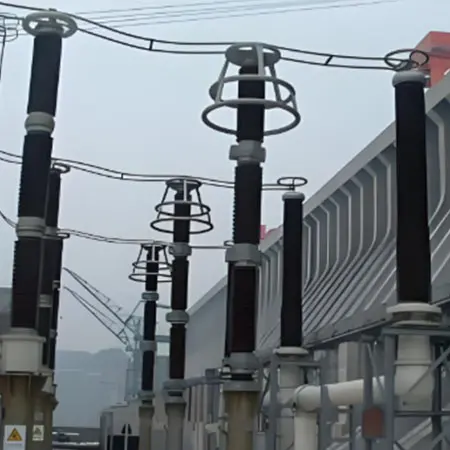
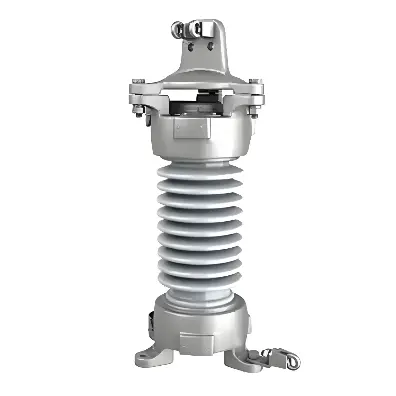
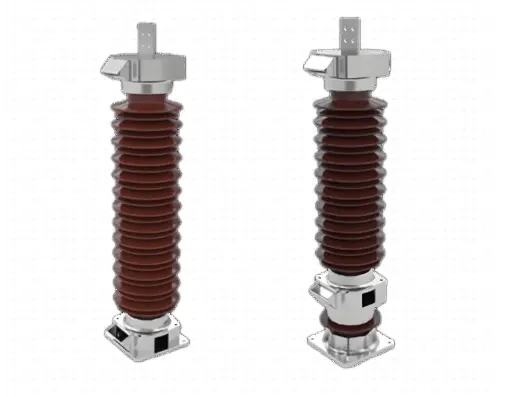
A surge arrester (Surge Protective Device / SPD) is fundamentally a voltage-limiting and current-diverting device: under normal operation it remains in a high-impedance state; when a lightning overvoltage appears, it rapidly switches to a low-impedance state, diverting the surge current to the grounding system and clamping the voltage across the protected equipment to a safe level.

But it has clear capability boundaries:

Limitation Explanation
Cannot prevent lightning from occurring Lightning is a natural discharge phenomenon; an arrester cannot alter the lightning path.
Cannot replace an air terminal (lightning rod) The air terminal intercepts the strike, down conductors carry the current, the grounding system dissipates it, and the SPD limits overvoltage. They belong to different protection layers.
Cannot replace a circuit breaker SPDs handle microsecond-scale surges; circuit breakers handle overload and short-circuit protection. Their protected objects are entirely different.
Effectiveness is severely reduced by poor grounding If grounding resistance is excessive, grounding leads are too long, or the grounding system is damaged, even the highest-class SPD will see its protection performance degrade dramatically.

Why Equipment Can Still Be Damaged by Lightning Even with an Arrester Installed?

Lightning damages equipment through multiple pathways, not just one:

  1. Direct strike — Lightning directly hits the equipment or the line.
  2. Conducted surge along lines — Surges travel along power lines, data cables, communication lines, etc., into equipment. The vast majority of lightning damage to equipment occurs via this path.
  3. Ground potential rise (GPR) backflash — The lightning current causes the local ground potential to rise instantaneously, creating transient potential differences between equipment, leading to insulation breakdown.
  4. Electromagnetic induction — The lightning channel generates a powerful transient electromagnetic field, inducing high voltages in nearby conductors.

Installing an arrester on only one line constitutes "localised lightning protection" — it cannot block lightning entering via other pathways. Complete lightning protection requires coordinated cooperation between external lightning protection (air terminals, down conductors, grounding system) and internal lightning protection (shielding, equipotential bonding, SPDs, proper wiring). Any missing or failed link can cause the overall protection to fail.

iee-business

Why Surge Arresters Themselves "Fail to Protect"?

Surge arresters do fail. Common causes include:

Failure Mode Mechanism
Ageing degradation Internal metal-oxide varistors (MOVs) age over time — their operating voltage drops, leakage current increases, and they eventually lose the ability to clamp overvoltages.
Surge energy exceeds rating When the actual lightning current exceeds the arrester's discharge capacity, the arrester may be punctured and damaged, resulting in open-circuit or short-circuit failure.
Seal failure Seals age and embrittle over time; moisture ingress causes leakage tracking, dielectric breakdown, or internal short-circuits.
Thermal runaway Sustained energy absorption raises temperature; if heat dissipation is insufficient, the valve element characteristics are destroyed, potentially leading to severe overheating or even explosion.
Improper selection Rated voltage too low, insufficient discharge capacity — causing premature failure even under normal operation. More critically, insulation coordination — the arrester clamps the overvoltage, but the resulting residual voltage must still be below the withstand voltage of the protected equipment, with adequate margin. If the residual voltage is too high or the equipment insulation level is too low, the equipment can still be punctured even when the arrester operates correctly.
Non-standard installation Excessive grounding lead length, loose connections, improper location — all weaken protection. Especially critical: arrester leads that are too long or bent introduce additional inductance; the inductive voltage drop under the steep lightning current front superimposes on the arrester's residual voltage, causing the actual overvoltage at the equipment terminals to exceed the nominal residual voltage. Standards therefore require leads to be "short and straight."
 

Important note: An SPD's indicator window turning red (or showing a failure colour) means the internal element has aged or the thermal disconnector has operated — protection is lost and the unit must be replaced immediately. However, many arresters show no external abnormality even when internal valve elements have degraded or moisture has entered; visual inspection alone cannot confirm safety. Professional electrical testing is essential to detect hidden degradation.


How to Properly Approach Lightning Protection?

  1. Integrated lightning protection, zoned protection — External protection (interception, down conductors, grounding) + internal protection (shielding, equipotential bonding, SPDs) + signal-line protection. All three are indispensable. SPDs should be staged: Type 1 at the main switchboard for high-current discharge, Type 2 at sub-distribution boards for voltage limiting, Type 3 at equipment terminals for fine protection.

  2. Grounding must be reliable — Grounding resistance requirements vary by application: general buildings ≤ 10 Ω; power systems ≤ 4 Ω; data centres, hospitals, and other critical facilities ≤ 1 Ω.

  3. Install dedicated backup protection — A Surge Protection Circuit Breaker (SCB) or Surge Protection Fuse (SFB) should be installed upstream of the SPD to prevent short-circuits from a failed SPD causing upstream tripping or fire.

  4. Regular inspection and maintenance — General buildings: at least annually; flammable/explosive environments: semi-annually; pre-thunderstorm-season inspection is most effective.

  5. Unplug sensitive appliances during thunderstorms — Even with a perfect lightning protection system, induced surges can still enter via lines. Unplugging valuable equipment is the ultimate safeguard.


iee-business

Summary

A surge arrester is an indispensable component of the lightning protection system, but it is not a "fit-and-forget" universal device. Lightning invades equipment through diverse pathways (direct strike, conducted surge, ground potential rise, electromagnetic induction); a single arrester cannot provide comprehensive protection. Moreover, the arrester itself can lose its protective capability due to ageing, energy exceedance, seal failure, thermal runaway, improper selection, or non-standard installation.

True lightning safety relies on the systemic synergy of:
External lightning protection + Internal lightning protection + Zoned protection + Reliable grounding + Dedicated backup protection + Regular maintenance.

Only by integrating the surge arrester into a complete, comprehensive lightning protection system and maintaining it continuously can the risk of lightning damage be minimised to the greatest extent.

Edited From:Noah 

Give a tip and encourage the author!
Topics:

Comments

Share your question or perspective
WhatsApp
Send inquiry
+86
Click to upload file
Download
Get the IEE Business Application
Use the IEE-Business app to find equipment, obtain solutions, connect with experts, and participate in industry collaboration anytime, anywhere—fully supporting the development of your power projects and business.
Login
or continue with
New here?
Register