• Product
  • Suppliers
  • Manufacturers
  • Solutions
  • Free tools
  • Knowledges
  • Experts
  • Communities
Search


Free Expert Guides on Power Systems, Circuit Design & Electrical Troubleshooting

Access free engineering resources from IEE Business—covering power design, circuit layout, equipment selection, and troubleshooting. Expert-developed guides help engineers, procurement, and project teams make better decisions. Stay ahead on smart grids, renewables, efficiency, and AI tools. Improve reliability, reduce downtime, and enhance outcomes with real-world solutions. Explore our knowledge hub today.
Effect of Load on a Synchronous Motor
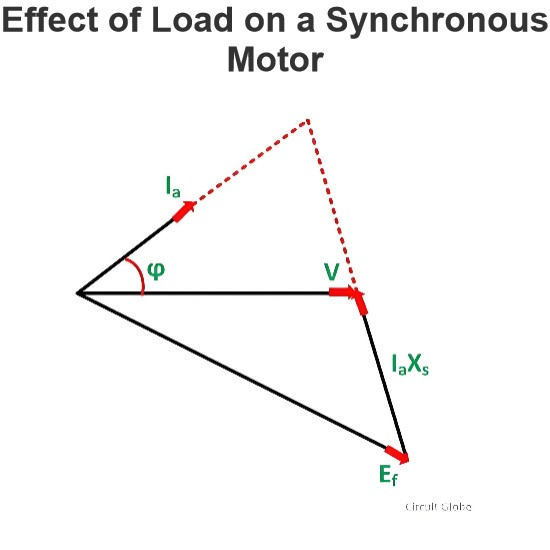
A synchronous motor operates at a constant synchronous speed, irrespective of the load. Now, let's examine the impact of load variation on the motor. Suppose a synchronous motor is initially running with a leading power factor. The phasor diagram corresponding to the leading power factor is presented as follows:When the load on the shaft is increased, the rotor experiences a momentary slowdown. This occurs because it takes some time for the motor to draw the additional power from the electrical
04/21/2025
Consult
Tip
Consult
Tip
What is Voltage Surge?
What is Voltage Surge?DefinitionVoltage surge is defined as a sudden and excessive rise in voltage that can damage the electrical equipment within an installation. Overvoltages in power lines occur due to an increase in voltage between phases or between a phase and ground. Voltage surges are mainly categorized into two broad types: internal and external voltages.Types of Voltage SurgesOvervoltages in a power station can be triggered either by internal disturbances or by atmospheric phenomena. Ba
04/16/2025
Consult
Tip
Consult
Tip
What are harmonics in electrical systems, and what causes them?
In an electrical system, harmonics refer to the components with frequencies that are integer multiples greater than the fundamental frequency obtained by decomposing a periodic non-sinusoidal alternating quantity through Fourier series, and they are usually called higher harmonics.The main causes of harmonics are as follows: Existence of Nonlinear Loads: This is the primary cause of harmonics generation. For example, power electronic devices, including rectifiers, inverters, and frequency conver
03/13/2025
Consult
Tip
Consult
Tip
Key Concepts of Magnetic Materials
The Magnetic Dipole MomentWhen exposed to the same external magnetic field, different materials can exhibit vastly different responses. To delve into the underlying reasons, we must first grasp how magnetic dipoles govern magnetic behavior. This understanding begins with an exploration of the magnetic dipole moment.The magnetic dipole moment, often referred to as the magnetic moment for simplicity, serves as a fundamental concept in electromagnetics. It offers a powerful tool for comprehending a
02/25/2025
Consult
Tip
Consult
Tip
What are the pros and cons of using ferromagnetic material in transformers?
Advantages High magnetic permeability: Ferromagnetic materials have high magnetic permeability, which means they can generate a large magnetic induction intensity under a relatively small magnetic field strength. In a transformer, using ferromagnetic materials for the core allows most of the magnetic field generated by the windings to be concentrated inside the core, enhancing the magnetic field coupling effect. This, in turn, improves the electromagnetic conversion efficiency of the transformer
02/12/2025
Consult
Tip
Consult
Tip
What are electromotive force and signals?
Electromotive Force (EMF)Electromotive force refers to the work done by the power source in moving a unit positive charge from the negative terminal to the positive terminal. Its unit is the volt (V). Essentially, it is a physical quantity that measures the ability of a power source to drive electric charges to perform work. It's important to note that the term "electromotive" does not directly relate to mechanical motion but rather comes from processes where chemical energy, light energy, therm
02/11/2025
Consult
Tip
Consult
Tip
How does temperature affect dielectric strength?
Temperature has a significant impact on dielectric strength, which is manifested as follows:1. Effects of Increased Temperature Material Softening: High temperatures cause insulating materials to soften, reducing their mechanical strength and insulation performance. Increased Conductivity: Rising temperatures enhance the mobility of charge carriers within the material, leading to increased conductivity and decreased insulation performance. Risk of Thermal Breakdown: At high temperatures, heat ac
02/06/2025
Consult
Tip
Consult
Tip
How does core material permeability affect transformer efficiency?
The magnetic permeability of core materials has a significant impact on transformer efficiency, mainly manifesting in the following aspects:1. Magnetic Flux Density High Permeability: Core materials with high permeability can more effectively conduct magnetic flux, increasing magnetic flux density and enhancing the electromagnetic induction efficiency of the transformer. Low Permeability: Lower permeability results in decreased efficiency of magnetic flux conduction, leading to increased energy
02/05/2025
Consult
Tip
Consult
Tip
How does flux affect armature winding?
How Magnetic Flux Affects Armature WindingsThe impact of magnetic flux on armature windings is central to the operation principles of motors and generators. In these devices, changes in magnetic flux induce an electromotive force (EMF) in the armature windings, based on Faraday's law of electromagnetic induction. Below is a detailed explanation of how magnetic flux affects armature windings:1. Induced Electromotive Force (EMF)According to Faraday's law of electromagnetic induction, when the magn
01/22/2025
Consult
Tip
Consult
Tip
What is hysteresis loss?
What is Hysteresis Loss?Hysteresis loss refers to the energy dissipation that occurs in ferromagnetic materials (such as iron cores) due to the hysteresis effect during the magnetization process. When the external magnetic field changes, the magnetization of the ferromagnetic material does not immediately follow the change in the magnetic field; instead, there is a lag. Specifically, when the magnetic field strength returns to zero, the magnetization does not completely return to zero but requir
01/16/2025
Consult
Tip
Consult
Tip
Send inquiry
+86
Click to upload file
Download
Get the IEE Business Application
Use the IEE-Business app to find equipment, obtain solutions, connect with experts, and participate in industry collaboration anytime, anywhere—fully supporting the development of your power projects and business.






