• Product
  • Suppliers
  • Manufacturers
  • Solutions
  • Free tools
  • Knowledges
  • Experts
  • Communities
Search


Free Expert Guides on Power Systems, Circuit Design & Electrical Troubleshooting

Access free engineering resources from IEE Business—covering power design, circuit layout, equipment selection, and troubleshooting. Expert-developed guides help engineers, procurement, and project teams make better decisions. Stay ahead on smart grids, renewables, efficiency, and AI tools. Improve reliability, reduce downtime, and enhance outcomes with real-world solutions. Explore our knowledge hub today.
What is the concept of energy conservation?
The Concept of the Law of Conservation of EnergyThe Law of Conservation of Energy is a fundamental principle in physics that states the total energy in an isolated system remains constant. In other words, energy cannot be created or destroyed; it can only be transformed from one form to another or transferred from one object to another.1. DefinitionThe Law of Conservation of Energy can be stated as follows:In an isolated system, the total energy remains constant throughout any process.Energy can
12/06/2024
Consult
Tip
Consult
Tip
What is the difference between electrical energy and mechanical energy?
Differences Between Electrical Energy and Mechanical EnergyElectrical energy and mechanical energy are two distinct forms of energy that differ in their physical properties, generation methods, transmission methods, and application areas. Below are the main differences between electrical energy and mechanical energy:1. DefinitionElectrical Energy Definition: Electrical energy is the energy carried by moving electric charges or existing in an electric field. It can be transmitted through currents
12/02/2024
Consult
Tip
Consult
Tip
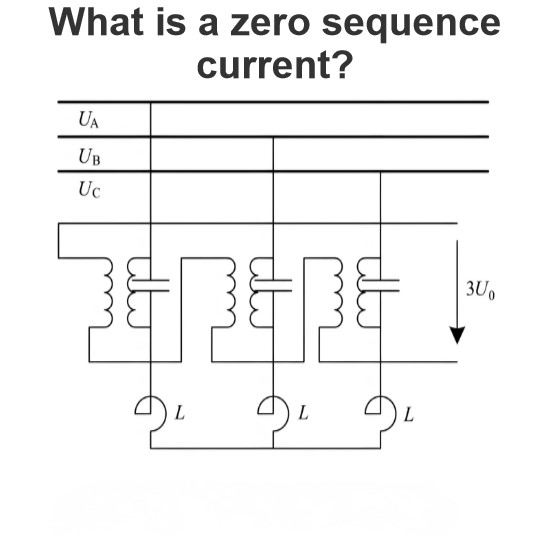
What is a zero sequence current?
Zero sequence current (Zero Sequence Current) is a special current component in a three-phase power system. It is one of the symmetrical components along with positive sequence current (Positive Sequence Current) and negative sequence current (Negative Sequence Current). The presence of zero sequence current indicates an imbalance or fault condition in the system. Below is a detailed explanation of the concept of zero sequence current and its characteristics:Definition of Zero Sequence CurrentIn
11/28/2024
Consult
Tip
Consult
Tip
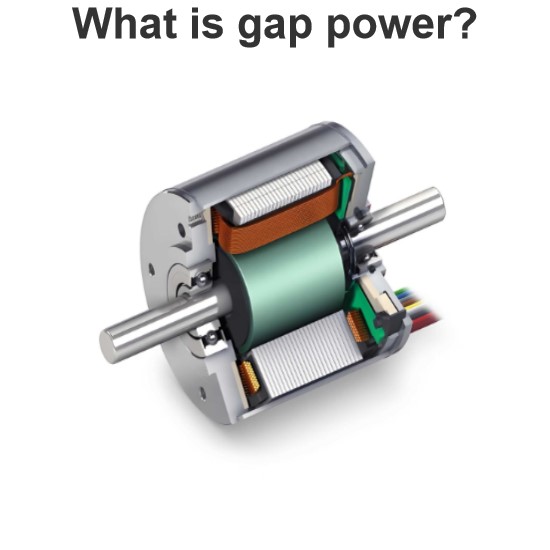
What is gap power?
Air-gap power is an important concept in electromagnetic devices, particularly in the analysis and design of these devices. It refers to the electromagnetic power transmitted through the air gap. Below is a detailed explanation of the concept of air-gap power and its applications in different devices.Detailed ExplanationDefinition:Air-gap power is the electromagnetic power transmitted through the air gap, which is the energy transferred from the rotor (or primary side) to the stator (or secondar
11/27/2024
Consult
Tip
Consult
Tip
What is the difference between aluminum and silicon in terms of their use as semiconductors?
Differences Between Aluminum and Silicon in Semiconductor ApplicationsAluminum and silicon have different applications in semiconductor technology, primarily due to their distinct physical and chemical properties and their specific roles in device fabrication. Here are the main differences between aluminum and silicon in semiconductor applications:SiliconPhysical Properties: Crystal Structure: Silicon typically exists in a single-crystal form, with the most common crystal structure being the dia
11/27/2024
Consult
Tip
Consult
Tip
What is the difference between energy forms that can be easily transformed and those that cannot?
Differences Between Easily Convertible and Hard-to-Convert Forms of EnergyThe ease of converting different forms of energy varies due to the nature of the physical and chemical processes involved, as well as the efficiency and reversibility of these processes. Below is a detailed explanation of the differences between easily convertible and hard-to-convert forms of energy, along with the reasons behind these differences.Easily Convertible Forms of Energy1. Electrical Energy and Mechanical Energy
11/25/2024
Consult
Tip
Consult
Tip
How does a magnet affect an electron moving through a wire and producing an electrical current?
How Do Magnets Affect the Movement of Electrons in a Wire and Generate Current?Magnets can influence the movement of electrons in a wire and generate current through several mechanisms, primarily based on Faraday's law of electromagnetic induction and the Lorentz force. Here is a detailed explanation:1. Faraday's Law of Electromagnetic Induction Faraday's law of electromagnetic induction states that when the magnetic flux through a closed loop changes, an electromotive force (EMF) is induced in
11/21/2024
Consult
Tip
Consult
Tip
What is the application of reverse recovery characteristics?
Application of Reverse Recovery CharacteristicsThe reverse recovery characteristic has important applications in power electronics, especially in circuits involving high-speed switching operations. Here are some key applications of the reverse recovery characteristic:Reduce power lossIn the switching process of power diodes and MOSFET body diodes, the reverse recovery characteristics directly affect switching losses. By optimizing the reverse recovery characteristics, significant reductions in p
11/20/2024
Consult
Tip
Consult
Tip
What is the difference between a star connected motor and a delta connected motor?
Differences Between Star (Y) Connection and Delta (Δ) Connection in MotorsStar connection (Y-connection) and delta connection (Δ-connection) are two common wiring methods used in three-phase motors. Each connection method has its unique characteristics and applications. Here are the main differences between star and delta connections:1. Connection MethodStar Connection (Y-Connection)Definition: In a star connection, the ends of the three windings are connected together to form a common point (ne
11/19/2024
Consult
Tip
Consult
Tip
How do electricity electric current electrons move in wires, cables, and metals?
The movement of current in wires, cables, and metals is a fundamental physical phenomenon that involves the motion of electrons and the properties of conductive materials. Here is a detailed explanation of this process:1. Concept of Free ElectronsIn metals and conductive materials, there are a large number of free electrons. These free electrons are not bound to atomic nuclei and can move freely within the material. The presence of free electrons is the primary reason why metals are good conduct
11/19/2024
Consult
Tip
Consult
Tip
Send inquiry
+86
Click to upload file
Download
Get the IEE Business Application
Use the IEE-Business app to find equipment, obtain solutions, connect with experts, and participate in industry collaboration anytime, anywhere—fully supporting the development of your power projects and business.