• Product
  • Suppliers
  • Manufacturers
  • Solutions
  • Free tools
  • Knowledges
  • Experts
  • Communities
Search


Free Expert Guides on Power Systems, Circuit Design & Electrical Troubleshooting

Access free engineering resources from IEE Business—covering power design, circuit layout, equipment selection, and troubleshooting. Expert-developed guides help engineers, procurement, and project teams make better decisions. Stay ahead on smart grids, renewables, efficiency, and AI tools. Improve reliability, reduce downtime, and enhance outcomes with real-world solutions. Explore our knowledge hub today.
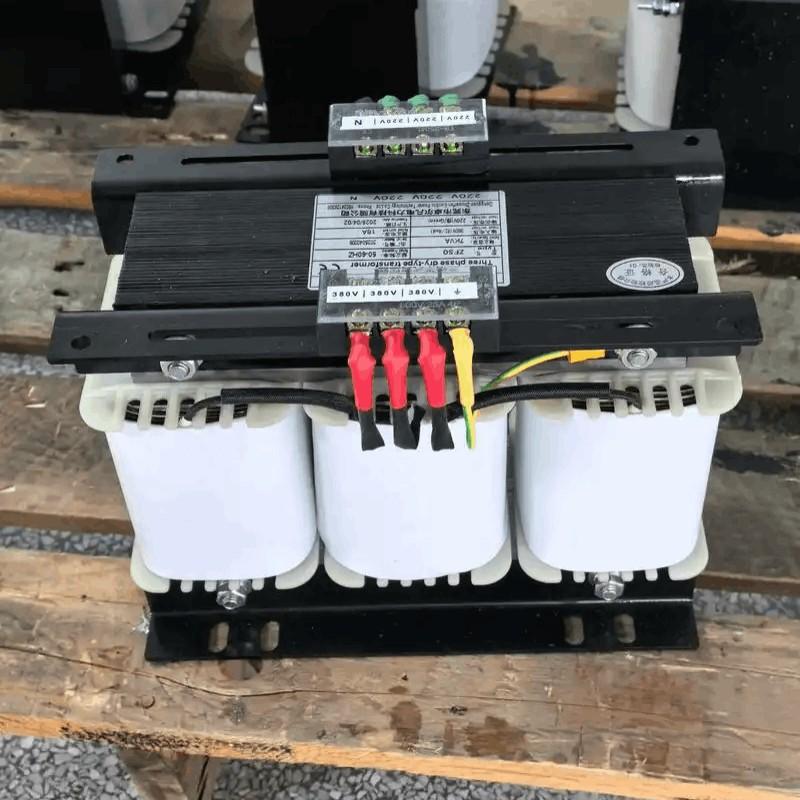
Can the secondary neutral of a control transformer be grounded?
Grounding the secondary neutral of a control transformer is a complex topic involving multiple aspects such as electrical safety, system design, and maintenance.Reasons for Grounding the Secondary Neutral of a Control Transformer Safety considerations: Grounding provides a safe path for current to flow to earth in the event of a fault—such as insulation failure or overload—instead of passing through the human body or other conductive paths, thereby reducing the risk of electric shock. System sta
12/05/2025
Consult
Tip
Consult
Tip
How to Implement Transformer Gap Protection & Standard Shutdown Steps
How to Implement Transformer Neutral Grounding Gap Protection Measures?In a certain power grid, when a single-phase ground fault occurs on a power supply line, both the transformer neutral grounding gap protection and the power supply line protection operate simultaneously, causing an outage of an otherwise healthy transformer. The main reason is that during a system single-phase ground fault, the zero-sequence overvoltage causes the transformer neutral grounding gap to break down. The resulting
12/05/2025
Consult
Tip
Consult
Tip
GIS Dual Grounding & Direct Grounding: State Grid 2018 Anti-Accident Measures
1. Regarding GIS, how should the requirement in Clause 14.1.1.4 of the State Grid’s "Eighteen Anti-Accident Measures" (2018 Edition) be understood?14.1.1.4: The neutral point of a transformer shall be connected to two different sides of the main mesh of the grounding grid via two grounding down conductors, and each grounding down conductor shall meet the thermal stability verification requirements. Main equipment and equipment structures shall each have two grounding down conductors connected to
12/05/2025
Consult
Tip
Consult
Tip
Innovative & Common Winding Structures for 10kV High-Voltage High-Frequency Transformers
1.Innovative Winding Structures for 10 kV-Class High-Voltage High-Frequency Transformers1.1 Zoned and Partially Potted Ventilated Structure Two U-shaped ferrite cores are mated to form a magnetic core unit, or further assembled into series/series-parallel core modules. Primary and secondary bobbins are mounted on the left and right straight legs of the core, respectively, with the core mating plane serving as the boundary layer. Windings of the same type are grouped on the same side. Litz wire i
12/05/2025
Consult
Tip
Consult
Tip
How to Increase Transformer Capacity? What Needs to Be Replaced for Transformer Capacity Upgrade?
How to Increase Transformer Capacity? What Needs to Be Replaced for Transformer Capacity Upgrade?Transformer capacity upgrade refers to improving the capacity of a transformer without replacing the entire unit, through certain methods. In applications requiring high current or high power output, transformer capacity upgrades are often necessary to meet demand. This article introduces methods for transformer capacity upgrade and the components that need to be replaced.A transformer is a critical
12/04/2025
Consult
Tip
Consult
Tip
Causes of Transformer Differential Current and Hazards of Transformer Bias Current
Causes of Transformer Differential Current and Hazards of Transformer Bias CurrentTransformer differential current is caused by factors such as incomplete symmetry of the magnetic circuit or insulation damage. Differential current occurs when the primary and secondary sides of the transformer are grounded or when the load is unbalanced.Firstly, transformer differential current leads to energy waste. Differential current causes additional power loss in the transformer, increasing the load on the
12/04/2025
Consult
Tip
Consult
Tip
Protection Logic Improvement and Engineering Application of Grounding Transformers in Rail Transit Power Supply Systems
1. System Configuration and Operating ConditionsThe main transformers at Zhengzhou Rail Transit’s Convention & Exhibition Center Main Substation and Municipal Stadium Main Substation adopt a star/delta winding connection with a non-grounded neutral point operation mode. On the 35 kV bus side, a Zigzag grounding transformer is used, connected to ground through a low-value resistor, and also supplies station service loads. When a single-phase ground short-circuit fault occurs on a line, a path
12/04/2025
Consult
Tip
Consult
Tip
Functions and Specific Wiring Method of the Grounding Disconnect Switch for Pad-Mounted Transformers
The grounding disconnect switch of a pad-mounted transformer is a switching device used to isolate the pad-mounted transformer from the grounding cable. It is an essential component of pad-mounted transformer equipment and plays a critical role in protecting the safety of the transformer equipment. The grounding disconnect switch of a pad-mounted transformer serves important functions in grounding down leads, grounding switching, auxiliary grounding, and lightning protection.Its functions includ
12/04/2025
Consult
Tip
Consult
Tip
Brief Discussion on the Selection of Grounding Transformers in Booster Stations
Grounding transformers, commonly referred to as "grounding transformers" or simply "grounding units," operate under no-load conditions during normal grid operation and experience overload during short-circuit faults. Based on the filling medium, they are commonly categorized into oil-immersed and dry-type types; based on phase count, they can be either three-phase or single-phase grounding transformers.A grounding transformer artificially creates a neutral point for connecting a grounding resist
12/04/2025
Consult
Tip
Consult
Tip
What are the differences between a grounding transformer and a conventional transformer?
What is a Grounding Transformer?A grounding transformer, abbreviated as "grounding transformer," can be classified into oil-immersed and dry-type according to the filling medium; and into three-phase and single-phase grounding transformers according to the number of phases.Difference Between Grounding Transformers and Conventional TransformersThe purpose of a grounding transformer is to create an artificial neutral point for connecting an arc suppression coil or resistor when the system is conne
12/04/2025
Consult
Tip
Consult
Tip
Send inquiry
+86
Click to upload file
Download
Get the IEE Business Application
Use the IEE-Business app to find equipment, obtain solutions, connect with experts, and participate in industry collaboration anytime, anywhere—fully supporting the development of your power projects and business.