• Product
  • Suppliers
  • Manufacturers
  • Solutions
  • Free tools
  • Knowledges
  • Experts
  • Communities
Search


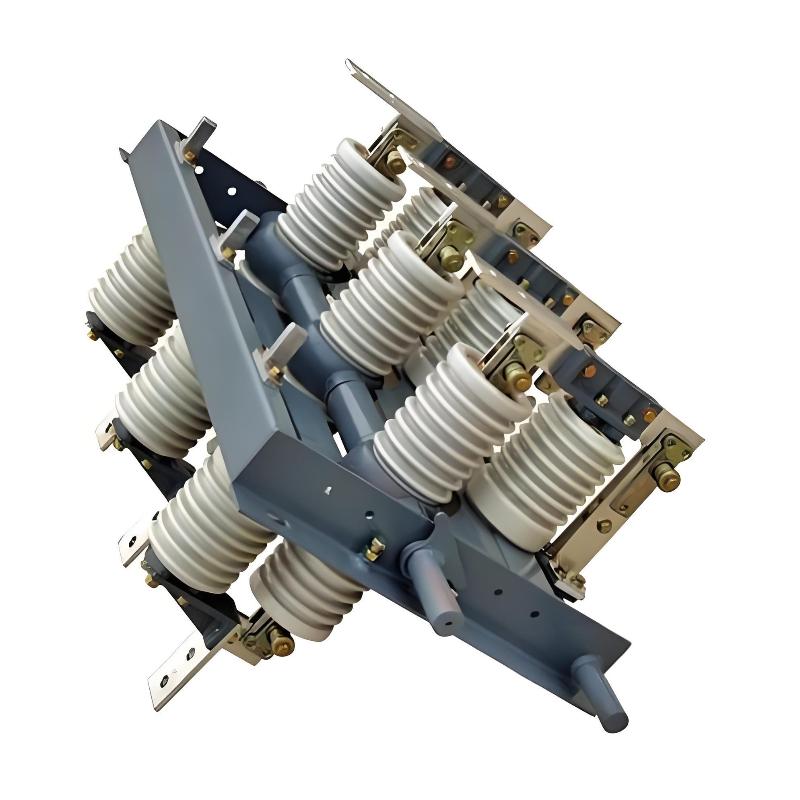
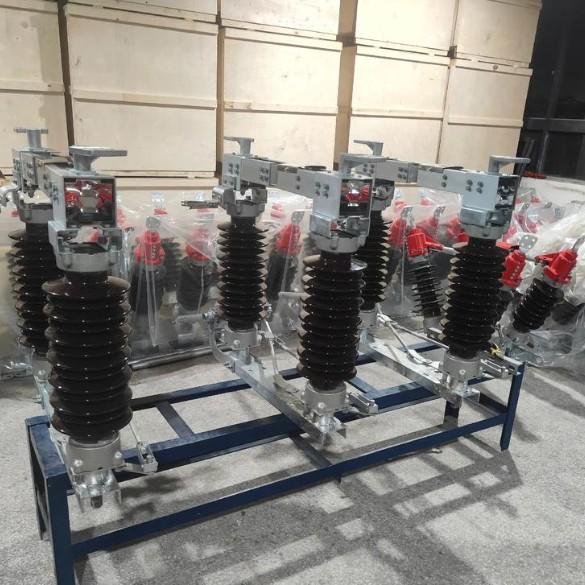
Recloser Bypass Switch with Mounting Back Strap

  • Recloser Bypass Switch with Mounting Back Strap

Key attributes

Brand ROCKWILL
Model NO. Recloser Bypass Switch with Mounting Back Strap
Rated voltage 27kV
Rated normal current 600A
Rated lightning impulse voltage 150kV
Series BP3

Product descriptions from the supplier

Description

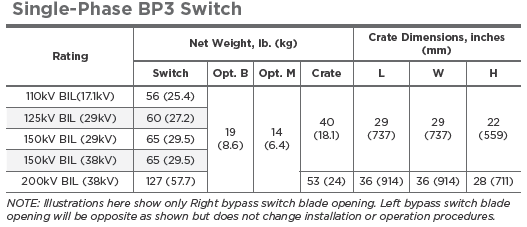
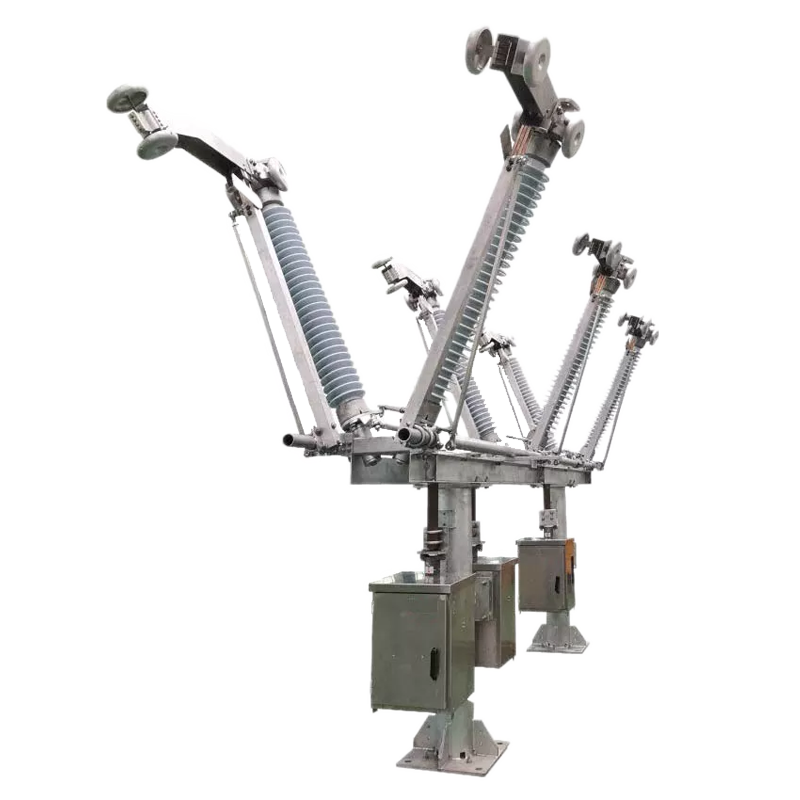
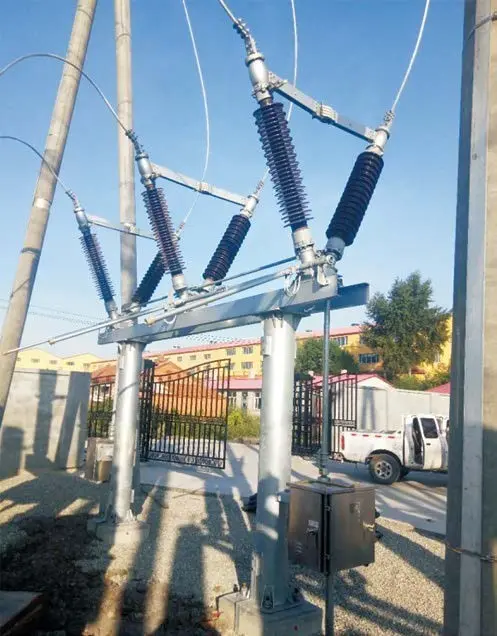
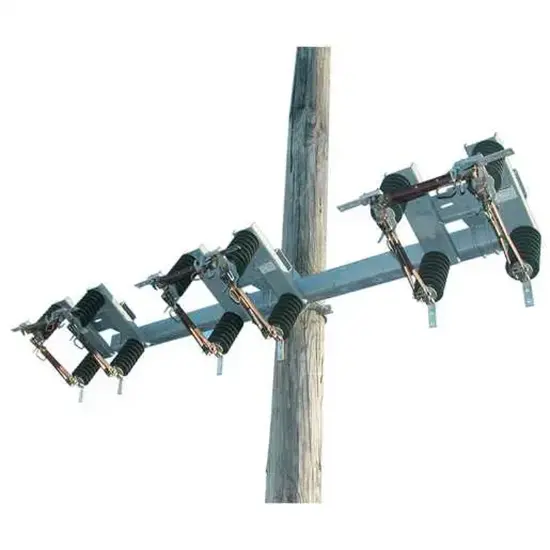
Chance Type BP3 Switches are an economical way to bypass pole mounted distribution reclosers so periodic maintenance can be conducted without interrupting service. The BP3 switches are 3 Pull Operation units that can be offered in either single phase or three phase units. They are rated either 600A or 900A with Voltages Classes of 15, 27 and 38kV with Insulation levels 110kV, 125kV or 150kV BIL. By operating the blades in proper sequence, the recloser is bypassed and isolated from the distribution system. They can be mounted on Cross Arms or directly to the pole via the Pole Mount Bracket Option. They can be configured for either Right Hand or Left Hand opening and either Angled or Non Angled Bypass Blades. Type BP3 switches are not to be used to isolate Voltage Regulators as they have no way to effectively interrupt the circulating current in the regulator windings. Chance: The Brand and Quality You Can Trust!!

  • Fully Compliant with ANSI/IEEE C37.30.1

  • 15, 27 and 38kV ratings

  • 110, 125 and 150kV BIL ratings

  • 600A and 900A ratings

  • ESP Polymer 2.25” Bolt Circle Insulator Assemblies

  • Right Hand and Left Hand opening Options

  • Non-Angled and Angled Bypass Blade Options

  • Cross arm or Pole Mount Options

  • 3 Phase on 100” or 124” Cross Arms in Steel or Fiberglass

Principal Application: Recloser Maintenance
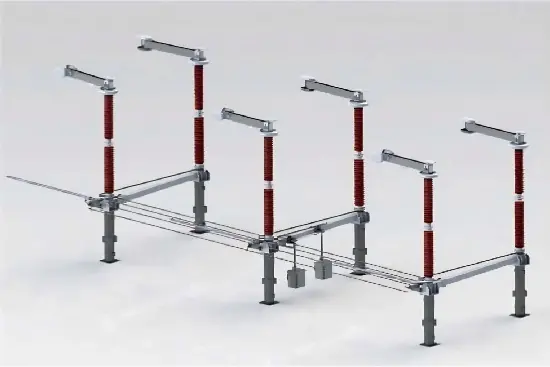
By design, the BP3 Switch provides an economical means for bypassing and disconnecting a pole-mounted distribution recloser. This permits de-energized periodic maintenance of the recloser without interrupting service. The BP3 Switch accomplishes this by a combination of three disconnect switches mounted on a common base. By operating the blades in proper sequence, the recloser is bypassed and isolated from the distribution system.

Operation
Figures below illustrate the BP3 Bypass Switch operation. In normal operation, the bypass switchblade is open and the two disconnect blades are closed, allowing the recloser to be in the circuit.
When recloser maintenance, testing, repair or removal isrequired, first close the bypass blade to provide a parallel current path. Then open the recloser’s internal contacts. And last, open both disconnect blades of the bypass switch. In this way, service continuity is maintained and the recloser is isolated from the line. To put the recloser back in service, the switch operating procedure is reversed.

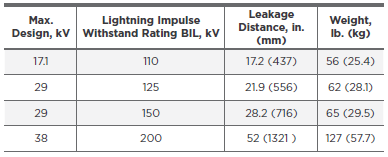
Parameters
Know your supplier
Online store
On-time delivery rate
Response time
100.0%
≤4h
Company overview
Workplace: 108000m²m² Total staff: 700+ Highest Annual Export(usD): 150000000
Workplace: 108000m²m²
Total staff: 700+
Highest Annual Export(usD): 150000000
Services
Business Type: Design/Manufacture/Sales
Main Categories: High Voltage Electrical Apparatus/Electric transformer
Whole life care manager
Whole-life care management services for equipment procurement, use, maintenance, and after-sales, ensuring safe operation of electrical equipment, continuous control, and worry-free electricity consumption.
The equipment supplier has passed platform qualification certification and technical evaluation, ensuring compliance, professionalism, and reliability from the source.

Related Products

Related Knowledges

  • Installation Requirements and Procedures for 10 kV High-Voltage Disconnect Switches
    First, the installation of 10 kV high-voltage disconnect switches must meet the following requirements. The first step is to select an appropriate installation location, typically near the switchgear power supply in the power system to facilitate operation and maintenance. At the same time, sufficient space must be ensured at the installation site to accommodate equipment placement and wiring.Secondly, equipment safety must be fully considered—for example, lightning protection and explosion-proo
    11/20/2025
  • Common Issues and Handling Measures for 145kV Disconnector Control Circuits
    The 145 kV disconnector is a critical switching device in substation electrical systems. It is used in conjunction with high-voltage circuit breakers and plays an important role in power grid operation:First, it isolates the power source, separating equipment under maintenance from the power system to ensure personnel and equipment safety;Second, it enables switching operations to change the system operating mode;Third, it is used to interrupt small-current circuits and bypass (loop) currents.Re
    11/20/2025
  • What are the six operating principles of disconnect switches?
    1. Operating Principle of the DisconnectorThe operating mechanism of the disconnector is connected to the active pole of the disconnector via a connecting tube. When the main shaft of the mechanism rotates 90°, it drives the insulating pillar of the active pole to rotate 90°. The bevel gears inside the base drive the insulating pillar on the other side to rotate in the opposite direction, thereby achieving opening and closing operations. The active pole, through inter-pole linkage tubes, drives
    11/19/2025
  • 36kV Disconnect Switch Selection Guide & Key Parameters
    Selection Guidelines for 36 kV Disconnect SwitchesWhen selecting the rated voltage, ensure that the disconnect switch’s rated voltage is equal to or higher than the nominal voltage of the power system at the installation point. For example, in a typical 36 kV power network, the disconnect switch must have a rated voltage of at least 36 kV.For rated current, selection should be based on the actual long-term load current. Generally, the switch’s rated current must be no less than the maximum conti
    11/19/2025
  • Copper Conductor Size vs Temperature Rise in 145kV Disconnectors
    The relationship between the temperature-rise current of a 145 kV disconnector and copper conductor size lies in balancing current-carrying capacity and heat dissipation efficiency. The temperature-rise current refers to the maximum continuous current a conductor can carry without exceeding its specified temperature rise limit, and the copper conductor size directly influences this parameter.Understanding this relationship begins with the physical properties of the conductor material. Copper’s c
    11/19/2025
  • Design of an Intelligent Control System for Fully Enclosed Disconnectors in Distribution Lines
    Intelligentization has become an important development direction for power systems. As a critical component of the power system, the stability and safety of 10 kV distribution network lines are vital to the overall operation of the power grid. The fully enclosed disconnector, as one of the key devices in distribution networks, plays a significant role; thus, achieving its intelligent control and optimized design is of great importance for enhancing the performance of distribution lines.This pape
    11/17/2025
Haven't found the right supplier yet? Let matching verified suppliers find you. Get Quotation Now
Haven't found the right supplier yet? Let matching verified suppliers find you.
Get Quotation Now
Send inquiry
+86
Click to upload file
Download
Get the IEE Business Application
Use the IEE-Business app to find equipment, obtain solutions, connect with experts, and participate in industry collaboration anytime, anywhere—fully supporting the development of your power projects and business.