• Product
  • Suppliers
  • Manufacturers
  • Solutions
  • Free tools
  • Knowledges
  • Experts
  • Communities
Search


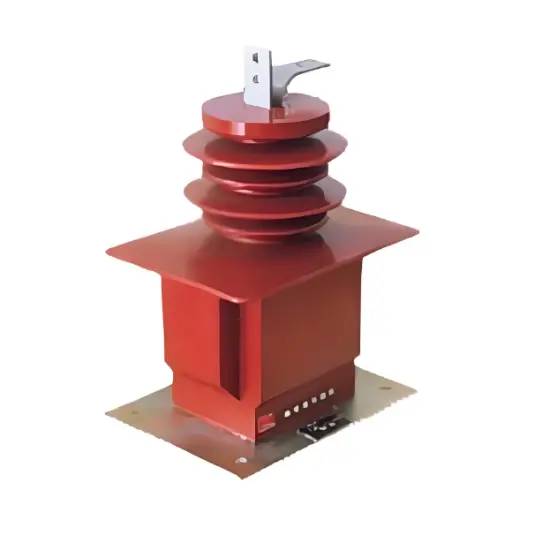
LB7 Series Reliable and safe outdoor instrument transformer

  • LB7 Series Reliable and safe outdoor instrument transformer

Key attributes

Brand Rockwell
Model NO. LB7 Series Reliable and safe outdoor instrument transformer
Rated voltage 300kV
Series LB7 Series

Product descriptions from the supplier

Description

Overview

Current transformer type LB is based on hairpin design with oil-paper insulation and metallic expansion bellow, mainly for outdoor installations. It is a reliable product for metering and protection in high-voltage
networks.

Features

● Designed and tested in accordance with latest IEC specification
●Safe sealing slows the aging process and extends product life
●Corrosion resistance: stainless steel expansion bellows and oil
●tank coated with water-proof, mould-proof and salt-proof painting

Benefits

●Easy installation and commissioning
●Maximum reliability and minimal maintenance
●Suitable for wide range of environmental conditions
●Good seismic performance

Technology parameters

Know your supplier
Online store
On-time delivery rate
Response time
100.0%
≤4h
Company overview
Workplace: 60000m² Total staff: Highest Annual Export(usD): 100000000
Workplace: 60000m²
Total staff:
Highest Annual Export(usD): 100000000
Services
Business Type: Design/Manufacture/Sales
Main Categories: High Voltage Electrical Apparatus/Electric transformer
Whole life care manager
Whole-life care management services for equipment procurement, use, maintenance, and after-sales, ensuring safe operation of electrical equipment, continuous control, and worry-free electricity consumption.
The equipment supplier has passed platform qualification certification and technical evaluation, ensuring compliance, professionalism, and reliability from the source.

Related Products

Related Knowledges

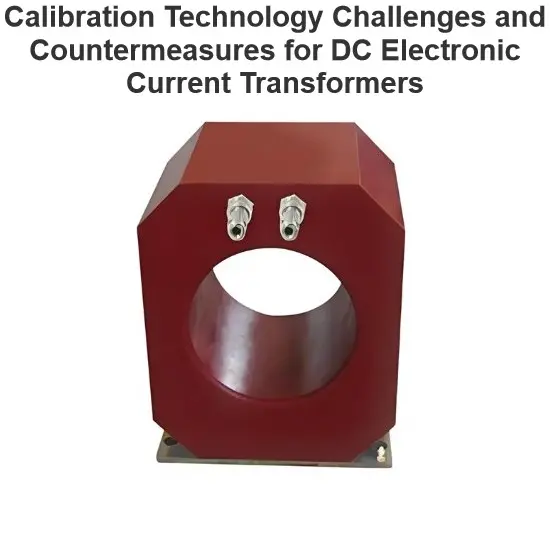
  • Calibration Technology Challenges and Countermeasures for DC Electronic Current Transformers
    In modern power systems, DC electronic current transformers play a crucial role. They are not only used for high-precision current measurement but also serve as key tools for grid optimization, fault detection, and energy management. With the rapid development of high-voltage direct current (HVDC) transmission technology and its widespread deployment globally, the performance requirements for DC current transformers have become increasingly stringent, especially in terms of measurement accuracy
    07/23/2025
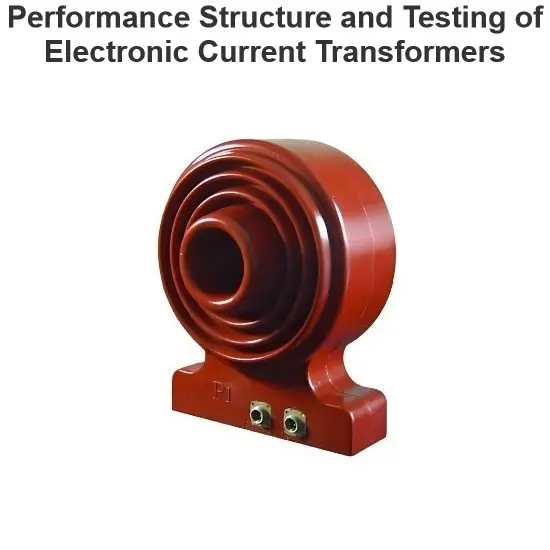
  • Performance Structure and Testing of Electronic Current Transformers
    1 Performance AdvantagesIn recent years, electronic current transformers (ECTs) have emerged as a key industry trend. National standards classify them into two types: Active Optical Current Transformers (AOCTs, active hybrid type) and Optical Current Transformers (OCTs, passive optical type). Active hybrid ECTs use low-power electromagnetic transformers and Rogowski coils as core sensing elements (Figure 1).Rogowski coils outperform traditional sensors with non-saturation and wide dynamic ranges
    07/22/2025
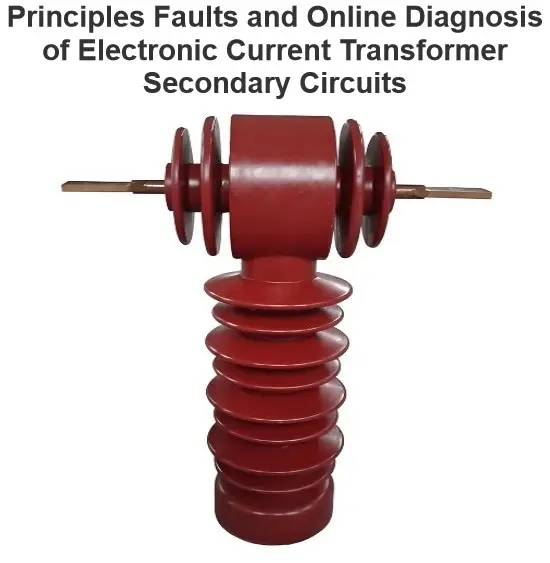
  • Principles Faults and Online Diagnosis of Electronic Current Transformer Secondary Circuits
    1 Principle and Role of Electronic Current Transformers1.1 Working Principle of ECTAn Electronic Current Transformer (ECT) is a key device for managing safe power system operations, converting large currents into manageable small-current signals for measurement and control. Unlike traditional transformers (relying on direct magnetic field interaction between primary and secondary windings), ECTs use sensors (e.g., Hall effect sensors) to detect magnetic field changes from the primary winding. Th
    07/22/2025
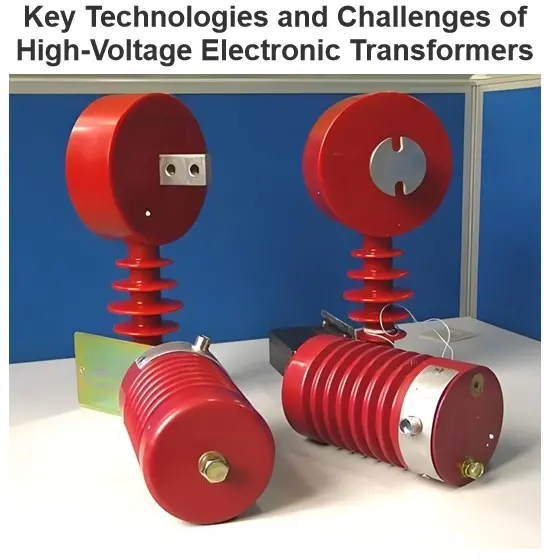
  • Key Technologies and Challenges of High-Voltage Electronic Transformers
    Traditional power transformers face inherent issues due to their sensors. Critically, they are vital for power plant monitoring, control, and protection (e.g., fault recording, safety control). However, large electrical energy transmission via information carriers and the lack of digital signal output from digital systems complicate secondary communication. Complex secondary wiring compensates for microcomputers’ high reliability, streamlining protection and secondary devices. This inn
    07/22/2025
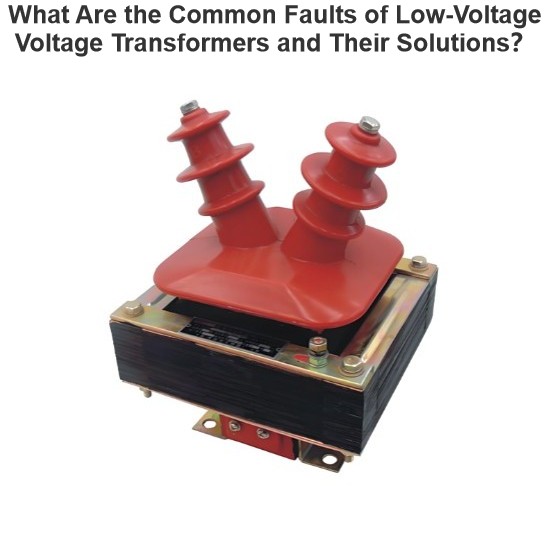
  • What Are the Common Faults of Low-Voltage Voltage Transformers and Their Solutions?
    Open - Circuit Fault on the Secondary SideOpen - circuit in the secondary side is a typical fault of low - voltage voltage transformers, showing abnormal voltmeter readings (zero/fluctuation), faulty power meters, buzzing noises, and core overheating. When open - circuited, the secondary voltage spikes (no secondary current to balance the primary EMF), causing core saturation, flux distortion, and potential overheating/damage.Causes include loose terminals, poor contact, or human error. In low
    07/18/2025
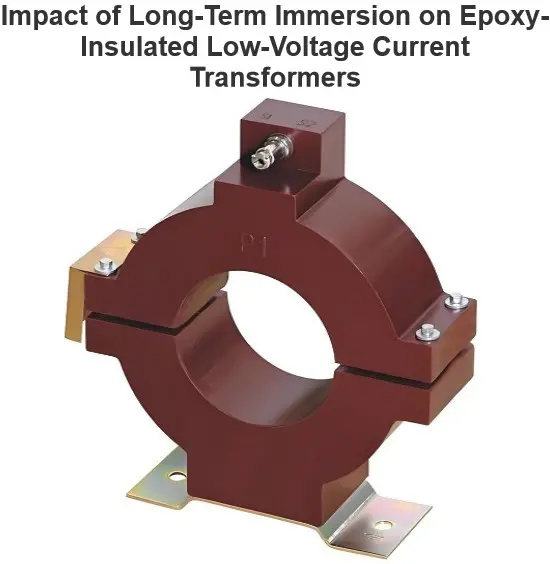
  • Impact of Long-Term Immersion on Epoxy-Insulated Low-Voltage Current Transformers
    1 IntroductionLow - voltage current transformers for metering, with a through - core type epoxy resin structure, are widely used in distribution transformer areas and for small - to - medium - sized industrial and commercial electricity consumption. As a range expander for electric energy metering, their performance directly relates to electricity consumption safety and the accuracy of users' trade calculations. Studying long - term immersion's impact on these transformers is practically signifi
    07/17/2025
Haven't found the right supplier yet? Let matching verified suppliers find you. Get Quotation Now
Haven't found the right supplier yet? Let matching verified suppliers find you.
Get Quotation Now
Send inquiry
+86
Click to upload file
Download
Get the IEE Business Application
Use the IEE-Business app to find equipment, obtain solutions, connect with experts, and participate in industry collaboration anytime, anywhere—fully supporting the development of your power projects and business.