Din rail mount fuse holder RT18-125-3P+N

Key attributes
| Brand | Switchgear parts |
| Model NO. | Din rail mount fuse holder RT18-125-3P+N |
| number of poles | 3P+N |
| Series | RT18-125-3P+N |
Product descriptions from the supplier
din rail mount fuse holder can be used in both AC (alternating current) and DC (direct current) applications. The design and specifications of the fuse holder will determine its suitability for AC or DC circuits. When selecting a fuse holder, it’s important to consider the following factors:
1.Voltage Rating: Ensure that the voltage rating of the din rail mount fuse holder is suitable for your AC or DC application. The voltage rating should match or exceed the voltage of your electrical system to ensure proper insulation and safety.
2.Current Rating: Consider the current rating required for your circuit, both for AC and DC applications. Fuse holders are designed to handle specific current ranges, so select a holder that can safely accommodate the maximum current expected in your circuit, whether it’s AC or DC.
3.Construction and Design: Fuse holders for AC and DC applications may have slight design differences to account for the specific characteristics of each current type. For example, AC fuse holders may have additional considerations for handling the alternating current’s periodic voltage reversals. However, many fuse holders are designed to be compatible with both AC and DC currents.
4.Compliance with Standards: Ensure that the fuse holder complies with relevant safety and industry standards for both AC and DC applications.
Fuse Holder Types Look for certifications or markings that indicate compliance with standards such as UL (Underwriters Laboratories), CSA (Canadian Standards Association), or IEC (International Electrotechnical Commission) for the specific voltage and current type you are working with.
By selecting a fuse holder that meets the voltage and current requirements of your AC or DC circuit, you can ensure its suitability and proper functioning in your application.
Multiple low-voltage distribution cabinets suitable for industrial and commercial scenarios, with specific information as follows: GGD low-voltage fixed switchgear, GCK low-voltage drawer switchgear, XL-21 low-voltage power cabinet, Schneider BlokSeT low-voltage distribution cabinet, etc
Item No.DN56124
| Product model | RT18-125 |
| Description | Fuse switch disconnector, standard structure with null line at right |
| Pole | 3P+N |
| Mounting method | DIN rail installation |
| Wiring method | 4-50mm2 |
| Fuse size | 22*58 |
| Rated operational current le | 125A(500VAC)/100A(690VAC) |
| Rated operational voltage Ue | 500VAC/690VAC |
| Rated insulation voltage | 800V |
| Rated impulse withstangd current lpk | 6KV |
| Breaking capacity with fuse | 100KA(500VAC)/50KA(690VAC) |
| Utilization category with fuse | gG |
| LED Indicator voltage | 110-690VAC/DC |
| IP | IP20 |
| Reference standard | IEC 60269-2 GB/T 13539.2 |


Related Products
-
DNT5-R1J Semiconductor protection fuse

-
AR Fuses DNT-O1J Series Semiconductors Equipment Protection Fuses

-
DNESS2 Fuse for battery and battery system Protection

-
DNESS Energy Storage Fuses

-
DNESS5 Fuse for battery and battery system protection

-
Rn2 Type indoor high-voltage limit-current fuse, fusing performance

-
RN1 type indoor high-voltage current limiting fuse, melting characteristics

Related Knowledges
-
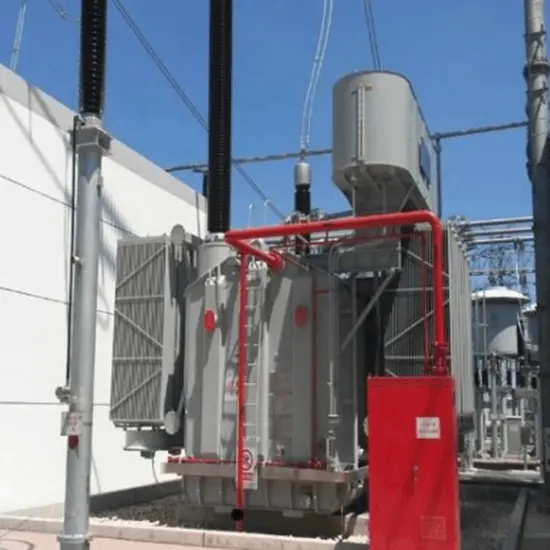 Impact of DC Bias in Transformers at Renewable Energy Stations Near UHVDC Grounding ElectrodesImpact of DC Bias in Transformers at Renewable Energy Stations Near UHVDC Grounding ElectrodesWhen the grounding electrode of an Ultra-High-Voltage Direct Current (UHVDC) transmission system is located close to a renewable energy power station, the return current flowing through the earth can cause a rise in ground potential around the electrode area. This ground potential rise leads to a shift in the neutral-point potential of nearby power transformers, inducing DC bias (or DC offset) in their01/15/2026
 -
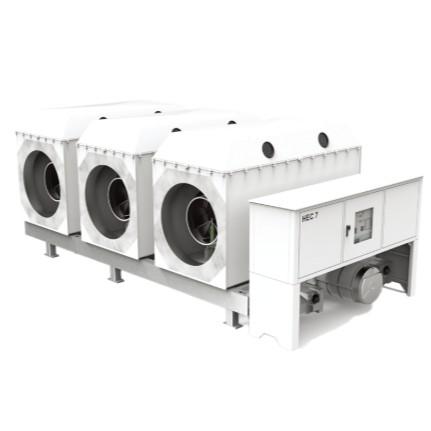 HECI GCB for Generators – Fast SF6 Circuit Breaker1.Definition and Function1.1 Role of the Generator Circuit BreakerThe Generator Circuit Breaker (GCB) is a controllable disconnect point located between the generator and the step-up transformer, serving as an interface between the generator and the power grid. Its primary functions include isolating generator-side faults and enabling operational control during generator synchronization and grid connection. The operating principle of a GCB is not significantly different from that of a standard c01/06/2026
 -
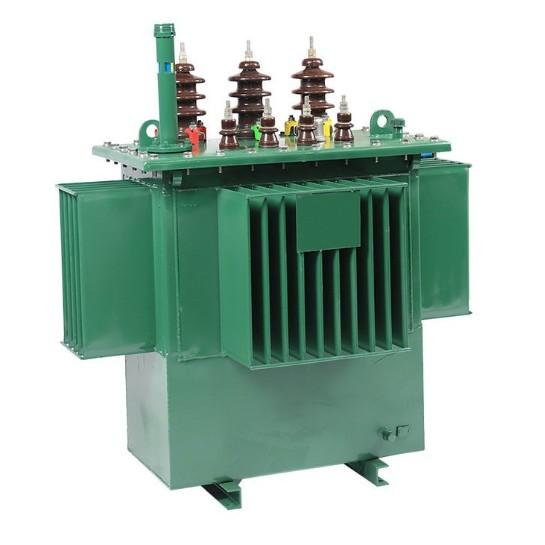 Distribution Equipment Transformer Testing, Inspection, and Maintenance1.Transformer Maintenance and Inspection Open the low-voltage (LV) circuit breaker of the transformer under maintenance, remove the control power fuse, and hang a “Do Not Close” warning sign on the switch handle. Open the high-voltage (HV) circuit breaker of the transformer under maintenance, close the grounding switch, fully discharge the transformer, lock the HV switchgear, and hang a “Do Not Close” warning sign on the switch handle. For dry-type transformer maintenance: first clean the porcel12/25/2025
 -
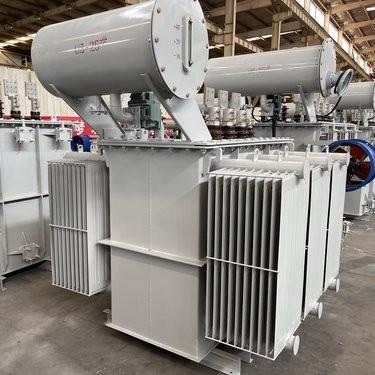 How to Test Insulation Resistance of Distribution TransformersIn practical work, insulation resistance of distribution transformers is generally measured twice: the insulation resistance between thehigh-voltage (HV) windingand thelow-voltage (LV) winding plus the transformer tank, and the insulation resistance between theLV windingand theHV winding plus the transformer tank.If both measurements yield acceptable values, it indicates that the insulation among the HV winding, LV winding, and transformer tank is qualified. If either measurement fails, pairwise12/25/2025
 -
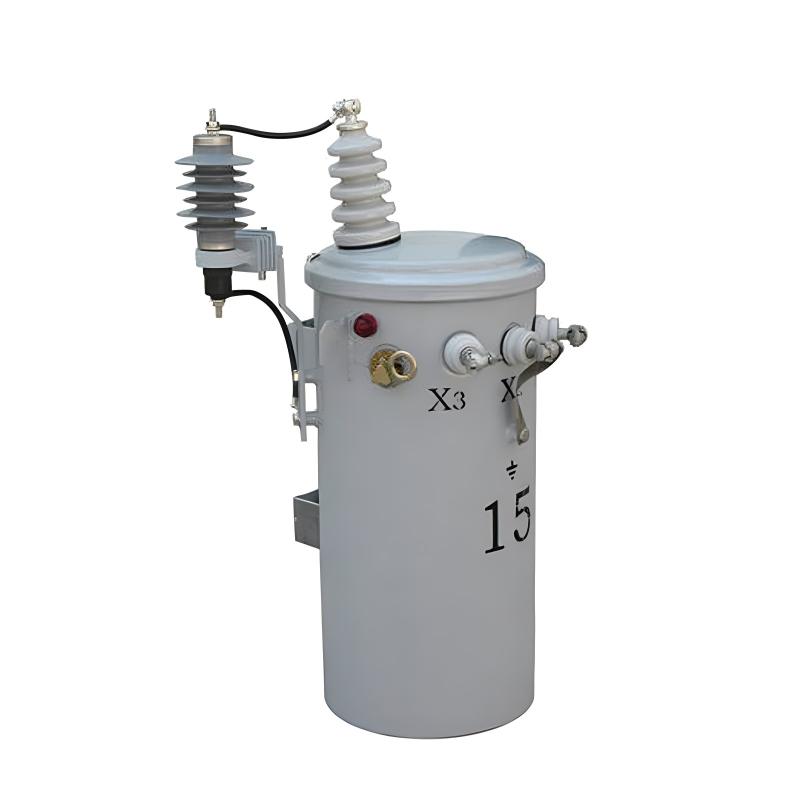 Design Principles for Pole-Mounted Distribution TransformersDesign Principles for Pole-Mounted Distribution Transformers(1) Location and Layout PrinciplesPole-mounted transformer platforms should be located near the load center or close to critical loads, following the principle of “small capacity, multiple locations” to facilitate equipment replacement and maintenance. For residential power supply, three-phase transformers may be installed nearby based on current demand and future growth projections.(2) Capacity Selection for Three-Phase Pole-Mounted Tr12/25/2025
 -
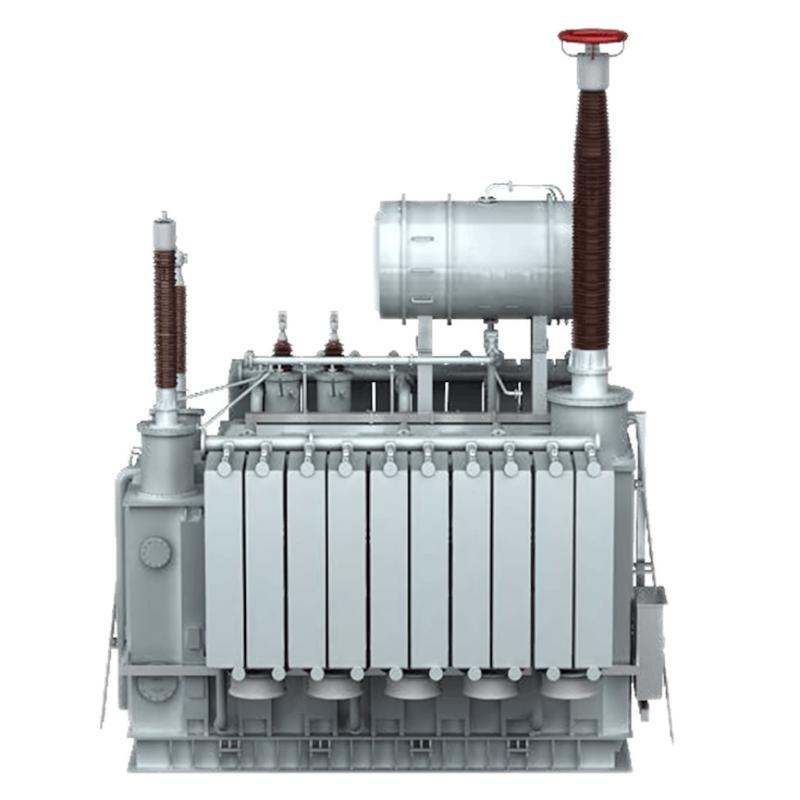 Transformer Noise Control Solutions for Different Installations1.Noise Mitigation for Ground-Level Independent Transformer RoomsMitigation Strategy:First, conduct a power-off inspection and maintenance of the transformer, including replacing aged insulating oil, checking and tightening all fasteners, and cleaning dust from the unit.Second, reinforce the transformer foundation or install vibration isolation devices—such as rubber pads or spring isolators—selected based on the severity of vibration.Finally, strengthen sound insulation at weak points of the ro12/25/2025






