36kV/38kV Indoor Vacuum Servo Motor Controlled Switching Circuit Breaker
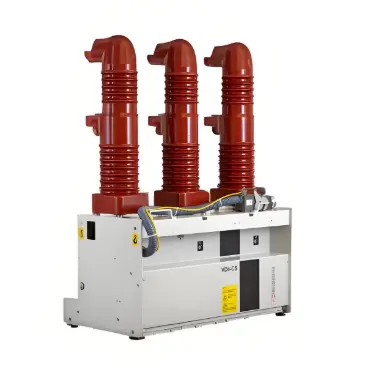
Key attributes
| Brand | ABB |
| Model NO. | 36kV/38kV Indoor Vacuum Servo Motor Controlled Switching Circuit Breaker |
| Rated voltage | 36kV |
| Rated normal current | 1250A |
| Rated frequency | 50/60Hz |
| Series | VD4-CS |
Product descriptions from the supplier
Description:
VD4-CS is the unique solution based on new vacuum interrupter technology and an innovative actuation systems up to 38kV, 1250A, 31.5kA and with superior noise-free performances, to support your business needs in reactive power compensation.Noise-free power quality by safe and reliable switching and protection of capacitor banks.
Key benefits:
Inrush elimination thanks to high accuracy in controlled switching technology.
Up to 5-times higher performance than the market standard with 10,000 maintenance-, inrush- and restrike-free operations.
Enables elimination of inrush limiting reactors and resistances, leading to significant cost and space savings.
Cost saving by as much as 20%, using same ratings, same interfaces of existing MV substation thanks to optimized footprint equivalent to standard distribution breakers.
Reduced total cost of capacitor bank operation due to elimination of downtime for breaker overhaul and a lifespan 5 times the market standard, with predictive health indication.
Fast and reliable support thanks to ABB’s global footprint.
Assets optimization having both circuit-breaker and capacitive switching devices in one single solution.
Enables increased lifespan of capacitors by more than 10% in e.g. 3 years.
Key features:
Embedded advanced diagnostics.
Up to 38 kV, 1250A, 31.5 kA.
10,000 maintenance-free and noise-free operations.
The CB comprises of:
Three poles in epoxy resin containing the vacuum interrupter.
Three brushless servomotors, one per phase with double encoder.
Three electronic controllers, one per phase, communicating hierarchically with each otherand with the first unit controls the entire system.
An electronic supply unit.
A capacitor for storing the energy required to operate the CB in the absence of auxiliary supply.
Three sensors and three mechanical position indicators.
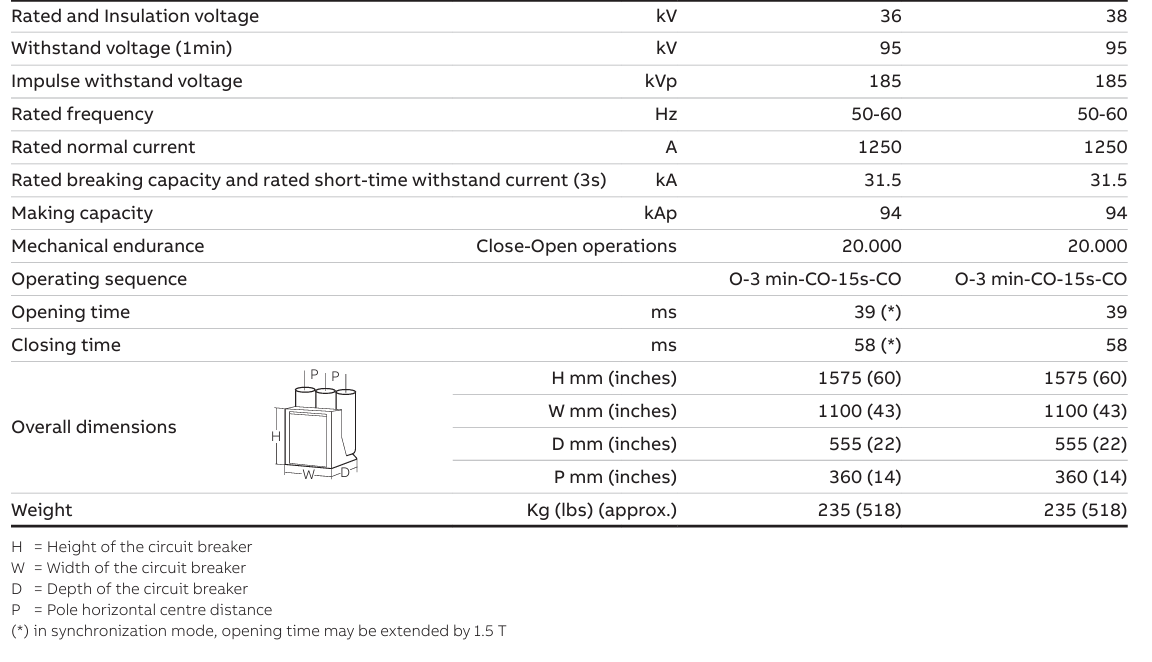
Technical Characteristics:
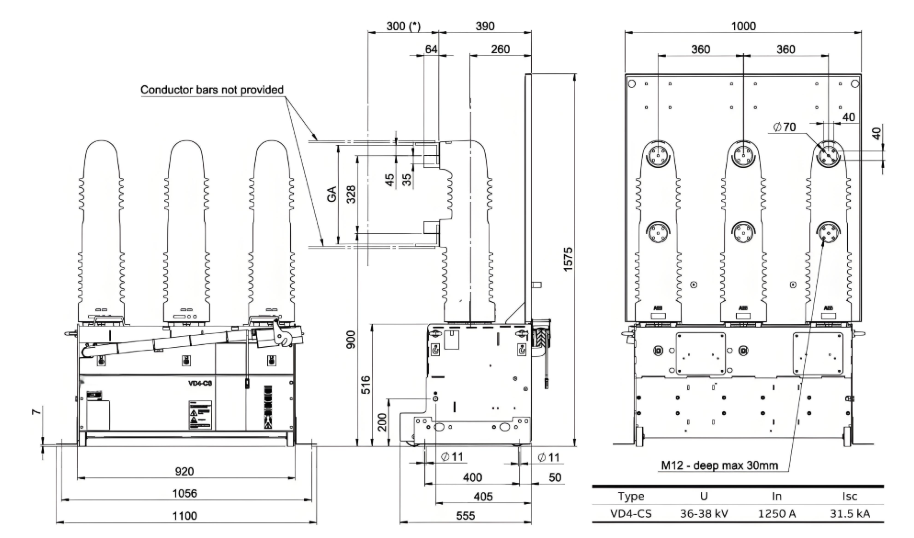
Dimension drawing:

Related Products
-
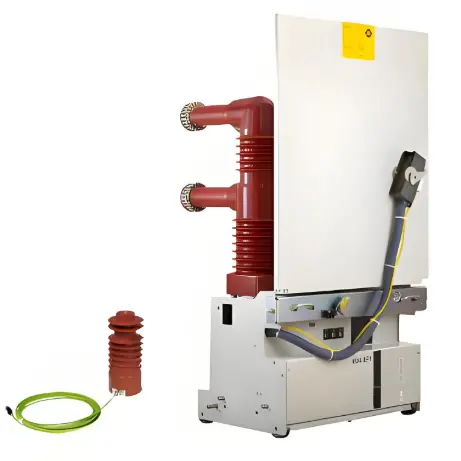
36/38kV Indoor vacuum circuit breaker with servomotor actuation and controlled switching
-
Vacuum Circuit Breaker 24 kV , the next generation of HVX digital MV Circuit Breaker
-
21.9kV 22kV 24kV 25.8kV MV Single phase outdoor vacuum Auto Circuit recloser Source Manufacturer

-
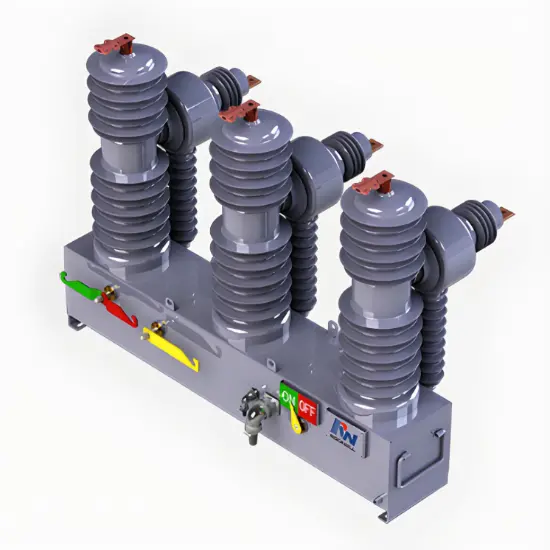
38kV 38.5kV 40.5kV 44kV Three-phase outdoor vacuum distribution recloser/Reclosure direct Supply
-
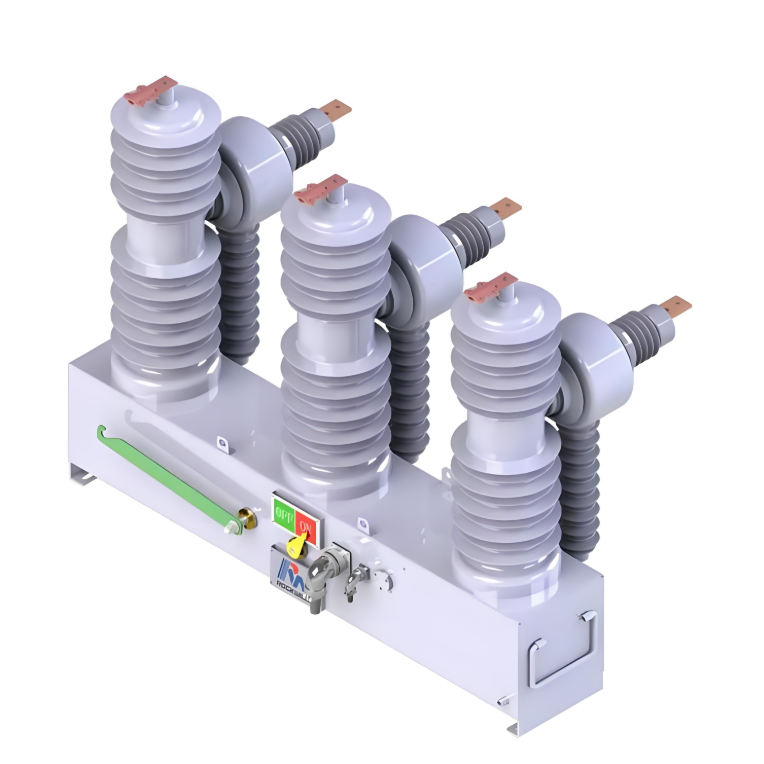
12kV 13.2kV 13.8kV 14.5kV 15kV MV outdoor Three phase Smart recloser/reclosure Source Manufacturer
-
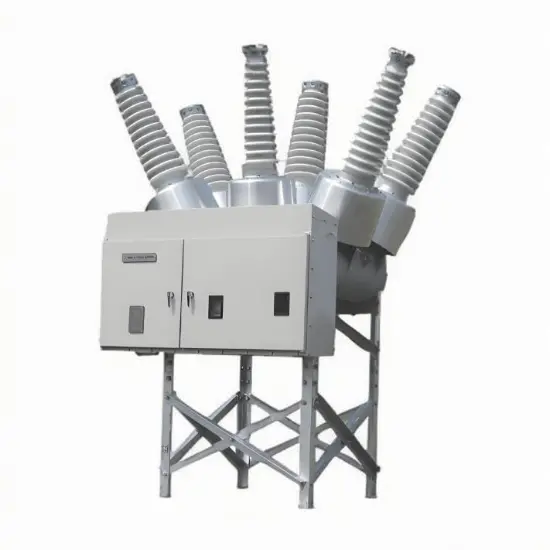
36kV 72.5kV Dry Air Insulated Dead Tank Vacuum Circuit Breaker(VCB)
-
126(145)kV HV Vacuum circuit breaker
Related Knowledges
-
 Impact of DC Bias in Transformers at Renewable Energy Stations Near UHVDC Grounding ElectrodesImpact of DC Bias in Transformers at Renewable Energy Stations Near UHVDC Grounding ElectrodesWhen the grounding electrode of an Ultra-High-Voltage Direct Current (UHVDC) transmission system is located close to a renewable energy power station, the return current flowing through the earth can cause a rise in ground potential around the electrode area. This ground potential rise leads to a shift in the neutral-point potential of nearby power transformers, inducing DC bias (or DC offset) in their01/15/2026
 -
 HECI GCB for Generators – Fast SF6 Circuit Breaker1.Definition and Function1.1 Role of the Generator Circuit BreakerThe Generator Circuit Breaker (GCB) is a controllable disconnect point located between the generator and the step-up transformer, serving as an interface between the generator and the power grid. Its primary functions include isolating generator-side faults and enabling operational control during generator synchronization and grid connection. The operating principle of a GCB is not significantly different from that of a standard c01/06/2026
 -
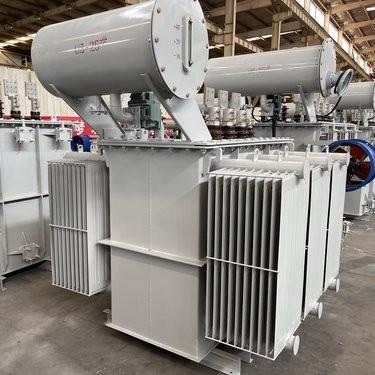
 Distribution Equipment Transformer Testing, Inspection, and Maintenance1.Transformer Maintenance and Inspection Open the low-voltage (LV) circuit breaker of the transformer under maintenance, remove the control power fuse, and hang a “Do Not Close” warning sign on the switch handle. Open the high-voltage (HV) circuit breaker of the transformer under maintenance, close the grounding switch, fully discharge the transformer, lock the HV switchgear, and hang a “Do Not Close” warning sign on the switch handle. For dry-type transformer maintenance: first clean the porcel12/25/2025
 -
 How to Test Insulation Resistance of Distribution TransformersIn practical work, insulation resistance of distribution transformers is generally measured twice: the insulation resistance between thehigh-voltage (HV) windingand thelow-voltage (LV) winding plus the transformer tank, and the insulation resistance between theLV windingand theHV winding plus the transformer tank.If both measurements yield acceptable values, it indicates that the insulation among the HV winding, LV winding, and transformer tank is qualified. If either measurement fails, pairwise12/25/2025
 -
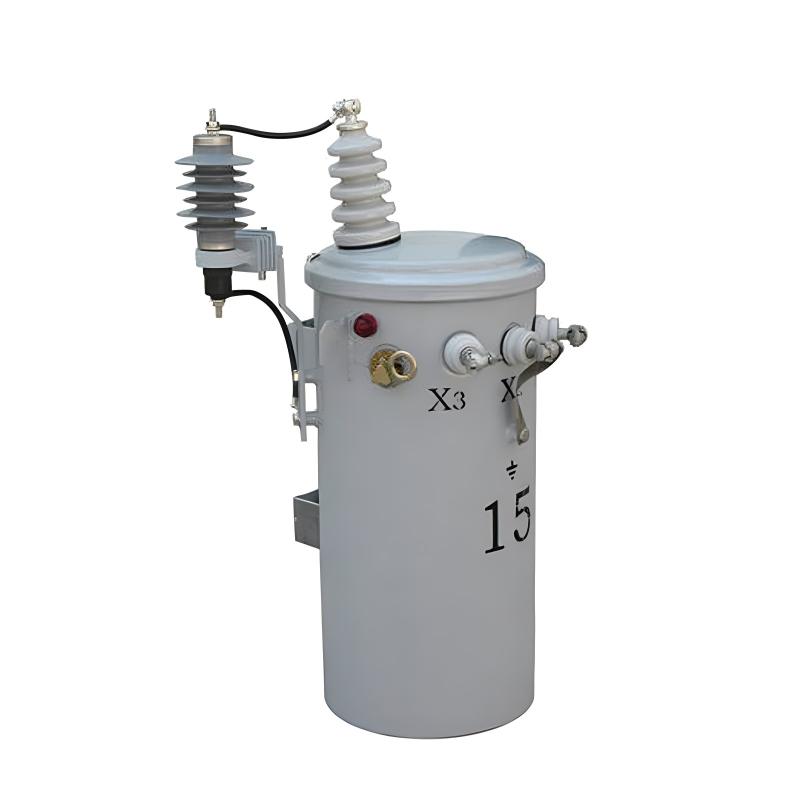 Design Principles for Pole-Mounted Distribution TransformersDesign Principles for Pole-Mounted Distribution Transformers(1) Location and Layout PrinciplesPole-mounted transformer platforms should be located near the load center or close to critical loads, following the principle of “small capacity, multiple locations” to facilitate equipment replacement and maintenance. For residential power supply, three-phase transformers may be installed nearby based on current demand and future growth projections.(2) Capacity Selection for Three-Phase Pole-Mounted Tr12/25/2025
 -
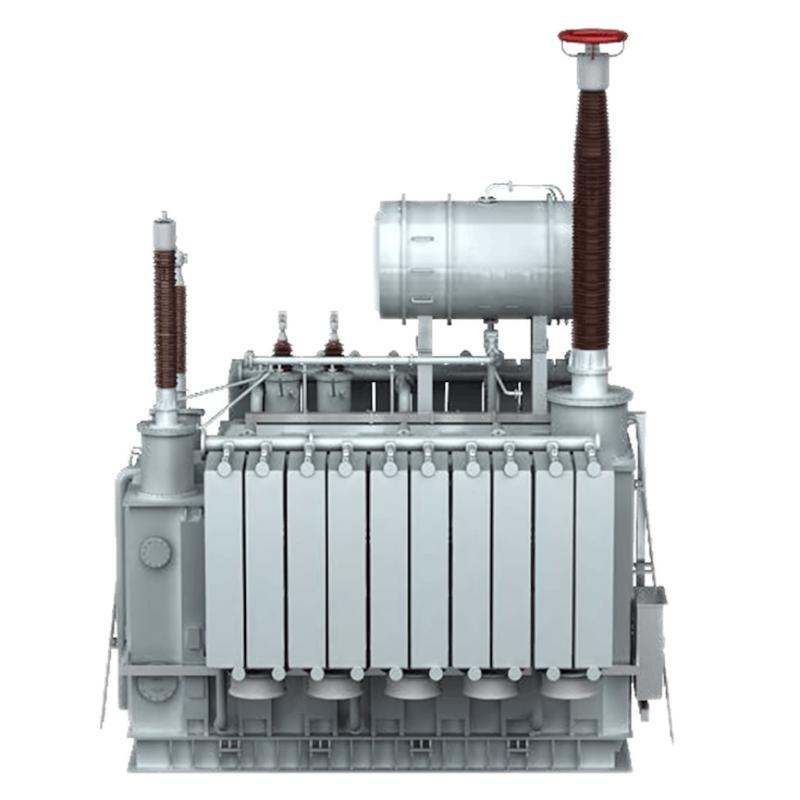 Transformer Noise Control Solutions for Different Installations1.Noise Mitigation for Ground-Level Independent Transformer RoomsMitigation Strategy:First, conduct a power-off inspection and maintenance of the transformer, including replacing aged insulating oil, checking and tightening all fasteners, and cleaning dust from the unit.Second, reinforce the transformer foundation or install vibration isolation devices—such as rubber pads or spring isolators—selected based on the severity of vibration.Finally, strengthen sound insulation at weak points of the ro12/25/2025
Related Solutions
-
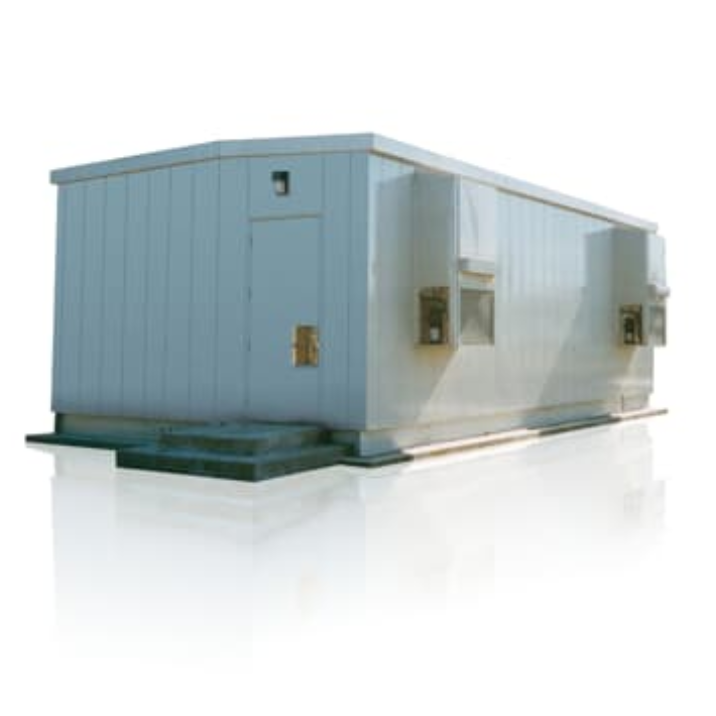 Electrical House (eHouse) SolutionsReduce site complexity, improve lead timeABB eHouses are prefabricated transportable substations, designed to house medium voltage and low voltage switchgear, critical power equipment and automation cabinets.An eHouse solution is a cost effective, risk reduced alternative to conventional concrete block and brick construction. Each eHouse module is custom engineered to meet application requirements with respect to equipment layout, site footprint limitations and logistics considerations.Installat04/16/2025
 -
 Improve speed to deployment Modular prefabricated and pre-engineered solutionsReduce site works and risk of schedule delays and cost overrunsOverview:With a complicated data center project that has short delivery timelines, prefabricated modular solutions and pre-engineered modular solutions may be the answer.Modular solutions are ideal for enterprise, colocation, edge and cloud data centers, where project replicability and expandability are critical, alongside fast deployment time.Reduce risk by leveraging prefabricated and integrated solutions:Fast track projects with p04/16/2025






