A cikin na gaban jirgin samun kasa uku da kisan kafuwar kasa, tushen kasa ta bayyana shi ne mai kyauwa na kasa, wanda ya zama da ita ko kuma bayyana shi a nan tsarin gyara/gyarancin tashoshin harsuna. ZNyn11 yana cikin tsari, inda mafi girman magungunan fadin kusa a tsakiyar/kwakwalen sararin kafuwar kafuwar kasa ta ci gaba, tare da mafi girman fadin kasa a sararin sarrafa da kuma kawo kusan magungunan fadin kasa/kyaututtuka.
Kyaututtukan fadin kasa yana da muhimmanci: yana nuna girman fadin kasa da kuma tashar kasa zuwa dukkan a cikin tsarin bayyana kasa.
1. Dukubin Tushen Kasa Da Tsarin ZN
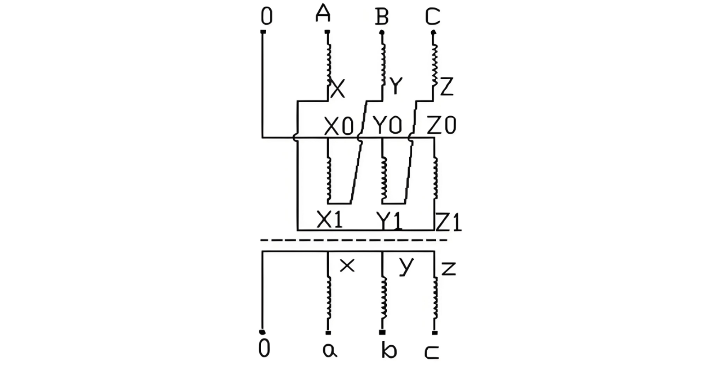
Idan an iya amfani da tushen kasa da YNd11, ZNyn11 ce mafi yiwu (Fig. 1). Abubuwan da suka damar:
A lokacin fadun kasa na kasa, zabi bayyana kasa daidai yana ƙara fadun kasa zuwa fadun kasa na tushen kasa na biyu.
2. Bincike Kyaututtukan Fadin Kasa A Cikin Tushen Kasa Da Tsarin ZN
Abubuwan da suka damar kan modelin bayyana tushen kasa suna cikin Jamiyar 1, idan an bukata cewa kyaututtukan fadin kasa ya zama a nan ±7.5%.
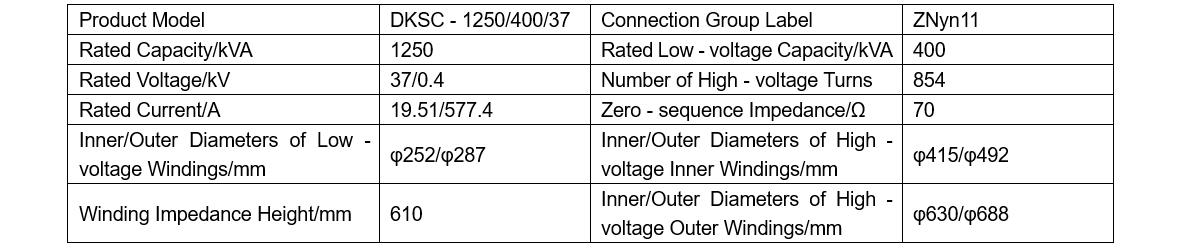
2.1 Lissafi Kyaututtukan Fadin Kasa Ta Hanyar Tsarin Ingantaccen Muhimmiyar
Kamar yadda ake nuna a Figura 2 (tsarin sarrafa tushen kasa), kyaututtukan fadin kasa tana nufin tashar kasa zuwa fadun kasa a lokacin da fadun kasa ta ci gaba a cikin kasa uku. Don lissafi, X0 ta yi amfani da kyaututtukan tushen kasa na biyu (Equation 1).

A nan, W tana nufin adadin sarrafa. Don tushen kasa da ZN, W tana nufin adadin sarrafa na tsakiyar sarrafa; ∑aR tana nufin tashar fadin kasa na duka. Don tushen kasa da ZN, tana nufin tashar fadin kasa na tsakiyar sarrafa; ρ tana nufin Rogowski coefficient; H tana nufin takamtar fadin kasa na sarrafa.
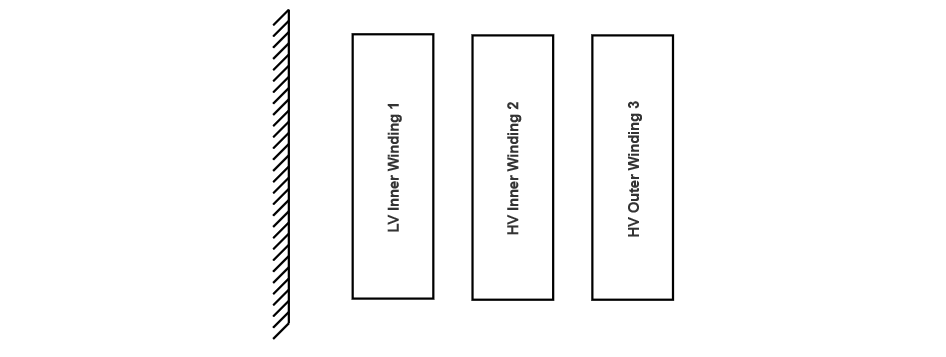
Idan an sanya bayanan Jamiyar 1 a Equation (1), kyaututtukan fadin kasa ta lissafa 70.6 Ω.
2.2 Bincike Kyaututtukan Fadin Kasa Ta Hanyar Software Electromagnetic
An yi amfani da software electromagnetic Magnet daga Infolytica don bincike fadin kasa. An gina modeli na 3D na haske a kan tsarin abinci, kamar yadda ake nuna a Figura 3. Software tana yi amfani da algorithmin T-Ω potential group solving algorithm da elements laminated da polynomials na 1st zuwa 3rd order interpolation.
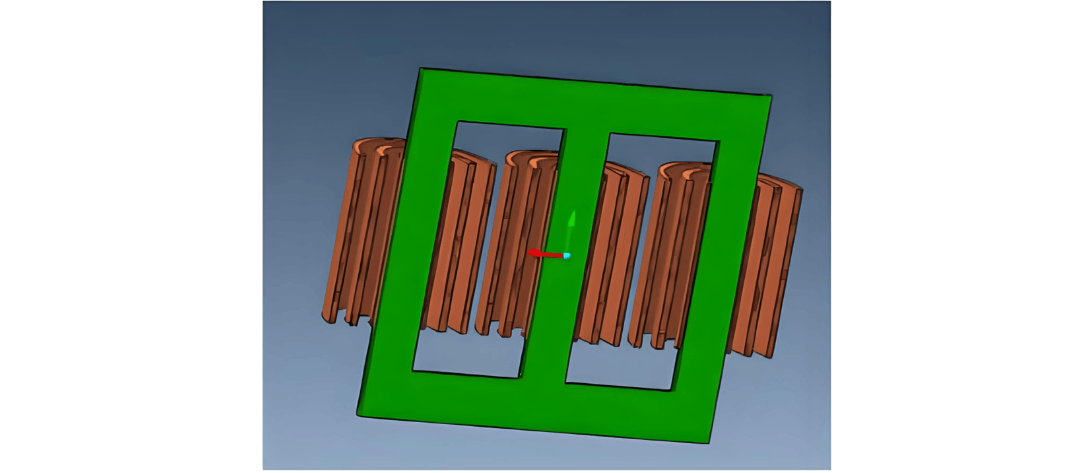
Finite element analysis (FEA) tana nufin ƙarfin lissafi na haske a kan variational principle da meshing interpolation. Tana baya da transforma boundary value problem zuwa variational problem (yana nufin extremum problem of a functional) a kan variational principle, sannan ta koye variational problem zuwa extremum problem of a common multivariate function ta hanyar meshing interpolation, kuma ta koye zuwa set of multivariate algebraic equations don lissafi bayanan ƙarfi. A lokacin bincike, an sa mesh divisions kamar haka: air at 80, iron core at 30, and windings at 15. Diagramin meshing na abinci a nuna a Figura 4.

A cikin algorithmin finite element, polynomial order tana nuna zabin field - domain shape functions - orders na ƙarin tana ba da zabin ƙarin bayan field properties. Don wannan model, an yi amfani da 2nd - order polynomial, da maximum of 20 iterations, 0.5% iteration error, and 0.01% conjugate gradient error.
Don bincika kyaututtukan fadin kasa tushen kasa ta hanyar field - circuit coupling method: apply the high - voltage rated current (27.59 A peak for software) at the neutral point, keep the low - voltage side open - circuited, and measure the voltage.
2.3 Lissafi Kyaututtukan Fadin Kasa
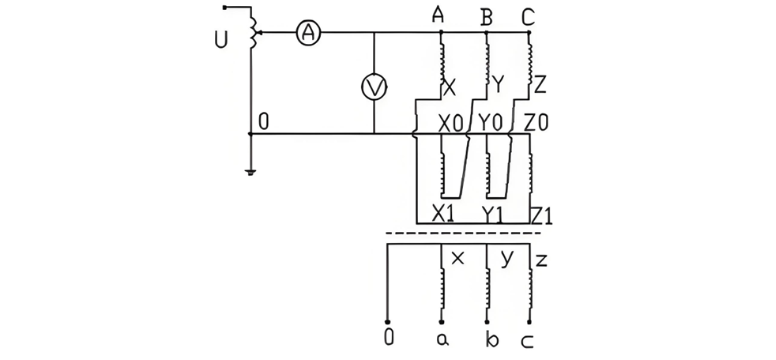
Kyaututtukan fadin kasa tana lissafi a cikin line terminals da neutral terminal of the earthing transformer at rated frequency (as shown in Figure 5), expressed in ohms per phase. Its value is calculated as 3U/I (where U is the test voltage and I is the test current). During the measurement, a rated current of 19.5 A is applied to the line terminals, and the voltage between the line terminals and neutral point is measured as 443.3 V. The calculated zero-sequence impedance is 68.2 Ω.
2.4 Comparative Analysis of Calculated, Simulated and Measured Values
The main performance parameters are compared in Table 2. The results show that both the calculated and simulated zero-sequence impedances of the earthing transformer are close to the measured value, with deviations of 3.5% and 0.88% respectively. The simulation results from the electromagnetic software are closer to the measured values. The magnetic field analysis results help to clearly understand the magnetic field distribution characteristics of the product under this working condition, which can be used to optimize the electromagnetic design and structural design of the product based on the magnetic field distribution characteristics.

The magnetic field simulation results obtained by electromagnetic software are more closely aligned with the measured values. With the help of magnetic field analysis results, the characteristics of the product's magnetic field distribution under this working condition can be more clearly understood, and thus targeted electromagnetic design and structural design of the product can be carried out.
3.Conclusion
Zero-sequence impedance is a key parameter of earthing transformers, with strict deviation requirements from users. When calculating with traditional empirical formulas in engineering, correcting empirical coefficients is needed, which relies heavily on designers' experience and hardly ensures accuracy.
To improve accuracy, this paper uses simulation software for magnetic field analysis, compares with empirical formula results, and verifies through tests. The simulation results are accurate and can meet engineering needs.