1. Temperature Control System
One of the main causes of transformer failure is insulation damage, and the greatest threat to insulation comes from exceeding the allowable temperature limit of the windings. Therefore, monitoring temperature and implementing alarm systems for transformers in operation are essential. The following introduces the temperature control system using the TTC-300 as an example.
1.1 Automatic Cooling Fans
A thermistor is pre-embedded at the hottest spot of the low-voltage winding to obtain temperature signals. Based on these signals, the fan operation is automatically adjusted. When the transformer load increases, the temperature rises accordingly. The thermistor reacts to this change: when the temperature reaches 110°C, the fan starts automatically to provide cooling; when the temperature drops below 90°C, the fan receives the temperature signal and stops running.
1.2 Trip and Alarm Functions
PTC thermistors are pre-embedded in the low-voltage winding to monitor and measure the temperature of the windings and core. If the winding temperature exceeds 155°C, the system triggers an over-temperature alarm signal. If the temperature rises above 170°C, the transformer can no longer operate safely, so a trip signal is sent to the secondary protection circuit, causing the transformer to quickly respond with a tripping action.
1.3 Temperature Display
Thermistors are embedded in the low-voltage windings. Temperature is measured via resistance and output as a 4–20 mA analog current signal for display. For computer connectivity, a communication interface can be added to enable remote transmission up to 1,200 meters. Additionally, one transmitter can simultaneously monitor up to 31 transformers. The thermistor signals also trigger over-temperature alarms and trip actions, further enhancing the performance of the temperature protection system.
2. Protection Methods
The selection of enclosure is also important for transformer protection and should be based on protection requirements and usage environment, resulting in various enclosure types. Typically, IP20 enclosures are chosen for transformers—a standard choice primarily intended to prevent animals such as cats, rats, snakes, and birds, as well as foreign objects larger than 12 mm in diameter, from entering and causing short circuits or other serious accidents, thereby protecting live parts. For outdoor transformers, an IP23-rated enclosure is required. In addition to the above functions, it also provides protection against water droplets falling at angles up to 60 degrees from vertical. However, this may affect the transformer’s heat dissipation capability, so attention must be paid to operating capacity.
3. Cooling Methods
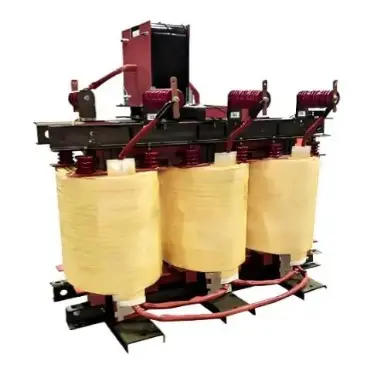
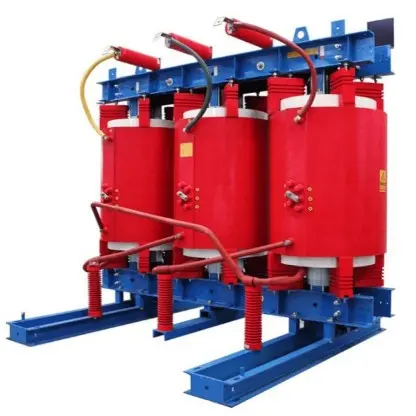
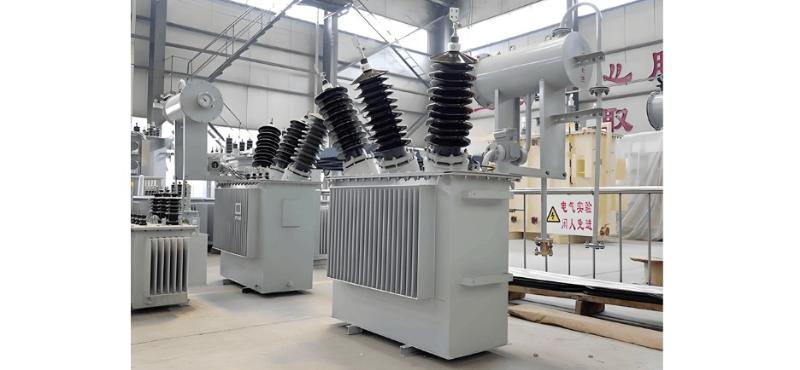
Dry-type transformers mainly include two types: natural air cooling and forced air cooling. Natural air cooling is primarily used for transformers operating continuously within their rated capacity. Forced air cooling can increase the transformer’s output capacity by 50%. This method is mainly applied for intermittent loads or emergency overload conditions. However, during such loading, both impedance voltage and load losses increase unnaturally, which is not economical. Therefore, it is not advisable to keep the transformer in this overloaded state for extended periods.
4. Overload Capacity
A transformer's overload capacity is influenced by multiple factors, so its overload capability must be rationally planned and utilized. The following aspects should be considered:
Appropriately reduce transformer capacity. Consideration can be given to short-term impact overloads that occur during the operation of equipment such as steel rolling mills and welding machines. By utilizing the transformer’s overload capacity, capacity can be reduced—this is an effective way to utilize overload capability. Additionally, for unevenly loaded areas such as residential public lighting, entertainment and cultural facilities, air conditioning systems, and shopping malls, the transformer’s overload capacity can be leveraged to appropriately downsize its capacity, allowing the transformer to operate near full load or intermittently in overload condition during peak operating hours.
Reduce spare capacity or number of units: In some locations, high redundancy requirements for transformers lead to oversized and excessive numbers of units being selected in engineering designs. By utilizing the overload capability of dry-type transformers, spare capacity can be reduced when planning. The number of backup units can also be decreased. When a transformer operates under overload, its operating temperature must be closely monitored. If the temperature rises to 155°C (an alarm will sound), load reduction measures (e.g., shedding non-critical loads) should be taken immediately to ensure safe power supply to critical loads.
5. Low-Voltage Output Methods and Interface Coordination for Dry-Type Transformers
Dry-type transformers contain no oil, eliminating risks of fire, explosion, or pollution. As a result, electrical codes and regulations do not require them to be installed in separate rooms. Especially for the newer SC(B)9 series, with significantly reduced losses and noise levels, it has become feasible to place dry-type transformers in the same switchgear room as low-voltage panels.
5.1 Standard Low-Voltage Enclosed Busbar
If the project uses enclosed busbars (also known as plug-in or compact bus ducts), the corresponding transformer can be provided with standard enclosed busbar terminals for easy connection to external busbars. For products with enclosures (IP20), a flange for the enclosed busbar is provided on the top cover of the enclosure. For products without enclosures (IP00), only the busbar connection terminals are provided.
5.2 Standard Horizontal Side Outlet (Low Voltage)
When the transformer is placed side-by-side with a low-voltage switchboard, horizontal side outlets can be provided on the transformer for convenient terminal connection. This configuration is typically matched with low-voltage panels such as GGD, GCK, and MNS. The transformer manufacturer and switchgear manufacturer must sign a coordination agreement to confirm detailed interface dimensions and ensure smooth on-site installation.
5.3 Standard Vertical Side Outlet (Low Voltage)
This side outlet uses vertical busbars and is similar in principle to the horizontal side outlet. When the transformer is used with Domino-style vertically arranged switchgear panels, the transformer can provide low-voltage side outlets.
China has achieved a very high production volume of dry-type transformers based on resin-insulated materials and now holds a significant position globally, with production and sales ranking first in the world. The leading manufacturing technology is also impressive. The application and technical promotion of these transformers have a very promising future, due to long-term development potential in manufacturing. The main advantages are summarized as follows:
Low energy consumption and low noise: Lower silicon steel sheet losses, structural advantages of foil windings, tighter joints in stepped cores compared to traditional designs—all contribute to higher environmental friendliness in the integrated design of dry-type transformers. With deeper promotion of these technologies, combined with low noise levels and the incorporation of new technologies and processes, future transformers will be even quieter, more environmentally friendly, and energy-efficient.
High reliability: Product reliability and quality have become key consumer concerns. Through research into each manufacturing process, transformer reliability has been verified and further improved, contributing to extended service life and enhanced dependability. This is particularly evident in fundamental engineering research.
Environmental certification: The basic environmental standard is HD464. Research and certification are conducted on climatic resistance classes C0/C1/C2, environmental endurance classes E0/E1/E2, and fire resistance classes F0/F1/F2.
Increased capacity: Dry-type transformers are primarily used as distribution transformers, with capacities ranging from 50 kVA to 2,500 kVA. Their application is now expanding into the power transformer domain, with capacities reaching 10,000 kVA to 20,000 kVA. This expansion is driven by increasing urban electricity demand and the growth of grid networks, leading to more urban load centers and wider adoption of large-capacity power transformers.
Comprehensive functionality: Modern transformers are structurally equipped with protective enclosures, forced cooling, temperature monitoring interfaces, instrument transformers, power metering, and other features. Transformer development is moving toward fully integrated functional designs.
Expanded application fields: The domain dominated by distribution transformers is expanding into multi-field, large-platform applications.