Medium-Voltage Solid-Insulated RMUs: Epoxy Resin Insulation and Structural Design Explained
1 Insulation Materials and Design
Based on cost statistics for medium-voltage solid-insulated ring main units (RMUs), the insulation structure accounts for over 40% of the total cost. Therefore, selecting appropriate insulation materials, designing rational insulation structures, and determining the correct insulation method are crucial to the value of medium-voltage RMUs. Since the first synthesis of epoxy resin in 1930, various additives have been continuously explored to improve its properties.
Epoxy resin is renowned for its high dielectric strength, high mechanical strength, minimal volume change during casting and curing, and ease of machining. Thus, it is selected as the primary insulation material for medium-voltage RMUs. By incorporating hardeners, tougheners, plasticizers, fillers, and colorants, a high-performance epoxy resin is formed. Its thermal resistance, thermal expansion, and thermal conductivity have been enhanced, providing flame retardancy and reliable insulation performance under long-term voltage and short-term overvoltage conditions.
In RMUs, conventional insulation structures often create non-uniform electric fields. In such fields, simply increasing the insulation distance is insufficient to improve insulation strength. Therefore, electric field uniformity must also be improved through structural optimization. The dielectric strength of epoxy resin ranges from 22 to 28 kV/mm, meaning that with optimized insulation design, only a few millimeters of insulation distance are required between phases, significantly reducing the product's size.
2 Structural Design of Medium-Voltage Solid-Insulated RMUs
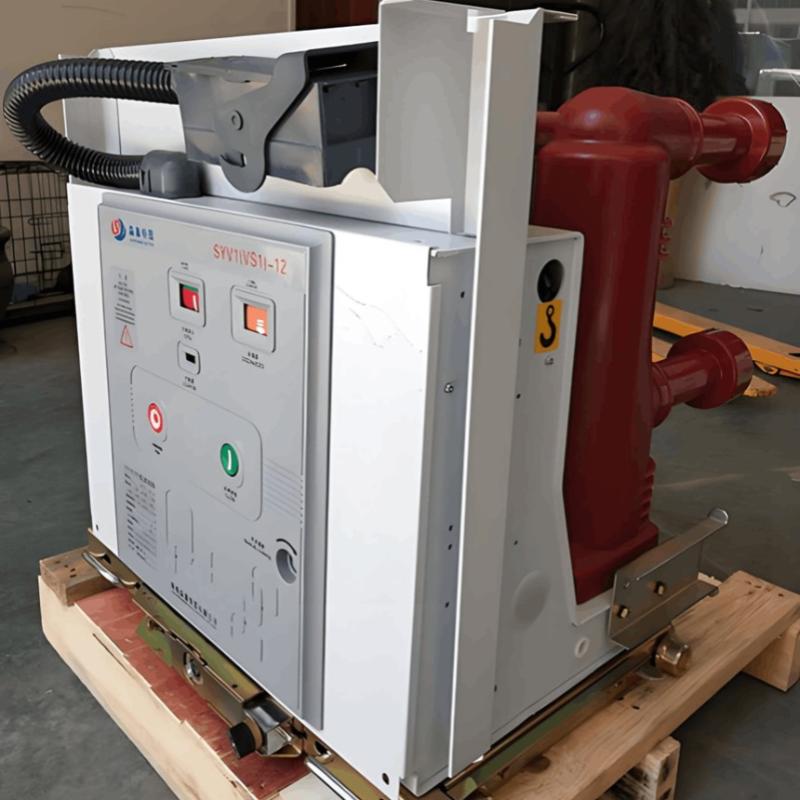
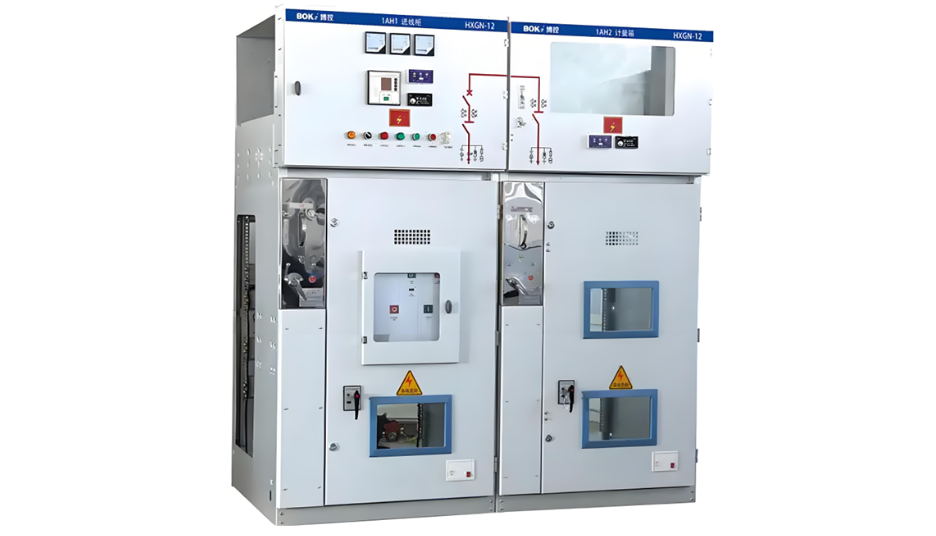
All conductive components—such as vacuum interrupters, disconnect switches, and grounding switches—are placed into a mold and integrally cast using high-performance epoxy resin via the Automatic Pressure Gelation (APG) process. The arc extinguishing medium is vacuum, while insulation is provided by the high-performance epoxy resin. The cabinet adopts a modular design, facilitating standardized mass production. Each compartment is separated by metal partitions to prevent arc propagation, thereby confining potential faults within individual modules.
Integrated busbar and contact connectors are designed. The main busbar consists of segmented, insulated enclosed busbars connected via telescopic integrated busbar connectors, simplifying on-site installation and commissioning. The door structure is designed to withstand internal arcing and allows three-position operations (closing, opening, and grounding) with the door closed. Switch position status can be easily observed through viewing windows, ensuring safe and reliable operation.
3 Advantages and Type Test Analysis of Medium-Voltage Solid-Insulated RMUs
3.1 Main Advantages
High-performance epoxy resin ensures reliable insulation performance and low partial discharge (≤5 pC).
The fully insulated and sealed structure has no exposed live parts, making it immune to dust and contamination. It is not limited by environmental conditions and is suitable for high/low temperatures, plateaus, explosion-proof areas, and polluted regions. It solves issues related to SF₆ gas pressure changes at high temperatures and gas liquefaction at low temperatures. For example, Fuzhou, located in a coastal high-salt-fog area, benefits significantly from the product's salt-fog resistance.
No SF₆ gas is used; no harmful gases are emitted, making it an environmentally friendly product. There is no risk of leakage, eliminating the need for regular maintenance—making it maintenance-free. Enhanced explosion-proof design ensures suitability for hazardous locations. The fully insulated three-phase structure prevents phase-to-phase short circuits, ensuring safety and reliability.
The equipment occupies only 30% of the space required by conventional air-insulated RMUs, making it an ultra-compact product.
3.2 Type Test Analysis
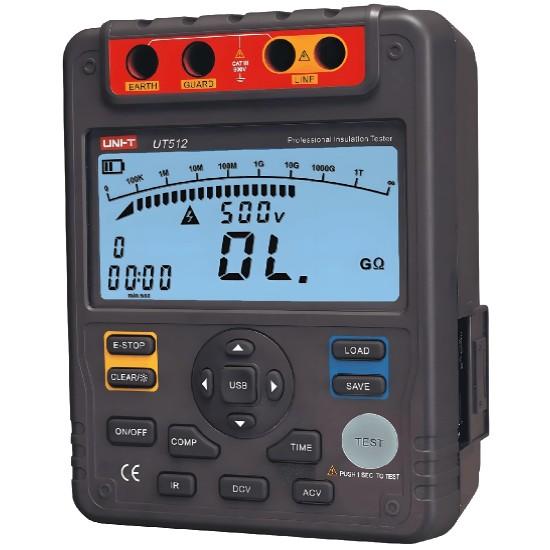
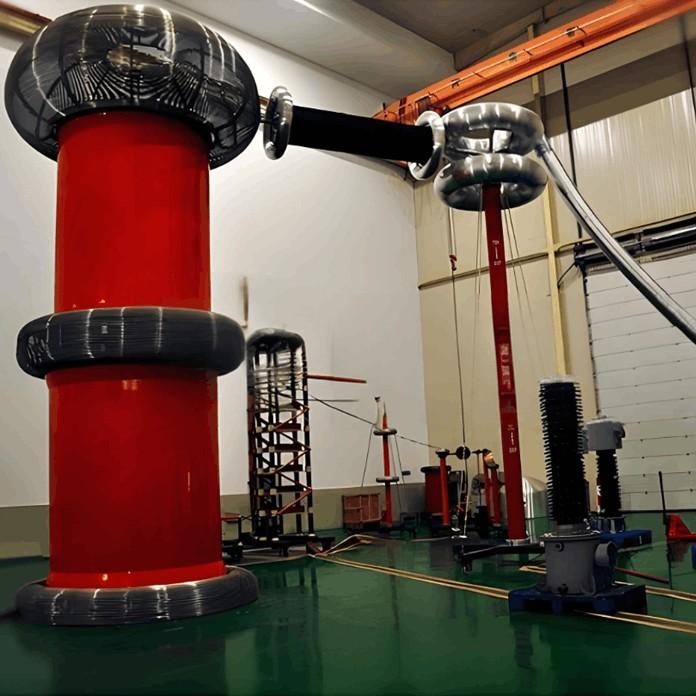
In line with the above advantages, corresponding type tests were conducted, including insulation withstand voltage tests (42 kV/48 kV), partial discharge measurement (≤5 pC), high/low temperature tests (+80 °C / -45 °C), condensation tests (Pollution Level II), and internal arc tests (0.5 s). Test results confirm full compliance with parameter requirements, effectively validating the product's stated advantages.
Additionally, other type tests required by national standards were completed: temperature rise test, main circuit resistance measurement, rated peak and short-time withstand current tests, rated short-circuit making and breaking capacity tests, electrical endurance, mechanical endurance, fault tests under phase-to-phase grounding, rated active load current switching tests, and rated capacitive current switching tests. All test results meet national standard requirements.
State Grid Corporation of China has held multiple meetings to discuss the type test items and parameter requirements for medium-voltage solid-insulated RMUs, with in-depth discussions on specific details such as whether the partial discharge limit should be ≤5 pC or ≤20 pC. We believe that the type tests mandated by national standards are essential and must be performed; additional tests conducted to verify product advantages are also necessary; furthermore, special tests such as vibration and severe climate condition tests should be selected based on the actual operating environment. Regarding parameters, while State Grid sets only baseline requirements, manufacturers can appropriately enhance specifications according to product performance—for instance, raising the partial discharge limit to ≤5 pC and extending the temperature range for high/low temperature tests.
4 Conclusion
Solid insulation offers significant advantages over gas and air insulation: reliable insulation performance, no harmful gas emissions, environmental friendliness, and no leakage issues. The application of solid insulation technology has greatly enhanced the miniaturization and environmental adaptability of medium-voltage RMUs, enabling wide application in high/low temperatures, plateaus, explosion-proof areas, and polluted regions. All these advantages have been fully validated through type testing.