Search


Rockwill RHB SF6 Porcelain-Type Circuit Breaker: Gas Liquefaction Mechanism, Hazard Analysis, and Anti-Freezing Measures at -40°C

Rockwill RHB SF6 porcelain circuit breaker: gas liquefaction mechanism, hazard analysis, and anti-freezing measures at -40°C for extreme climates.

Rockwill
Field: Manufacturing
10Year<
China
Add us on Google

At an extreme low temperature of -40°C, the physical properties of SF6 gas undergo significant changes, posing severe challenges to the safe operation of high-voltage switchgear. The liquefaction mechanism, hazards, and anti-freezing measures for the Rockwill RHB series SF6 porcelain-type circuit breaker are detailed as follows:

I. SF6 Gas Liquefaction Mechanism

The liquefaction temperature of SF6 gas is closely related to its pressure. At an operating pressure of 0.6 MPa, the liquefaction point of SF6 gas is approximately -25°C. Within the conventional pressure range of 0.35-0.65 MPa, the liquefaction temperature can drop as low as -40°C. When the ambient temperature suddenly drops to -40°C, SF6 gas within this pressure range will partially liquefy, transitioning from a gaseous to a liquid state.

iee-business

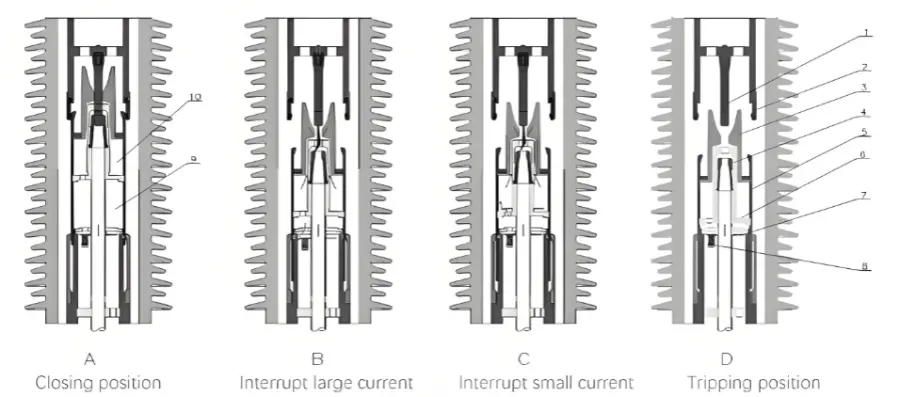
Cross-section Diagram of Interrupter in Four Operating Conditions

II. Hazards of Liquefaction to Circuit Breaker Performance

Once SF6 gas liquefies, the internal gas pressure and density of the circuit breaker drop sharply, leading to the following severe hazards:

Insulation Strength Degradation: Reduced gas density means greater molecular spacing, weakening the electric field shielding effect of the gas. This makes gas molecule ionization more likely, causing a drop in breakdown voltage and severely impairing insulation performance.

Arc-Quenching Capability Loss: The arc-quenching mechanism of SF6 relies on gas molecules combining with charged particles in the arc channel to form negative ions, enabling rapid deionization. Reduced gas density directly weakens this recombination capability, making the arc difficult to extinguish or even causing re-ignition, severely threatening the breaker's interruption performance.

III. Anti-Freezing Liquefaction Measures

iee-business

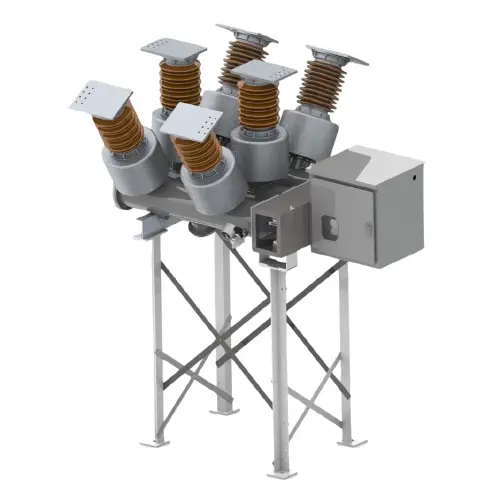
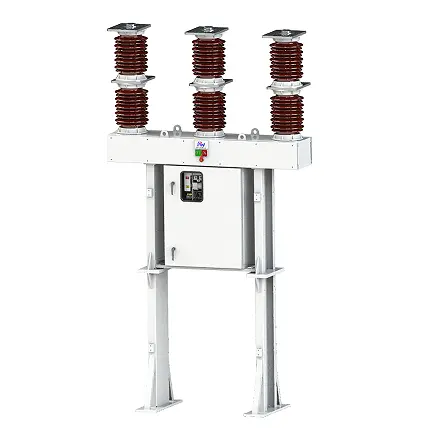
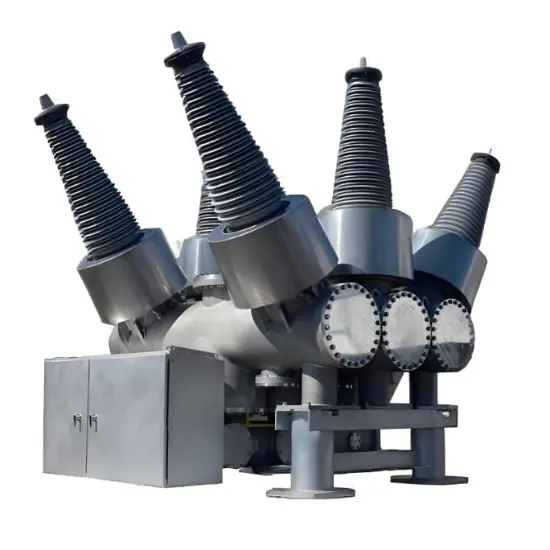
HV Live tank SF6 gas circuit breaker 52kV

To address the extreme cold environment of -40°C, the Rockwill RHB series porcelain-type circuit breaker adopts a comprehensive anti-freezing strategy combining "active heating, passive insulation, medium improvement, and intelligent temperature control":

Active Heating System: A nickel-chromium alloy heating strip (typically 800W-1200W) is integrated at the base of the breaker's porcelain insulator, working in conjunction with a temperature sensor for closed-loop control. When the ambient temperature drops to a set threshold (e.g., -25°C), it automatically activates, ensuring the SF6 gas temperature inside the arc-quenching chamber is maintained above -18°C, keeping the equipment within its normal operating pressure range.

Passive Insulation Measures: High-efficiency insulation materials such as nano-gel aerogel are used to wrap the porcelain insulators and related piping. This not only significantly reduces heat loss (improving heating efficiency by approximately 30% under extreme low temperatures) but also prevents condensation or ice formation on the porcelain surface due to excessive temperature differentials, reducing energy consumption.

Mixed Gas Technology: By mixing SF6 with a specific proportion of N2 or CF4 to form a mixed gas, the liquefaction temperature is substantially reduced. For example, an SF6/N2 (60%:40%) mixture at 0.7 MPa has a liquefaction temperature as low as -42°C. An SF6/CF4 mixture achieves an even lower liquefaction temperature, enabling normal operation at -50°C. However, it should be noted that with mixed gas, the reduced SF6 partial pressure lowers the arc-quenching capability compared to pure SF6 (e.g., a 40kA interruption capacity may drop to 31.5kA), and when gas leakage occurs, refilling requires dedicated equipment to maintain the correct mixing ratio.

Intelligent Temperature Control and Monitoring System: Leveraging IoT and AI technologies, the system achieves precise closed-loop control and fault prediction for the heating system. It monitors gas chamber temperature, pressure, and heating device status in real time, dynamically adjusting heating power based on environmental changes to avoid overheating or underheating, while providing anomaly alarms to ensure long-term reliable operation of the anti-freezing system.

iee-business

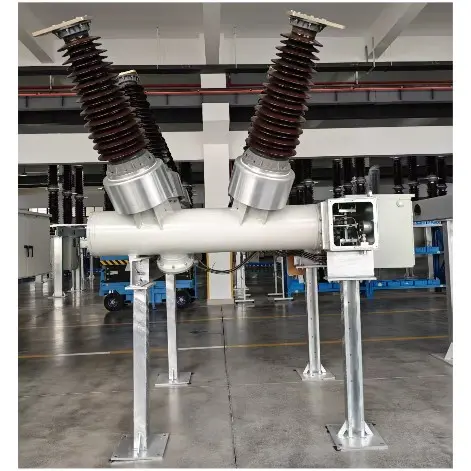
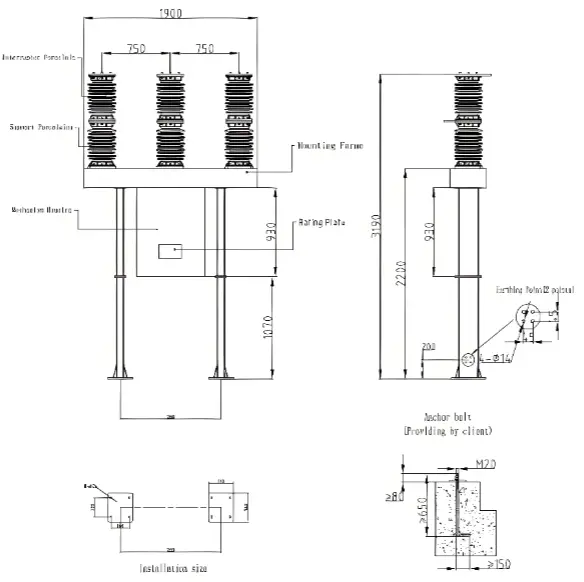
Circuit Breaker Overall Installation Drawing

IV. Conclusion

In the extreme cold environment of -40°C, changes in the physical properties of SF6 gas are the core challenge threatening the safe operation of circuit breakers. Gas liquefaction causes a sharp drop in gas chamber pressure and density, leading to severe hazards such as weakened insulation strength, loss of arc-quenching capability, and equipment lockout, posing a significant threat to grid safety and stability.

To comprehensively address this issue, the Rockwill RHB series SF6 porcelain-type circuit breaker adopts a comprehensive strategy of "active protection + passive insulation + medium improvement + intelligent monitoring." By integrating high-power electric heating elements and nano-aerogel insulation layers on the porcelain housing, an efficient thermal management system is established. Simultaneously, SF6/N2 or SF6/CF4 mixed gas technology is introduced to substantially reduce the gas liquefaction temperature at the physical source, while objectively assessing the technical trade-offs in arc-quenching performance. Furthermore, the intelligent temperature control system leveraging IoT and AI technologies achieves precise closed-loop control and fault prediction of the heating system. These multi-dimensional anti-freezing liquefaction measures complement each other, not only effectively eliminating safety hazards caused by extreme low temperatures but also significantly reducing full-lifecycle O&M costs, providing solid assurance for the reliable operation of power equipment in cold regions.

Edited From:Garca

Give a tip and encourage the author!

Comments

Share your question or perspective
WhatsApp
Send inquiry
+86
Click to upload file
Download
Get the IEE Business Application
Use the IEE-Business app to find equipment, obtain solutions, connect with experts, and participate in industry collaboration anytime, anywhere—fully supporting the development of your power projects and business.
Login
or continue with
New here?
Register