Remembering! Sometimes, a Dead Tank means more risk of being dead!
1. Common Misconception
Many incorrectly assume that "Live Tank" means the entire equipment is energized and dangerous, while "Dead Tank" means the enclosure is completely safe to touch. This is false. In a Live Tank (LTCB) design, only the interrupter chamber at the top is at system potential (live). The lower support structure, base tank, and operating mechanism are solidly grounded and near zero potential. The high-voltage parts are elevated on insulators, keeping accessible parts relatively safe. In a Dead Tank (DTCB) design, the interrupter chamber is inside a metal tank that is at ground potential (dead). However, the high-voltage conductors run inside the tank, separated from the grounded shell only by internal insulation (SF6 or oil). The name "dead" creates a dangerous false sense of security.
2. Technical Comparison
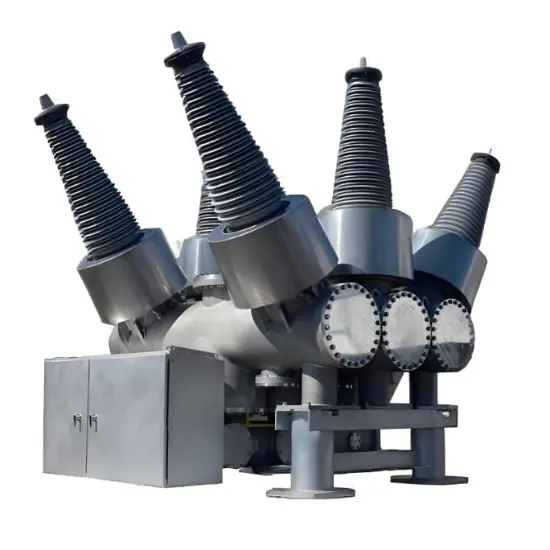
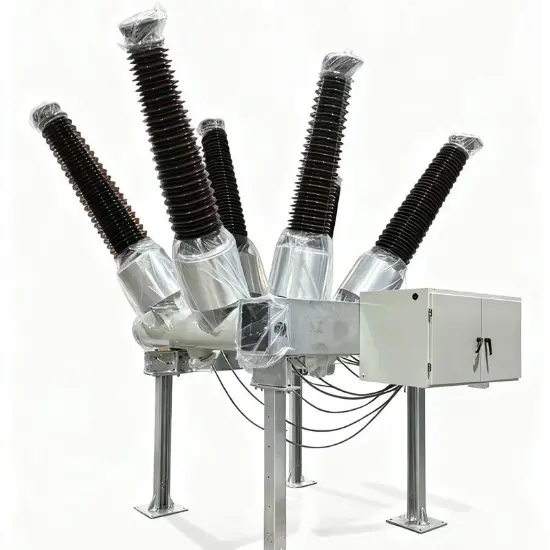
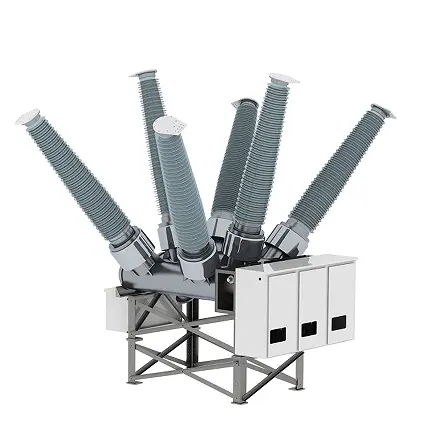
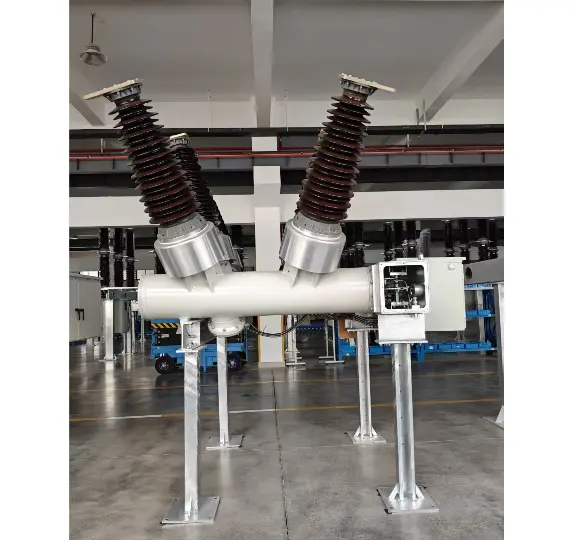
For interrupter location, Live Tank has it on top of a porcelain insulator at high potential, while Dead Tank has it inside a grounded metal tank. For appearance, Live Tank is tall with a narrow footprint, whereas Dead Tank has a low profile, wide stance, and low center of gravity. Seismic resistance is moderate for Live Tank and excellent for Dead Tank. Contamination resistance depends on insulators and is only fair for Live Tank, but good for Dead Tank due to the sealed tank. SF6 gas volume is low for Live Tank (about 15% of Dead Tank) and high for Dead Tank. Built-in current transformers are not possible with Live Tank (external CT needed) but are easily integrated into Dead Tank. Material cost is lower for Live Tank and higher for Dead Tank (more steel). Typical markets for Live Tank are Europe and compact substations, while Dead Tank is common in the US, Japan, high-seismic areas, and UHV projects.
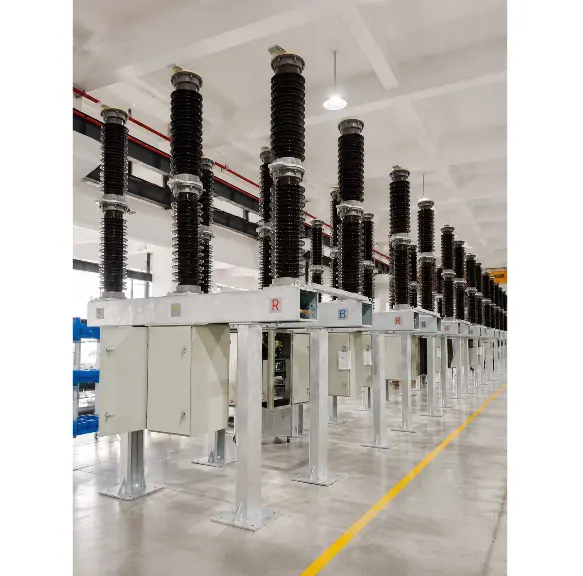
Physical Photo of RHB-72.5kV Live Tank SF6 Circuit Breakers
3. Critical Risk: Ground Potential Rise (GPR) and Beyond
The higher risk of fatal contact with dead tank breakers is not because the tank is energized, but because it becomes a primary anchor point for Ground Potential Rise (GPR) during faults. During a high-current fault, the tank and its connected metal structures (CT boxes, mechanisms, ladders) can rise to thousands of volts relative to the surrounding soil. The large grounded metal mass sits at ground level, creating the steepest potential gradients exactly where personnel stand and work. Additional hazards beyond fault current include system overvoltages, lightning strikes, and deterioration of internal insulation, which can also cause high potential to conduct or leak from the main circuit into the low-potential system (tank, control circuits, grounding grid), leading to dangerous touch voltages and transferred potentials. Live tank designs naturally keep energized parts high above ground, away from personnel.
Physical Photo of RHD-72.5kV Dead Tank SF6 Circuit Breakers
4. Human Factors & Transferred Potential
The grounded appearance of Dead Tank circuit breakers gives a false sense of security, leading to procedural shortcuts. The hazard extends beyond the tank via transferred potential, meaning dangerous voltages propagate through control cables and shielding into distant rooms such as relay buildings.
5. Three Factors Explaining the Mortality Gap
The mortality gap stems from three factors. First, electromagnetic: the Dead Tank breaker tank sits at the source of the highest potential rise. Second, geometric: all operational interfaces (handles, panels) are at waist height, maximizing the probability of contact. Third, psychological: the grounded appearance bypasses natural caution, turning a safety feature into a lethal trap when the ground grid itself becomes energized.
6. Final Safety Rules
Never touch any metal part of either live tank or dead tank equipment while in service, including grounded enclosures, because you cannot visually verify that grounding is intact. Always maintain safe clearance distances as per high-voltage regulations. Follow LOTO (Lockout/Tagout) and earthing procedures before entering any compartment. For dead tank breakers in particular, do not lean on, sit on, or casually approach the tank. Internal arc or insulation failure can raise the tank potential or cause violent rupture. Do not rely on equipment names. "Dead" does not mean "safe to touch."
Remember: Machinery is unforgiving, life is priceless. Strictly follow high-voltage safety rules at all times!
Edited From:ChengMing Chen

 Login