Search


ROCKWILL Dead Tank Circuit Breaker: SF6 Low Leakage Technology Principles and Emergency Response Guide

Rockwill dead tank circuit breaker: SF6 low leakage technology principles, sealing design, and emergency response guide for safe operation.

Rockwill
Field: Manufacturing
10Year<
China
Add us on Google
 

I. Underlying Technical Principles of Dual-Flange Sealing Achieving Low Leakage (≤0.5%/Year)

ROCKWILL dead tank circuit breakers strictly control the annual leakage rate within 0.5% through a triple assurance of "structural redundancy + precision manufacturing + scientific prediction." The core technical principles include:

iee-business

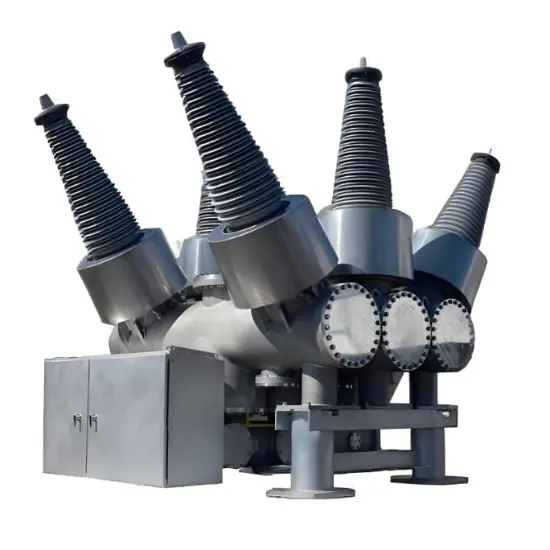
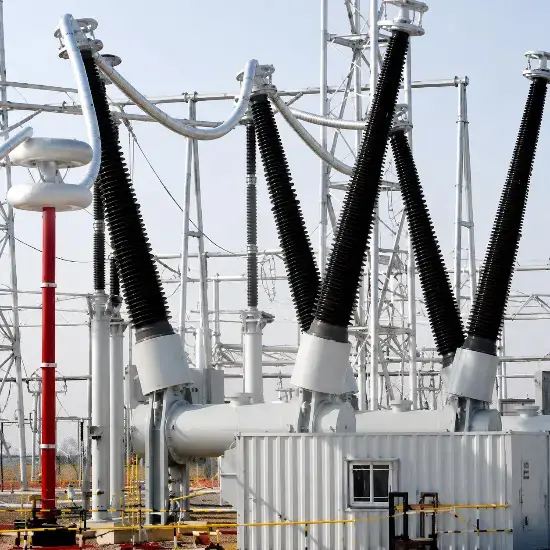
HV Dead Tank SF6 Circuit Breaker factory

1.1 Dual O-Ring Redundant Barrier and Anti-Corrosion Design

  • Physical Barrier: Two EPDM rubber O-rings are arranged on the inner and outer sealing faces of the flange. The inner primary seal directly blocks the high-pressure SF6 gas inside the tank. The outer secondary seal effectively isolates external rain, dust, and moisture. Even if a micro-leakage occurs at the inner seal, the outer layer provides a second barrier, significantly lengthening the leakage path.
  • Chemical Protection: An additional layer of sealant is applied to the outer sealing surface, serving not only as a secondary barrier but also protecting against atmospheric corrosion, preventing accelerated O-ring aging due to environmental erosion.

iee-business

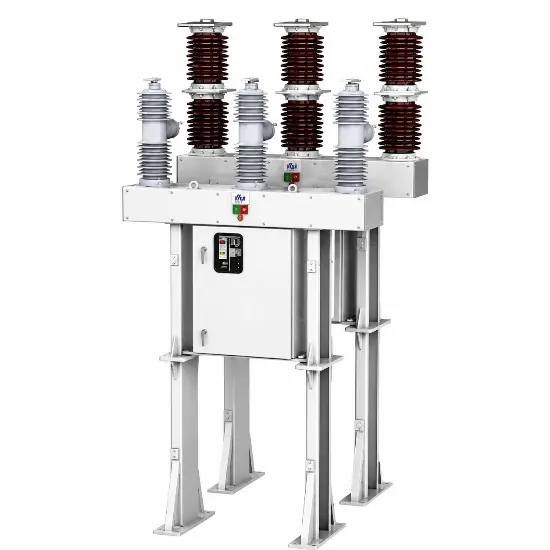
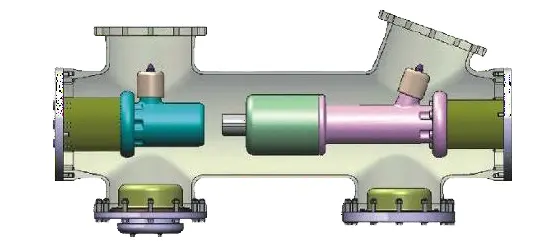
Opening position 

iee-business

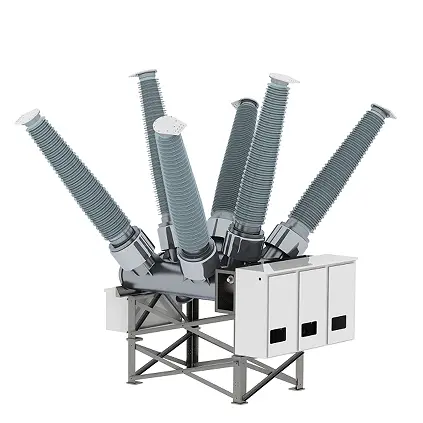
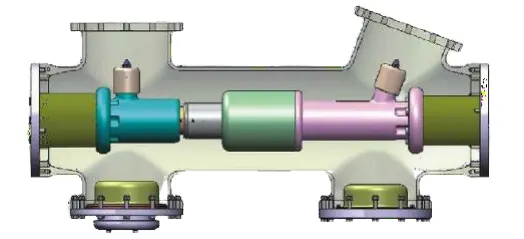
Closing position 

1.2 Precise Early Warning Mechanism via Intermediate Leak Detection Groove

An annular leak detection cavity is reserved between the two sealing rings, allowing connection to a leak detector or installation of online monitoring sensors. Micro-leakage from the inner seal will preferentially accumulate in the intermediate groove, rather than directly escaping to the atmosphere. This enables early warning of leakage and rapid pinpointing of the leak source, avoiding prolonged undetected gas loss.

1.3 Uniform Compression and Finite Element Mechanical Optimization

  • Assembly Process: The tank flange is CNC-machined as a single piece, ensuring the sealing surface is free of scratches and concave/convex defects. Bolts are tightened with uniform torque to ensure consistent compression of both sealing rings, effectively resisting local gaps caused by equipment vibration and thermal expansion/contraction.
  • Advanced Prediction Technology: During the design phase, a finite element model of the O-ring is constructed for contact nonlinear calculation, obtaining parameters such as average contact pressure and equivalent contact length. Combined with an average flow model, the leakage rate on random rough surfaces is quantitatively evaluated, theoretically eliminating sealing blind spots from the source.

1.4 Stringent Factory Vacuum and Gas Inspection

Before shipment, helium mass spectrometry vacuum leak detection is performed as a type test, thoroughly inspecting micro-leakage risks in welds and flanges at the manufacturing source. Together with the dual-seal structure, this meets stringent environmental and safety standards.

II. SF6 Leakage Graded Response and Safety Protection Measures

Although SF6 gas is colorless and odorless, it decomposes under arcing into highly toxic and corrosive gases (such as HF, SO2, etc.). Additionally, being heavier than air, it tends to accumulate in low-lying areas, causing oxygen deprivation. Therefore, leakage handling must follow the principle of "protection first, source control second."

2.1 Minor Leakage (Density Relay Alarm, Not Yet at Lockout Pressure)

  • Precise Location: Use an SF6 leak detector combined with the local bagging method to inspect leak-prone areas such as flanges, joints, and welds.
  • Tightening and Replacement: For minor flange seepage, retighten bolts to the specified torque. If the sealing ring is confirmed aged, de-energize and replace the seal.
  • Live Refilling: Under the premise of ensuring safety, refill gas to the rated pressure while energized. Record ambient temperature simultaneously and perform pressure-temperature correction, then continuously track the pressure trend.

iee-business

Simulation analysis of circuit breaker operating mechanism motion

2.2 Severe Leakage (Rapid Pressure Drop, Triggering Open/Close Lockout)

  • Emergency Isolation and Power-Off: Immediately disconnect the circuit breaker operating power supply and lock out the open/close control circuit. Use a specialized tool to physically lock the operating mechanism, preventing the breaker from attempting to operate under low SF6 pressure (where it would be unable to extinguish the arc). Quickly report to the dispatcher and arrange for isolation and shutdown.
  • Forced Ventilation and Personnel Protection: Turn on the substation exhaust fans, focusing mechanical ventilation on low-lying areas. Do not rely on ordinary masks. Personnel entering the area must wear positive-pressure self-contained breathing apparatus (SCBA), acid-resistant gloves, and goggles. On-site monitoring must be continuous — the area can only be considered temporarily safe when SF6 concentration drops to ≤1000 ppm and oxygen content rises to ≥19.5%.
  • De-Energized Repair and Environmental Recovery: After de-energization, evacuate the gas chamber, replace failed sealing rings, or repair tank welds. The recovered SF6 gas must undergo purification treatment to remove impurities and decomposition products. Only purified gas meeting quality standards may be reused; direct discharge is strictly prohibited.

iee-business

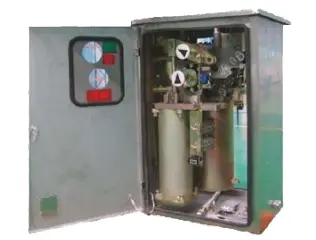
Operation Mechanism 

  • Recovery and Testing: After repair, perform a vacuum hold leak test. Once qualified, refill with certified SF6 gas. After gas filling, allow the gas to settle for at least 24 hours before conducting a seal tightness test, and at least 48 hours before performing moisture (water content) testing. Gas moisture and purity must be verified as qualified before returning the equipment to service.

2.3 Long-Term Preventive Leak Control and Maintenance Strategy

  • Periodic Inspection: Conduct annual infrared or halogen leak detection to re-measure the annual leakage rate. Increase inspection frequency for aging equipment.
  • Environmental Protection: Apply waterproof wrapping to outdoor equipment flanges to reduce salt spray and UV-accelerated aging of sealing rings.
  • Climate Adaptation: For cold climate projects, select low-temperature-resistant sealing rings to reduce micro-leakage risk from low-temperature contraction. In high-humidity environments, install built-in dehumidifiers to prevent internal condensation.
  • Smart Monitoring: Deploy an online density monitoring system integrated with pressure sensors and wireless modules for real-time early warning of slow leakage, shifting from "reactive emergency repair" to "proactive condition-based maintenance."

III. Deeper Reflection

Limiting the annual leakage rate strictly to within 0.5% serves a dual strategic purpose: on one hand, it ensures the long-term stability of SF6 insulation and arc-quenching performance inside the tank, preventing flashover or breakdown caused by excessive moisture; on the other hand, SF6 is a potent greenhouse gas explicitly regulated under the Kyoto Protocol (with a global warming potential more than 20,000 times that of CO2), making strict leakage control an essential compliance requirement for power grid enterprises.

ROCKWILL's dual-seal design is a classic example of "redundant safety design." While it incurs a slightly higher initial manufacturing cost, it delivers lower maintenance frequency and reduced refilling needs over the entire lifecycle — perfectly balancing the absolute safety requirements of grid operation with green, low-carbon environmental protection goals.

Edited From:Garca 

Give a tip and encourage the author!

Comments

Share your question or perspective
WhatsApp
Send inquiry
+86
Click to upload file
Download
Get the IEE Business Application
Use the IEE-Business app to find equipment, obtain solutions, connect with experts, and participate in industry collaboration anytime, anywhere—fully supporting the development of your power projects and business.
Login
or continue with
New here?
Register