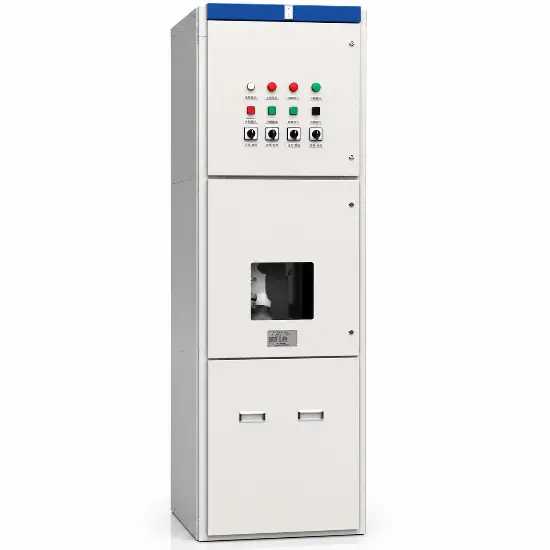
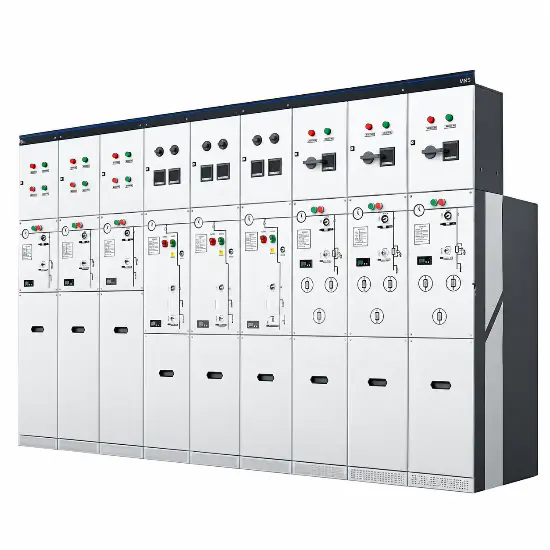
"Pure air" is the marketing name for a new generation of SF6-free insulation systems that use conditioned, dry, compressed air — sometimes at higher pressure, sometimes mixed with small amounts of climate-friendly gases — to replace sulfur hexafluoride inside the sealed tank. As utilities and industrial sites move away from SF6, the question is no longer whether to go SF6-free, but which technology delivers the same performance without the trade-offs.
The short answer
For 12–24kV distribution and ring-main applications, pure air switchgear is a credible, direct SF6 replacement: zero GWP, sealed vacuum interruption, comparable safety and familiar installation. It only gives way to gas-insulated or solid-insulated designs where extreme compactness at higher voltage is the single priority.
Side-by-side comparison
| Pure air switchgear vs SF6 switchgear |
| Criterion |
Pure air switchgear |
SF6 switchgear |
| Insulation medium |
Conditioned dry compressed air |
Sulfur hexafluoride (SF6) |
| Global warming potential |
Zero |
≈ 23,500 × CO2 |
| Arc interruption |
Sealed vacuum interrupter |
SF6 blast / vacuum (hybrid) |
| Voltage class |
12–24kV (extending to 36kV) |
12kV and above, incl. compact GIS |
| Regulatory outlook |
Aligned with F-gas phase-down |
Restricted; reporting & recovery costs |
| Leakage risk |
Harmless air; nothing to recover |
Heavy gas, asphyxiation & climate risk |
| Maintenance |
Pressure monitor, sealed vacuum |
Gas-density checks and top-ups |
| End of life |
Standard recycling |
Specialized gas recovery & disposal |
1. What "pure air" actually is
Unlike early SF6-free designs that simply vented ordinary air, pure-air systems condition the air — drying it strictly, controlling humidity, and often sealing it in a welded tank at mild positive pressure. Because air alone has lower dielectric strength than SF6 at the same pressure, modern designs combine optimized internal shielding, compact electrode geometry and vacuum interruption to reach the required ratings. The result is insulation that needs no fluorinated gas at all.
2. Performance and reliability
A common worry is whether pure air can hold off 12–24kV and clear fault currents as well as SF6. In practice, the fault-current interruption is handled by vacuum interrupters — a technology with decades of proven service — while the pure-air medium handles steady-state insulation. Units meet IEC 62271 class ratings (typically 20kA/3s at 12–24kV), so there is no reliability gap for distribution applications.
3. Footprint and retrofits
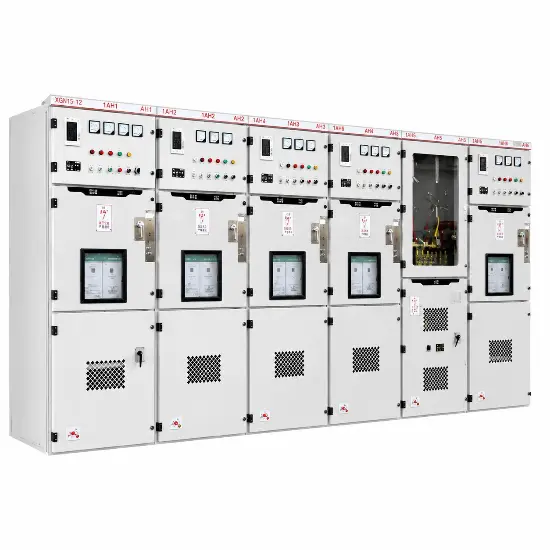
Pure-air RMUs and switchgear are designed to fit the same or similar cubicle envelopes as conventional SF6 units, which is a major advantage when replacing gear in existing substations with limited space. They are not quite as dense as high-voltage GIS, but they avoid the retrofitting cost of changing switchroom dimensions.
4. Safety, regulation and total cost
Because the medium is breathable air, there is no asphyxiation hazard in cable pits and basements, and no specialized gas-handling on site. Over the asset life, pure air removes three hidden costs SF6 owners keep paying: periodic gas-density monitoring and top-ups, F-gas reporting, and end-of-life gas recovery. For new specifications, the total cost of ownership is typically lower.
Bottom line: specify pure air for new 12–24kV ring main units, secondary substations and any project under ESG or F-gas pressure. Keep SF6 only where a space-constrained GIS application truly demands it.
Pure air products from ROCKWILL
We build SF6-free ring main units insulated with pure/dry air, and supply them to distributors and EPCs as a manufacturer under your brand. For the broader medium-voltage panel view, see our dry air switchgear range, and read the companion piece on dry air vs SF6 switchgear.

 Login
Login