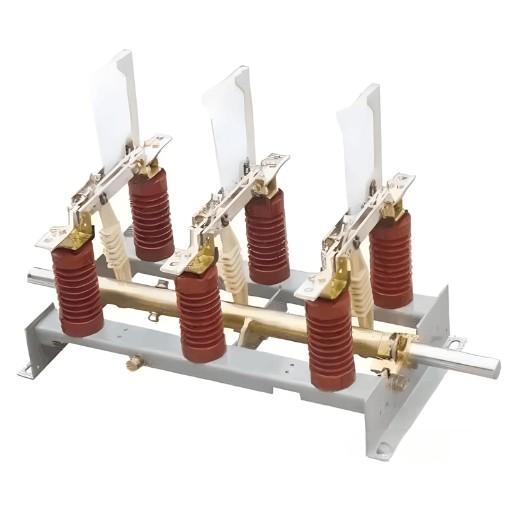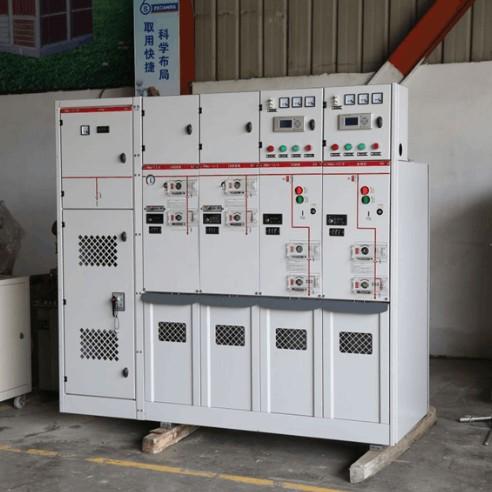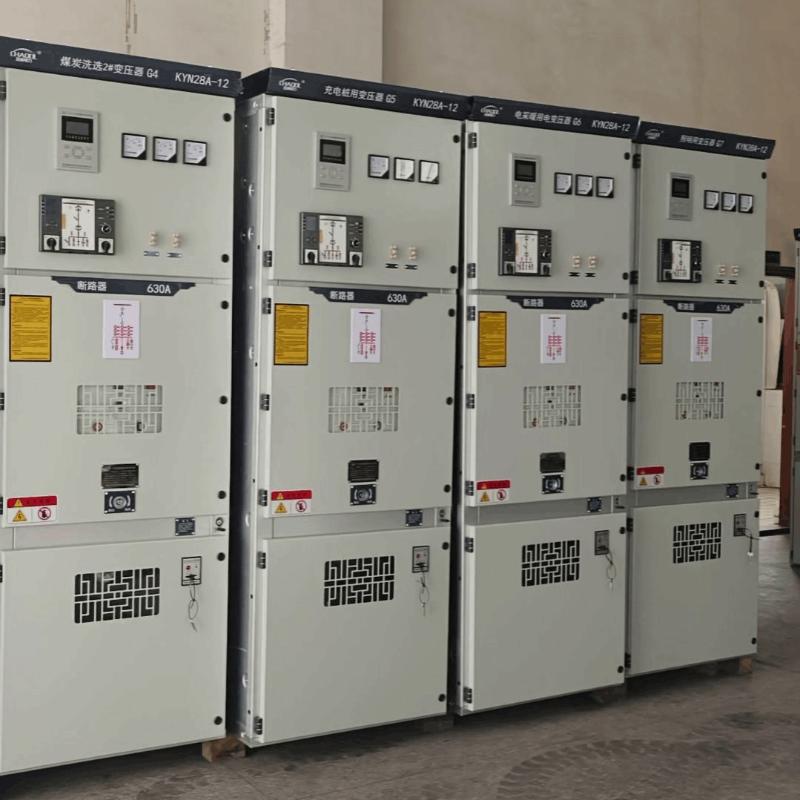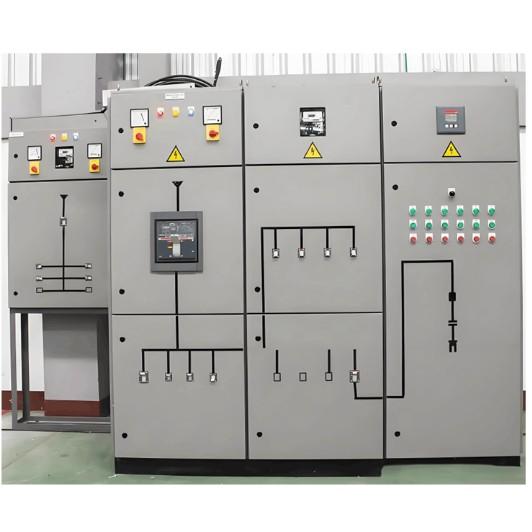
Ang DTU (Distribution Terminal Unit), usa ka terminal sa substation sa mga sistema sa automatikong distribusyon, adunay secondary nga gamit nga gisulod sa mga switching station, distribution room, N2 Insulation ring main units (RMUs), ug box-type substations. Ito ang nag-uugmad sa primary nga gamit ug sa master station sa automatikong distribusyon. Ang mga lumang N2 Insulation RMUs nga walay DTUs dili makapag-communicate sa master station, kasagaran dili na sila mokomplyar sa mga requirement sa automatikong operasyon. Bagama't ang pagpalit sa tanang RMUs ngadto sa bag-ong modelo nga may integrado nga DTU mahimong solusyon, kini nag-require og dako nga investment ug magresulta og power interruption. Ang pag-retrofit sa eksistensyal nga RMUs ngadto sa DTUs nagsilbi isip mas ekonomiko nga solusyon. Batas sa praktikal nga kapahan-an, hini ang proseso alang sa retrofitting sa N2 Insulation RMUs ngadto sa sheltered upright ug outdoor upright "three-remote" (telemetry, teleindication, telecontrol) DTUs.
1 Key Survey Points for N2 Insulation RMU Retrofit
(1) Pagsusi sa primary nga gamit nga may suliranan: Pagsusi sa severe corrosion, mechanism jamming, o deformation. Kung ang gamit kay sobrang luma, ang retrofitting dili na worth it.
(2) Pag-verify sa electric operating mechanisms: Ang non-electric mechanisms nag-support lamang sa telemetry/teleindication ngadto sa walay telecontrol capability. Ang desisyon sa retrofitting dapat i-consider ang requirements sa kompanya.
(3) Pag-confirm sa secondary wiring terminals: Kung wala'y accessible terminals, ang DTU wiring dili posible. Ang RMUs nga may internally enclosed wiring (ang requires bolt removal aron mapasabot) dili suitable sa retrofitting. (4) Pag-determine sa configuration sa RMU: Ang N2 Insulation RMUs kasagaran adunay incoming cabinets, outgoing cabinets, ug voltage transformer cabinets. 2-in/4-out units adunay 7 bays; 2-in/2-out units adunay 5 bays. Common DTU configurations adunay 4, 6, 8, o 10 channels (kasagaran dili mogawas sa 10). Ang channel count nagdetermina sa sukat sa DTU.
(5) Pag-assess sa installation space: Human sa pag-determine sa sukat sa DTU, verify kung ang interior sa RMU makakapahimulos niini. Sufficient horizontal space allows sheltered upright installation; otherwise, outdoor upright is needed. For sheltered upright installation, also consider side cabinet door availability. If the DTU fits only sideways but no side door exists, cabinet modification is required. Outdoor upright installations require an additional external cabinet, increasing costs, affecting aesthetics, and requiring foundation work. Foundation placement should consider environmental impact, proximity to voltage transformer compartments (shorter cables with closer placement), and cable routing options.
(6) Pag-check sa availability sa voltage transformer: Ang current transformers nag-provide og measurement current sa protection devices ug DTUs. Karon most RMU bays adunay current transformers, pero ang voltage transformers dili always present. Ang voltage transformers nag-supply og power sa mga devices (line loss modules, power supplies, etc.) ug instruments (voltage meters, power meters), nag-provide og 220V AC, zero-sequence voltage, ug DTU measurement voltage. Through power modules, indirect supply operating power, DTU power, teleindication power, ug communication power. Ang RMUs nga wala'y voltage transformers (depende ra sa current transformers para sa power sa protection device) dili recommended sa retrofitting. Some RMUs adunay voltage transformers nga may ratio lang nga 10/0.22 requiring replacement with 10/0.22/0.1 ratio units. Additionally, verify if existing voltage transformer capacity is sufficient for the added DTU load (typically ≤40 VA).
(7) Pag-verify sa bay equipment types: Ang electric-operated circuit breakers ug load switches using similar control cables (load switches simply lack the "energy stored" signal wire). Manual load switches only require position signals and measurement lines connected to DTU terminals.
(8) Pag-identify sa safety hazards: Survey potential construction hazards and develop appropriate safety measures.
2 Material Preparation
(1) DTU selection: Post-survey, determine appropriate DTU model (channel count). For common 2-in/4-out configurations, 6-channel or 8-channel DTUs are suitable.
(2) Control cables: These connect RMU terminals to DTU terminals, forming various circuits:
Signal circuits: Transmit switch positions (closed/open position, energy stored, remote/local status, etc.). Typically use 12×1.5 mm² control cables. Position signals for voltage transformer compartment switches have limited value and are generally not installed.
Measurement circuits: Include voltage and current measurement (load current and zero-sequence current). Monitor grid parameters to calculate power values and detect abnormalities (phase loss, imbalance, overload). These activate DTU protection functions (three-stage current protection, voltage protection, zero-sequence protection). Typically use 3-4 cores of 6×2.5 mm² cables connecting phase current transformers (UVW three-phase or UW two-phase) to DTU terminals. 2-in/4-out configurations require six 6×2.5 mm² cables. An additional 6×2.5 mm² cable connects voltage transformer 100V terminals to DTU terminals. Many RMUs lack zero-sequence transformers since cable networks have low ground fault probability.
Control circuits: Enable remote/local control of circuit breakers or load switches. Typically use 3 cores of 12×1.5 mm² cable.
Power circuits: Supply power to modules like power supplies. Typically use 2 cores of 6×2.5 mm² cable.
For common 2-in/2-out and 2-in/4-out RMU configurations, required control cable specifications and reference lengths are shown in Table 1.
| No. | Model sa Control Cable | Reference Length of Built-in DTU Control Cable (m) | Reference Length of External DTU Control Cable (m) | ||
| 2-Inlet & 4-Outlet | 2-Inlet & 2-Outlet | 2-Inlet & 4-Outlet | 2-Inlet & 2-Outlet | ||
| 1 | 6×2.5mm2 | 35 (Total length of 7 cables) | 25 (Total length of 5 cables) | 50 (Total length of 7 cables) | 35 (Total length of 5 cables) |
| 2 | 12×1.5mm2 | 33 (Total length of 6 cables) | 22 (Total length of 4 cables) | 40 (Total length of 6 cables) | 30 (Total length of 4 cables) |
Sa dihang mao kini:
① Alang sa 12×1.5 mm² control cables: Ang usa ka dako sa cable cores nagkonekta sa circuit breaker closing control, circuit breaker opening control, common terminal alang sa pagsulay/pagbukas, ug uban pa, samtang ang uban nga dako nagkonekta sa DTU pinaagi sa terminal blocks, nahimong remote control circuit. Ang uban pang cores nagkonekta sa circuit breaker closed position, circuit breaker open position, disconnector closed position, grounding disconnector closed position, remote position, energy-stored position, common terminal, ug uban pa, samtang ang uban nga dako nagkonekta sa DTU pinaagi sa terminal blocks, nahimong remote signaling circuit. Ang electrically operated load switches gikinahanglan og parehas nga wiring sama sa circuit breakers tungod kay walay "energy stored" signal wire. Ang wala gigamit nga cable cores gipangandoy isip spares. Ang 2-in/2-out configuration gikinahanglan og 4 cables sa tipo kini; ang 2-in/4-out configuration gikinahanglan og 6 cables. Wala kini gikinahanglan sa voltage transformer compartment.
② Alang sa incoming ug outgoing line compartments: 6×2.5 mm² cables nagkonekta sa U, V, W three-phase o U, W two-phase current transformers ug common terminals alang sa bawg incoming o outgoing line. Ang three-phase connections gikinahanglan og 4 cores; ang two-phase connections gikinahanglan og 3 cores. Ang natig-an nga cores gipangandoy isip spares. Ang 2-in/2-out configuration gikinahanglan og 4 cables sa tipo kini; ang 2-in/4-out configuration gikinahanglan og 6 cables.
③ Alang sa voltage transformer compartment: Usa pa nga 6×2.5 mm² cable nagkonekta sa cabinet's U, V, W three-phase 100V ug 220V terminals (gikinahanglan og 5 cores total) sa DTU terminals. Kini nga gisukdan nga voltage pangunaa nga monitor sa power outages ug voltage anomalies sa cabinet, suporta sa power calculation, maghatag og sampling alang sa voltage-based relay protection, ug maghatag og power sa power module (sumala sa operating power sa DTU).
(3) Auxiliary materials: Handurawan fireproof sealant, PVC wire marker tubes, cable identification tags, nylon cable ties, wire wrapping tubes, insulation tape, ug uban pang auxiliary materials batasan sa aktwal nga sitwasyon.
(4) Installation tools: Handurawan cable strippers, screwdrivers, multimeters, ug uban pang kinahanglan nga mga tool.
3 Construction Procedures
Tungod kay ang DTU installation gikinahanglan lamang og secondary equipment nga wala na-energize, ang operasyon sa primary equipment adunay epekto. Aron maprevent ang accidental power interruption sa primary equipment sa panahon sa DTU installation ug commissioning, kinahanglan nga masukad sa maong pagkakaron:
Ang remote/local switch gihatag sa "local" o "locked" position Tanang relay protection output hard plates giwithdraw Tanang air circuit breakers bisan device power supply ug AC power supply gisulay
(1) Unsa man, siguro nga mount ang DTU ug siguro nga reliable nga grounding nga ground resistance dili mogos 10 Ω.
(2) Konekta ang usa ka dako sa handurawang control cables sa corresponding DTU terminals ug ang uban nga dako sa cabinet terminals. Tungod kay mechanical tension sa cables, panalipdan ang adequate slack isip reserve length. Ang cable laying ug wiring mahimong compliant sa secondary cable connection requirements. Bisag asa: ang control cables gibilin nga neat ug secure nga bound pinaagi sa nylon cable ties; ang duha ka dako sa cables gikinahanglan og identification tags; ang exposed wire cores human sa pagremove sa cable insulation gibilin nga wrapped pinaagi sa wire wrapping tubes. Tungod kay retrofit wiring kini, ang duha ka dako sa bawg wire core gikinahanglan og clear nga marked pinaagi sa PVC marker tubes. Ang wala gigamit nga wire cores gibilin nga insulated pinaagi sa tape aron maprevent ang accidental contact.
(3) Human sa pagkumpleto sa wiring, verify balik tanang koneksyon aron siguro nga accurate. Suri nga wala nay tools o leftover materials naglubog sa site.
(4) Conduct joint commissioning sa DTU sa primary equipment ug distribution automation master station aron siguro nga accurate nga "three-remote" (telemetry, teleindication, telecontrol) functionality. Human sa verification, label ang corresponding remote control hard plates sumala sa line numbers ug directions. Ang settings makaputli sa commissioning process. Tungod kay factory testing sa DTUs mahimo ra mogamit sa communication functionality (wala wiring, wala makita sa master station ang telemetry ug teleindication data), on-site joint commissioning gikinahanglan aron mapatunay ang proper wiring ug "three-remote" functionality.
(5) Seal tanang cable openings ug clean ang site.
(6) Batasan sa gikinahanglan, energize ang appropriate air circuit breakers, plates, ug switches. Human sa equipment commissioning, dili mogamit sa arbitrary nga change sa plate ug switch positions.