Impulse Testing of New or Overhauled Transformers Before Commissioning
Do you know why new or overhauled transformers must undergo impulse testing before official commissioning? This testing verifies whether the transformer's insulation strength can withstand the impact of full voltage or switching overvoltages.
The principle behind impulse testing relates to what happens when an unloaded transformer is disconnected. The circuit breaker interrupts a small magnetizing current, potentially forcing current interruption before it reaches zero due to current chopping. This creates switching overvoltages in the inductive transformer. The magnitude of these overvoltages depends on switch performance, transformer structure, and crucially, the transformer neutral grounding method. For ungrounded transformers or those grounded through arc suppression coils, overvoltage can reach 4-4.5 times the phase voltage, while directly grounded neutral transformers typically experience overvoltages not exceeding 3 times phase voltage. This is why transformers undergoing impulse testing must have their neutral points directly grounded.
Impulse testing also serves two additional purposes: verifying the transformer's mechanical strength under large inrush currents, and checking whether relay protection systems will maloperate under significant inrush current conditions.
Regarding test frequency: new transformers typically require five impulse tests, while overhauled transformers generally need three tests.
When energizing an unloaded transformer, magnetizing inrush current occurs, reaching 6-8 times the rated current. This inrush current decays rapidly initially, typically reducing to 0.25-0.5 times rated current within 0.5-1 second, though complete decay takes longer—several seconds for small/medium transformers and 10-20 seconds for large transformers. During the initial decay period, differential protection may maloperate, preventing transformer energization. Therefore, no-load impulse closing allows practical verification of differential protection wiring, characteristics, and settings under inrush current conditions, enabling evaluation of whether protection systems can be properly commissioned.
Per IEC 60076 standards, full-voltage no-load impulse testing requires five consecutive impulses for new products and three consecutive impulses after major overhauls. Each impulse should be separated by at least 5 minutes, with personnel monitoring the transformer on-site for abnormalities, stopping operations immediately if problems are detected. After the first impulse, the transformer should operate continuously for over 10 minutes, with subsequent impulses separated by at least 5 minutes. The requirement for five impulses is specified in regulations, likely representing a comprehensive consideration of mechanical strength, overvoltage effects, and inrush current characteristics.
Procedure for Transformer Impulse Energization Testing in Power Systems
Ensure circuit breakers and disconnect switches on the generator side are open. If necessary, disconnect terminal connections on the transformer's low-voltage side.
Activate the transformer's relay protection systems and cooling system controls, protection, and signaling.
Engage the transformer neutral grounding switch.
Close the transformer's high-voltage circuit breaker to perform five impulse energizations from the power system, with approximately 10-minute intervals between each. Check the transformer for abnormalities and monitor the operation of differential protection and Buchholz (gas) protection.
When possible, record oscillograms of the magnetizing inrush current during transformer energization.
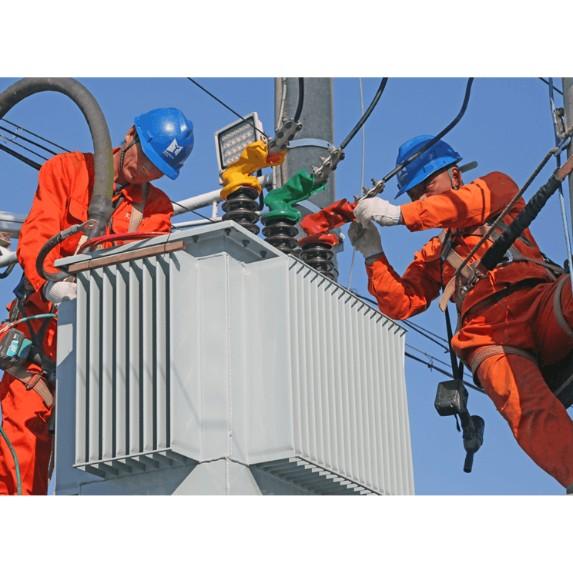
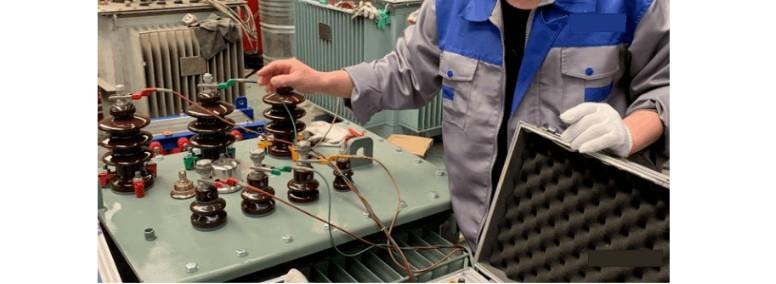
During testing, technicians examine the transformer's terminal insulation and listen carefully for abnormal internal sounds by placing a wooden stick or insulating rod against the transformer enclosure. If intermittent explosive sounds or sudden loud noises are detected, operation must be immediately stopped. Only after successfully passing five impulse tests can the transformer be commissioned for normal operation.