IEE Business offers free, AI-powered tools for electrical engineering design and power procurement budgeting: enter your parameters, click calculate, and get instant results for transformers, wiring, motors, power equipment costs, and more — trusted by engineers worldwide.
• Transparency: End-to-end traceable data
• Trust: Certifed for reliability & low risk
• Speed: 24-hour response, fast incident resolution
• Support: Priority service & quality assurance
Why Join the Whole life care manager?
• Trust: Earn clients trust by a system badge certifcation.
• Insight: Optimize desian with data feedback
• Visibility: Prioritized on platform
• Support: Big earn by experts training andquality rising.
Technical Deep Dive: Breaking the "Heat Trap" in Package Substations1. The Paradox: Power Density vs. Physical ConstraintsWith the implementation of new standards likeGB 20052-2024, Grade 1 efficiency transformers are now mandatory in many regions. While these units have lower internal losses, the push for miniaturization in European and American-style substations has created significant thermal challenges.Heat Concentration: A package substation integrates the transformer, high-voltage (HV), an
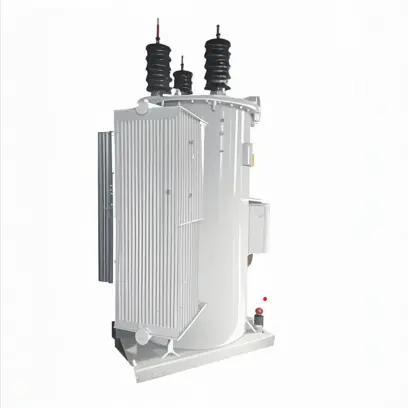
1. Core Logic: Deep Decomposition of Loss MechanismsDistribution transformer losses are primarily categorized into No-load loss (P0P0) and Load loss (PkPk). To achieve a leap in energy efficiency (e.g., from Grade 3 to Grade 1), one must start with micro-mechanisms.1.1 No-load Loss (P0P0): Hysteresis and Eddy CurrentsNo-load loss is proportional to the square of the magnetic flux density (B2B2) and the frequency (ff) to the power of 1.3–2.5.Hysteresis Loss:Caused by the friction of magn
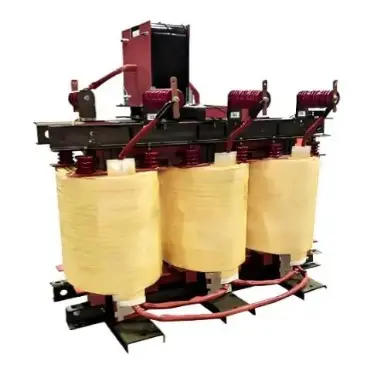
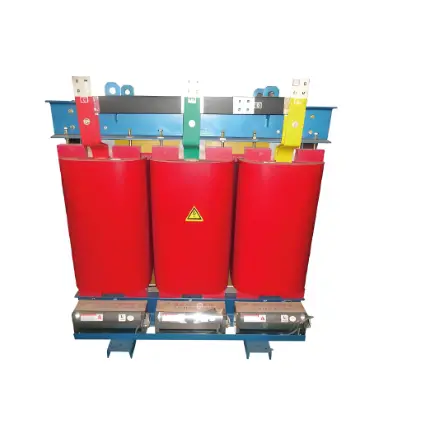
1. Heading and ContextDuring long-term operation, dry-type transformers often face risks of localized overheating and insulation breakdown caused by dust accumulation, moisture, or loose fasteners. How can scientific maintenance methods eliminate these potential failures in their infancy? Based on power industry standards, this article systematically outlines the operational specifications for dry-type transformers, ranging from daily inspections to in-depth maintenance.Equipment Scope: Applicab
1. IntroductionIn the fields of precision manufacturing, laboratory power supply, and sensitive industrial loads, traditional mechanical contact voltage regulators are increasingly inadequate due to slow response times and contact wear. Power electronic contactless voltage regulation technology utilizes high-power semiconductor devices (such as IGBTs) to achieve stepless voltage adjustment, offering advantages like rapid regulation and low maintenance. However, designing efficient control logic
Use the IEE-Business app to find equipment, obtain solutions, connect with experts, and participate in industry collaboration anytime, anywhere—fully supporting the development of your power projects and business.