Ang usa ka pangunahon nga pagkakaiba tali sa short circuit ug overload mao ang short circuit mahitabo tungod sa kasayuran sa mga conductor (line-to-line) o sa pagitan sa conductor ug yuta (line-to-ground), habang ang overload nagrefer sa sitwasyon diin ang equipment nagkuha og mas dako nga current kaysa iyang rated capacity gikan sa power supply.
Ang uban pang pangunahon nga mga pagkakaiba tali sa duha nga gitumong sa comparison chart sa ubos.
Ang termino "overload" kasagaran nagrefer sa kondisyon sa isang circuit o konektado nga device. Ang circuit gitawagon nga overloaded kon ang konektado nga load mogasabot sa mas dako kaysa sa iyang designed capacity. Ang overloads kasagaran resulta sa equipment malfunction o faulty circuit design. Sa kabalaka, ang short-circuit condition mahitabo kon ang bare metal conductors mobati diretso sa matag usa, o kon ang insulation sa pagitan sa mga conductor magfail. Sa panahon sa short circuit, ang resistance mopadako bisan asa zero, mosultia og ekstremong taas nga current nga molakip sa network.
Pahayag sa Short Circuit
Ang short circuit mao ang electrical fault nga mogahin sa current nga molakip sa dili intended nga ruta uban ang labi ka gamay (o negligible) resistance. Kini mosultia og massive nga surge sa current nga makapadamage sa insulation ug components sa electrical equipment. Ang short circuits kasagaran mahitabo kon ang duha ka live conductors mobati sa matag usa o kon ang insulation sa pagitan sa mga conductor moguho.
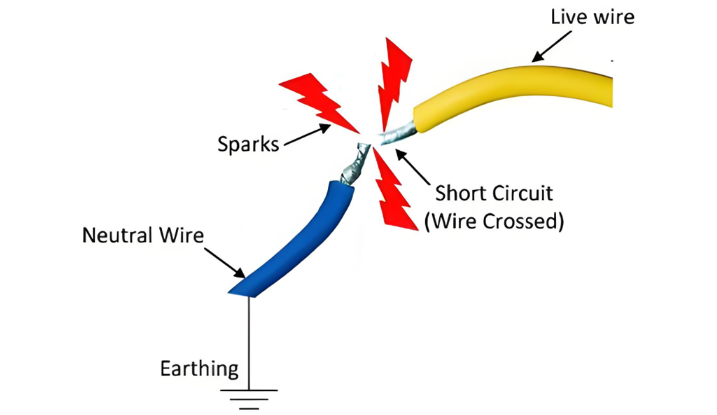
Ang magnitude sa short-circuit current makapulo ka beses mas dako kaysa sa normal nga operating current. Sa point sa kasayuran, ang voltage mopadako bisan asa zero, samantalang ang labi ka taas nga current molakip sa system.
Ang short circuits adunay daghang harmful effects sa power systems, lakip ania:
Excessive heat generation: Ang heavy fault current mogahin sa intense heat, kini mohatag sa fires o pipila pa nga explosions.
Arcing damage: Ang formation sa electric arcs sa panahon sa short circuit makapadamage sa severe sa power system components.
System instability: Ang short circuits makadisrupt sa stability sa power network, nakaapekto sa continuity ug reliability sa power supply.
Pahayag sa Overload
Ang overload mahitabo kon ang load mas dako kaysa sa designed o rated capacity gi-impose sa power system o equipment. Sa panahon sa overload, ang voltage mopadako bisan asa zero. Ang current mo-increase beyond normal levels, bisan maoy considerably lower kaysa sa current sa panahon sa short circuit. Kini excessive current mogahin sa increased heat generation, sama sa described sa Joule’s law (P = I²R), kini momataas sa temperature sa conductors ug components. Kini overheating makapadamage sa insulation, equipment failure, o pipila pa nga fire hazards.
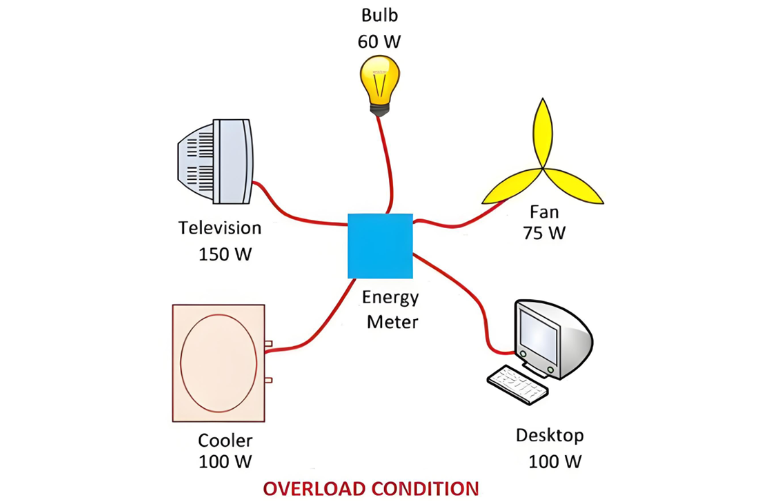
Ang overload condition makapadamage sa power system equipment. Tignero, consider an inverter rated at 400 watts: connecting an 800-watt load to it will cause an overload, potentially leading to overheating and equipment failure.
Key Differences Between Short Circuit and Overload
Ang short circuit mahitabo kon ang voltage sa point sa kasayuran mopadako bisan asa zero, mosultia og ekstremong dako nga current nga molakip sa circuit. Sa kabalaka, ang overload mahitabo kon ang load mas dako kaysa sa system’s designed o safe capacity gi-connect.
Sa short circuit, ang voltage sa location sa kasayuran mopadako bisan asa zero. Sa overload condition, ang voltage mokaubos tungod sa excessive demand, pero dili mopadako bisan asa zero.
Sa panahon sa short circuit, ang resistance sa ruta sa current mopadako bisan asa zero, mosultia og massive nga surge sa current. Sa overload, ang current mas taas kaysa sa normal pero significantly lower compared to short-circuit current.
Ang short circuit kasagaran mahitabo kon ang live (phase) ug neutral wires mobati direktso tungod sa insulation failure o accidental bridging. Ang overload, sa kabalaka, mahitabo kon ang daghan nga electrical devices gi-connect sa sama nga circuit o outlet, mogasabot sa mas dako kaysa sa iyang rated capacity.
Ang short-circuit current primarily supplied by synchronous machines, including synchronous generators, synchronous motors, ug synchronous condensers.