Talakayan tungkol sa mga Kamalian sa Mga Transformer ng Pamamahagi ng Rural Power Grid

1. Pagkakataon
Dahil sa mahabang panahon ng pag-operate, hindi maaaring iwasan ang mga kasalanan at aksidente ng mga distribution transformers sa mga rural power grids. Ang mga kasalanan at aksidente na ito ay dulot ng maraming mga kadahilanan, tulad ng mga panlabas na pwersa gaya ng pinsala at impact, at hindi mapipigilang mga kalamidad tulad ng pagtama ng kidlat. Sa ilang mga lugar sa bundok, ang mga low-voltage lines ay hindi sapat na inaalamin, na nagdudulot ng sobrang load at short-circuits, na nagdudulot ng pagkawala ng distribution transformers. Ito ay naging isang pangunahing kadahilanan ng mga pagkakamali.
Upang maiwasan ang pagkawala ng mga distribution transformers at bawasan ang kanilang mga pagkakamali sa mga rural power grids, ang papel na ito ay sumusunod at nagsasalamin ng ilang mga typical fault types at mga kadahilanan ng mga distribution transformers, tumatalakay sa mga preventive measures, mas malalim na pinag-aaralan at sinusugpo ang mga potensyal na panganib at mahihinang mga link ng mga distribution transformers, epektibong nagpapahinto at nagpipigil sa pag-occur ng mga pagkawala ng mga distribution transformers, at sa pamamagitan nito ay nagpapataas ng reliabilidad ng supply ng kuryente ng mga rural power grids.
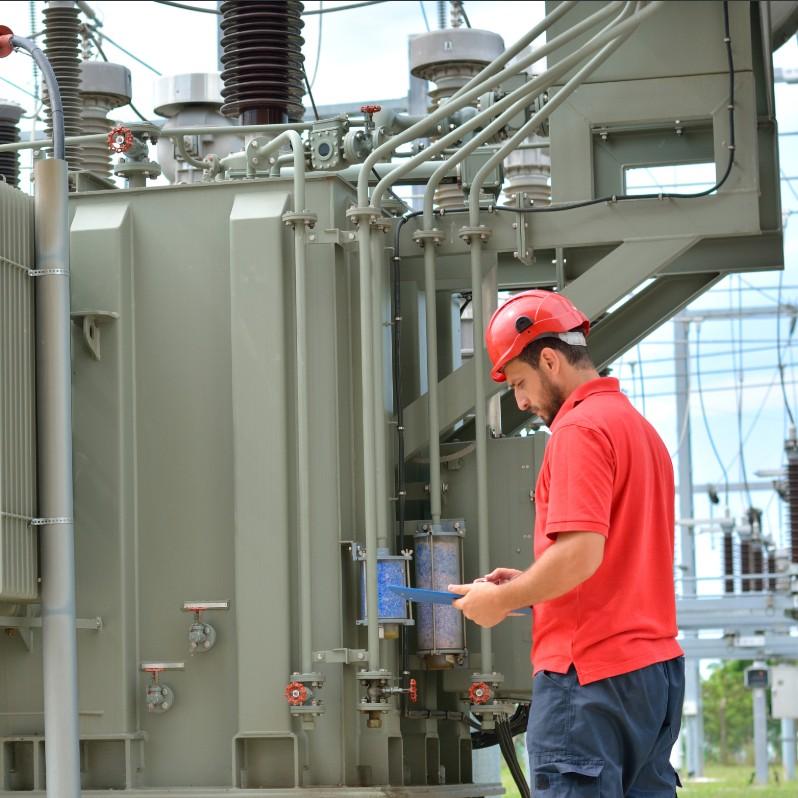
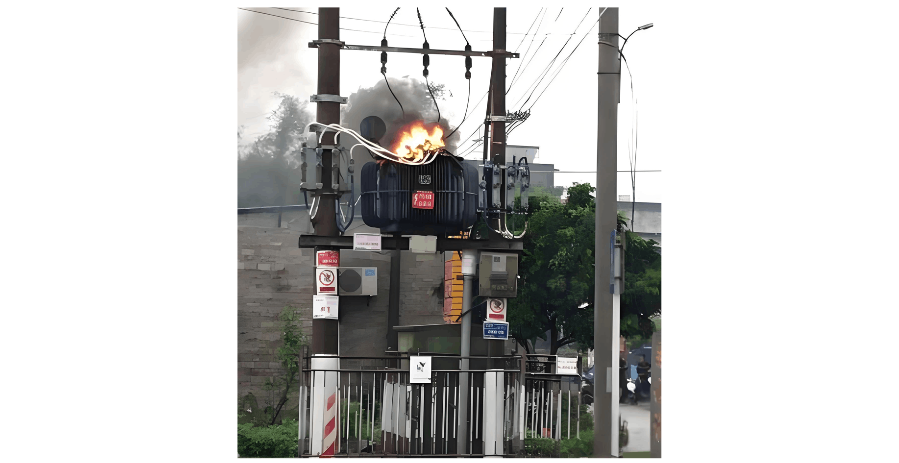
Kasalukuyan, ang mga distribution transformers na ginagamit sa mga rural power grids ay pangunahing oil-immersed distribution transformers. Ang mga kasalanan ng mga transformer na ito ay karaniwang nakaklasi bilang internal at external faults. Ang internal faults ay tumutukoy sa iba't ibang mga pagkakamali na nangyayari sa loob ng tank ng transformer. Ang mga pangunahing uri ay inter-phase short-circuits sa pagitan ng mga winding, turn-to-turn short-circuits sa loob ng mga winding, at grounding faults kung saan ang mga winding o lead-outs ay makakontak sa outer casing. Ang external faults ay iba't ibang mga pagkakamali na nangyayari sa mga insulating bushings sa labas ng tank ng transformer at ang kanilang mga lead-outs. Ang mga pangunahing uri ay grounding dahil sa flashover o pagkasira ng mga insulating bushings, at inter-phase short-circuits o grounding ng mga low-voltage outlet lines.
Dahil ang mga kasalanan ng mga distribution transformers ay malawak, may maraming mga specific classification methods. Halimbawa, mula sa perspektibo ng circuit loops, sila ay pangunahing nakaklasi bilang circuit faults, magnetic circuit faults, at oil-circuit faults. Kung ikuklasi ayon sa pangunahing struktura ng distribution transformer, maari silang hatiin sa winding faults, core faults, oil-quality faults, at accessory faults. Sa konbensyon, ang mga uri ng fault ng mga distribution transformers ay karaniwang nakaklasi batay sa mga common fault-prone areas, tulad ng insulation faults, core faults, tap-changer faults, atbp. Sa kanila, ang distribution transformer outlet short-circuit fault ang may pinakamasamang epekto sa transformer mismo at ang may pinakamataas na occurrence rate ngayon. Bukod dito, mayroon din mga distribution transformer leakage faults, atbp. Ang lahat ng iba't ibang mga uri ng fault ay maaaring kumatawan sa thermal faults, electrical faults, o parehong thermal at discharge faults. Gayunpaman, ang leakage fault ng distribution transformer ay maaaring hindi ipakita ang mga thermal o electrical fault characteristics sa normal na sitwasyon.
Dahil dito, mahirap ikategorya ang mga uri ng fault ng mga distribution transformers sa loob ng isang tiyak na framework. Ang papel na ito ay gumagamit ng relatibong karaniwan at pangkalahatang mga uri ng fault ng mga distribution transformers, tulad ng short-circuit faults, discharge faults, insulation faults, core faults, tap-changer faults, oil-gas leakage faults, external-force damage faults, at fuse protection faults. Bawat uri ay pinag-uusapan nang hiwalay sa kanyang kadahilanan at kaukulang teknikal na mga hakbang.
2. Fault Analysis ng Distribution Transformers
2.1 Short-Circuit Faults
2.1.1 Fault Cause Analysis
Ang short-circuit faults ng mga distribution transformers ay pangunahing tumutukoy sa outlet short-circuits ng mga distribution transformers, pati na rin ang short-circuits sa pagitan ng mga internal lead-outs o windings sa ground, at short-circuits sa pagitan ng mga phase, na nagdudulot ng mga pagkakamali.
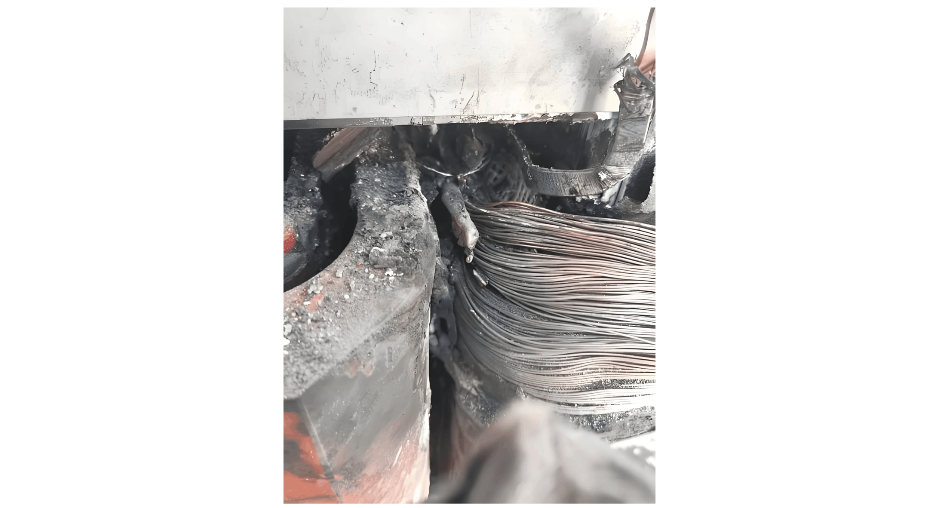
Sa normal na operasyon ng mga distribution transformers, ang pinsala na dulot ng outlet short-circuit faults ay relatibong malubha. Ayon sa mga kaugnay na estadistika, ang mga pagkakamali na direkta na resulta ng short-circuit fault current impacts sa mga distribution transformers sa rural power grids ay bumubuo ng humigit-kumulang 40% ng lahat ng mga pagkakamali. Maraming mga kaso ang ganito. Partikular na kapag ang low-voltage outlet short-circuit ay nangyari sa isang distribution transformer, ang mga winding ay pangkalahatang kailangang palitan. Sa mga malubhang kaso, maaaring kailangang palitan ang lahat ng mga winding, na nagdudulot ng napakalubhang mga resulta at pinsala. Dahil dito, dapat itong bigyan ng sapat na pansin.
Ang mga epekto ng outlet short-circuits sa mga distribution transformers ay pangunahing kasama ang sumusunod na dalawang aspeto:
Insulation Overheating Fault Caused by Short-Circuit Current
Dahil sa hindi sapat na pag-aalamin ng ilang mga rural low-voltage lines, madalas nangyayari ang overloading at short-circuits. Kapag ang distribution transformer ay nakaranas ng biglaang short-circuit, ang kanyang high- at low-voltage windings ay maaaring magdaan ng short-circuit currents na sampung beses pa higit sa rated value. Ito ay naggagawa ng malaking halaga ng init, na nagdudulot ng sobrang init ng distribution transformer at ang temperatura ng coil ay tumaas nang mabilis, na nagdudulot ng aging ng insulation. Kapag ang kakayahan ng distribution transformer na tanggapin ang short-circuit current ay hindi sapat at ang kanyang thermal stability ay mahina, ang insulation material ng distribution transformer ay seryosong masisira, na nagdudulot ng breakdown at pinsala sa distribution transformer.
Winding Deformation Fault Caused by Short-Circuit Electrodynamic Force
Kapag ang distribution transformer ay naapektuhan ng short-circuit, kung ang short-circuit current ay maliit at ang fuse ay tama ang pag-blow, ang winding deformation ay maliit. Kung ang short-circuit current ay malaki at ang fuse ay may delayed blow o hindi nag-blow, ang secondary side ay maggagawa ng short-circuit current na 20-30 beses mas mataas kaysa sa rated current. Ang primary side ng distribution transformer ay sigurado na maggagawa ng malaking current upang labanan ang demagnetizing effect ng secondary-side short-circuit current. Ang malaking current ay naggagawa ng malaking mechanical stress sa loob ng coil, na nagdudulot ng compress, shift, o deform ng coil, ang insulation pads at plates ay lumuluwag, ang core clamping bolts ay nasisira, ang high-voltage coil ay distorting o bursting, at sa huli ay nagdudulot ng pagkakamali ng distribution transformer. Sa parehong oras, ang mga winding ay naapektuhan ng malaking electromagnetic torque, at ang insulation material ay nagbabawas, na nagpapakita ng wire body at nagdudulot ng inter-turn short-circuits. Para sa mga minor deformations, kung hindi agad na nairepair, tulad ng pagbalik ng posisyon ng mga pads, pag-tighten ng pressure nails ng mga winding at ang pull-plates at pull-rods ng yoke, at pag-strengthen ng clamping force ng mga lead-outs, ang cumulative effect pagkatapos ng maraming short-circuit impacts ay maaari ring masira ang distribution transformer.
2.1.2 Mga Hakbang Upang Bawasan ang Short-Circuit Faults
Optimization ng Selection Requirements. Kapag pinili ang isang distribution transformer, piliin ang isa na makakapasa ng short-circuit test. Maaring matukoy ang capacity ng distribution transformer at maaring mapili ang kanyang short-circuit impedance rationally. Subukan ang energy-efficient S11-type distribution transformers at phase out high-energy-consumption transformers.
Optimization ng Operating Conditions at Environment. I-improve ang insulation level ng mga power lines, lalo na ang insulation level ng mga low-voltage outlet lines ng distribution transformer sa isang tiyak na distansya. Sa parehong oras, itaas ang mga standard para sa safety corridor at safety distance requirements ng mga low-voltage lines upang bawasan ang impact at panganib ng mga nearby-area faults. Ito ay kasama ang pagbibigay ng pansin sa installation at maintenance quality ng mga low-voltage dropper terminals (dahil ang explosion ng mga low-voltage terminals ay kadalasang katumbas ng secondary short-circuit), pag-iwas sa pagpasok ng mga small animals, at pag-improve ng quality requirements para sa mga low-voltage fuses upang iwasan ang mga sitwasyon kung saan ang fuses ay hindi nag-blow.
Optimization ng Operating Modes. Kapag itinakda ang operating mode, kalkulahin ang short-circuit current at limitahan ang kanyang panganib. Lalo na, iwasan ang distribution transformer na mag-operate sa ilalim ng overload. Subukan ang kalkulahin at ayusin ang electrical load ng distribution transformer.
Pag-improve ng Operation Management Level. Una, iwasan ang short-circuit impacts na dulot ng misoperation. Palakasin ang timely monitoring at maintenance ng mga distribution transformers, agad na detekta ang degree ng deformation ng mga distribution transformers, at siguraduhin ang kanilang ligtas na operasyon. Sa parehong oras, taasan ang inspection efforts sa power consumption ng mga users sa area ng distribution transformer upang iwasan ang mga problema ng overloading na dulot ng power theft ng user.
2.2 Discharge Faults
Batay sa energy density ng discharge, ang mga discharge faults ng mga distribution transformers ay karaniwang nakaklasi bilang partial discharge, spark discharge, at high-energy discharge. Ang discharge ay may dalawang uri ng destructive effects sa insulation: isa ay ang mga discharge particles na direktang bombarding ang insulation, na nagdudulot ng local insulation damage at unti-unting ito'y naglalaki hanggang sa mabreakdown ang insulation. Ang isa pa ay ang chemical action ng mga active gases tulad ng heat, ozone, at nitrogen oxides na nabuo ng discharge na korosyon ng local insulation, nagdudulot ng pagtaas ng dielectric loss, at sa huli ay nagdudulot ng thermal breakdown.
2.2.1 Partial Discharge Faults ng Distribution Transformers
Ang partial discharge ay tumutukoy sa non-through-type discharge phenomenon na nangyayari sa mga edges ng air gaps, oil films, o conductors sa loob ng insulation structure sa ilalim ng aksyon ng voltage. Sa simula, ang partial discharge ay isang low-energy discharge. Kapag nangyari ang ganitong uri ng discharge sa loob ng distribution transformer, ang sitwasyon ay medyo komplikado. Ayon sa iba't ibang insulation media, ang partial discharge ay maaaring hatiin sa partial discharge sa bubbles at partial discharge sa oil. Ayon sa lokasyon ng insulation, ito ay kasama ang partial discharge sa cavities ng solid insulation, sa electrode tips, sa oil-corner gaps, sa oil gaps sa pagitan ng oil at insulation paperboards, at sa surface ng solid insulation sa oil. Ang mga kadahilanan ng partial discharge ay sumusunod:
Kapag may bubbles sa oil o cavities sa solid insulation material, dahil sa maliit na dielectric constant ng gas, ito ay nagtataglay ng mataas na electric field strength sa ilalim ng alternating voltage, ngunit ang kanyang withstand voltage strength ay mas mababa kaysa sa oil at paper insulation materials. Dahil dito, ang discharge ay maaaring unang mangyari sa air gap.
Influence ng external environmental conditions. Halimbawa, kung ang oil treatment ay hindi sapat at ang bubbles ay precipitate mula sa oil, ito ay magdudulot ng discharge.
Dahil sa mahinang kalidad ng paggawa. Halimbawa, ang discharge ay nangyayari sa ilang bahagi na may sharp corners. Ang bubbles, debris, at moisture ay idinadala, o dahil sa external temperature-related factors tulad ng paint nodules, ito ay nagtataglay ng malaking electric field strength.
Discharge na dulot ng mahinang contact sa pagitan ng mga metal parts o conductors. Bagama't ang energy density ng partial discharge ay hindi malaki, kung ito ay magpapaunlad, ito ay magiging vicious cycle ng discharge, sa huli ay magdudulot ng breakdown o damage ng equipment at nagdudulot ng malubhang burnout accidents.
2.2.2 Spark Discharge Faults ng Distribution Transformers
Karaniwan, ang spark discharge ay hindi mabilis na nagdudulot ng insulation breakdown. Ito ay pangunahing ipinakikita sa abnormal na oil chromatographic analysis, pagtaas ng partial discharge quantity, o light gas. Ito ay medyo madali na detekta at i-handle, ngunit sapat na pansin ang dapat ibigay sa kanyang pag-unlad. Mayroong dalawang pangunahing kadahilanan ng spark discharge:
Spark Discharge Caused by Floating Potential. Sa high-voltage power equipment, isang tiyak na metal part, dahil sa structural reasons o mahinang contact sa panahon ng transport at operasyon, ay disconnected at located sa pagitan ng high-voltage at low-voltage electrodes, dividing the voltage according to its impedance. The potential to the ground generated on this metal part is called the floating potential. The electric field strength near an object with a floating potential is relatively concentrated, often gradually burning out the surrounding solid dielectric or carbonizing it.
It also causes the insulating oil to decompose a large amount of characteristic gases under the action of the floating potential, resulting in an abnormal result of the insulating oil chromatographic analysis. Floating discharge may occur in metal parts at high potential inside the distribution transformer, such as the regulating winding, when the grading ball of the bushing and the no-load tap-changer shift fork have a floating potential. For parts at ground potential, such as the silicon steel sheet magnetic shielding and various metal bolts for fastening, if their connection to the ground is loose or detached, it will lead to floating-potential discharge. Poor contact at the end of the high-voltage bushing of the distribution transformer can also form a floating potential and cause spark discharge.
Spark Discharge Caused by Impurities in Oil
The main cause of spark discharge faults in distribution transformers is the influence of impurities in the oil. These impurities are composed of moisture, fibrous substances (mainly damp fibers), etc. The dielectric constant ε of water is approximately 40 times that of the distribution transformer oil. In an electric field, the impurities are first polarized and attracted to the area with the strongest electric field intensity, namely near the electrodes, and are arranged in the direction of the electric field lines. Thus, an impurity "bridge" is formed near the electrodes.
The conductivity and dielectric constant of the "bridge" are both greater than those of the distribution transformer oil. According to the principles of electromagnetic fields, the presence of the "bridge" distorts the electric field in the oil. Since the dielectric constant of the fibers is small, the electric field in the oil at the ends of the fibers is strengthened. Therefore, the discharge first occurs and develops in this part of the oil. The oil dissociates under a high-field-strength environment, decomposing into gases, which causes the bubbles to increase in size and the dissociation to strengthen. Subsequently, the process gradually develops, leading to spark discharge in the entire oil gap through the gas channel. So, spark discharge may occur at a relatively low voltage.
If the distance between the electrodes is not large and there are enough impurities, the "bridge" may connect the two electrodes. At this time, due to the relatively high conductivity of the "bridge", a large current flows along the "bridge" (the magnitude of the current depends on the capacity of the power supply), causing the "bridge" to heat up intensely. The moisture and the nearby oil in the "bridge" boil and vaporize, creating a gas channel - the "bubble bridge", and spark discharge occurs.
If the fibers are not damp, the conductivity of the "bridge" is very small, and its influence on the spark discharge voltage of the oil is also relatively small; conversely, the influence is greater. Therefore, the spark discharge of the distribution transformer oil caused by impurities is related to the heating process of the "bridge". When an impulse voltage acts or the electric field is extremely non-uniform, it is not easy for the impurities to form a "bridge", and their effect is only limited to distorting the electric field. The spark discharge process mainly depends on the magnitude of the applied voltage.
2.2.3 Arc Discharge Faults ng Distribution Transformers
Arc discharge is a high-energy discharge, which is commonly seen as insulation breakdown between winding turns or layers. Other common faults include lead breakage, flashover to the ground, and arcing of tap-changers.
Influence of Arc Discharge. Due to the high energy density of arc discharge faults, gas is generated rapidly. It often impacts the dielectric in the form of electron avalanches, causing the insulating paper to perforate, char, or carbonize, deforming or melting and burning the metal materials. In severe cases, it may cause equipment damage or even explosions. Such accidents are generally difficult to predict in advance and have no obvious omens, often emerging in a sudden manner.
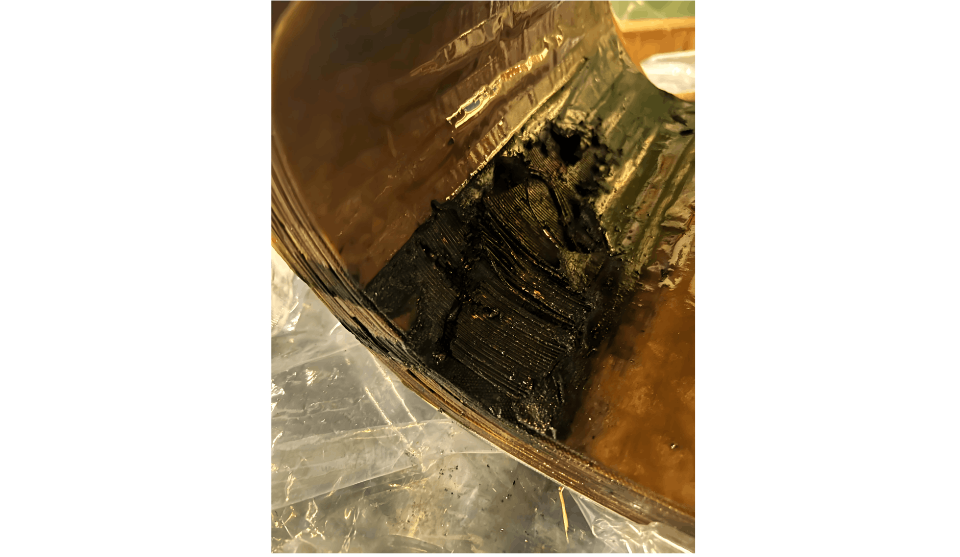
Gas Characteristics of Arc Discharge. After an arc discharge fault occurs, the distribution transformer oil also carbonizes and turns black. The main components of the characteristic gases in the oil are H2 and C2H2, followed by C2H6 and CH4. When the discharge fault involves solid insulation, CO and CO2 will also be generated.In summary, the three forms of discharge have both differences and certain connections. The differences refer to the discharge energy level and gas composition, while the connection is that partial discharge is a precursor to the other two forms of discharge, and the latter two are inevitable results of the development of the former. Since the faults occurring inside distribution transformers are often in a state of gradual development, and most of them are not single-type faults, but rather one type is accompanied by another type, or several types occur simultaneously. Therefore, more careful analysis and specific treatment are required.
2.3 Insulation Faults
Currently, the most widely used distribution transformers in rural power grids are oil-immersed transformers. The insulation of a distribution transformer refers to the insulation system composed of its insulation materials. It is a fundamental condition for the normal operation of the distribution transformer, and the service life of the distribution transformer is determined by the lifespan of the insulation materials (such as oil-paper or resin). Practical experience has proven that most of the damage and faults of distribution transformers are caused by the damage of the insulation system.
Therefore, protecting the normal operation of the distribution transformer and strengthening the reasonable maintenance of the insulation system can, to a large extent, ensure a relatively long service life for the distribution transformer. Preventive and predictive maintenance are the keys to extending the service life of distribution transformers and improving power supply reliability.
In oil-immersed distribution transformers, the main insulation materials are insulating oil and solid insulation materials such as insulating paper, cardboard, and wooden blocks. The so-called aging of the distribution transformer insulation means that these materials decompose under the influence of environmental factors, reducing or losing their insulation strength.
2.3.1 Solid Paper Insulation Faults
Solid insulation is one of the main components of the insulation of oil-immersed distribution transformers, including insulating paper, insulating board, insulating pad, insulating coil, insulating binding tape, etc. Its main component is cellulose. After the insulating paper ages, its degree of polymerization and tensile strength gradually decrease, and water, CO, and CO2 are generated. In addition, furfural (furfuraldehyde) is also produced. Most of these aging products are harmful to electrical equipment. They can reduce the breakdown voltage and volume resistivity of the insulating paper, increase the dielectric loss, decrease the tensile strength, and even corrode the metal materials in the equipment.
2.3.2 Liquid Oil Insulation Faults
Reasons for the Deterioration of Distribution Transformer Oil
Contamination means that moisture and impurities are mixed into the oil. These are not oxidation products of the oil. The insulation performance of contaminated oil deteriorates, the breakdown electric field strength decreases, and the dielectric loss angle increases.
Deterioration is the result of oil oxidation. This oxidation does not only refer to the oxidation of hydrocarbons in pure oil but also includes the acceleration of the oxidation process by impurities in the oil, especially copper, iron, and aluminum metal shavings.
Oxygen comes from the air inside the distribution transformer. Even in a fully-sealed distribution transformer, there is still about 0.25% of oxygen by volume. Oxygen has a relatively high solubility, so it occupies a relatively high proportion among the dissolved gases in the oil.
When the distribution transformer oil oxidizes, moisture as a catalyst and heat as an accelerator cause the distribution transformer oil to generate sludge. Its main impacts are as follows: under the action of the electric field, the sediment particles are large; the impurities concentrate in the area with the strongest electric field, forming a conductive "bridge" for the insulation of the distribution transformer; the sediment is not uniform but forms separate slender strips, and it may be arranged in the direction of the electric field lines, which undoubtedly hinders heat dissipation, accelerates the aging of insulation materials, and leads to a decrease in insulation resistance and insulation level.
The Process of Distribution Transformer Oil Deterioration
During the deterioration process of the oil, the main products in each stage are peroxides, acids, alcohols, ketones, and sludge.In the early deterioration stage, the peroxides generated in the oil react with the insulating fiber materials to form oxidized cellulose, which deteriorates the mechanical strength of the insulating fibers, causing embrittlement and insulation shrinkage. The generated acids are a kind of viscous fatty acid. Although its corrosiveness is not as strong as that of mineral acids, its growth rate and impact on organic insulation materials are significant.
In the later deterioration stage, sludge is generated. When acids erode copper, iron, insulating paint, and other materials, sludge is produced. It is a viscous, asphalt-like polymeric conductive substance that can moderately dissolve in the oil. Under the action of the electric field, it is generated very quickly and adheres to the insulation materials or the edges of the distribution transformer tank, deposits in the oil pipes and radiator fins of the cooler, etc., increasing the operating temperature of the distribution transformer and reducing its electrical withstand strength.
The oxidation process of the oil is composed of two main reaction conditions. One is that the acid value in the distribution transformer oil is too high, making the oil acidic. The other is that the oxides dissolved in the oil are transformed into compounds insoluble in the oil, gradually deteriorating the quality of the distribution transformer oil.
2.3.3 Winding Insulation Moisture Ingress
Winding insulation moisture ingress is mainly caused by poor-quality insulating oil or a decrease in the oil level. The main reasons are as follows:
Before the distribution transformer is put into operation, if it is in a humid place or a rainy area with high humidity, moisture will invade and cause the insulation to get damp.
During storage, transportation, and operation, improper maintenance may lead to moisture, impurities, or other oil contaminants mixing into the distribution transformer oil, greatly reducing the insulation strength.
During the manufacturing process, if the inner layer of the winding is not impregnated thoroughly and dried completely, or if the winding lead joints are not welded properly, incomplete insulation may cause inter-turn and inter-layer short-circuits. When approaching or reaching the service life, the insulation naturally becomes charred and black, and the insulation characteristics decline, which is the main cause of faults in old distribution transformers.
In some old distribution transformers that have not been maintained for a long time, for various reasons, the oil level drops, and the insulating oil comes into extensive and long-term contact with the air. A large amount of moisture in the air enters the insulating oil, reducing the insulation strength.
2.3.4 Main Factors Affecting Distribution Transformer Insulation Faults
The main factors affecting the insulation performance of distribution transformers include temperature, humidity, oil protection method, and over-voltage influence.
Influence of Temperature. Power distribution transformers use oil-paper insulation. At different temperatures, there are different equilibrium relationship curves