• Product
  • Suppliers
  • Manufacturers
  • Solutions
  • Free tools
  • Knowledges
  • Experts
  • Communities
Search


Free Expert Guides on Power Systems, Circuit Design & Electrical Troubleshooting

Access free engineering resources from IEE Business—covering power design, circuit layout, equipment selection, and troubleshooting. Expert-developed guides help engineers, procurement, and project teams make better decisions. Stay ahead on smart grids, renewables, efficiency, and AI tools. Improve reliability, reduce downtime, and enhance outcomes with real-world solutions. Explore our knowledge hub today.
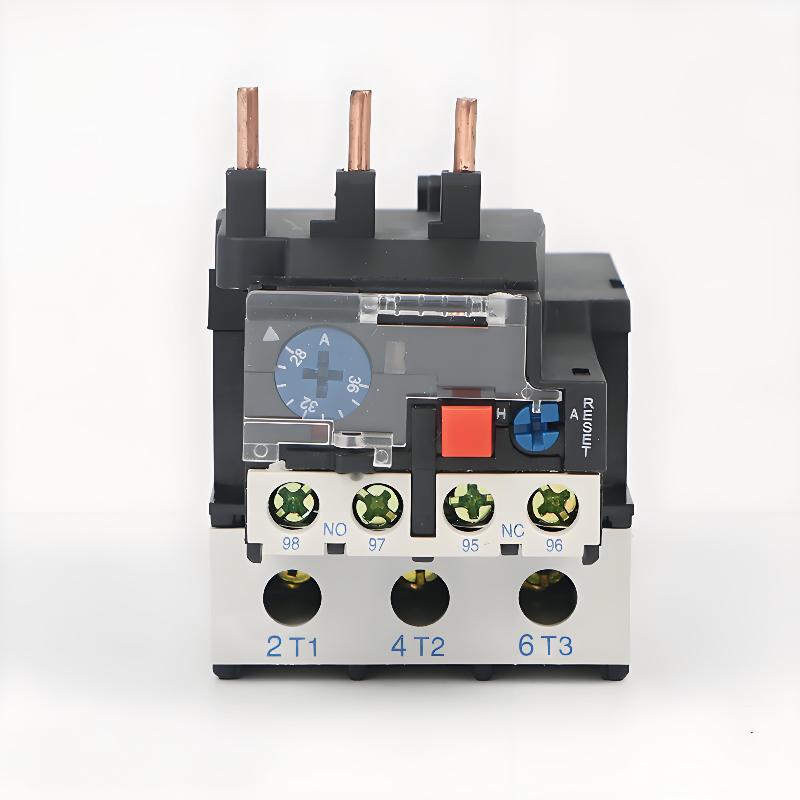
How to Choose a Thermal Relay for Motor Protection?
Thermal Relays for Motor Overload Protection: Principles, Selection, and ApplicationIn motor control systems, fuses are primarily used for short-circuit protection. However, they cannot protect against overheating caused by prolonged overloading, frequent forward-reverse operation, or undervoltage operation. Currently, thermal relays are widely used for motor overload protection. A thermal relay is a protective device that operates based on the thermal effect of electric current, and is essentia
10/22/2025
Consult
Tip
Consult
Tip
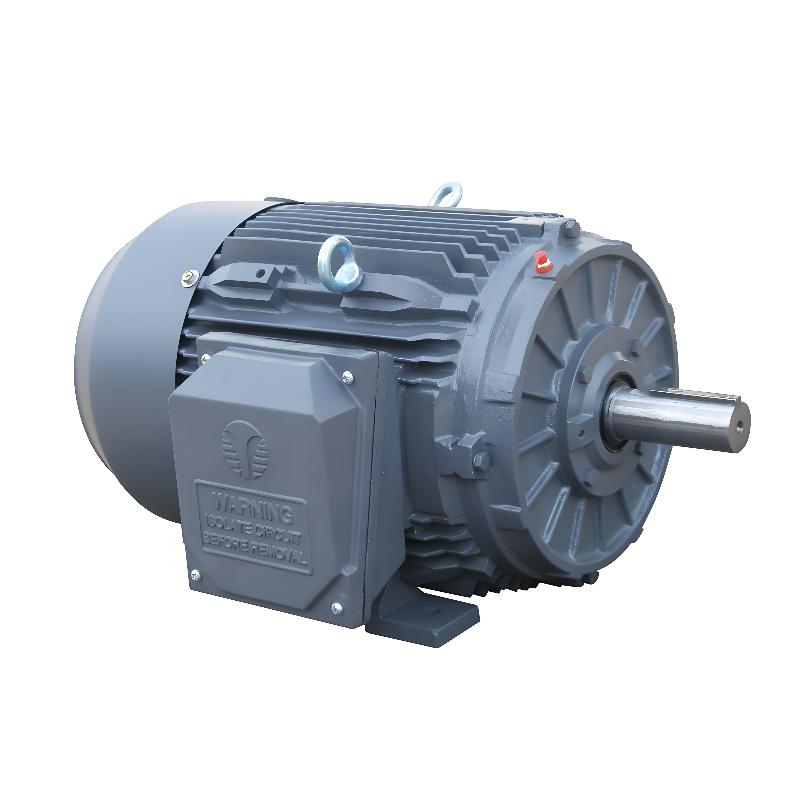
How to Choose & Maintain Electric Motors: 6 Key Steps
"Selecting a High-Quality Motor" – Remember the Six Key Steps Inspect (Look): Check the motor’s appearanceThe motor’s surface should have a smooth, even paint finish. The nameplate must be properly installed with complete and clear markings, including: model number, serial number, rated power, rated current, rated voltage, allowable temperature rise, connection method, speed, noise level, frequency, protection rating, weight, standard code, duty type, insulation class, manufacturing date, and ma
10/21/2025
Consult
Tip
Consult
Tip
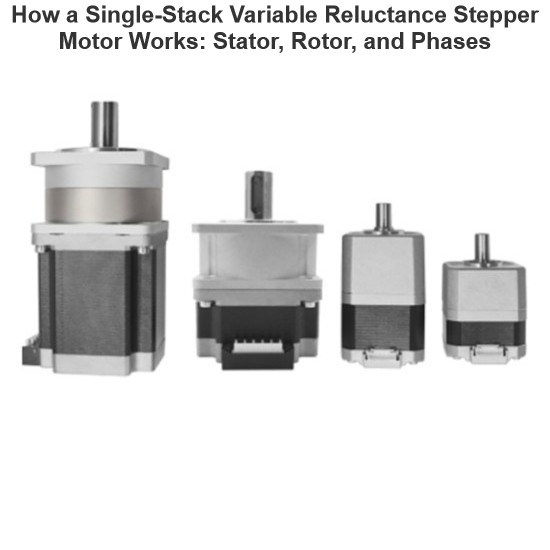
How a Single-Stack Variable Reluctance Stepper Motor Works: Stator, Rotor, and Phases
A single-stack variable reluctance stepper motor features a salient-pole stator with concentrated windings mounted directly on the stator poles. The number of phases is determined by the connection configuration of these windings, typically comprising three or four windings. The rotor is constructed from ferromagnetic material and contains no windings.Both the stator and rotor are made of high-quality, high-permeability magnetic materials, requiring only a small exciting current to produce a str
08/14/2025
Consult
Tip
Consult
Tip
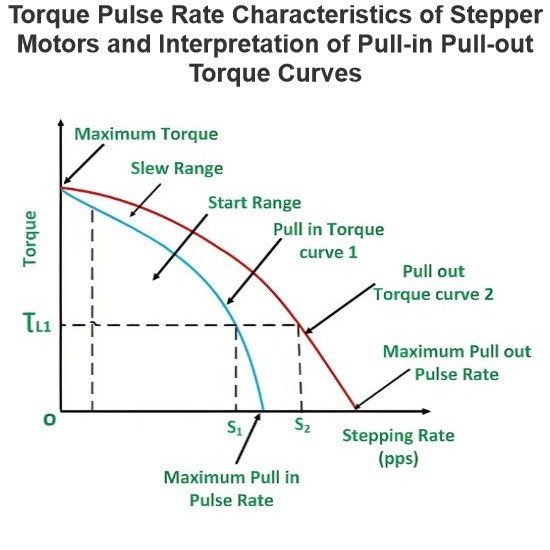
Torque Pulse Rate Characteristics of Stepper Motors and Interpretation of Pull-in Pull-out Torque Curves
The torque pulse rate characteristics of a stepper motor describe the variation of electromagnetic torque as a function of stepping rate in pulses per second (PPS). There are two characteristic curves, Curve 1 and Curve 2, shown in the figure below.Curve 1, represented by a blue line, is known as the pull-in torque curve. It indicates the maximum stepping rate at which the motor can start, synchronize, stop, or reverse under different load torque values. Similarly,Curve 2, shown as a red line, i
08/02/2025
Consult
Tip
Consult
Tip
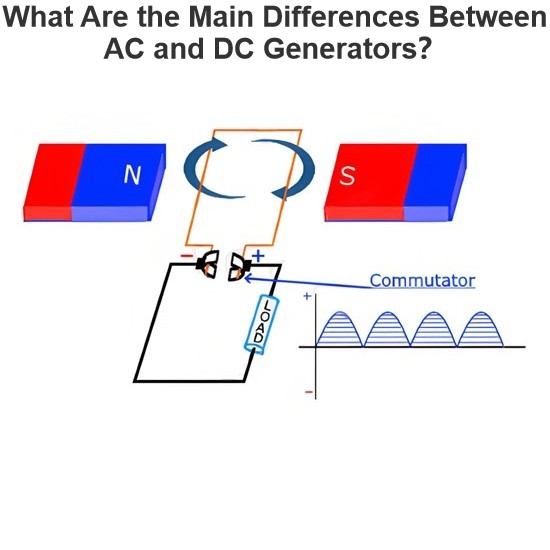
What Are the Main Differences Between AC and DC Generators?
Main Differences Between AC and DC GeneratorsAn electrical machine is a device that converts mechanical energy into electrical energy and vice versa. A generator is a type of such machine that converts mechanical energy into electrical energy. However, the electrical energy generated can be in either alternating current (AC) or direct current (DC) form. Thus, the primary difference between AC and DC generators is that they generate alternating current and direct current respectively. While there
07/18/2025
Consult
Tip
Consult
Tip
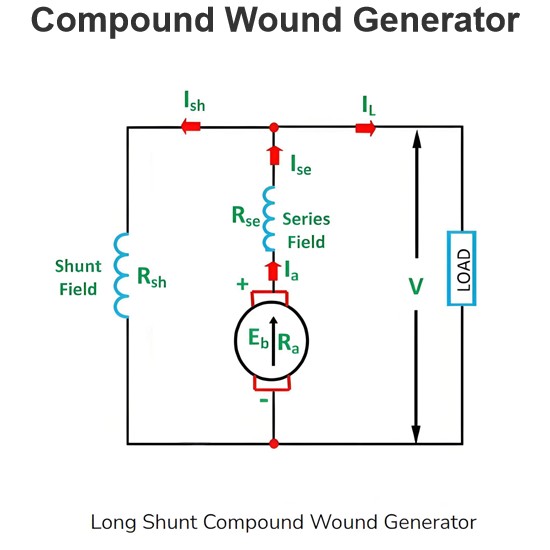
Compound Wound Generator
Compound Wound Generator FundamentalsA compound wound generator features two field windings per pole: one series-connected with few turns of thick wire, and the other shunt-connected with many turns of fine wire parallel to the armature windings.In essence, a compound generator integrates both shunt and series field windings. It is classified as: Cumulative compounded: Series winding flux reinforces shunt winding flux. Differentially compounded: Series winding flux opposes shunt winding flux.Two
05/27/2025
Consult
Tip
Consult
Tip
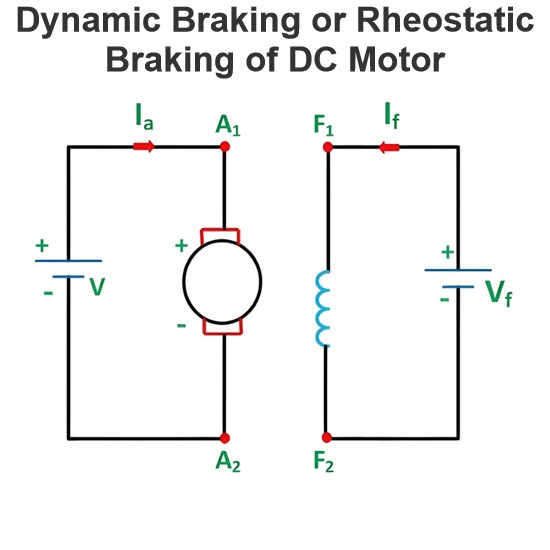
Dynamic Braking or Rheostatic Braking of DC Motor
Dynamic Braking Principles in DC MotorsIn dynamic braking, a braking resistor Rbis connected across the armature immediately after disconnecting the DC motor from the supply. The motor then functions as a generator, producing braking torque.Dynamic Braking ConfigurationsTwo connection methods enable braking operation: Separately Excited/Shunt Motor as a Separately Excited Generator: Flux is maintained constant for consistent braking performance. Self-Excited Shunt Generator: Field winding i
05/27/2025
Consult
Tip
Consult
Tip
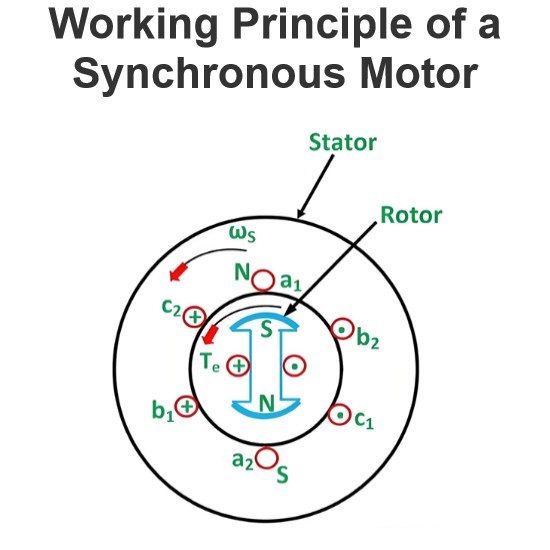
Working Principle of a Synchronous Motor
Structure and Excitation of Synchronous MotorsThe synchronous motor consists of two primary components: the stator (stationary part) and the rotor (rotating part). The stator is energized by a three-phase AC supply, while the rotor is excited by a DC supply.Excitation Principle:Excitation refers to the process of inducing magnetic fields in both the stator and rotor, transforming them into electromagnets. This magnetic coupling is essential for converting electrical energy into mechanical rotati
05/26/2025
Consult
Tip
Consult
Tip
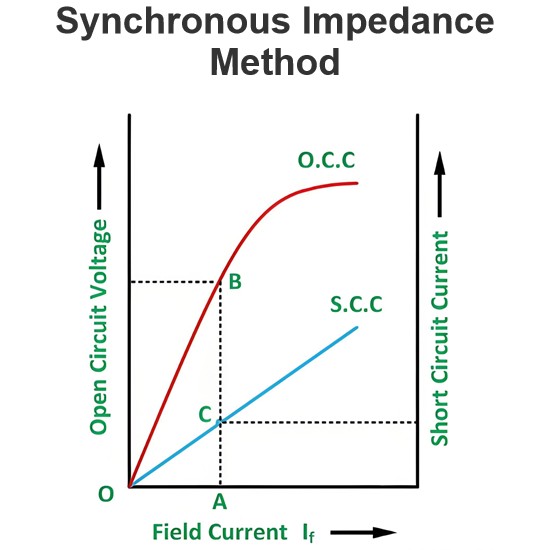
Synchronous Impedance Method
The Synchronous Impedance Method, also known as the EMF Method, replaces the impact of armature reaction with an equivalent imaginary reactance. To calculate voltage regulation using this method, the following data are required: armature resistance per phase, the Open-Circuit Characteristic (OCC) curve depicting the relationship between open-circuit voltage and field current, and the Short-Circuit Characteristic (SCC) curve showing the relationship between short-circuit current and field current
05/26/2025
Consult
Tip
Consult
Tip
Slip Speed in an Induction Motor
Slip Speed in an Induction MotorDefinition: The slip of an induction motor is defined as the difference between the synchronous speed of the main magnetic flux and the rotor speed. Denoted by the symbolS, it is expressed as a percentage of the synchronous speed. Mathematically, it is formulated as:This revision enhances technical precision by clarifying "main flux speed" as thesynchronous speed(a standard term in electrical engineering), and structures the definition to align with academic notat
05/26/2025
Consult
Tip
Consult
Tip
Send inquiry
+86
Click to upload file

IEE Business will not sell or share your personal information.

Download
Get the IEE Business Application
Use the IEE-Business app to find equipment, obtain solutions, connect with experts, and participate in industry collaboration anytime, anywhere—fully supporting the development of your power projects and business.